Journal of Semnan University of Medical Sciences
Image Credit:Koomesh
Outline
Effect of Whole-Body Electromyostimulation on miRNA146a, miRNA133a Gene Expression, Lipid Profiles, Muscle Strength and Body Composition of Men with Overweight/Obesity
Authors

Abstract
Background: The whole-body electromyostimulation (WB-EMS) represents an innovative strategy designed to enhance body composition and muscle strength while reducing the time commitment required for such improvements.
Objective: This study aimed to assess the effectiveness of high-frequency versus low frequency WB-EMS training on body composition, muscle strength, the expression of miRNA133a- miRNA146a, and the lipid profile of men with overweight/obesity.
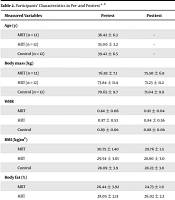
Methods: Forty-five men were allocated into high-frequency WB-EMS (BMI = 34.4 kg.m2; 85 Hz, n = 15), low- frequency WB-EMS (BMI = 29.4 kg.m2; 25 Hz; n = 15), and control (BMI = 34.6 kg.m2; n = 15) groups. The intervention was carried out over an eight-week/ three sessions per week. The control group underwent no particular intervention and carried on with their daily activities. The RT-QPCR method was applied to measure the serum levels of miRNA133a, miRNA146a, body composition, lipid profile, fasting blood glucose, insulin levels, and muscle strength, were assessed before and after the intervention.
Result: The expression of miRNA146a exhibited a significant reduction in both training groups (P ≤ 0.05), whereas miRNA133a demonstrated an increase across all training groups (P ≤ 0.05). Notably, a significant reduction in body mass index was observed exclusively in the high-frequency group (P ≤ 0.05). Furthermore, the training groups experienced relative decreases in TG, TC, LDL-C levels in comparison to the control group (P ≤ 0.05). Insulin levels increased significantly in the training groups, while fasting blood glucose decreased solely in the high-frequency group (P ≤ 0.05). Additionally, hand grip strength, and knee extensor peak torque also increased significantly in the high-frequency group (P ≤ 0.05).
Conclusion: It appears that WB-EMS training at higher frequencies may positively influence body composition and metabolic parameters in overweight men. This approach could be beneficial for certain individuals with severe obesity, provided that specific considerations are taken into account.
Highlights
References
- 1.Silveira A, Gomes J, Roque F, Fernandes T, de Oliveira EM. MicroRNAs in Obesity-Associated Disorders: The Role of Exercise Training. Obes Facts. 2022;15(2):105-17. [PubMed ID:35051942]. [PubMed Central ID:PMC9021631]. https://doi.org/10.1159/000517849.
- 2.Flowers E, Won GY, Fukuoka Y. MicroRNAs associated with exercise and diet: a systematic review. Physiol Genomics. 2015;47(1):1-11. [PubMed ID:25465031]. [PubMed Central ID:PMC7199230]. https://doi.org/10.1152/physiolgenomics.00095.2014.
- 3.Hernandez-Lepe MA, Hernandez-Ontiveros DA, Chavez-Guevara IA, Ramos-Jimenez A, Hernandez-Torres RP, Lopez-Fregoso RJ, et al. Impact of Exercise Training at Maximal Fat Oxidation Intensity on Metabolic and Epigenetic Parameters in Patients with Overweight and Obesity: Study Protocol of a Randomized Controlled Trial. J Funct Morphol Kinesiol. 2024;9(4). [PubMed ID:39584867]. [PubMed Central ID:PMC11587150]. https://doi.org/10.3390/jfmk9040214.
- 4.Moghadam E, Eskandari Z, Shiri-Shahsavar MR, Mirmoezzi M. [Effects of High-Intensity Interval and Mini-Trampoline Training with Calorie Restriction on Body Composition and Aerobic Capacity in Overweight and Obese women]. Koomesh. 2022;24(6):747-56. Persian.
- 5.Castano C, Meza-Ramos A, Batlle M, Guasch E, Novials A, Parrizas M. Treatment with EV-miRNAs Alleviates Obesity-Associated Metabolic Dysfunction in Mice. Int J Mol Sci. 2022;23(23). [PubMed ID:36499248]. [PubMed Central ID:PMC9736074]. https://doi.org/10.3390/ijms232314920.
- 6.Improta-Caria AC, Soci ÚPR, Rodrigues LF, Fernandes T, Oliveira EM. MicroRNAs regulating pathophysiological processes in obesity: the impact of exercise training. Curr Opinion Physiol. 2023;33. https://doi.org/10.1016/j.cophys.2023.100648.
- 7.Metzinger-Le Meuth V, Metzinger L. The roles of microRNAs in obesity: emphasizing links with chronic kidney disease and cardiovascular disorders. Obesities. 2023;3(3):243-52.
- 8.Ansar B, Keshavarz P, Akhoondian M. [Role of microRNA as a biomarker in Alzheimer's disease]. Koomesh. 2022;24(1):38-48. Persian.
- 9.Sanada T, Sano T, Sotomaru Y, Alshargabi R, Yamawaki Y, Yamashita A, et al. Anti-inflammatory effects of miRNA-146a induced in adipose and periodontal tissues. Biochem Biophys Rep. 2020;22:100757. [PubMed ID:32346618]. [PubMed Central ID:PMC7178317]. https://doi.org/10.1016/j.bbrep.2020.100757.
- 10.Paramasivam P, Meugnier E, Gokulakrishnan K, Ranjini H, Staimez LR, Weber MB, et al. Blood-derived miRNA levels are not correlated with metabolic or anthropometric parameters in obese pre-diabetic subjects but with systemic inflammation. PLoS One. 2022;17(2):e0263479. [PubMed ID:35120179]. [PubMed Central ID:PMC8815902]. https://doi.org/10.1371/journal.pone.0263479.
- 11.Kemmler W, Weissenfels A, Willert S, Shojaa M, von Stengel S, Filipovic A, et al. Efficacy and Safety of Low Frequency Whole-Body Electromyostimulation (WB-EMS) to Improve Health-Related Outcomes in Non-athletic Adults. A Systematic Review. Front Physiol. 2018;9:573. [PubMed ID:29875684]. [PubMed Central ID:PMC5974506]. https://doi.org/10.3389/fphys.2018.00573.
- 12.Kemmler W, Shojaa M, Steele J, Berger J, Frohlich M, Schoene D, et al. Efficacy of Whole-Body Electromyostimulation (WB-EMS) on Body Composition and Muscle Strength in Non-athletic Adults. A Systematic Review and Meta-Analysis. Front Physiol. 2021;12:640657. [PubMed ID:33716787]. [PubMed Central ID:PMC7952886]. https://doi.org/10.3389/fphys.2021.640657.
- 13.Balke M, Teschler M, Schafer H, Pape P, Mooren FC, Schmitz B. Therapeutic Potential of Electromyostimulation (EMS) in Critically Ill Patients-A Systematic Review. Front Physiol. 2022;13:865437. [PubMed ID:35615672]. [PubMed Central ID:PMC9124773]. https://doi.org/10.3389/fphys.2022.865437.
- 14.Pouzesh Jadidi G. Comparison of Whole-Body Electrical Stimulation with Aerobic Exercise on Body Composition and Serum Irisin Level in Overweight Adolescents. Physical Activity Child. 2024;1(2):80-5. https://doi.org/10.61186/pach.2024.490070.1041.
- 15.Kemmler W, von Stengel S, Uder M. Safety and Attractiveness of Whole-Body Electromyostimulation in Non-athletic Cohorts. A Scoping Review. Prerpintsorg. 2024;Preprint. https://doi.org/10.20944/preprints202406.1540.v1.
- 16.Sadeghipour S, Mirzaei B. Effects of whole-body electromyostimulation with two different frequencies and combined training on lipid profile and body composition in overweight women. Physiotherapy Quarterly. 2022;30(3):79-85. https://doi.org/10.5114/pq.2021.103559.
- 17.Deley G, Kervio G, Verges B, Hannequin A, Petitdant M-F, Salmi-Belmihoub S, et al. Comparison of low-frequency electrical myostimulation and conventional aerobic exercise training in patients with chronic heart failure. Europ J Preventive Cardiol. 2005;12(3):226-33.
- 18.Kaçoglu C, Kale M. Acute effects of lower body electromyostimulation application with two different frequencies on isokinetic strength and jumping performance. J Physical Educ Sport. 2016;16(1):38.
- 19.Eston R. Kinanthropometry and Exercise Physiology Laboratory Manual: Tests, Procedures and Data. London, UK: Routledge 2009.
- 20.Brzycki M. Strength Testing—Predicting a One-Rep Max from Reps-to-Fatigue. J Physical Educ, Recreat Dance. 1993;64(1):88-90. https://doi.org/10.1080/07303084.1993.10606684.
- 21.Kim J, Jee Y. EMS-effect of Exercises with Music on Fatness and Biomarkers of Obese Elderly Women. Medicina (Kaunas). 2020;56(4). [PubMed ID:32244777]. [PubMed Central ID:PMC7231244]. https://doi.org/10.3390/medicina56040158.
- 22.Javidan A, Jiang W, Okuyama M, Thiagarajan D, Yang L, Moorleghen JJ, et al. miR-146a Deficiency Accelerates Hepatic Inflammation Without Influencing Diet-induced Obesity in Mice. Sci Rep. 2019;9(1):12626. [PubMed ID:31477775]. [PubMed Central ID:PMC6718417]. https://doi.org/10.1038/s41598-019-49090-4.
- 23.Zhou Q, Shi C, Lv Y, Zhao C, Jiao Z, Wang T. Circulating microRNAs in Response to Exercise Training in Healthy Adults. Front Genet. 2020;11:256. [PubMed ID:32256529]. [PubMed Central ID:PMC7093586]. https://doi.org/10.3389/fgene.2020.00256.
- 24.Li Y, Yao M, Zhou Q, Cheng Y, Che L, Xu J, et al. Dynamic Regulation of Circulating microRNAs During Acute Exercise and Long-Term Exercise Training in Basketball Athletes. Front Physiol. 2018;9:282. [PubMed ID:29662456]. [PubMed Central ID:PMC5890107]. https://doi.org/10.3389/fphys.2018.00282.
- 25.Sawada S, Kon M, Wada S, Ushida T, Suzuki K, Akimoto T. Profiling of circulating microRNAs after a bout of acute resistance exercise in humans. PLoS One. 2013;8(7):e70823. [PubMed ID:23923026]. [PubMed Central ID:PMC3726615]. https://doi.org/10.1371/journal.pone.0070823.
- 26.Peng XP, Huang L, Liu ZH. miRNA-133a attenuates lipid accumulation via TR4-CD36 pathway in macrophages. Biochimie. 2016;127:79-85. [PubMed ID:27109382]. https://doi.org/10.1016/j.biochi.2016.04.012.
- 27.Oliveira MS, Rheinheimer J, Moehlecke M, Rodrigues M, Assmann TS, Leitao CB, et al. UCP2, IL18, and miR-133a-3p are dysregulated in subcutaneous adipose tissue of patients with obesity. Mol Cell Endocrinol. 2020;509:110805. [PubMed ID:32251712]. https://doi.org/10.1016/j.mce.2020.110805.
- 28.Nie Y, Sato Y, Wang C, Yue F, Kuang S, Gavin TP. Impaired exercise tolerance, mitochondrial biogenesis, and muscle fiber maintenance in miR-133a-deficient mice. FASEB J. 2016;30(11):3745-58. [PubMed ID:27458245]. [PubMed Central ID:PMC5067247]. https://doi.org/10.1096/fj.201600529R.
- 29.Reljic D, Herrmann HJ, Neurath MF, Zopf Y. Iron Beats Electricity: Resistance Training but Not Whole-Body Electromyostimulation Improves Cardiometabolic Health in Obese Metabolic Syndrome Patients during Caloric Restriction-A Randomized-Controlled Study. Nutrients. 2021;13(5). [PubMed ID:34068089]. [PubMed Central ID:PMC8152778]. https://doi.org/10.3390/nu13051640.
- 30.Pano-Rodriguez A, Beltran-Garrido JV, Hernandez-Gonzalez V, Reverter-Masia J. Effects of whole-body ELECTROMYOSTIMULATION on health and performance: a systematic review. BMC Complement Altern Med. 2019;19(1):87. [PubMed ID:31014310]. [PubMed Central ID:PMC6480820]. https://doi.org/10.1186/s12906-019-2485-9.
- 31.Kim K, Eun D, Jee YS. Higher Impulse Electromyostimulation Contributes to Psychological Satisfaction and Physical Development in Healthy Men. Medicina (Kaunas). 2021;57(3). [PubMed ID:33668740]. [PubMed Central ID:PMC7996253]. https://doi.org/10.3390/medicina57030191.
- 32.Kemmler W, Teschler M, Weissenfels A, Bebenek M, Frohlich M, Kohl M, et al. Effects of Whole-Body Electromyostimulation versus High-Intensity Resistance Exercise on Body Composition and Strength: A Randomized Controlled Study. Evid Based Complement Alternat Med. 2016;2016:9236809. [PubMed ID:27034699]. [PubMed Central ID:PMC4789460]. https://doi.org/10.1155/2016/9236809.
- 33.Oh S, Oshida N, Someya N, Maruyama T, Isobe T, Okamoto Y, et al. Whole-body vibration for patients with nonalcoholic fatty liver disease: a 6-month prospective study. Physiol Rep. 2019;7(9):e14062. [PubMed ID:31087530]. [PubMed Central ID:PMC6513769]. https://doi.org/10.14814/phy2.14062.
- 34.Park HK, Na SM, Choi SL, Seon JK, Do WH. Physiological Effect of Exercise Training with Whole Body Electric Muscle Stimulation Suit on Strength and Balance in Young Women: A Randomized Controlled Trial. Chonnam Med J. 2021;57(1):76-86. [PubMed ID:33537223]. [PubMed Central ID:PMC7840343]. https://doi.org/10.4068/cmj.2021.57.1.76.
- 35.Reljic D, Dieterich W, Herrmann HJ, Neurath MF, Zopf Y. "HIIT the Inflammation": Comparative Effects of Low-Volume Interval Training and Resistance Exercises on Inflammatory Indices in Obese Metabolic Syndrome Patients Undergoing Caloric Restriction. Nutrients. 2022;14(10). [PubMed ID:35631137]. [PubMed Central ID:PMC9145085]. https://doi.org/10.3390/nu14101996.
- 36.Colson SS, Martin A, Van Hoecke J. Effects of electromyostimulation versus voluntary isometric training on elbow flexor muscle strength. J Electromyogr Kinesiol. 2009;19(5):e311-9. [PubMed ID:18621547]. https://doi.org/10.1016/j.jelekin.2008.05.009.
- 37.Joubert M, Metayer L, Prevost G, Morera J, Rod A, Cailleux A, et al. Neuromuscular electrostimulation and insulin sensitivity in patients with type 2 diabetes: the ELECTRODIAB pilot study. Acta Diabetol. 2015;52(2):285-91. [PubMed ID:25107502]. https://doi.org/10.1007/s00592-014-0636-5.
- 38.Holzer R, Schulte-Korne B, Seidler J, Predel HG, Brinkmann C. Effects of Acute Resistance Exercise with and without Whole-Body Electromyostimulation and Endurance Exercise on the Postprandial Glucose Regulation in Patients with Type 2 Diabetes Mellitus: A Randomized Crossover Study. Nutrients. 2021;13(12). [PubMed ID:34959874]. [PubMed Central ID:PMC8708442]. https://doi.org/10.3390/nu13124322.
- 39.Giggins OM, Crowe L, Coughlan GF, Caulfield B. Neuromuscular electrical stimulation exercise: a potential alternative to conventional exercise in the management of type 2 diabetes. British J Diabetes. 2017;17(2). https://doi.org/10.15277/bjd.2017.127.
- 40.Wahl P, Hein M, Achtzehn S, Bloch W, Mester J. Acute metabolic, hormonal and psychological responses to cycling with superimposed electromyostimulation. Eur J Appl Physiol. 2014;114(11):2331-9. [PubMed ID:25059760]. https://doi.org/10.1007/s00421-014-2952-4.
- 41.Bellia A, Ruscello B, Bolognino R, Briotti G, Gabrielli PR, Silvestri A, et al. Whole-body Electromyostimulation plus Caloric Restriction in Metabolic Syndrome. Int J Sports Med. 2020;41(11):751-8. [PubMed ID:32485778]. https://doi.org/10.1055/a-1171-2003.
- 42.Krause A, Centner C, Walther M, Memmert D, Walser N, Ritzmann R. No beneficial effect of aerobic whole-body electromyostimulation on lower limbs strength and power - a randomized controlled trial. BMC Sports Sci Med Rehabil. 2024;16(1):144. [PubMed ID:38956590]. [PubMed Central ID:PMC11218063]. https://doi.org/10.1186/s13102-024-00931-4.
- 43.Jee YS. The efficacy and safety of whole-body electromyostimulation in applying to human body: based from graded exercise test. J Exerc Rehabil. 2018;14(1):49-57. [PubMed ID:29511652]. [PubMed Central ID:PMC5833968]. https://doi.org/10.12965/jer.1836022.011.
- 44.Ludwig O, Berger J, Becker S, Kemmler W, Frohlich M. The Impact of Whole-Body Electromyostimulation on Body Posture and Trunk Muscle Strength in Untrained Persons. Front Physiol. 2019;10:1020. [PubMed ID:31481895]. [PubMed Central ID:PMC6710354]. https://doi.org/10.3389/fphys.2019.01020.
- 45.Qin Y, Chen H, Liu X, Wu J, Zhang Y. Effects of whole-body electromyostimulation training on upper limb muscles strength and body composition in moderately trained males: A randomized controlled study. Front Public Health. 2022;10:982062. [PubMed ID:36159315]. [PubMed Central ID:PMC9501974]. https://doi.org/10.3389/fpubh.2022.982062.
- 46.Silva PE, Babault N, Mazullo JB, de Oliveira TP, Lemos BL, Carvalho VO, et al. Safety and feasibility of a neuromuscular electrical stimulation chronaxie-based protocol in critical ill patients: A prospective observational study. J Crit Care. 2017;37:141-8. [PubMed ID:27732921]. https://doi.org/10.1016/j.jcrc.2016.09.012.
Copyright
© 2026, Author(s). This open-access article is available under the Creative Commons Attribution 4.0 (CC BY 4.0) International License (https://creativecommons.org/licenses/by/4.0/), which allows for unrestricted use, distribution, and reproduction in any medium, provided that the original work is properly cited.
Similar Articles
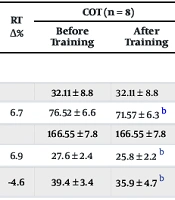
Effect of Combined Moderate-Intensity Exercise and Thyme Supplementation on the Expression of miRNA-223 and miRNA-146 and Some Metabolic Variables in Women with Overweight/Obesity
Azizi Emarati AH, Minasian V, Hovsepian S, Rahmati M. Effect of Combined Moderate-Intensity Exercise and Thyme Supplementation on the Expression of miRNA-223 and miRNA-146 and Some Metabolic Variables in Women with Overweight/Obesity. Zahedan J Res Med Sci. 2026;28(3):e172076. doi: https://doi.org/10.5812/zjrms-172076
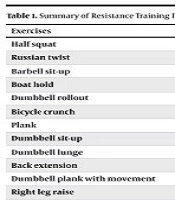
Comparison of the Effects of Resistance and Combined Training Methods on Lipid Profile, Levels of miRNA-192a and miRNA-122 in Women with Overweight/Obesity
Ghanbari H, Minasian V, Hovsepian S, Rezaee Z. Comparison of the Effects of Resistance and Combined Training Methods on Lipid Profile, Levels of miRNA-192a and miRNA-122 in Women with Overweight/Obesity. Zahedan J Res Med Sci. 2026;28(1):e165621. doi: https://doi.org/10.5812/zjrms-165621

Effects of Concurrent Strength and Aerobic Training on Blood Glucose Homeostasis and Lipid Profile in Females with Overweight and Obesity
Shabani R, Jalali Z, Nazari M. Effects of Concurrent Strength and Aerobic Training on Blood Glucose Homeostasis and Lipid Profile in Females with Overweight and Obesity. Zahedan J Res Med Sci. 2018;20(4):e13746. doi: https://doi.org/10.5812/zjrms.13746
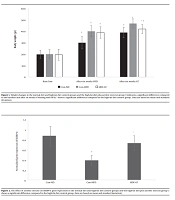
The Effect of Aerobic Exercise on SREBP-1c Gene Expression in Skeletal Muscle in Obese Female Rats
Eftekharzadeh M, Atashak S, Azarbayjani MA, Moradi L, Rahmati-Ahmadabad S. The Effect of Aerobic Exercise on SREBP-1c Gene Expression in Skeletal Muscle in Obese Female Rats. Thrita J Neu. 2023;12(1):e138382. doi: https://doi.org/10.5812/thrita-138382
Comparison of Moderate and High-Intensity Interval Training for Plasma Levels of Orexin-A, Insulin, and Insulin Resistance in Women with Overweight/Obesity
Allahverdi H, Minasian V, Hovsepian S. Comparison of Moderate and High-Intensity Interval Training for Plasma Levels of Orexin-A, Insulin, and Insulin Resistance in Women with Overweight/Obesity. Zahedan J Res Med Sci. 2022;24(3):e115748. doi: https://doi.org/10.5812/zjrms-115748
More by these authors
- Scopus by DOI: 0
Last Update: 1 week ago
- Scopus by Title: 0
Last Update: 1 week ago
- Scopus by Title (Ref): 0
Last Update: 1 week ago
- CrossRef: 0
Last Update: 6 days ago
- OpenAlex: 0
Last Update: 6 hours ago
- OpenCitations: 0
Last Update: 4 days ago
