Fulltext
Full Text Available is PDF
Image Credit:Multidiscip Cardio Annal
Authors
Defects are classified according to their location within the septum (muscular, perimembranous, or supracrystal). The most common type is the perimembranous VSD (around 70%).
Indications for VSD closure are symptoms of heart failure, signs of left heart chambers volume overload, or a history of endocarditis. In patients with a volume overload of the left heart, closure is necessary to prevent pulmonary arterial hypertension, ventricular dysfunction, and arrhythmias.
The surgical approach is considered to be the gold standard, but it is associated with morbidity and mortality and the use of CPB . Percutaneous techniques have been developed to reduce the impact of such drawbacks of surgery. The attractiveness of percutaneous closure lies in the avoidance of cardiopulmonary bypass and sternotomy, a shorter hospital stay, and decreased cost.
The most significant complication is complete atrioventricular block (4-5%). The only variable significantly associated with the occurrence of this complication was age at the time of the procedure. In contrast, iatrogenic complete heart block after surgical VSD closure occurs in less than 1%. Equally, periventricular device closure of VSDs without cardiopulmonary bypass (CPB) under trans esophageal (TEE) or epicardial echocardiography guidance yields a low risk for rhythm disorders.
Different devices have been used for transcatheter VSD closure: AMPLATZER perimembraneous or muscular VSD occluders, Cardio -SEAL devices. Other devices have been used "off-label" to close muscular as well as perimembranous VSDs, including the buttoned device, detachable coils and the Amplatzer Septal Occluder.
However, these devices as well as the approved Cardio-SEAL device were designed for different indications and as such are not generally adapted to suit the very different anatomical and morphological parameters (such as septal thickness) that are encountered with muscular VSDs
© 2015, Multidisciplinary Cardiovascular Annals. This open-access article is available under the Creative Commons Attribution-NonCommercial 4.0 (CC BY-NC 4.0) International License (https://creativecommons.org/licenses/by-nc/4.0/), which allows for the copying and redistribution of the material only for noncommercial purposes, provided that the original work is properly cited.
OMRANI G. Comparison of VSD closure with single patch and flap valve patch in VSD patients with systemic pulmonary hypertensin at Rajaie Heart center. Multidiscip Cardio Annal. 2008;2(1):e8695. doi:
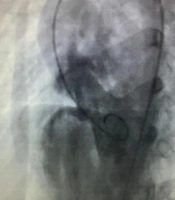
Mortezaeian H, Farshidgohar M, Vesal A, Alizadeh B, Khalili Y, et al. Long-Term Follow-up of Transcatheter Ventricular Septal Defect Closure in Children, and Comparison of Single-Hole Versus Multi-holes Ventricular Septal Defects. Inn J Pediatr. 2022;32(6):e129278. doi: https://doi.org/10.5812/ijp-129278
Sadeghpour Tabaee A. Atrial septal defect (ASD), device or surgical closure ?. Multidiscip Cardio Annal. 2008;2(2):e8712. doi:
Saedi S, Parsaee M. Intramural Ventricular Septal Defect. Int J Cardiovasc Pract. 2017;2(3):e130066. doi: https://doi.org/10.21859/ijcp-020304
Mirzaaghayan MR, Aghaei Moghadam E, Dehestani A, Ghamari A. Early Surgical Closure of the Ventricular Septal Defects; to Be Done or Not to Be Done? A Question to Be Answered. Inn J Pediatr. 2018;28(6):e58876. doi: https://doi.org/10.5812/ijp.58876
Last Update: 1 week ago
Last Update: 1 week ago
Last Update: 1 week ago
Last Update: 4 hours ago
Last Update: 7 hours ago
Last Update: 5 days ago