
Fulltext
-
Medical-Surgical Nursing Journal
 Tooran Bagheri1, Mohammad Javad Fatemi2,*, Seyed Abouzar Hosseini1, Mohsen Saberi1, Mitra Niazi1, Mahnoush Momeni1, Zahra Masoumi1
Background: Burn is among the problems, which leads to numerous health and financial side effects for the patients and their families. The high costs of new dressings and burn rehabilitation have resulted in the increased tendency of researchers toward using complementary therapies and cost-effective ingredients such as honey with natural origin. Regarding this, the aim of this study was to compare the effect of topical use of honey and Nitrofurazone ointment on superficial second-degree burn healing.
Methods: This clinical trial was conducted on 50 patients with superficial second-degree burns referring to Yaftabad Hospital, Tehran, Iran, during 2013-2015. The participants were selected using the convenience sampling method, and then randomly assigned into two groups. The wounds were dressed daily until complete wound healing, with organic honey in one group and Nitrofurazone ointment and sterile gauze in the other group. For the purpose of the study, the two groups were compared in terms of such factors as pain intensity (for the first week), antibacterial activity (for the first week), histopathological parameters (14 days later), wound healing, and wound scar (6-12 months later). The comparisons were made through the visual analogue scale, laboratory culture results, pathologist’s ratings, daily photographs, and Vancouver Scar Scale, respectively. The data were analyzed using the SPSS software version 21 by the t-test and Chi-square test.
Results: According to the results, the patients’ pain intensity gradually decreased in both groups of honey (P<0.001) and Nitrofurazone (P<0.001) treatments and the pain intensity results showed better improvement in the honey group. Nevertheless, there was no significant difference between the two groups in this regard (P>0.05). Furthermore, the two groups showed no significant differences in terms of the epithelialization rate (P=0.52), inflammatory cells (P=0.71), vascularization (P=0.79), repair duration (P=0.43), and scar score (P=0.28).
Conclusion: As the findings of the present study indicated, honey and Nitrofurazoneon had comparable effects on the healing of second-degree burns (i.e., partial thickness) with less extended area. However, further studies are needed for the replacement of Nitrofurazone with honey.
© 2030, Author(s). This open-access article is available under the Creative Commons Attribution 4.0 (CC BY 4.0) International License (https://creativecommons.org/licenses/by/4.0/), which allows for unrestricted use, distribution, and reproduction in any medium, provided that the original work is properly cited.
heydari M. Comparing the effect of dressing with silver sulfadiazine 1% or fundermol herbal ointments on pain management in patients with second-degree burn. Med Surg Nurs J. 2013;2(1 And 2):e87606. doi:

Saremi Z, Yari R, Khodadadi I, Tabatabaei SM. The Combined Effects of Nano-Zinc, Nano-Albumin and Honey in Healing Wounds Caused by Third-Degree Burn in Male Mice. J Skin Stem Cell. 2016;3(4):e66329. doi: https://doi.org/10.5812/jssc.66329
Rabat Sarpooshi H, Vaheb M, Tabarayee Y, Vahidi Sabzevar A, Mortazavi F. The effects of topical vitamin C solution on the necrotic tissue volume of burn wounds. J Nurs Midwifery Sci. 2016;3(3):e141223. doi: https://doi.org/10.18869/acadpub.jnms.3.3.11
Azadi M, Foruozandeh H, Karami L, Khodayar MJ, Rashidi Nooshabadi M, et al. Comparing the Effect of Visceral Fat and Barley Seed Ash (Hordeum Vulgare L) With Silversulfadiazine on Burn Wound Healing in Rats. Jundishapur J Nat Pharm Prod. 2015;10(1):e20670. doi: https://doi.org/10.17795/jjnpp-20670
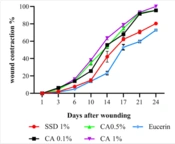
Alizadeh Haghighi M, Latifi A, Nourian A, Tamri P. Comparison of the Effects of Cinnamic Acid and Silver Sulfadiazine on Deep Second-degree Burns in Rabbits. J Skin Stem Cell. 2024;11(1):e145290. doi: https://doi.org/10.5812/jssc-145290
Last Update: 21 hours ago
Last Update: 21 hours ago
Last Update: 21 hours ago
Last Update: 1 day ago
Ordering Reprints
Articles are published under the Creative Commons license stated on each article. No permission or royalty fee is required for uses permitted by that license. CCC handles optional bulk and customized reprint orders. Any quotation covers production and delivery services only, not copyright permission. > Request Reprints from CCC
Author(s):