Fulltext
-
Image Credit:Med Surg Nurs J
Authors
Introduction: Nurses' participation in clinical affairs improves patient care and reduces costs. Also, the lack of correct and timely decisions can prolong the treatment and care for patients and create problems. The aim of study was to determine the effect of nurses' participation in patient weaning from mechanical ventilator and on its outcomes on patients hospitalized in intensive care units in Esfahan Al-Zahra Hospital.
Materials and Method: This is a clinical trial in which 50 patients connected to mechanical ventilators for more than 48 h were selected through convenient sampling and were randomly divided into two groups of 25 subjects. In the Intervention group patients were prepared for weaning by trained nurses three times in every 24 hours using Burn’s wean assessment program in three shifts. Control group weaning followed the conventional care unit procedures. Findings were analyzed using descriptive and inferential statistical methods (t-test, chi-square and Fisher's exact).
Results: The findings showed that length of MV (P=0.03), length of staying time in intensive care units (P=0.006) and the weaning failure from mechanical ventilator (P=0.01) were all significantly different in the two groups however, the average arterial oxygen saturation 2 hours after removal from mechanical ventilation was not significantly different between intervention and control group.
Conclusion: The results showed that nurse participation in the weaning process of the patients from mechanical ventilator is a safe method in day time and shortens the length of MVT and length of staying in ICU and, reduces the weaning failure compared to the conventional methods.
© 2012, Author(s). This open-access article is available under the Creative Commons Attribution 4.0 (CC BY 4.0) International License (https://creativecommons.org/licenses/by/4.0/), which allows for unrestricted use, distribution, and reproduction in any medium, provided that the original work is properly cited.
Mahmoudi M, Hekmatpou D, Khajeh Goodary M, Vakilian P, Rafiei F, et al. Comparison of the effects of two weaning methods of spontaneous breathing trial and synchronized intermittent-mandatory ventilation on the physiological indices of patients with mechanical ventilation. Med Surg Nurs J. 2016;4(4):e68077. doi:
Yaghoubinia F, Nasir-al-din Tabatabaei SM, Jahantigh M, Mohammadi P. Impact of Care Program on Ventilator-Associated Pneumonia Incidence: A Clinical Trial. Med Surg Nurs J. 2030;5(4):e67933. doi:
karimi Z, Molavynejad S, Jahani S, Rashidi M, Saki Malehi A. Effect of pain control algorithm on pain intensity and duration of patients’ connection to the ventilator. koomesh. 2021;23(5):e153289. doi:
Arabnejad H, Ebadi A, Ahmadinejad M, Jonid Jaffari N, Tadrisi SD, et al. The Combination Strategy to Reduce Early Ventilator Associated Pneumonia. Arch Clin Infect Dis. 2011;6(4):. doi:
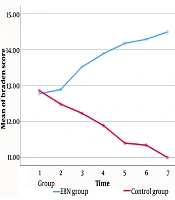
Yari M, Adineh M, Rezaie M, Haghighizadeh MH. The Effects of an Evidence-Based Nursing Care Program on Treatment Outcomes of Intensive Care Unit Patients: A Quasi-Experimental Study. J Nurs Midwifery Sci. 2026;13(3):e172175. doi: https://doi.org/10.5812/jnms-172175
Last Update: 1 week ago
Last Update: 1 week ago
Last Update: 1 week ago
Last Update: 2 hours ago
Last Update: 6 hours ago
Last Update: 5 days ago