
1. Background
Childhood plays an important role in human development (1). Child development indicates the improvement of the child in all areas of human functioning; social and emotional, cognitive, communication, and movement (2). Developmental delay can occur in various aspects, including motor (gross and/or fine motor problems), communication, and cognitive delays comprising delay in socio-personal and problem-solving skills (3, 4).
Children with developmental delays are at higher risk of poor health, and lower educational attainment and wellbeing than the normal ones (2). The prevalence of developmental disorders varies worldwide and is significant, even in developed countries (1). However, developmental difficulties during early childhood are increasingly documented in low- and middle-income countries as the most common causes of morbidity in both children and adults (2). According to a systematic global analysis, about 52.9 million children under five years had developmental disabilities in 2016, and 95% of them lived in low- and middle-income countries (5). Results of a survey in 18 low- and middle-income countries indicated that about 23% of children (3% - 48%) within the age range of 2 - 9 years had disability (6). The prevalence of developmental disorders among children aged 4 - 60 months in Iran, as a middle-income country, was reported 7% - 22.4% (1).
Various studies are performed to find the effective factors of developmental delay in children (1). Socioeconomic status (SES) is one of the most studied issues in the field of child development, which is usually measured through family income status, parental education level, and occupational status (7). Different studies in diverse contexts mentioned SES as an effective factor in child development (4, 8, 9). According to a systematic review of 155 articles in Iran, SES was mentioned as one of the major risk factors of developmental disorder (1). In other words, the risk of overall developmental delay was associated with low SES, and decreased SES was associated with the risk of delay in fine motor, communication, problem-solving, and personal-social skills (4). However, Coleman studied 124 preschool-aged children with cerebral palsy and found no relationship between developmental delay and the two variables of SES (10).
2. Objectives
The current study aimed at determining the effect of socioeconomic status on different domains of child development at the age of 60 months.
3. Methods
The current prospective cohort study was conducted in Shiraz, Iran, from summer 2011 to the end of 2016 to evaluate the association between the socioeconomic status of family and developmental skills of children. Therefore, mothers registered in the Fars Birth Cohort (FBC) study and lived in Shiraz were called (11). In the phone call, the importance of detecting developmental delay in kids was explained, and mothers were asked to bring their kids to the FBC Clinic for evaluation. The children were also interviewed by a trained nurse in order to evaluate their developmental skills.
The current study protocol was approved by the Ethics Committee of Shiraz University of Medical Sciences (ethical code: IR.sums.med.rec.1397.373). Mothers were also reassured of the confidentiality of the information.
3.1. Data Gathering Instrument
3.1.1. SES Checklists
Since it was aimed at assessing the socioeconomic context in which the children were brought up, the study used the SES data in the second phase of the study recorded when the babies were two months old.
A checklist comprised of two parts was employed; social and economic. The social part included the parents’ education level and occupational status. Also, it was asked if the parents’ occupation was part-time, full-time, or shift work. In the economic checklist, 25 questions were asked about the families’ level of income, assets including movable and immovable properties, and the travels the family had in the two years prior to the interview.
3.1.2. Children’s Information
The communication development status of children was assessed using the ages and stages questionnaire (ASQ) for 60-month-old children (12) validated in Iran (13, 14). The children were interviewed by a trained nurse in the presence of their mothers in a private room. The children’s medical history was also obtained, considering its role in children’s development. The children were considered to have a delay in any of the five skills if they were two standard deviations below the cutoff point mentioned by Yaghini et al. (14), and Soltani et al. (13). To make it more tangible, fine and gross motor skills were considered as motor domain and social and problem-solving skills as the cognitive domain.
3.1.3. Mothers’ Information
Considering the confounding effect of the mother’s medical history on the child’s development, some questions were asked whether the mother used psychiatric medication for more than six months since giving birth to the child. Moreover, it was asked about the history of stillbirth, any deceased children, presence of children with congenital anomalies and/or non-communicable diseases, including diabetes type 1, attention deficit hyperactivity disorder, etc.
3.1.4. Statistical Methods
SES was determined using 25 variables as mentioned above. At first, multiple imputations with 10 replications were implemented to impute missing values among some of the variables. It was not appropriate to apply the principal component analysis (PCA) since less than 10% of the total variation was expressed by PCA. Then, at the second step, partitioning around medoid (PAM) was utilized to cluster individuals in three clusters of low, moderate, and high SES. PAM clustering handles different kinds of variables (nominal, ordinal, or scale) in clustering and is also very robust against outliers. Clustering was performed in all of the 10 datasets and each individual was categorized into a cluster with maximum relative frequency among the 10 datasets. Descriptive statistics, univariate analysis including chi-squared test and ANOVA, logistic regression analysis, and multiple imputations were performed with SPSS 19.0 and PAM clustering with R 3.5.0 software. P value < 0.05 was considered as statistically significant and variables with P < 0.20 in univariate analysis were entered in the logistic regression.
4. Results
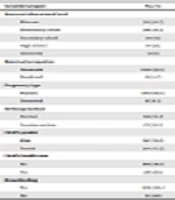
Of the 640 mothers participating in the current study, the majority were homemakers (82.8%), non-smoker (56.7%), and had high school diplomas (38.9%) (Table 1). The mean age and average length of marriage were 33.7 ± 4.6 and 11.1 ± 4.9 years, respectively. Based on the results of PAM clustering, 92 (14.4%) participants were categorized as high, 506 (79.1%) as moderate, and 42 (6.6%) as low SES; 106 (16.56%) children had a delay in at least one developmental domain; delayed communication skills were observed among 79 (12.3%) children, and 20 (3.1%) and 23 (3.6%) children were diagnosed with delay in motor skills and cognitive domain, respectively.
Table 1.
Demographic Characteristics of the Parentsa
| Characteristic | Values |
|---|---|
| Mother’s education level | |
| Below high school diploma | 162 (25.3) |
| High school diploma | 249 (38.9) |
| Academic degree | 229 (35.8) |
| Mother’s job | |
| Homemaker | 530 (82.8) |
| Part-time | 32 (5.0) |
| Full-time | 53 (8.3) |
| Shift work | 25 (3.9) |
| History of child death | |
| No | 636 (99.4) |
| Yes | 4 (0.6) |
| History of abortion | |
| No | 440 (68.8) |
| Yes | 200 (31.3) |
| Mother’s history of smoking | |
| No | 363 (56.7) |
| Yes | 277 (43.3) |
| Father’s education level | |
| Below high school diploma | 193 (30.2) |
| High school diploma | 233 (36.4) |
| Academic degree | 214 (33.4) |
| Father’s job | |
| Unemployed | 22 (3.4) |
| Part-time | 25 (3.9) |
| Full-time | 214 (33.4) |
| Shift work | 379 (59.2) |
| History of stillbirth | |
| No | 637 (99.5) |
| Yes | 3 (0.5) |
| Having children with specific diseasesb | |
| No | 499 (78.0) |
| Yes | 141 (22.0) |
| Having children with congenital abnormalities | |
| No | 637 (99.5) |
| Yes | 3 (0.5) |
aValues are expressed as No. (%).
bSpecific diseases: Down syndrome, polymyositis, and autism.
The current study results showed that the parents’ education level (P < 0.001) and mother’s occupational status (P = 0.02) were significantly associated with delayed communication skills in children. Indeed, the prevalence of delay in motor skills was significantly higher among the children whose mothers had a history of abortion (5.5% versus 2.0%, P = 0.03). Also, delay in communication skills was significantly more prevalent among children whose mothers and fathers had a low educational level (P = 0.02 and 0.048, respectively). However, no significant association was observed between the delay in social and problem-solving skills and the demographic characteristics of the mothers (Table 2).
Table 2.
the Association Between Delay in Communication, Motor, and Social Skills, and the Studied Characteristicsa
| Characteristic | Delay in Communication Skills (N = 79) | P Value | Delay in Motor Skills (N = 20) | P Value | Delay in Social or Problem-Solving Skills (N = 23) | P Value |
|---|---|---|---|---|---|---|
| Mother’s education level | < 0.001 | 0.02 | 0.13 | |||
| Below high school diploma | 23 (14.2) | 10 (6.2) | 6 (3.7) | |||
| High school diploma | 5 (2.0) | 7 (2.8) | 13 (5.2) | |||
| Academic degree | 51 (22.3) | 3 (1.3) | 4 (1.7) | |||
| Father’s education level | < 0.001 | 0.048 | 0.16 | |||
| Below high school diploma | 68 (12.4) | 11 (5.7) | 11 (5.7) | |||
| High school diploma | 1 (0.4) | 5 (2.1) | 7 (3.0) | |||
| Academic degree | 54 (25.2) | 4 (1.9) | 5 (2.3) | |||
| Mother’s job | 0.02 | 0.95 | 0.47 | |||
| Homemaker | 57 (10.8) | 17 (3.2) | 18 (3.4) | |||
| Part-time | 9 (28.1) | 1 (3.1) | 1 (3.1) | |||
| Full-time | 9 (17.0) | 2 (3.8) | 2 (3.8) | |||
| Shift work | 4 (16.0) | 0 (0) | 2 (8.0) | |||
| Father’s job | 0.07 | 0.39 | 0.08 | |||
| Unemployed | 2 (9.1) | 1 (4.5) | 1 (4.5) | |||
| Part-time | 6 (24.0) | 0 (0) | 0 (0) | |||
| Full-time | 33 (15.4) | 4 (1.9) | 3 (1.4) | |||
| Shift work | 38 (10.0) | 15 (4.0) | 19 (5.0) | |||
| History of deceased child | 0.99 | 0.99 | 0.99 | |||
| No | 79 (12.4) | 20 (3.1) | 23 (3.6) | |||
| Yes | 0 (0) | 0 (0) | 0 (0) | |||
| History of stillbirth | 0.99 | 0.09 | 0.10 | |||
| No | 79 (12.4) | 13 (3.0) | 22 (3.5) | |||
| Yes | 0 (0) | 1 (33.3) | 1 (33.3) | |||
| History of abortion | 0.10 | 0.03 | 0.99 | |||
| No | 48 (10.9) | 9 (2.0) | 16 (3.6) | |||
| Yes | 31 (15.5) | 11 (5.5) | 7 (3.5) | |||
| History of smoking in the mother | 0.60 | 0.36 | ||||
| No | 47 (12.9) | 9 (2.5) | 9 (2.5) | 0.09 | ||
| Yes | 32 (11.6) | 11 (4.0) | 14 (5.1) | |||
| Children with specific diseasesb | 0.32 | 0.99 | ||||
| No | 65 (13.0) | 20 (3.1) | 23 (3.6) | 0.99 | ||
| Yes | 14 (9.9) | 0 (0) | 0 (0) | |||
| Mother’s history of using psychiatric medication | 0.11 | 0.99 | ||||
| No | 69 (11.7) | 19 (3.2) | 23 (3.9) | 0.24 | ||
| Yes | 10 (19.2) | 1 (1.9) | 0 (0) | |||
| SES | 0.049 | 0.63 | ||||
| High | 5 (5.4) | 3 (3.3) | 5 (5.4) | 0.40 | ||
| Moderate | 66 (13.0) | 15 (3.0) | 16 (3.2) | |||
| Low | 8 (19.0) | 2 (4.8) | 2 (4.8) |
Abbreviation: SES, socioeconomic status.
aValues are expressed as No. (%).
bSpecific diseases: Down syndrome, polymyositis, and autism
A significant association was found between delay in communication skills and SES since mothers with a low level of SES were more likely to have children with delay in communication skills (19.0% versus 13.0% for mothers with a moderate level of SES and 5.4% for mothers with a high level of SES, P = 0.048). However, no association was found between motor skills and cognitive skills with SES (P = 0.63 and 0.40, respectively).
The logistic regression model was fitted to assess the simultaneous effect of variables on delay in children’s communication skills; results are summarized in Table 3. The study findings showed that after controlling other confounders, the relative risk of delay in communication skills was 3.7 times higher among children in the moderate level of SES and almost 10 times higher among children in the low level of SES compared with the ones in the high level of SES.
Table 3.
Results of Logistic Regression Model to Assess Factors Affecting Developmental Delay in Communication Skills of Children
| Variable | RR | 95% CI | P Valuea |
|---|---|---|---|
| SES | |||
| High | Baseline | ||
| Moderate | 3.70 | 1.32, 10.40 | 0.01 |
| Low | 9.96 | 2.48, 40.06 | 0.001 |
| Mothers’ education level | |||
| Below high school diploma | Baseline | ||
| High school diploma | 0.11 | 0.03, 0.35 | < 0.001 |
| Academic degree | 1.01 | 0.39, 2.66 | 0.98 |
| Fathers’ education level | |||
| Below high school diploma | Baseline | ||
| High school diploma | 0.03 | 0.004, 0.27 | 0.001 |
| Academic degree | 2.24 | 0.88, 5.70 | 0.09 |
Abbreviations: CI, Confidence interval; RR, relative risk; SES, socioeconomic status.
aP value less than 0.05 was considered significance.
5. Discussion
To investigate the effects of SES on different domains of child development at age 60 months, 640 children whose information was recorded by the FBC study (11) were enrolled in the current study.
The current study results showed that 16.56% of children had delays in at least one developmental domain. Similarly, Karami et al. (15), reported the developmental delay prevalence of 16.3% in one-year-old children in Khorramabad City, Iran. The results of a study in Tehran, Iran reported the prevalence of developmental delay among children aged 4 - 60 months as 18% (16); their results were within the reported range for Iranian children, 7% - 22.4% (1).
Moreover, a significant association was observed between SES and communication skills in the current study; the lower the SES, the higher the delay in communication skills. Even after controlling other confounders, the risk factor of delay in communication skills was higher among children in the low level of SES compared with the ones in the high level of SES. This result was consistent with that of an earlier study showing an association between decreased level of SES and increased risk of delay in the developmental domains such as communication (4).
Amongst the main developmental domains, delay in communication skills was the most commonly observed among 12.3% of the studied children. An earlier study on 129 Peruvian children also mentioned communication problems as the most prevalent delay (17). However, some studies in Iran described other dimensions as the most common (16, 18, 19); for example, Moraveji et al. (18), mentioned the gross motor delay as the most prevalent delay in 4-60-month-old children of Kashan, while problem-solving was the most prominent dimension among children in Isfahan (19). A probable reason could be a difference in the age range of the samples; children of 4 - 60 months in comparison with 60-month ones in the current study.
The mother’s education level was also associated with children’s communication skills. In comparison with mothers with an education level below high school diploma, children of those with high school diploma were at a lower risk of delay in communication skills. However, the academic degree of the mother had no relationship with the child’s communication skills.
The current study results showed that parents’ education level and mother’s occupational status were significantly associated with delays in children’s communication skills. It was consistent with Ryan-Krause et al. (20) findings pointing at the low level of parental education as an effective factor in children’s development. Moraveji et al. (18), also reported the relationship between the mother’s job and developmental delay in 4-60-month-old children. Similarly, Shaahmadi et al., revealed that mothers’ education level and occupational status were the factors contributing to developmental delay in children (21).
Certainly, the prevalence of delay in gross and fine motor skills was also associated with parental low level of education. Comuk-Balci et al. (22), similarly investigated that a higher level of mother’s education was associated with the earlier achievement of fine motor skills, especially in children older than 24 months. Fallah et al. (21), also declared that a low level of maternal education increased fine motor delay. Moreover, delay in motor skills was significantly higher among the children whose mothers had a history of abortion. Previous findings also confirmed that habitual abortions and maternal medical disorders in pregnancy had associations with developmental delays in children (23).
Overall, the current study revealed an association between delay in communication skills and SES. Mothers with a low level of SES were more likely to have children with delays in communication skills. Besides, the results did not show any association between gross/fine and problem-solving/social skills with SES, which was not in line with previous findings (18). The discrepancy may be due to the low prevalence of delay in cognitive and motor skills of the studied children in comparison with communication skills and also differences in demographic characteristics of the subjects.
As shown in the current study, delay in communication skills was more prevalent among children brought up in families with a low level of SES than the ones in middle SES families. Due to the importance of communication skills in children’s socialization, more attention should be paid to the SES of the families with preschool kids. It seems quite reasonable if health policymakers put more emphasis on the communication skills of kindergarten and preschool children.