
1. Background
Recurrent miscarriage poses significant challenges for both physicians and affected couples. Defined as the loss of pregnancy before the 20th week, recurrent miscarriage refers to experiencing two or three consecutive miscarriages before the 20th week of gestation (1, 2), excluding ectopic pregnancies and those diagnosed solely through biochemical markers (1-3). The American Society of Reproductive Medicine (ASRM) defines two or more miscarriages as recurrent and recommends thorough examinations after each miscarriage, with a comprehensive evaluation after three consecutive miscarriages (4). Risk factors for miscarriage include maternal age (both younger than 18 and older than 35), parity, and previous abortion history (5). While 50% of recurrent miscarriages (RM) lack a specific etiological factor and are labeled as idiopathic, the remaining cases are attributed to various factors, including anatomical, immunological, genetic, endocrine, thrombophilia, and environmental factors (6, 7).
Recurrent miscarriage significantly impacts women of childbearing age, causing stress, diminishing hope for successful pregnancies, and affecting marital life. While chromosomal disorders are the leading cause of miscarriage, accounting for 75% of cases, diminished egg quality and genetic predisposition associated with low anti-Mullerian hormone (AMH) levels are also significant factors (1, 6).
Recent studies have indicated an association between AMH levels and recurrent miscarriage, particularly in cases of recurrent idiopathic miscarriage (1). Although these findings suggest the potential utility of AMH testing in the diagnostic evaluation of RM, the key question whether the AMH test reliably predicts pregnancy outcomes in these patients (1).
While the impact of AMH serum levels on pregnancy outcomes in women with RM remains a topic of debate across various studies (7, 8), there is a pressing need to investigate the hormone's role in predicting pregnancy outcomes, including miscarriage and the likelihood of live birth.
Unlike follicle-stimulating hormone (FSH), which requires measurement on specific days of the menstrual cycle, AMH levels can be assessed on any day of the month. The decline in AMH levels with advancing age indicates a decrease in ovarian function, potentially signaling reduced fertility (9).
Given that a significant proportion of miscarriages (ranging from 5% to 75%) are attributed to fetal chromosomal abnormalities associated with diminished egg quality, coupled with evidence of increased chromosomal abnormalities in fetuses of couples with RM, it appears reasonable to explore whether serum parameters in reproductive-age women can predict future outcomes, particularly live birth rates and the recurrence of miscarriage in those with idiopathic recurrent miscarriage (IRM).
2. Objectives
Currently, assessing ovarian function through blood AMH levels is considered the most reliable method. Therefore, here, baseline levels of ovarian hormones, including FSH, luteinizing hormone (LH), estradiol, and follicular phase AMH, were measured, and patients were subsequently monitored to assess the correlation between decreased AMH levels and pregnancy outcomes.
3. Methods
This study utilized a prospective cohort approach within the infertility department of Shariati Hospital. The research adhered to the principles outlined in the Helsinki Declaration for Medical Research involving Human Subjects and received approval from the local ethics committee (IR.TUMS.MEDICINE.REC.1398.197) at Tehran University of Medical Sciences. Written consent was obtained from all participants after providing them with comprehensive information about the study's objectives. Participants were only included after confirming their willingness to participate through signed informed consent forms.
The sample size for this study was determined through a census, encompassing all women under the age of 38 who presented to Shariati Hospital in Tehran city during 2020 - 2021 with recurrent idiopathic miscarriages, excluding other abortion causes.
All included women underwent normal hysteroscopy and hysterosalpingography (HSG), had parents with normal karyotypes, and exhibited normal results in hormonal tests, including TSH, prolactin, androstenedione, 17-hydroxyprogesterone, DHEAS, diabetes, HbA1c evaluation, antiphospholipid evaluation, and antibody (IgG, IgM) evaluation of Cardiolipin (CL) antibody (Igh, IgM), and beta-glycoprotein-1 antibody. Additionally, they showed no signs of PCOS (10), congenital adrenal hyperplasia, androgen-secreting tumors, Cushing syndrome, male infertility, tubal pathologies, anovulation, hyperprolactinemia, hypothalamic amenorrhea, previous ovarian surgery, ovarian tumors, anatomical abnormalities of the uterine cavity, intraperitoneal adhesions, endometriosis, other pelvic pathologies (11), thyroid dysfunction, other endocrinological disorders such as diabetes mellitus, recurrent pregnancy loss (12), autoimmune diseases, or genetic disorders (6).
Since AMH levels are routinely measured in all patients referred to the infertility clinic with recurrent miscarriage, and other tests are conducted to rule out causes of miscarriage, patients did not incur any additional costs in this study. Patients undergoing ovulation stimulation cycles or receiving IVIG were excluded from the study (13).
Patients with AMH levels less than 1.1 mg/cc were classified as the poor responder group. All patients with recurrent miscarriage received a combined regimen of Prednisolone (20 mg) daily and Utrogestan Vaginal 100 suppositories twice a day, starting from the beginning of pregnancy until fetal heart activity was detected, followed by gradual tapering (14). Additionally, they were prescribed aspirin and folic acid from the decision for pregnancy until 36 weeks, which was routinely administered to all participating patients. Pregnancy outcomes were evaluated over a two-year period.
3.1. Statistical Analysis
Statistical analyses were conducted using the SPSS software package, version 26.0 (SPSS, Chicago). Univariate and multiple logistic regression models were applied to analyze the data. Relative risks (RR), odds ratios (OR), and 95% confidence intervals (95% CI) are reported. P-values < 0.05 were considered significant.
4. Results
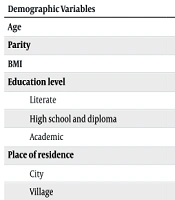
A total of 128 patients with an average age of 36.4 ± 3.91 years were included in the study. Among them, 80 patients became pregnant, while 48 patients did not achieve pregnancy. Among the pregnant patients, 34 underwent termination before 26 weeks (13 ongoing and 21 clinical), while 46 patients had pregnancies lasting 26 weeks or more. The average BMI of the subjects was 26.4 ± 6.18, and the average number of abortions among the subjects was 4 ± 1.2.
The primary outcome of interest was whether women would succeed in becoming pregnant again and, if so, what the pregnancy outcome would be (abortion or live birth after ≥ 26 weeks) (Table 1).
Table 1.
Basic Characteristics of Patients and Results of Hormonal Tests
| Variables | Values a |
|---|---|
| Age at diagnosis | 36.4 ± 3.9 |
| Body Mass Index (BMI) | 24.6 ± 2 |
| Number of previous early miscarriages | 4 (3 - 4) |
| Luteinizing hormone (LH), IU/L | 5.4 ± 2.2 |
| Follicle-stimulating hormone (FSH), IU/L | 5.8 ± 1.9 |
| Estradiol, pg/mL | 98 ± 52.5 |
| Anti-Mullerian hormone (AMH), ng/mL | 1.7 ± 1.2 |
| Women who had at least one pregnancy | 80 (62.5) |
| Women who never got pregnant | 48 (37.5) |
a Values are expressed as mean ± SD or No. (%) or median (Q1 - Q3).
Subsequently, univariate and multiple logistic regression analyses were performed to predict the probability of re-pregnancy in women with IRM. Based on the results of the univariate analysis, a significant association was found between maternal age (RR = 1.23, 95% CI: 1.10 - 1.90, P = 0.001), history of abortion (RR = 1.26, 95% CI: 1.052 - 1.327, P = 0.008), and low serum AMH levels (RR = 0.752, 95% CI: 0.227 - 0.934, P = 0.035) with the risk of not achieving pregnancy again.
However, in the multiple analysis results shown in Table 2, only maternal age (RR = 1.108, 95% CI: 1.05 - 1.350, P = 0.025) and history of abortion (RR = 1.097, 95% CI: 1.02 - 1.161, P = 0.042) demonstrated a significant association with the risk of not achieving pregnancy again.
Table 2.
Results of Univariate and Multiple Regression Analysis for Pregnancy Outcome
| Variables | NO Pregnancy (n = 48) | One or More Pregnancy (n = 80) | Univariate Analysis | Multiple Analysis | ||
|---|---|---|---|---|---|---|
| RR (95% CI) | P-Value | RR (95% CI) | P-Value | |||
| Age, y | 34.8 ± 2.36 (32 - 38) | 32.62 ± 5.41 (26 - 37) | 1.23 (1.039 - 1.254) | 0.001 a | 1.108 (1.05 - 1.35) | 0.025 a |
| Body Mass Index (BMI), kg/m2 | 25.31 (23.5 - 27.1) | 24.20 (22.1 - 26.4) | 0.962 (0.902 - 1.12) | 0.355 | - | - |
| Number of previous miscarriages | 5 (3 - 6) | 3 (3 - 3) | 1.262 (1.052 - 1.327) | 0.008 a | 1.097 (1.02 - 1.161) | 0.042 a |
| Multi-pregnancy history; No. (%) | 0 (0) | 7 (8.75) | 0.662 (0.242 - 1.105) | 0.126 | - | - |
| Luteinizing hormone (LH), mIU/mL | 4.22 (3.1 - 7.50) | 5.41 (3.52 - 8.10) | 0.672 (0.815 - 1.109) | 0.445 | - | - |
| Follicle-stimulating hormone (FSH), mIU/mL | 5.35 (2.92 - 8.25) | 5.80 (3.90 - 8.0) | 1.099 (0.870 - 1.75) | 0.680 | - | - |
| Estradiol, pg/mL | 124 (61 - 192) | 90 (53 - 138) | 1.01 (0.960 - 1.030) | 0.304 | - | - |
| Anti-Mullerian hormone (AMH), ng/mL | 0.80 (0.7 - 1.6) | 1.90 (0.8 - 3.60) | 0.752 (0.226 - 0.934) | 0.035 a | 0.871 (0.721 - 1.020) | 0.061 |
a Significant.
To predict the incidence of miscarriage in women with IRM, univariate and multiple analyses were conducted only on the 80 individuals who had a history of pregnancy. For this purpose, the patients were divided into two groups: Termination over 26 weeks and termination under 26 weeks. Based on the results of the univariate analysis, there was a significant association between age, AMH serum level, and previous abortion history with the risk of miscarriage.
Also, the findings obtained from multiple analyses showed that all three factors of age, AMH, and history of previous abortion are significant in multiple analyses (respectively: RR = 1.136, P = 0.038; RR = 0.866, P = 0.043; and RR = 2.89, P = 0.015). This indicates that increasing maternal age, low AMH levels, and having a history of miscarriage increase the probability of miscarriage in subsequent pregnancies (Table 3). Additionally, univariate and multiple analyses were performed to predict live births > 26 weeks among all examined women who had the chance of live births > 26 weeks. Based on the results of the analyses conducted in the univariate model, lower age, no history of abortion (or fewer previous abortions), and higher AMH levels were associated with an increased probability of live birth in the future (Table 4). In the multiple variables analysis, it was also demonstrated that all three factors of age (RR = 0.936, 95% CI: 0.08 - 0.009; P < 0.05), history of previous abortion (P = 0.035, CI: 0.193 - 0.841; RR = 0.41), and low level of AMH (P = 0.048, 95% CI: 1.109 - 1.440; RR = 1.272) have a statistically significant association with the probability of survival > 26 weeks. In such a way, the advanced age of mothers, low AMH levels, and the history and frequency of abortion decrease live births (≥ 26 weeks), while an increase in AMH levels increases the probability of live births ≥ 26 weeks (Table 4).
Table 3.
Results of Univariate and Multiple Regression Analysis for Live Birth (≥ 26 w) in the First Pregnancy in Women with Idiopathic Recurrent Miscarriage
| Variables | Women with Miscarriage (< 26 w) (n = 34) | Women with Live Birth (≥ 26 w) (n = 46) | Univariate Analysis | Multiple Analysis | ||
|---|---|---|---|---|---|---|
| RR (95% CI) | P-Value | RR (95% CI) | P-Value | |||
| Age, y | 36.7 ± 4.12 (29 - 38) | 30.60 ± 5.36 (26 - 35) | 1.214 (1.182 - 1.521) | 0.010a | 1.136 (1.102 - 1.390) | 0.038 a |
| Body Mass Index (BMI), kg/m2 | 26.85 (23.6 - 29.2) | 24.15 (22.6 - 26.4) | 1.06 (0.900 - 1.115) | 0.381 | - | - |
| Number of previous miscarriages | 3 (3 - 4) | 3 (3 - 3) | 2.89 (1.262 - 7.59) | 0.001 a | 2.89 (1.810 - 6.38) | 0.015 a |
| Multi-pregnancy history; No. (%) | 4 (11.76) | 3 (6.52) | 1.015 (0.60 - 1.307) | 0.280 | - | - |
| Luteinizing hormone (LH), mIU/mL | 4.2 (3.0 - 7.6) | 5.7 (3.3 - 8.6) | 0.953 (0.920 - 1.015) | 0.150 | - | - |
| Follicle-stimulating hormone (FSH), mIU/mL | 5.2 (3.2 - 7.6) | 5.7 (3.5 - 7.9) | 0.934 (0.780 - 1.201) | 0.670 | - | - |
| Estradiol, pg/mL | 82 (51 - 119) | 90 (56 - 166) | 0.998 (0.900 - 1.016) | 0.490 | - | - |
| Anti-Mullerian hormone (AMH), ng/mL | 1.6 (0.6 - 3.4) | 1.5 (0.8 - 3.6) | 0.909 (0.733 - 0.989) | 0.032 | 0.866 (0.532 - 0.955) | 0.043 a |
a Significant.
Table 4.
Results Univariate and Multiple Logistic Regressions for Further Live Birth in the Women with Idiopathic Recurrent Miscarriage
| Variables | Women with a Further Live Birth (n = 46) | Women Without a Further Live Birth (n = 82) | Univariate Analysis | Multiple Analysis | ||
|---|---|---|---|---|---|---|
| RR (95% CI) | P-Value | RR (95% CI) | P-Value | |||
| Age, y | 31.38 ± 6.12 (26 - 37) | 33.15 ± 4.28 (30 - 38) | 0.0.93 (0.750 - 0.988) | 0.009 a | 0.936 (0.812-0.998) | 0.025 a |
| Body Mass Index (BMI), kg/m2 | 23.40 (21.1 - 26.6) | 24.82 (21.9 - 27.2) | 1.038 (0.890 - 1.098) | 0.560 | – | – |
| Number of previous miscarriages | 3 (3 - 3) | 3 (3 - 4) | 0.552 (0.230 - 0.906) | 0.022 a | 0.41 (0.110 - 0.770) | 0.035 a |
| Multi-pregnancy history; No. (%) | 2 (4.34) | 5 (6.09) | 0.726 (0.562 - 1.484) | 0.712 | – | – |
| Luteinizing hormone (LH), mIU/mL | 5.8 (3.6 - 8.50) | 4.9 (3.11 - 7.2) | 1.098 (0.932 - 1.323) | 0.567 | – | – |
| Follicle-stimulating hormone (FSH), mIU/mL | 6.0 (3.4 - 8.2) | 5.3 (3.1 - 7.8) | 1.094 (0.910 - 1.082) | 0.245 | – | – |
| Estradiol, pg/mL | 86 (54 - 169) | 102 (51 - 179) | 1.027 (0.980 - 1.321) | 0.478 | – | – |
| Anti-Mullerian hormone (AMH), ng/mL | 2.0 (1.1 - 3.9) | 1.2 (0.7 - 2.0) | 1.543 (1.120 - 2.25) | 0.024 a | 1.272 (1.109 - 1.440) | 0.048 a |
a Significant.
5. Discussion
One of the most critical problems in women of childbearing age is miscarriage. If miscarriage becomes recurrent, it can lead to stress, decreased hope of a successful pregnancy, and problems in the patient's married life (15). The most significant cause of miscarriage is chromosomal disorders, which account for 75% of miscarriage cases. Previous studies have shown that patients with low AMH levels are genetically prone to miscarriage, indicating that even if the mother's karyotype is normal, low AMH levels cause a decrease in ovarian function and ovarian reserve (16-18). Since the best way to assess ovarian function is to check the blood level of AMH (19), this study was designed and implemented with the aim of measuring the basal level of ovarian hormones (FSH, LH, estradiol, AMH) in the follicular phase and investigating the association between reduced AMH levels and pregnancy outcomes.
According to recent studies, AMH levels are lower in women with RM, especially those with IRM. Based on the results of this study, it appears that AMH levels in women with IRM play a significant role in predicting pregnancy complications, including miscarriage and live births ≥ 26 weeks. Overall, the results of the univariate test indicate a significant association between age, AMH serum level, and previous abortion history with the risk of miscarriage (20). Additionally, the results obtained from multiple analyses indicate that all three factors—age, AMH, and history of previous abortion—are also significant in multiple analyses (respectively: OR = 1.214, P = 0.038; OR = 0.846, p = 0.043; and OR = 3.00, P = 0.015). This suggests that an increase in maternal age, low AMH levels, and a history of abortion increase the likelihood of miscarriage in subsequent pregnancies (21).
Based on univariate and multiple analyses to predict the inability to conceive again in women with IRM, which was performed based on two groups—women with a history of pregnancy and those without—the predictive power of women's age was higher than that of AMH.
It should be noted that the level of AMH is related to follicle storage and not to the quality of eggs. This indicates that unlike age, AMH does not predict live birth after IVF. This prospective study demonstrates that a woman's age, AMH level, and the number of previous abortions have the greatest influence on predicting the final outcome of pregnancy. Overall, these findings are consistent with those of previous studies. For instance, in the Pils et al. study in 2017 regarding the association between AMH and recurrent idiopathic miscarriage, 79 patients with this disorder were examined over a 10-year period, and the findings suggested that AMH could be a valuable parameter for investigating the causes of early miscarriage in the future (3).
However, a recently published large study failed to demonstrate the effect of the number of previous abortions (22). Additionally, in 2019, a study investigated the association between AMH levels and pregnancy outcomes in patients with recurrent idiopathic miscarriages. In this study, 116 women with recurrent idiopathic miscarriages received treatment with prednisolone, ASA, folic acid, and progesterone—routine combined treatment for women with frequent abortions (22, 23). The results of this study, observed over a 42-month follow-up period, suggest that there is little to no association between AMH levels and abortion in women with recurrent idiopathic abortions (1).
Given the detrimental effect of RM on mental health, some women may prefer to avoid further abortions rather than risk giving birth to a live fetus. Based on our data, the number of previous abortions, the mother's age, and the AMH level of these patients had the highest predictive value for predicting the probability or risk of abortion.
Based on the results of previous studies, subsequent pregnancies of women with IRM are successful, and there is no difference in the prognosis of women with RM with known causes and those with IRM. As recently reported, this may be because RM pathology, which has known causes, is well treated, or because the definition of IRM is inadequate. Although it seems that birth certificate age and ovarian reserve markers are related to IRM, the reason that in some studies, including the Pils et al. study (3), an association between age and AMH level of more abortions was not included, could be due to the small sample size. However, in the above study, the authors concluded that according to the ratio of age and AMH, the effect of these factors is moderate even if examined in larger datasets. In fact, this suggests that the IRM criteria are probably flawed. Accordingly, other factors should be more important. One of the limitations of the prospective study design is that we cannot provide details of modifiable risk factors, such as alcohol consumption, heavy lifting, and night work. However, it is likely that the main focus of many affected couples is on changes to increase the likelihood of live birth in the future. The birth certificate age, the level of AMH, and the lower number of previous abortions were consistent with this result. It should be noted that this analysis also includes women who could not conceive again, and the outcome of pregnancy can be predicted in the best way according to the age of the mother and AMH. Therefore, it is logical that older biological age or birth certificate would affect this result. However, the average effect size indicates the effects of the above-mentioned factors on the prediction of miscarriage (24, 25).
5.1. Conclusions
The findings of this study indicate that AMH levels in women with IRM play a significant role in predicting pregnancy complications such as abortion and live births of 26 weeks or more. Low serum AMH was significantly associated with the risk (probability) of re-pregnancy. Overall, based on the results of the univariate analysis, there was a significant correlation between age, serum AMH levels, and the previous history of abortion with the risk of abortion. Also, the level of AMH is related to follicle storage, not to the quality of eggs. This shows that AMH, unlike age, does not predict live birth after IVF. This prospective study shows that the woman's age, AMH level, and the number of previous abortions have the greatest influence on predicting the final outcome of pregnancy.
5.2. Recommendations
Considering that this problem is primarily chromosomal, it may be concluded in the future that these patients, especially older ones, should be directed towards IVF and PGD. Testing this approach could provide valuable insights. Although some articles have concluded that PGD does not improve outcomes for patients with recurrent miscarriage, it may be applicable to some selected patients (17, 26).