
1. Background
According to the World Health Organization (WHO), (1) almost 200,000 people die worldwide from unintentional poisoning. About 84% of them occur in low- and middle-income nations. Hospitals, especially emergency departments (ED), are challenged with many admissions, affecting many hospitalizations and budgets.
According to the million suicides verified annually, the WHO estimates (1) that pesticide consumption accounts for 370,000 deaths. Snakebites are an essential public health issue in several states, resulting in 5 million incidents annually. Consequently, the world faces 2.5 million injections of venom, up to 100 000 deaths, and up to 300 000 incidents of amputations and other eternal incapacities (1).
Critical insecticide poisoning is a primary health emergency that causes notable illness and mortality. Insecticide poisoning is accountable for 14 - 20% of universal suicides and nearly 110000 - 168000 deaths annually (2).
However, severe poisoning is a great cause of morbidity and mortality globally; the magnitude of the subject, the conditions of exposure, and the categories of poisoning fluctuate in many countries (3-5).
Nevertheless, most developing states have yet to fully recognize the hazards and effects of poisoning on human well-being. One reason was the absence of inclusive national epidemiological statistics on critical poisoning (6, 7).
Epidemiological features such as geographic location, employment, socioeconomic position, and knowledge degree can considerably impact the clinical performance and effect of poisoning patients. It emphasizes the implication of continuing investigation to enhance understanding of the outline of poisoning in different regions (8).
Identifying the ingredient triggering the poisoning and the time to arrive at the hospital once exposed correlate with the patient's prognosis (9). A suitable cure, like an antidote or sanitization treatment, can be effective for several substances. Furthermore, even if an element does not mark treatment, it can aid doctors in concluding the treatment course for patients with indistinct diagnoses (10).
It is hard to define what venoms affect poisoning and if a sick person has taken poison. Corporal inspection and medical history define it. The diagnosis of herbicide poisoning frequently depends on medical history (11).
According to the extensive diversity of pollutants in poisoned individuals who reach the emergency department, sustaining a toxicology laboratory in a particular hospital is problematic because of issues with time, workforce, and budget (12).
Many countries have conducted surveys on the attributes of acute poisonings. Certain studies emphasized cases in the ED (13-23), whereas others focused on hospitals (24-29). It indicates the demographic features of the patients, the period of admittance, the substances included, the healing measures, and the outcomes.
2. Objectives
This study aimed to evaluate the socio-demographic characteristics of patients to identify aspects related to diagnosis definition and consecutive results of acute poisoning in a tertiary hospital center in Tirana, Albania.
3. Methods
This study was an explanatory-observational research, considering patient records of all poisoning-linked admissions of individuals aged ten years or older admitted to the emergency department at the University Hospital Center in Tirana, Albania. This center is a tertiary care center in Albania. Annually, the hospital offers outpatient healthcare facilities to nearly 150000 individuals, hospital maintenance to 60000 people, and emergency examinations to around 200000.
We used the recommendation for reporting the "Strengthening the Reporting of Observational Studies in Epidemiology Statement" (STROBE) (30).
The data was gathered from January 2018 to December 2019. We extracted the health records of severely poisoned patients from the registration handbook of the emergency department and the Statistical Center of the University Hospital Center in Tirana, Albania. Two well-qualified nurses extracted the essential evidence via data modeling format. A well-skilled supervisor performed the management and inspection to guarantee the wholeness and reliability of the data. We inspected all gathered data for inclusiveness and reliability through data administration and examination.
We used the statistical package SPSS version 24. We analyzed continuous variables, presenting the mean and standard deviation (SD), while the frequency and proportion were for categorical variables. We used the chi-square test for the distribution of categorical variables and Pearson Correlation to measure the strength of the linear relationship between two variables.
We obtained an ethical approval letter from the Ethical Committee of the University of Medicine in Tirana, Albania.
3.1. Inclusion Criteria
We screened for poisoning all ED (emergency department) patients with the codes for intoxication, carbon monoxide poisoning, suicide attempt, and emotional or psychosomatic motive to avoid administering patients who had a different complaint but were intoxicated.
We encoded T36-T50 (intoxication by drugs, medicines, and biological materials) or T51-T65 (poisonous outcomes of constituents mainly non-therapeutic as to basis) of the International Classification of Diseases (ICD-10) as the goal for admittance in our study. Autonomously, for every admission comprised, two researchers reflected on whether inclusion was acceptable.
4. Results
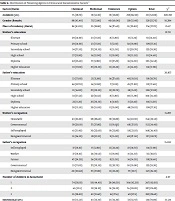
We assessed 200 patients' medical records. Among these records, we compiled 157 patients' medical records with comprehensive evidence in the ultimate study. The predominant age group was 21 to 30 years, involving 22.3% of the participants. The mean age of contributors was 34.2 years (SD 12.3). We noticed that 52.87% were female. Regarding the birthplace, 76 (48.4%) individuals were from middle Albania. Most participants, 108 (68.8 %), lived in rural areas. The diagnosis of poisoning was 56.69% from phostoxin and phosphoro-organics, followed by 11.46% from multi-drug intoxication. Oral absorption was the usual route of poisoning that arose in 105 participants (66.87%) (Table 1).
Table 1.
Socio-Demographic Features of Participants
| Category | Values a |
|---|---|
| Age group | |
| 10 - 20 years old | 15.9 |
| 21 - 30 years old | 22.3 |
| 31 - 40 years old | 16.6 |
| 41 - 50 years old | 18.5 |
| 51 - 60 years old | 17.2 |
| 61 - 70 years old | 3.2 |
| 71 - 80 years old | 5.7 |
| 81 - 90 years old | 0.6 |
| Gender | |
| Male | 47.13 |
| Female | 52.87 |
| Place of residence | |
| Rural | 108 (68.8) |
| Urban | 49 (31.2) |
| Civil status | |
| Single | 110 (70.06) |
| Married | 47 (29.94) |
| Economic status | |
| Low | 84 (53.5) |
| Middle | 65 (41.4) |
| High | 8 (5.1) |
| Education | |
| Literate | 63 (40.2) |
| Illiterate | 94 (59.8) |
a Values are presented as No. (%) or %.
Most participants had used poison orally, generally in fluid 119 (76.23%) form. In 12 (7.64%) of patients, alcohol was used with the poison. Of the most intoxicating episodes, 114 (72.61%) were home-based, while 43 (27.38%) took place outside. About the diagnosis definition, we observed that intoxication from phostoxin in and phosphor-organics accounted for 89 (56.69%) of the cases, followed by multi-drug intoxication in 18 cases (11.46%), and drug poisoning in 17 cases (10.83%) (Table 2).
Table 2.
Classification of Poisoning Diagnoses
| Categories | Percentage |
|---|---|
| Drug intoxication | 10.83 |
| Herbicides and chemical substances | 6.37 |
| Narcotic substances | 4.46 |
| Alcohol | 3.82 |
| Multi-substance intoxication | 1.91 |
| Multi-drug intoxication | 11.46 |
| Spider bite | 0.64 |
| Snakebite | 0.64 |
| Carbon monoxide poisoning | 2.55 |
| Phostoxin and phosphor-organics intoxication | 56.69 |
| Total | 157 |
The time from poison consumption to arrival at the emergency department to be treated was up to 5 hours in 89.17% (140) of the cases, followed by 5 to 10 hours in 7.64% (12) cases. Regarding the POP scale, the intoxication was minor in most patients, with 110 (70.06%) in severity. We investigated deaths following poison intake for up to one hour in 28.3% of the cases (Table 3).
Table 3.
Determinants of Poison Consumption
| Categories | Values a |
|---|---|
| Time of exposure (h) | |
| 0 - 5 | 140 (89.17) |
| 5 - 10 | 12 (7.64) |
| 10 - 15 | 1 (0.64) |
| 15 - 20 | 1 (0.64) |
| 20 - 25 | 1 (0.64) |
| Admittance to the reanimation department | |
| Directly from the ED | 95.5 |
| From ED to the toxicology department, then the reanimation department | 4.5 |
| Severity (POP scale) | |
| Mild | 98 (62.42) |
| Moderate | 48 (50.57) |
| Severe | 11 (44.01) |
| Hospitalization period | |
| Not hospitalized | 58 (36.9) |
| A few hours | 20 (12.7) |
| 1 - 5 days | 56 (35.7) |
| 6 - 10 days | 7 (4.5) |
| 11 - 15 days | 16 (10.2) |
| Death time | |
| Recovered | 52.87 |
| ≤ 1 hour | 28.3 |
| Up to 24 hours | 18.47 |
| One to two days | 0.64 |
a Values are presented as No. (%) or %.
We performed a chi-square test to analyze the association between the variables of gender and diagnosis definition, P < 0.0001.
5. Discussion
Our study examined data from all poisoned patients at the emergency department at the University Hospital Center in Tirana, Albania, from 2018 to 2019, investigating the socio-demographic factors, diagnosis, definition of intoxication, and ultimate outcomes. Our study only investigated characteristics that could be useful for healthcare staff and policymakers.
The mean age of the participants was 34.2 years (SD 12.3) in our study, which was similar to most studies (33 - 40 years) (14, 15, 21, 22), though various surveys established a minor mean age (range 23 - 28 years) (16, 31).
Most of the patients who consumed poison in our study were young adults. Most of them had psychological problems such as academic failure, joblessness, economic hardships, and failed love issues. Such situations contribute to an adverse attitude toward life and are linked to suicidal challenges (32).
In particular, most patients were from the farming community in Albania, with easy access to chemicals such as pesticides and herbicides. Consequently, they intoxicated many of them. Similar studies have demonstrated similar results (33).
Our study revealed a female preponderance in poisonings, comparable to studies conducted in Nepal (34, 35). Domestic violence, marital issues, and harmful sociocultural customs expose women to suicide (32). Additionally, women are more vulnerable to self-harm behavior (36).
Similar to previous studies, phostoxin and phosphor-organic poisoning were the most common poisons identified (37, 38). The next commonly used poison was drugs, necessitating suitable doctor guidance and constructive follow-up. Most patients exposed themselves to pesticides at home and deliberately intoxicated themselves to commit suicide. The accessibility, widespread use, and low price of pesticides make individuals more susceptible to suicidal and unintentional intoxication (39, 40).
A proportion of 52.87% of patients in our study survived, while 48.4 % stayed in the hospital for up to five days. The high survival rate in our research may be due to the small amount of poisons taken by the patients, quick admission, and prompt management in the hospital.
It is not documented if ethanol implicates other incidents of deliberate self-injury, which may explain the low proportion of cases with ethanol consumption (3.82%).
We detected carbon monoxide poisoning in 0.64% of the cases, similar to a study in a university hospital in Belgium (1.2%). The government should take supervisory measures to reduce the levels of carbon monoxide in our country.
Our study revealed that patients could access the ED between 9 p.m. and 12 p.m. and between 12 p.m. and 5 a.m. (26%). Further healthcare facilities are not usually accessible during these times; consequently, psychosocial issues are undoubtedly more prevalent.
We concluded that 62.42 % of the patients had mild intoxication. The reason could be a smaller amount of poison taken by the individuals because of rapid hospitalization and suitable supervision. A Nepali study that demonstrated that 70% of the patients had mild poisoning is in agreement with our results (41).
Phostoxin and phosphor-organic composites are the most common causes of poisoning. Severe poisonings comprise a substantial proportion of ED admissions, highlighting a significant managerial and economic load on hospitals and healthcare personnel.
Regarding poisoning cases admitted to the emergency department, defining a pattern would be helpful, with a robust description of the related variables utilizing an identical classification of poisoning, including agents and evidence on country-specific well-being administrative arrangements.
5.1. Limitations
Initially, since our study restricted itself to one hospital, we could not generalize the results to the whole country. The second restraint is that we depended on doctors' choices in cases of intoxication, for there were no laboratory tests for poisons. Finally, additional study is necessary to evaluate specific administrations and antidotes for particular toxins in the future since our study primarily evaluated the pattern of poisons. Consequently, population-based research is needed to discover the accurate pesticide exposure and poisoning range.
5.2. Conclusions
The main motive for ingesting poison is unclear. The most frequent place to obtain and ingest poison was home. The average time between exposure and admission to the hospital was approximately 5 hours. We recommend a study in several hospital centers with a large sample size, as these data afford initial significant evidence related to poison that may be convenient instruments to introduce anticipatory measures and establish concrete recommendations in critical poisoning cases.
This was the first study on acute poisoning in regard with epidemiological aspects, diagnosis definition, and consecutive results at the University Hospital Center in Tirana, Albania.
Our study revealed some issues that need attention from managers and policymakers, such as superior vigilance among the public concerning the significance of quick transfer to hospitals for all poisoning cases, accelerating the relocation of severe patients to tertiary care hospitals, and the arrangement of specific poison divisions in secondary and tertiary care centers.
Conducting pilot studies on poisoning and taking hospital-based outcomes into account can elucidate some obscure aspects such as the primary motives for poisonings, choice of treatment options, and the magnitude of unawareness concerning the safe usage of pesticides.