

Dear Editor,
Leishmaniasis is a significant vector-borne parasitic disease (1). It is often observed in poor and undeveloped regions of the world (2). Leishmaniasis has three clinical forms: visceral, cutaneous, and mucocutaneous (2). There are estimated to be 300,000 people with visceral leishmaniasis in the world, with over 20,000 deaths occurring annually (3). In addition, 310 million people globally are at risk of infection by visceral leishmaniasis (3). Additionally, 1 million cases of cutaneous leishmaniasis have been reported across the world in the last 5 years (3). This infection is caused by bites from sand flies (4). The causative agent in leishmaniasis is an intracellular protozoan parasite, which is transmitted by sand flies and infects the phagocytes of vertebrate hosts (5). The disease has different clinical manifestations, according to the species of the causative agent (6). Leishmaniasis is endemic in Iran (7) because there is no effective control program for it. Early detection of leishmaniasis is crucial for the effective treatment of the disease. Some cases of the illness remain undetected due to technological limitations, inaccurate sampling, and a lack of experienced staff in public health centers in the Khuzestan province, Iran. The public health centers in the poorer areas of Khuzestan province function as the only available sites for medical care for local people. Unfortunately, detection of leishmaniasis at these centers generally relies on direct microscopic examination; often, cultures are not taken from patient samples (Figure 1). Although the microscopic method is the gold standard for the detection of parasites in a sample, it has some limitations for example, it has limited effectiveness in cases where there are low numbers of parasites in the sample. It seems that there is a need to review and change the current detection protocol used for Leishmaniasis in the majority of public health centers in the Khuzestan province of Iran by adding molecular diagnostic techniques and culture methods to it. Therefore, it is recommended that local health authorities give serious consideration to the issue of leishmaniasis, which creates high economic costs for people and the government. The implementation of new detection methods in public health centers could have significant benefits.
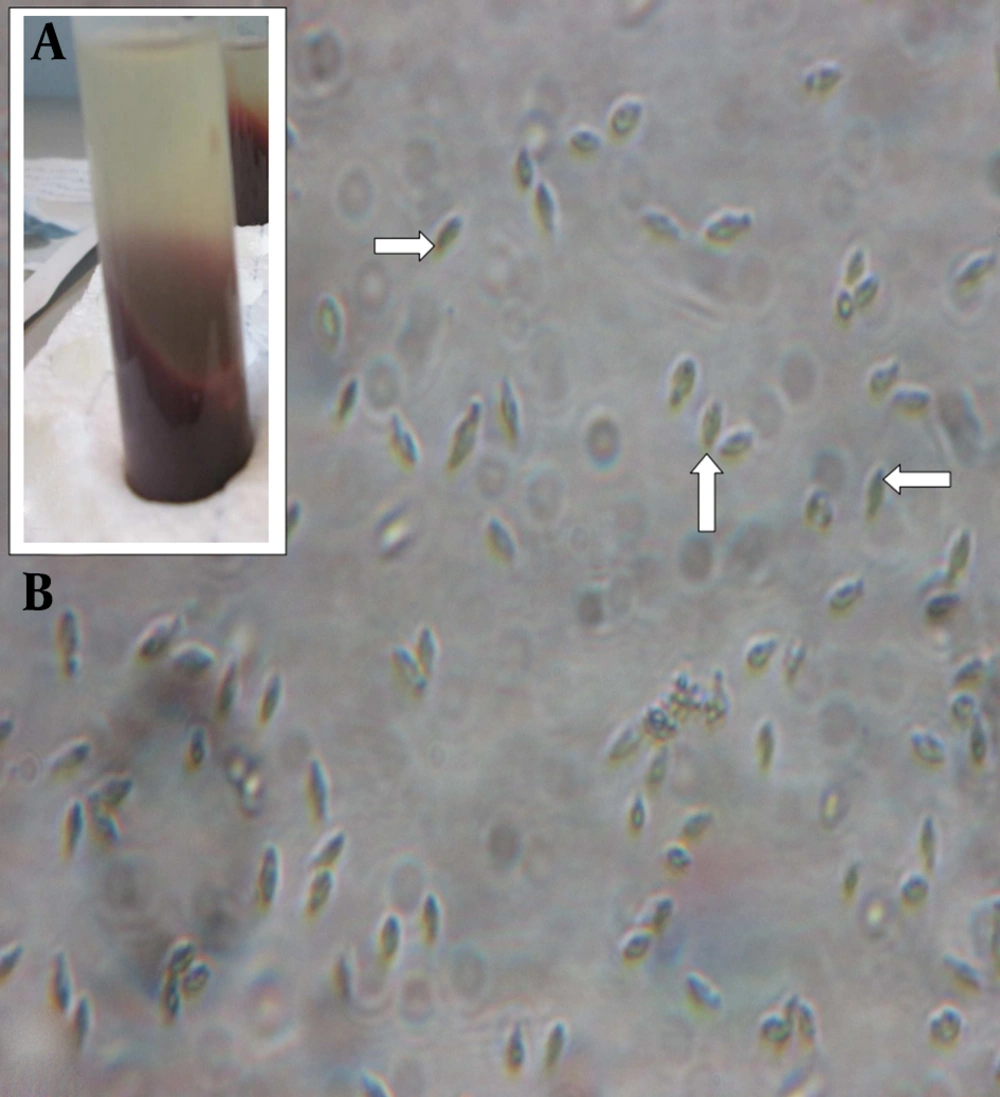
Figure 1.
Culture of Patient Specimen in NNN Medium A, and Detection of the Leishmania Promastigote by Direct Microscopic Method B.
