


1. Background
Making a porous area in the mouth, soft liners in dentures create a proper environment for mechanical attachment and growth of Candida and other yeasts. In fact, soft liners are regarded as a cause of increased susceptibility to denture stomatitis. Although some liners existing in the market are able to release antifungal and antibacterial agents in the oral cavity for a specific duration of time, washing them with a diluted solution of bleach and/or soaking them in boric acid or nystatin cream before placing them in the mouth will reduce the amount of yeast (1).
Among all Candida species, Candida albicans is regarded as the most pathogenic and the most common strain that has become more important due to its resistance to antifungal agents. This yeast forms part of the natural flora of mucus and skin and is restricted to the skin in the form of saprophyte. In favorable occasions or when the body is weak, or instances where more systemic corticosteroids and antibiotics are taken as well as in case of malignancies, the yeast can turn into the pathogenic form and result in mucosal or cutaneous infections and in some uncommon cases, it may cause systemic diseases (2, 3).
Today, the case of successful treatments with antifungal agents is limited due to the wide resistance of various species of Candida (especially glabrata, tropicalis, krusei, and albicans) (4). Therefore, specialists are looking for effective compounds to control these infections.
As drug resistance in various infections has been observed and confirmed in recent years, it is recommended to use compounds or antimicrobial agents for controlling such resistance. Probiotics are among the compounds that not only are justified economically but also are easy to access. Moreover, their usage in pharmaceutical and medical fields is approvable, as, unlike antibiotics, they have no side effects.
Probiotics, as live microorganisms effective for the health, are introduced via keeping the microbial balance in the intestine of animals or human beings (5). Today, the probiotics, which have received more focus recently, are the bacteria producing lactic acid, such as Lactobacilli species. Generally, upon affecting the cytoplasmic membrane and creating the proton motive force, probiotics cause holes in the phospholipid layer of the bacterial membrane as well as the ergosterol layer of the yeast membrane. In addition, they prevent the probable growth and metastasis of bacteria and yeasts through immunologic and non - immunologic mechanisms (6).
2. Objectives
This study was carried out with the aim of determining the antifungal effects of probiotics on the growth of Candida species isolated from the oral cavity of elderly persons in laboratory conditions.
3. Methods
In this cross - sectional study, 72 samples were isolated from two elderly care centers in the city of Gorgan, Golestan province, Iran, in January - May 2016. The data were used anonymously, and the Candidates were not paid for participating in this study. Not having taken antibiotics for a month before carrying out the study was regarded as the criterion for entering the study.
Among the patients who were studied, 25% were male and 75% were female in the age range of 50 to 89 years, and the samples were taken from their mouth and saliva. The samples of volunteers’ saliva were collected without stimulation about 2 hours after oral hygiene in the morning or in the afternoon. The samples were stored in sterile disposable collectors and kept on ice up to 3 hours. Then, a fraction of the samples was plated in Sabouraud dextrose agar (Merck, Germany) for isolation and identification of Candida yeasts.
3.1. Morphologic Identification of Candida Species
After a direct microscopic examination using 10% KOH in order to identify the isolated microorganisms (in terms of the existence of pseudohypha and yeast cells), swab samples were cultured on Sabouraud dextrose agar medium (Merck, Germany). The cultivated samples were then incubated for 48 hours at 35°C. The plates were studied for the growth of yeast colonies. In the next step, the samples were incubated for the second time in the SDA medium, other tests including the germ tube test were done, culturing on the Chromogenic CHROMagar Candida (HiMedia, India) was performed, and the assimilation test using API20C AUX kit (BioMe’rieux, France) was carried out for the isolation and presumptive identification of Candida species.
3.2. Molecular Identification of Candida Species
After phenotype identification of strains, the molecular identification was conducted to confirm the identification and differentiation of Candida albicans from non - albicans species. In this study, a PCR identification kit (Candida spp. PCR detection) purchased from Iranian Gene Fanavar Institute was used. Molecular comparisons are increasingly being used as a method of yeast identification given that they are less laborious and have greater reliability. The choice of DNA allows solving close or distant relationships between strains or biological species. The D1/D2 domain is a 600 - nucleotide domain at the 5’ end of a large subunit of 26S rDNA. Most yeast species can be identified from the sequence divergence of the D1/D2 domain (9).
In this study, the glass bead phenol - chloroform method was used to extract DNA yeast strains. The extracted DNA was then run in the agarose gel 1.5% (Invitrogen, USA).
The results showed a high quality of the DNA for the upstream tests. The kit was then used to defrost the tubes and after being vortexed, the PCR test in the volume of 25 µL was carried out. The test tubes were then named positive or negative controls. 1 × PCR Mix (20 µL) and Taq - DNA Polymerase (0.3 µL) were added to each tube. The tubes were shaken and one drop of mineral oil was added to each tube if needed. In the end, 5 µL of the DNA was added and vortexed for 3 - 5 seconds.
The thermal cycles included an initial denaturation at 94°C for 3 minutes, followed by 40 cycles of denaturation at 94°C for 30 seconds, annealing at 52°C for 30 seconds, extension at 72°C for 1 minute, and the final extension at 72°C for 5 minutes. The results were read based on Iranian Gene Fanavar Institute’s protocol and the Candida species were confirmed.
3.3. Antifungal Susceptibility Test
In order to determine the susceptibility of Candida to itraconazole and nystatin, the standard broth microdilution method was applied in accordance with the CLSI document M27 - A3 (10).
In this test, first, a suspension of 48 - hour cultured strains grown on SDA medium was prepared and then the initial sample consisting of 106 yeasts per milliliter of distilled water was prepared at the wavelength of 530 nm and transition of 75 - 77 percent. The samples were diluted first with distilled water at the ratio of 1:10 and second with RPMI1640 medium (Sigma - Aldrich, Germany) at the ratio of 1:100 so that the final amount of yeasts reached 1 × 10³.
In order to prepare the stock solution from antibiotics, sufficient amounts of itraconazole and nystatin (Sigma - Aldrich, Germany) were weighed and combined in the DMSO (dimethyl sulfoxide) solvent. For dissolution purpose, the RPMI - 1640 culture medium (Sigma - Aldrich, Germany) with glutamine, without bicarbonate and MOPS (3 - (morpholino) propanesulfonic acid) buffer (Sigma - Aldrich, Germany) was used. The broth microdilution test was carried out at the densities of 0.03 - 16 µg/mL. Upon preparing serial densities from antibiotics separately and inoculation of yeast suspension, microplates were incubated for 48 hours at 35°C. In the MIC report, in addition to the turbidity test, the Elisa Reader device was also used to confirm the results, and the findings were compared with standard tables. The minimum concentration of antifungal agents inhibiting the growth of the yeast by 90% compared to the positive control wells is considered as MIC90. C. albicans (ATCC 90028) was used as the control strain in this study.
3.4. Isolating Probiotic Bacteria
To separate probiotic bacteria, 14 samples including yogurt, cow milk, buffalo milk, and sheep milk were studied.
The yogurt and milk samples were transferred to the laboratory within maximum 6 hours in cold conditions, and isolating conditions were implemented on them; 10 mL of each sample was mixed with 90 mL of physiologic serum completely and a dilution was prepared. The dilutions of yogurt and milk were inoculated into the MRS broth culture medium (Sigma - Aldrich, Germany) for Lactobacilli and into broth M17 (Sigma - Aldrich, Germany) for Streptococci. Then, they were incubated in anaerobic conditions at 37°C for 48 hours. Solutions enriched in MRS and M17 agar selective media were cultured and the isolates were studied in terms of microscopic and macroscopic specifications. Species were identified based on the pattern of carbohydrates fermentation. Finally, the colonies of the isolated lactic bacteria were inoculated into a special broth medium and incubated for 4 days (the required time for production of antibacterial material) at 37°C after adding paraffin to the media. After 4 days, the paraffin was extracted; the content of the tubes was transferred to sterile glass tubes and after being combined, they were centrifuged per 2800 round for 10 minutes. Sediments were removed in sterile conditions and the upper solution was preserved for further study.
3.5. Evaluating the Inhibitory Ability of Lactic Acid Isolates
The colony of lactic bacteria isolated from yogurt was inoculated for Streptococci into broth M17 medium (Sigma - Aldrich, Germany) and for Lactobacilli into broth MRS medium (Sigma - Aldrich, Germany). Antimicrobial effects of the isolated lactic acid bacteria on the growth of Candida were studied using the well - diffusion agar and the modified agar methods.
In the well - diffusion method, first, a suspension equal to 0.5 McFarland was prepared from Candida spp. resistant to antibiotics being studied and cultured in the Muller Hinton agar medium (Merck, Germany) in the form of spread sheet. Then, wells in 6 mm diameter were drilled in the medium using sterile pipette Pasteur, and 100 λ of the upper solution of the bacteria isolated from yogurt and milk was poured in these wells. The plates were then incubated for 48 hours at 35°C. After 48 hours, the inhibition diameter was measured and recorded in millimeters.
In the modified agar method, first, 2 cm of lactic bacteria was cultured linearly in the middle of MRS and M17 agar plates and incubated for 24 hours at 37°C. After 24 hours, a thin layer of SDA medium was poured over the media containing lactic bacteria. Then, a suspension of Candida strains equal to 0.5 McFarland was prepared and cultured in the form of spread sheet over the mentioned medium. The suspension was first placed for 2 - 4 hours at 8°C and then incubated for 48 hours at 35°C.
They were then studied in terms of growth or non-growth in the 2 - cm zone of lactic bacteria and the area around them. In this study, the standard strain of Leuconostoc mesenteroides (PTCC 1663) was considered for comparison and each step of the test was repeated three times.
3.6. Statistical Analysis
Data were analyzed using ANOVA. The comparison of the mean of the treatments was done by Duncan’s multiple range test at a confidence level of 5%. All statistical analyses were performed using SPSS software and charts were drawn with Excel software.
4. Results
Among the elderly (N = 72) who were studied, 50 cases of yeast cells were seen through applying direct microscopic tests on samples. After phenotype tests, 47 cases (64.38 %) were identified as Candida species. The frequency and the diversity of species were greater in the elderly with dentures (61.1%) than in ones with natural teeth (4.2%). Among the Candida strains, most of the isolated species were Candida albicans (57.44%) and other strains included Candida tropicalis, Candida guilliermondii, Candida kefyr, C. glabrata, Candida parapsilosis, and Candida krusei (Table 1).
Table 1.Frequency of Candida Species Isolated from the Oral Cavity of the Elderly
| Candida Spp. | Absolute Frequency | Relative Frequency |
|---|---|---|
| C. albicans | 27 | 57.44 |
| C. glabrata | 2 | 4.25 |
| C. tropicalis | 9 | 19.14 |
| C. kefyr | 2 | 4.25 |
| C. guilliermondii | 4 | 8.51 |
| C. parapsilosis | 2 | 4.25 |
| C. krusei | 1 | 2.12 |
| Total | 47 | 100 |
4.1. Analyzing the Results after DNA Replication
10 µL of the multiplied product was loaded on the 1.5% agarose gel and TBE × 1 buffer without adding loading buffer. One DNA marker was associated with samples for determining the size of bands that was then stained with ethidium bromide gel (0.5 µg/mL), and the image was generated by a UV DOC device.
The presence of 620bp fragments compared to the DNA size marker indicated that the test was positive, implying the Candida species (non - albicans) identification was confirmed (Figure 1).
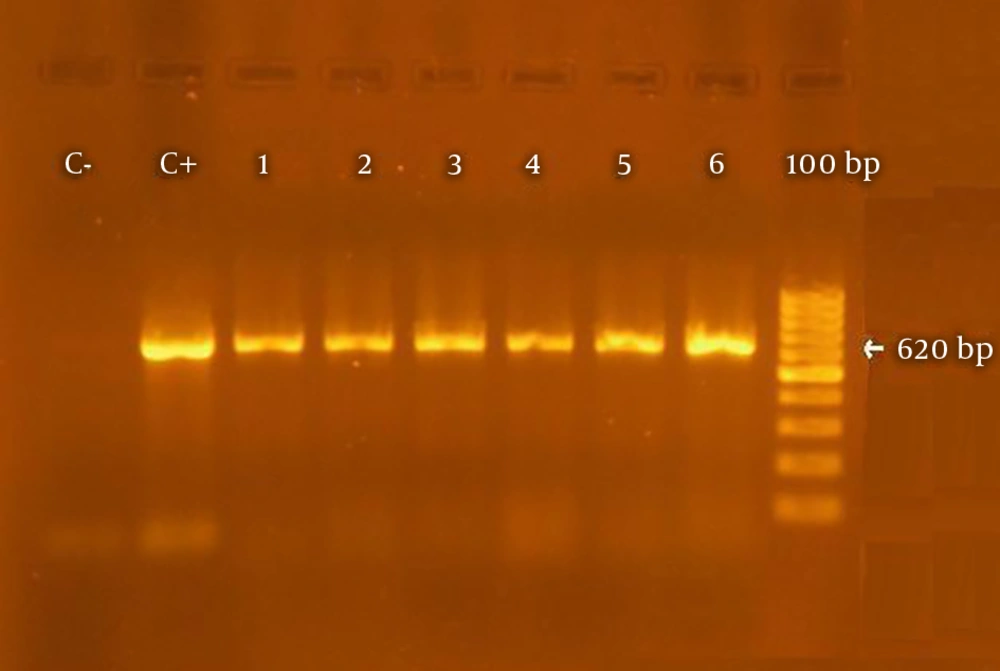
Figure 1.
The polymerase chain reaction fragment length profile of non - albicans isolates 1: C. parapsilosis, 2: C. glabrata, 3: C. tropicalis, 4: C. krusei, 5: C. kefir, 6: C. guilliermondii.
4.2. Results of Determining Drug Susceptibility
Nystatin and itraconazole were studied in this test. This test was conducted on 47 Candida strains, out of which 31 samples showed resistance to both antibiotics and three samples showed susceptibility to both drugs. Overall, 47 Candia isolates in seven different species were diagnosed. The MICs of itraconazole and nystatin were within the range of 0.03 - 16 and 0.03 - 8 µg/mL, respectively. In total, 87.23% of the strains showed resistance to nystatin and 74.46% to itraconazole. The amount of MIC90 itraconazole was obtained as 16 µg/mL for Candida albicans. This value was 8 µg/mL for nystatin. Among non - albicans species, Candida glabrata showed the most resistance to itraconazole (MIC90 = 16) and nystatin (MIC90 = 4); this is while the most susceptibility to itraconazole and nystatin was seen in Candida kefyr and Candida parapsilosis, respectively.
4.3. Results of Isolating Probiotic Bacteria and Their Antagonistic Effects
In this study, among 32 lactic bacteria isolates, most strains contained Lactobacilli (88.5%) and least of them contained Lactococci and Leuconostoc mesenteroides (11.5%). Among the Lactobacillus strains, most of the isolated strains were of Lactobacillus. Plantarum (57%) and other strains included Lactobacillus casei, Lactobacillus divergens, and Lactobacillus piscium, in sequence.
The antimicrobial features were studied using two methods, well - diffusion and modified agar methods. In the well - diffusion method, plates were studied for their inhibition zone after being incubated. This method was not effective for isolated Candida and no satisfactory results were gained in terms of the creation of the inhibition zone. In the modified agar method, plates were studied for growth or non-growth in the 2 - cm zone and the area around it after being incubated.
After sufficient growth, the inhibitory zones for the growth of Candida were evaluated using a semi - quantitative scale (Table 2), which is as follows:
(–): Failure to inhibit the growth of Candida in the culture of Lactobacillus.
(–/+): Low inhibition of the growth of Candida in the culture of Lactobacillus.
(+): Semi inhibition of the growth of Candida in the culture of Lactobacillus.
(++): Full inhibition of the growth of Candida in the culture of Lactobacillus.
(+++): Full inhibition of the growth of Candida beyond the culture of Lactobacillus.
Table 2.The Antagonistic Effect of Probiotics on Candida Species in the Modified Agar Method
| Species | C. glabrata | C. albicans | C. kefyr | C.tropicalis |
|---|---|---|---|---|
| Leuconostoc mesenteroides | +++ | +++ | ++ | ++ |
| L. plantarum | +++ | +++ | ++ | ++ |
| L. casei subsp. Tolerans | - | - | - | - |
| L. divergens | ++ | ++ | + | + |
| Lactococcus piscium | - | - | - | - |
| Lactococcus lactis | - | - | - | - |
| Lactococcus raffinolactis | - | - | - | - |
In this study, Leuconostoc mesenteroides, Lactobacillus plantarum, and Lactobacillus divergens were effective against Candida species, inhibiting their growth (Figure 2).
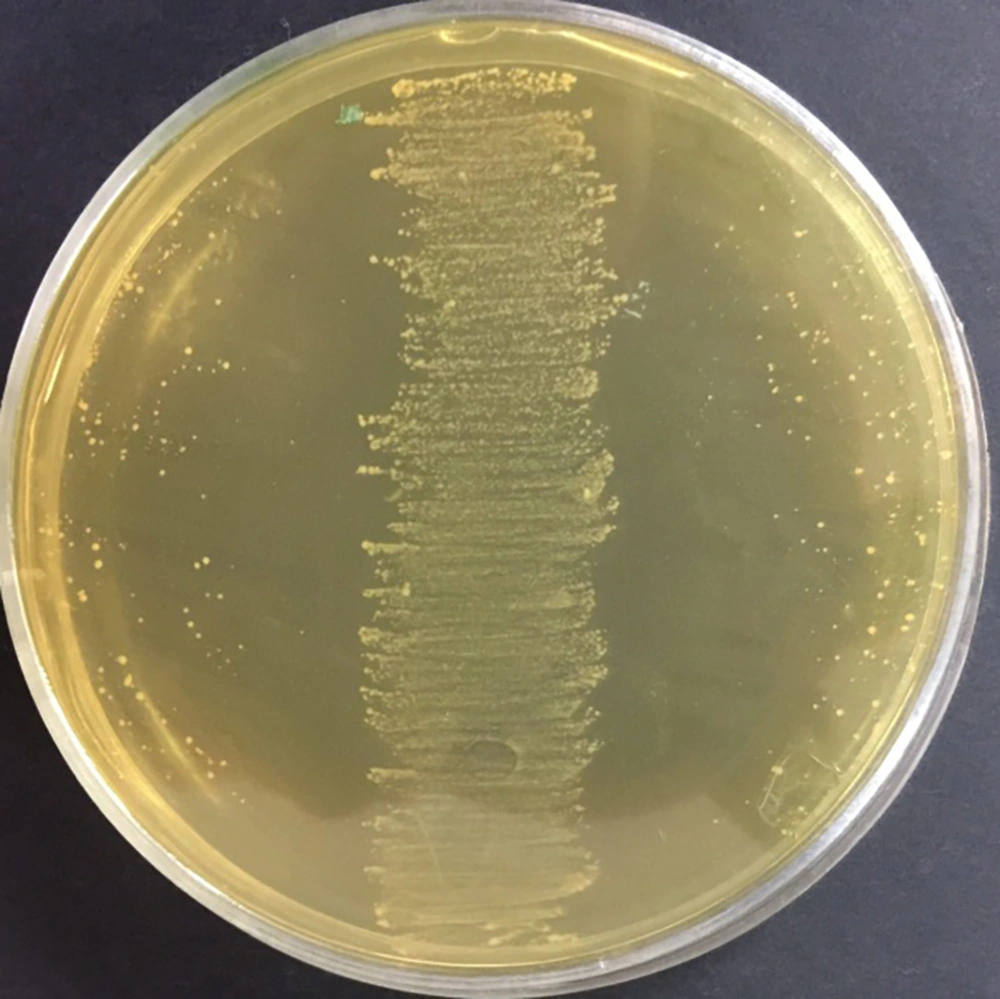
Figure 2.
The Antimicrobial Effect of the Compound Produced by Lactobacillus plantarum on the Growth of Candida glabrata
5. Discussion
Several species of Candida, particularly Candida albicans, coexist in the digestive system of human beings. They become pathogenic where the local or systemic resistance of the host decreases (11). Candida albicans is the most important pathogenic species of Candida that forms the most prevalent isolates from patients. Candidiasis includes a range of opportunistic fungal diseases that appear in the form of superficial, mucosal, or systemic infections in vulnerable people (3).
The elderly are prone to mucosal Candidiasis due to chronic diseases, misuse of medicines, improper hygiene of the mouth, low salivary flow, and disorders in the immune system. Some other reasons such as using dentures endanger mucosal hygiene; for instance, dentures can cause stomatitis. Although the colonization of Candida might be asymptomatic, their growth usually leads to various mucosal lesions (9).
The prevalence of oral mucosal diseases in the elderly is reported in the range of 40 - 50 percent (12, 13). In the present study, 65% of the elderly were affected by oral Candidiasis.
In spite of various investigations carried out in different countries, not enough information is still available about the oral health of the elderly. Therefore, it is important to investigate the oral health of these people in the society.
The present study was conducted in 72 elderly people. In this study, 47 Candida species were identified and isolated, out of which the most cases belonged to C. albicans (57.44%), and the least belonged to C. krusei species (2.12%).
In a study, more oral Candida species were isolated and diagnosed from the elderly with dentures (63.3%) in comparison with the elderly who had natural teeth (33.53%) (14). In this study, it was found that non - albicans species are found more in the elderly with dentures compared to in ones with natural teeth. The results obtained in this study confirmed the deployment and colonization of Candida species in the elderly who were using dentures for a long time; this may lead to stomatitis due to using dentures that is close to the results obtained in the present study. At present, due to the increasing rate of Candidiasis by various Candida species on the one hand, and widely increasing use of antibiotics in treating this disease that ultimately results in increasing the resistance to antibiotics in the yeast, on the other hand, studying resistance in these yeasts seems quite necessary.
Determining the susceptibility of pathogens causing diseases before starting the treatment is a useful method for selecting the proper treatment and removal of the fungi to prevent excessive use of drugs and creation of secondary and unwanted drug resistance. In the present study, the rates of resistance to nystatin and itraconazole in 47 Candida strains were estimated to be 87.23% and 74.46%, respectively. The samples were taken from the oral cavity of the elderly, and this percentage shows a high resistance. In a study in patients admitted to the intensive care unit, non - albicans strains showed a high resistance to azoles (15).
Khosravi et al. studied the susceptibility of oral Candida species to antifungal agents in HIV - positive patients. The study was conducted on 150 oral samples. The pattern of susceptibility to six antifungal medicines was prepared through the disk diffusion and broth microdilution methods, and it was revealed that resistance of Candida species to azoles is increasing (11), which almost matches the results of the present study.
Today, specialists are looking for effective agents with no side effects when used for treating this disease. As today drug resistance has been observed in various infections, it is recommended to use antimicrobial compounds for inhibiting or controlling such resistance. Probiotics are among these compounds that lack side - effects, which are the case of antibiotics (16, 17).
The Food and Agriculture Organization of the United Nation (FAO) and the World Health Organization (WHO) consider probiotics as live microorganisms, which have health - improving results if consumed sufficiently. These bacteria are able to produce antimicrobial compounds that have an expansive range of effect on pathogens (5). They could be used as complementary medicine or replacement for currently used antibiotics due to their satisfactory antimicrobial effects.
Hatakka et al. studied whether probiotics reduce the prevalence of oral Candidiasis in the elderly in Finland. This study was conducted in 276 elders and showed the amount of yeasts reduces to 25% after 8 - 16 weeks of treatment with consuming probiotic cheese containing Lactococcus lactis and Lactobacillus rhamnosus (18). In the present study, the probiotic bacteria prevented the growth of Candida species in laboratory conditions.
Khonafari et al. studied the production of Lactocins by probiotic strains in local yogurt samples. The results of this study showed the isolation of 21 strains of lactic acid bacteria. The production of antimicrobial compounds by strains in the logarithmic phase of their growth and their antimicrobial effects was also observed (19).
Mojgani et al. identified and studied Bacteriocin produced by Lactobacillus acidophilus isolated from local cheese in Karaj. In their study, Lactocin produced by Lactobacillus acidophilus was studied and its inhibitory effect against gram - positive and gram - negative bacteria was investigated. The inhibitory range of this Bacteriocin against pathogenic bacteria was also confirmed (20). In this study, Leuconostoc mesenteroides, Lactobacillus Plantarum (isolated from local yogurt, Poonak yogurt, sheep milk, and cow milk), and Lactobacillus divergence were effective against Candida species by inhibiting their growth.
Mendonca studied the effects of probiotic bacteria on the growth of Candida in the oral cavity of the elderly in Brazil. The study was conducted in 42 healthy elders to examine the effects of probiotics (Lactobacillus casei). In this study, the saliva samples were collected three times a week for 30 days before and after consuming probiotics. The results showed a remarkable decrease in the prevalence of Candida (from 92.9% to 85.7%) (21). In the present study, the laboratory study on antagonistic effects of isolated probiotic bacteria also showed their inhibitory effect by inhibiting the growth of Candida species.
5.1. Conclusion
As the elderly are more susceptible to Candida colonization, it was expected to find a high prevalence of the fungus in the oral cavity of the study population. According to the results obtained from this study, it could be concluded that unfortunately, resistance to selective agents used in treating Candidiasis is increasing. Therefore, it puts in doubt the prescription of these medicines for preventing oral candidiasis in the elderly. Concerning the high resistance of Candida isolates to antifungal agents and the inhibitory effects resulted from lactic bacteria, especially Lactobacillus plantarum, it is recommended to use its metabolites directly in the diet of the elderly or to use them in the form of supplements in order to control oral candidiasis. It was also revealed that well diffusion method is not as proper as the modified agar method since the latter could better show the ability of probiotic bacteria in preventing the growth of Candida species.



