


1. Context
2. Objectives
3. Methods
3.1. Search Strategy
3.2. Study Selection Criteria
3.3. Data Extraction
3.4. Quality Assessment
3.5. Statistical Analysis

4. Results
4.1. Literature Search
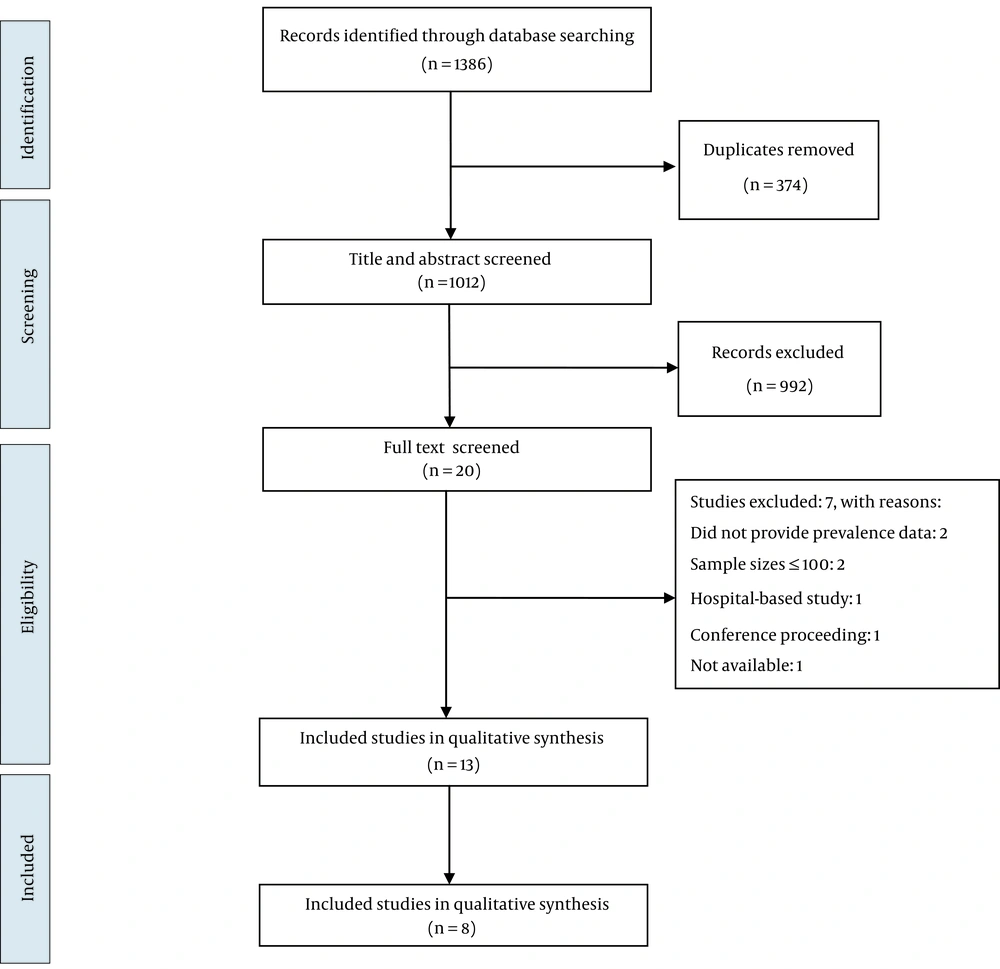
PRISMA flow diagram of literature search and selection process
4.2. Study Characteristics
| First Author - Publication Year | Participants | Gender | Instruments to Assess Abuse | Prevalence Period | Method of Data Collection | Sampling Procedure | Prevalence Rates |
|---|---|---|---|---|---|---|---|
| Khalili - 2016 (22) | 500 people aged over 60 years, who had health care records in health centers in Kashan, Esfahan | 290 (58%) male, 210 (42%) female | Iranian domestic elder abuse questionnaire | 1 year | Face-to-face interview | Random sampling | Prevalence = 80% |
| Financial abuse = 45.6% | |||||||
| Psychological abuse = 45% | |||||||
| Authority deprivation = 41.2% | |||||||
| Financial neglect = 37.8% | |||||||
| Care neglect = 35.6% | |||||||
| Emotional neglect = 29.8% | |||||||
| Physical abuse = 22.2% | |||||||
| Abandonment = 16.6% | |||||||
| Morowatisharifabad - 2016 (23) | 250 people aged over 60 years in Yazd, Yazd | 126 (50.4%) male, 124 (49.6%) female | Iranian domestic elder abuse questionnaire | 1 year | Face-to-face interview | Random sampling | Prevalence = 79.6% |
| Emotional neglect = 66% | |||||||
| Care neglect = 52.4% | |||||||
| Financial abuse = 44.8% | |||||||
| Psychological abuse = 42.8% | |||||||
| Financial neglect = 16.4% | |||||||
| Authority deprivation = 15.6% | |||||||
| Abandonment = 8.4% | |||||||
| Physical abuse = 4.4% | |||||||
| Mohebbi - 2016 (21) | 210 people aged over 60 years, who were referred to rural health centers in Dezful, Khuzestan | 116 (55.2%) male, 94 (44.8%) female | Iranian domestic elder abuse questionnaire | 1 year | Face-to-face interview | Random sampling | Prevalence = 60.5% |
| Emotional neglect = 38.6% | |||||||
| Financial neglect = 22.8% | |||||||
| Authority deprivation = 15.3% | |||||||
| Financial abuse = 14.3% | |||||||
| Physical abuse = 14.3% | |||||||
| Psychological abuse = 12.4% | |||||||
| Abandonment = 12.9% | |||||||
| Care neglect = 7.3% | |||||||
| Keyghobadi - 2014 (17) | 180 people aged over 60 years, who were referred to mosques and clinics in Sabzevar, Khorasan Razavi | 180 (100%) female | Iranian domestic elder abuse questionnaire | 1 year | Face-to-face interview | Random sampling | Prevalence = 49.4% |
| Emotional neglect = 69% | |||||||
| Care neglect = 52% | |||||||
| Financial abuse = 48.5% | |||||||
| Psychological abuse = 47.3% | |||||||
| Authority deprivation = 45.4% | |||||||
| Financial neglect = 44.8% | |||||||
| Physical abuse = 44.5% | |||||||
| Abandonment = 42.8 | |||||||
| Nori - 2014 (19) | 247 people aged over 60 years, who had health care records in urban or rural health centers in Kalaleh, Golestan | 137 (55.5%) male, 110 (44.5%) female | Iranian domestic elder abuse questionnaire | 1 year | Face-to-face interview | Random sampling | Prevalence = - |
| Emotional neglect = 34.8% | |||||||
| Care neglect = 33.6% | |||||||
| Financial neglect = 29.1% | |||||||
| Psychological abuse = 26.7% | |||||||
| Authority deprivation = 22.3% | |||||||
| Financial abuse = 21.9% | |||||||
| Abandonment = 12.6% | |||||||
| Physical abuse = 2.8% | |||||||
| Nassiri - 2016 (20) | 465 people aged over 60 years, who were referred to urban or rural health centers in Gorgan and Aq-Qala, Golestan | 253 (55.4%) female, 212 (44.6%) male | Iranian domestic elder abuse questionnaire | 1 year | Face-to-face interview | Random sampling | Prevalence = 63.3% |
| Care neglect = 59.8% | |||||||
| Psychological abuse = 53.3% | |||||||
| Emotional neglect = 43% | |||||||
| Financial abuse = 39.1% | |||||||
| Financial neglect = 34% | |||||||
| Authority deprivation = 34% | |||||||
| Abandonment = 8.2% | |||||||
| Physical abuse = 8% | |||||||
| Heravi Karimoei - 2012 (18) | 379 people aged over 65 years, who were members of the senior social clubs in Tehran, Tehran | 254 (67%) female, 125 (33%) male | Iranian domestic elder abuse questionnaire | 1 year | Face-to-face interview | Random sampling | Prevalence = 25.9% |
| Emotional neglect = 17.4% | |||||||
| Psychological abuse = 17.2% | |||||||
| Care neglect = 14.8% | |||||||
| Authority deprivation = 10% | |||||||
| Financial neglect = 9.8% | |||||||
| Financial abuse = 7.9% | |||||||
| Physical abuse = 4.7% | |||||||
| Abandonment = 3.7% | |||||||
| Kashfi - 2017 (24) | 226 people aged over 60 years, who were referred to urban healthcare and retirement centers in Shiraz, Shiraz | 61 (27.4%) male, 165 (72.6%) female | Iranian domestic elder abuse questionnaire | 1 year | Face-to-face interview + aelf-administered | Random sampling | Prevalence = - |
| Emotional neglect = 43.8% | |||||||
| Psychological abuse = 41.2% | |||||||
| Care neglect = 31.9% | |||||||
| Financial neglect = 28.8% | |||||||
| Financial abuse = 23% | |||||||
| Authority deprivation = 20.8% | |||||||
| Physical abuse = 7% | |||||||
| Abandonment = 4% | |||||||
| Manoochehri - 2009 (25) | 400 people aged over 60 years, who were referred to parks in Tehran, Tehran | 200 (50%) male, 200 (50%) female | Researcher-made questionnaire | Since aged 60 | Face-to-face interview | Random sampling | Prevalence = 87.8% |
| Psychological abuse = 84.8% | |||||||
| Neglect = 68.3% | |||||||
| Financial abuse = 40.1% | |||||||
| Physical abuse = 35.2% | |||||||
| Barzanjeh Atri - 2013 (26) | 415 elderly people aged over 60 years, who were referred to urban health centers in Tabriz, East Azerbaijan | 258 (62.2%) male, 157 (37.8%) female | Researcher-made questionnaire based on H-S/EAST and other related studies | Since aged 60 | Face-to-face interview | Random sampling | Prevalence = - |
| Psychological abuse = 91% | |||||||
| Physical abuse = 12.3% | |||||||
| Financial abuse = 14.3% | |||||||
| Neglect = 29.9% | |||||||
| Alizadeh Khoei - 2014 (27) | 300 people aged over 60 years, who had health care records in urban health centers in Ahvaz, Khuzestan | 160 (53.3%) female, 140 (46.7%) male | Researcher- made questionnaire based on H-S/EAST | 1 year | Face-to-face interview | Random sampling | Prevalence = 14.7% |
| Physical abuse = 10.3% | |||||||
| Care neglect = 9% | |||||||
| Psychological abuse= 3% | |||||||
| Financial abuse = 3% | |||||||
| Karimi - 2008 (28) | 385 people aged over 60 years, who were in urban public places in Ahvaz, Khuzestan | 205 (53.2%) female, 180 (46.8%) male | Elder assessment instrument | Since aged 60 | Face-to-face interview | Random sampling | Prevalence = 10.5% – 25% |
| Neglect = 31.7% | |||||||
| Financial abuse = 25% | |||||||
| Psychological abuse = 16.9% | |||||||
| Abandonment = 12% | |||||||
| Physical abuse = 10.5% | |||||||
| Hosseini - 2016 (29) | 400 people aged over 60 years, who were in public places in Chaharmahal and Bakhtiari Province | 240 (60%) female, 60 (40%) male | Elder assessment instrument | Since aged 60 | Face-to-face interview | Random sampling | Prevalence = 17.1% |
| Physical abuse = 35.9% | |||||||
| Abandonment = 23.3% | |||||||
| Psychological abuse = 31.9% | |||||||
| Financial abuse = 14.3% | |||||||
| Neglect = 14.6% |
Abbreviation: H-S/EAST, Hwalek-Sengstock elder abuse screening test.
4.3. Estimated Prevalence of Elder Abuse
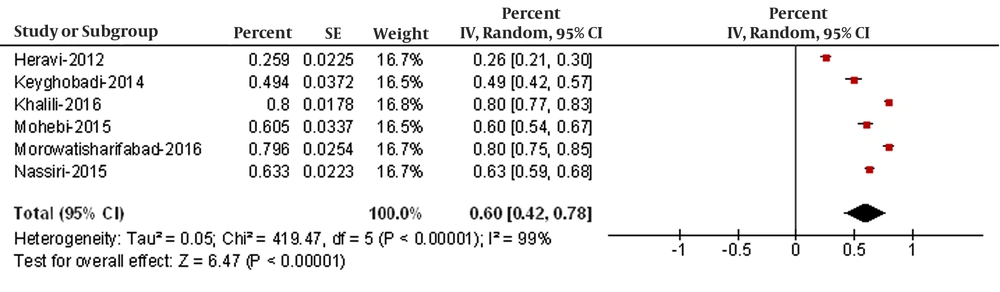
Forest plot of prevalence of elder abuse and neglect in the elderly in Iran
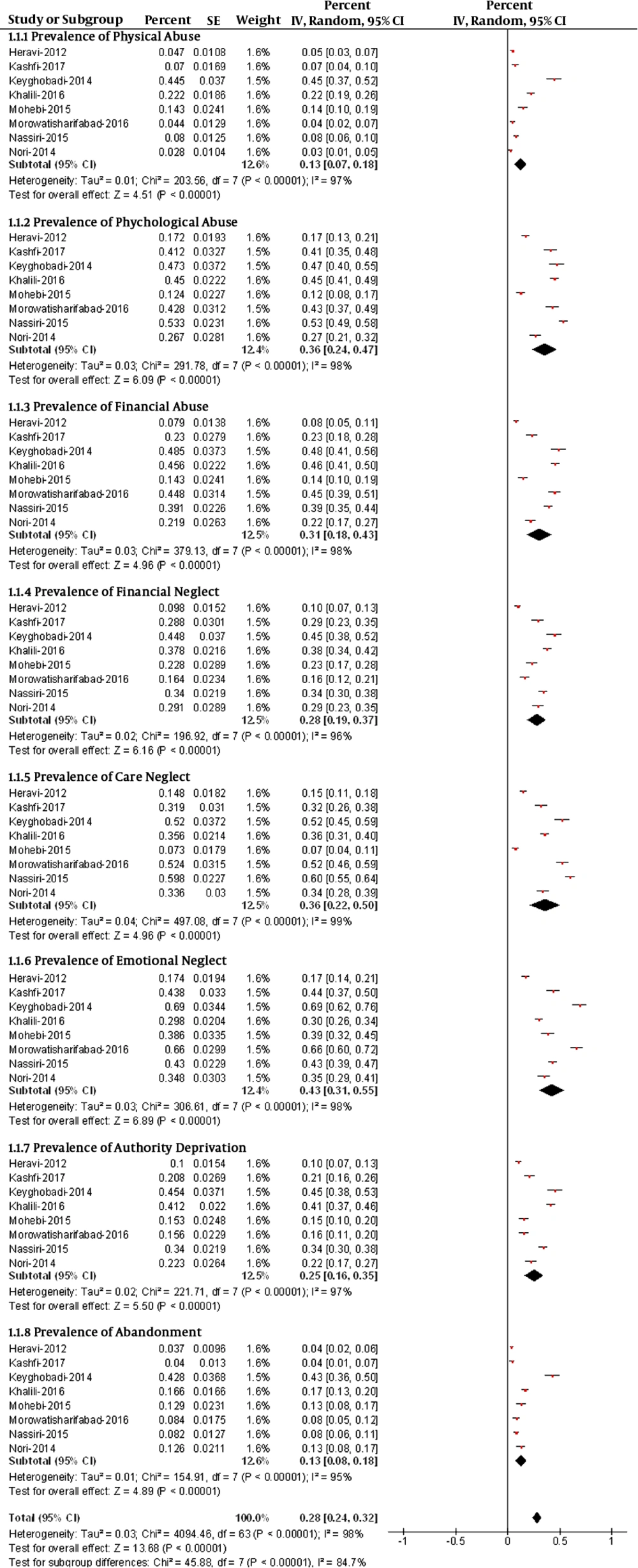
Forest plot of prevalence of elder abuse domains in the elderly in Iran
4.4. Quality of the Included Studies
| S. | Study Details | STROBE Items | ||||||||||||||||||||||
|---|---|---|---|---|---|---|---|---|---|---|---|---|---|---|---|---|---|---|---|---|---|---|---|---|
| NO. | 1 | 2 | 3 | 4 | 5 | 6 | 7 | 8 | 9 | 10 | 11 | 12 | 13 | 14 | 15 | 16 | 17 | 18 | 19 | 20 | 21 | 22 | Total Score | |
| 1 | Khalili, 2016 (22) | □ | □ | □ | □ | □ | □ | × | □ | × | □ | □ | Δ | □ | □ | □ | Δ | Δ | □ | Δ | Δ | Δ | □ | 34 |
| 2 | Morowatisharifabad, 2016 (23) | □ | □ | □ | □ | □ | □ | × | □ | × | □ | □ | Δ | □ | □ | □ | Δ | Δ | Δ | Δ | Δ | Δ | □ | 33 |
| 3 | Mohebbi, 2016 (21) | □ | □ | □ | □ | □ | □ | × | □ | × | □ | □ | Δ | □ | □ | □ | Δ | □ | □ | × | Δ | Δ | □ | 34 |
| 4 | Keyghobadi, 2014 (17) | □ | □ | □ | □ | □ | □ | × | □ | × | × | □ | Δ | □ | □ | Δ | Δ | × | □ | Δ | Δ | Δ | × | 28 |
| 5 | Nori, 2014 (19) | □ | □ | □ | □ | □ | □ | × | □ | × | × | □ | Δ | □ | □ | Δ | Δ | Δ | Δ | × | Δ | Δ | × | 27 |
| 6 | Nassiri, 2016 (20) | □ | □ | □ | □ | □ | □ | × | □ | × | □ | □ | Δ | □ | □ | □ | Δ | Δ | □ | × | Δ | Δ | □ | 33 |
| 7 | Heravi Karimoei, 2012 (18) | □ | □ | □ | □ | □ | □ | × | □ | × | □ | □ | Δ | □ | □ | □ | Δ | Δ | □ | □ | Δ | Δ | □ | 35 |
| 8 | Manoochehri, 2009 (25) | □ | □ | □ | □ | □ | □ | × | Δ | × | × | □ | × | □ | □ | Δ | Δ | × | □ | × | Δ | Δ | × | 25 |
| 9 | Barzanjeh Atri, 2013 (26) | □ | □ | □ | □ | □ | □ | × | □ | × | × | □ | × | □ | □ | □ | Δ | Δ | □ | × | Δ | Δ | × | 28 |
| 10 | Alizadeh Khoei, 2014 (27) | □ | □ | □ | □ | □ | □ | × | Δ | × | Δ | □ | Δ | □ | □ | □ | Δ | Δ | □ | Δ | Δ | Δ | × | 30 |
| 11 | Karimi, 2008 (28) | □ | □ | □ | □ | □ | □ | × | Δ | × | Δ | □ | Δ | □ | □ | Δ | Δ | × | □ | × | Δ | Δ | × | 27 |
| 12 | Hosseini, 2016 (29) | □ | □ | □ | □ | □ | □ | × | □ | × | × | □ | Δ | □ | □ | Δ | Δ | Δ | Δ | □ | Δ | Δ | × | 29 |
| 13 | Kashfi, 2017 (24) | □ | □ | □ | □ | □ | □ | × | Δ | × | □ | Δ | □ | □ | □ | □ | □ | Δ | □ | □ | Δ | Δ | □ | 35 |
a1, title and abstract; [Introduction] 2, background/rationale; 3, objectives; [Methods] 4, study design; 5, setting; 6, participants; 7, variables; 8, data sources/measurement; 9, bias; 10, study size; 11, quantitative variables; 12, statistical methods; [Results] 13, participants (groups); 14, descriptive data; 15, outcome data; 16, main results; 17, other analyses; [Discussion] 18, key results; 19, limitations; 20, interpretation; 21, generalizability; [Other Information] 22, funding.
b2 (□), good description; 1 (Δ), partial description; 0 (×), no description.



