Fulltext
This part is available in the PDF file.
Image Credit:Shiraz E-Med J
Authors
Co-bedding twins is the practice of placing siblings in the same crib or bed. The objective of this study was to find out how frequently co-bedding was practiced at home among Malaysian twins. Moreover, parents’ knowledge and satisfaction was measured. Developmental mill-stones and sleeping pattern of twins were compared between those who practiced co-bedding versus those who did not.
Method: This is a cross-sectional comparative study. Parents of registered twins aged below 18 were interviewed to collect data on 204 Malaysian twins including socio-demographic characteristics, sleeping pattern and developmental millstones of twins as well as parent’s knowledge and satisfaction with co-bedding.
Result: Eighty nine percent of twins were co-bedded during their infancy and childhood. More than 90% of parents considered co-bedding as safe and believed it had a positive effect on psychological wellbeing of their twins (89.2%). No significant difference was found be-tween co-bedded and separately bedded twins in terms of their developmental millstones. Duration of sleep was described as complete for 89% of co-bedded twins with similar fre-quency of wakening between the two understudy groups (P=0.258).
conclusion: Co-bedding is considered a safe practice at home and carries a high satisfaction rate among parents of twins. Randomized controlled studies are warranted to investigate the long-term benefits of co-bedding at home.
© 2012, Author(s). This open-access article is available under the Creative Commons Attribution 4.0 (CC BY 4.0) International License (https://creativecommons.org/licenses/by/4.0/), which allows for unrestricted use, distribution, and reproduction in any medium, provided that the original work is properly cited.
Cinar N, Kose D, Alvur M, Dogu O. Mothers’ Attitudes Toward Feeding Twin Babies in the First Six Months of Life: A Sample From Sakarya, Turkey. Inn J Pediatr. 2016;26(5):e5413. doi: https://doi.org/10.5812/ijp.5413
Novina N, Dorjee B, Hermanussen M, Scheffler C, Bogin B, et al. Maternal Education is a Major Factor in Growth Regulation in Twins and Singletons. J Compr Ped. 2024;15(2):e145017. doi: https://doi.org/10.5812/jcp-145017
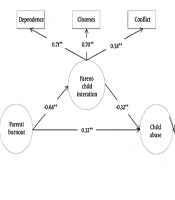
Aslanabadi S, Khanjani Z, Hashemi Nosrat Abad T, Jamalpour Y. The Relationship Between Parental Burnout and Parent-Child Interaction Quality and Child Abuse. Appl Psychol Health Promot. 2025;2(1):e148860. doi: https://doi.org/10.5812/aphp-148860
Sayahi Y, Javadifar N, Cheraghian B, Sayahi M, Afshari P. The Relationship Between Unwanted Pregnancy with Mother and Father Attachment to Infant. Shiraz E-Med J. 2017;18(12):e14066. doi: https://doi.org/10.5812/semj.14066
Kordi M, Mohamadirizi S, mohamadirizi S. The relationship between mindfulness and maternal attachment to the fetus and neonate in prenatal and postpartum periods: A cross sectional study. koomesh. 2016;17(4):e151174. doi:
Last Update: 2 weeks ago
Last Update: 2 weeks ago
Last Update: 2 weeks ago
Last Update: 3 hours ago
Last Update: 6 hours ago
Last Update: 5 days ago