
1. Background
Cardiovascular diseases (CVDs) are among the leading causes of death worldwide. Lifestyle modifications, particularly increased physical activity, including aquatic exercise such as swimming and water walking, have shown promise in reducing several cardiovascular disease risk factors.
Coronary heart disease is one of the leading causes of death in Iran (1) and is directly associated with high total cholesterol and LDL-C concentrations, low HDL-C levels, insulin resistance, and glycosylated hemoglobin (2, 3). Technological advances and industrialization in modern societies have significantly contributed to declining levels of physical activity (4). Reduced physical activity has, in turn, contributed to an increased prevalence of related disorders and diseases, including obesity and weight gain (5, 6), cardiovascular diseases (7), musculoskeletal diseases (8), and psychological complications (9).
In addition, exercise and physical activity are essential for maintaining and improving health (10) and enhancing cardiovascular function (11). Garcia et al. reported that physical activity can reduce the risk of cardiovascular events (11). Aquatic exercise is particularly beneficial for improving general health, reducing body weight, improving body composition and quality of life, reducing stress on the musculoskeletal system, and facilitating physical activity in overweight individuals (12).
Sari Saraf et al. found that aquatic exercise at an intensity of 80% of maximum heart rate regulated lipid profile storage (13). Aquatic exercise not only lowers total cholesterol but also increases protective HDL-C and reduces harmful LDL-C, thereby helping to improve health (14). Nosrani et al. reported that lipid profiles, fasting glucose, insulin, and insulin resistance did not change between or within groups following aquatic exercise (15). Shabkhiz et al. found that confounding variables contribute to changes in lipid profile ratios (16). Dağıstan et al. found that a high TG level is an important risk factor for coronary heart disease (CHD) (17). Yilmaz et al. argued that increased FGF21 following moderate exercise in white adipose tissue increases energy expenditure through the hypothalamic-pituitary-thyroid axis (18). Demarie et al. showed that heart rate and oxygen consumption were higher during aquatic exercise (19). Borén et al. stated that insufficient physical activity contributes to blood lipid disorders and that low-density lipoprotein is a cause of atherosclerotic cardiovascular disease (20). Wood et al. found that exercise decreases lipid profile levels, body fat percentage, and weight (21). Given the global prevalence of overweight and obesity and the increasing number of affected individuals, preventive measures are essential.
2. Objectives
3. Methods
3.1. Study Design and Participants
This clinical trial used an interventional pretest-posttest design. To ensure transparent and comprehensive reporting, the STROBE guidelines for case-control studies were followed. The study population comprised overweight women aged 50 - 60 years who periodically visited the East Tehran Health Center, which had an average of 80 patients in this age range per month. During the announced call, 60 individuals expressed interest in participating in the research project, and 30 eligible individuals were purposively selected as the study sample and allocated to 2 groups by simple randomization using a random-number generator: a control group (CG) and an aquatic exercise group (EG) (n = 15 each). Written informed consent was obtained before enrollment, and all participants received exercise counseling.
The inclusion criteria were female sex, age 50 - 60 years, BMI ≥ 25, no regular exercise, no medication or supplement use, and no weight-loss diet. Participants were excluded if they missed more than 3 training sessions, were injured during exercise, participated in sports activities outside the research program, or used certain medications or supplements. No participants withdrew from the study, and all participants completed the research protocol.
3.2. Exercise Protocol
The exercise group participated in supervised aquatic exercise sessions 3 times per week for 8 weeks. Each session lasted 60 minutes, and exercise intensity progressed from 45% of heart rate reserve at the beginning of the program to 60% by week 8, as monitored with a heart rate monitor. Control group participants were asked to maintain their usual daily activity and to refrain from regular exercise.
Aquatic exercises included linear walking, lateral walking with hip abduction/extension, circular walking around an imaginary axis, running, heel-to-toe weight transfer, simulated soccer kicks, ball throwing, and hip abduction. The number of repetitions was 8 - 10. Each session consisted of a 10-minute warm-up, 40 minutes of exercise at the prescribed intensity, and a 10-minute cool-down. Rest intervals between sets were maintained at 20 seconds. Target heart rate was calculated using the following formula: Target HR = Resting HR + A × Reserve.
During the aquatic exercise sessions, no adverse effects, discomfort, or exercise intolerance were reported by any participant. The aquatic environment appeared to improve body-position control in older adults and allowed a wide range of movements without increasing the risk of falls or injury.
3.3. Blood Sampling and Laboratory Measurements
After completion of the exercise protocol, participants were asked to refrain from light or moderate physical activity. Blood samples (5 mL) were collected from the antecubital vein of the right arm after a 12-hour overnight fast. Outcome assessors were blinded to group allocation.
Insulin resistance was calculated using fasting glucose and insulin values and the HOMA-IR formula. To convert fasting blood glucose from mg/dL to mmol/L, glucose values were divided by 18. HOMA-IR was then calculated as follows: HOMA-IR = fasting insulin (microunits/L) × fasting glucose (mmol/L) / 22.5.
Total cholesterol was measured by photometric lipometry (GHOD-PAP) using a MINDRAY BS 380 autoanalyzer manufactured in China. The TG assay kit from Pars Azmoun was used. Triglycerides were measured using the photometric GPO-PAP method with a MINDRAY BS 380 autoanalyzer. A Zelbio lipid profile assay kit (Germany) from Daneshbonyan Pishtaz Teb Zaman Company, with a sensitivity of 0.1 μmol, was used. HDL-C was measured using a nonprecipitation enzymatic method, and VLDL-C and LDL-C were calculated using an enzymatic staining method with the MINDRAY BS 380 autoanalyzer. Results were reported in milligrams per deciliter (mg/dL).
3.4. Statistical Analysis
Data were analyzed using SPSS version 22. Descriptive data are presented as mean ± SD. Normality and homogeneity of variances were assessed using the Shapiro-Wilk and Levene tests, respectively. A mixed repeated-measures ANOVA (within-subject factor: time; between-subject factor: group) was used to evaluate the intervention, with the Group × Time interaction as the primary outcome. No baseline adjustments were made (P > 0.05 for all). Pairwise comparisons used the Bonferroni correction. Effect sizes (partial η2), observed power, and 95% CIs were reported. Statistical significance was set at P ≤ 0.05.
4. Results
4.1. Participant Characteristics
Table 1 presents the anthropometric characteristics of the participants before and after the intervention. Table 2 presents the repeated-measures ANOVA results for the Group × Time interaction effects on biochemical variables. Descriptive data are presented as mean ± SD.
Table 1.
Anthropometric Characteristics of Participants at Baseline and After the Intervention a
| Groups | Age (y) | Height (cm) | Weight, Pre-test (kg) | Weight, Post-test (kg) | BMI, Pre-test (kg/m2) | BMI, Post-test (kg/m2) |
|---|---|---|---|---|---|---|
| Aquatic Exercise (n = 15) | 54.4 ± 2.5 | 162.2 ± 3.7 | 70.5 ± 6.8 | 67.5 ± 6.4 b | 26.7 ± 0.8 | 25.5 ± 0.6 |
| Control (n = 15) | 53.6 ± 5.1 | 159.3 ± 7.3 | 68.6 ± 2.4 | 68.4 ± 0.5 | 26.6 ± 0.6 | 26.5 ± 0.3 |
a Data are presented as mean ± standard deviation (SD). Abbreviation: BMI, body mass index.
b Significant within-group difference compared with pre-test in the aquatic exercise group (P < 0.05, based on pairwise comparisons with Bonferroni correction); No significant baseline differences were observed between the 2 groups for any variable (P > 0.05).
Table 2.
Results of Repeated-Measures ANOVA for Group × Time Interaction Effects on Biochemical Variables
| Variables | Source | Sum of Squares | Df | Mean Square | F | P Value | Effect Size | Statistical Power |
|---|---|---|---|---|---|---|---|---|
| Total Cholesterol | Group × Time | 45230.15 | 1 | 45230.15 | 18.42 | 0.001 | 0.398 | 0.965 |
| Triglycerides | Group × Time | 8245.67 | 1 | 8245.67 | 3.56 | 0.072 | 0.112 | 0.415 |
| HDL-C | Group × Time | 185.43 | 1 | 185.43 | 3.21 | 0.081 | 0.104 | 0.382 |
| LDL-C | Group × Time | 32150.88 | 1 | 32150.88 | 14.87 | 0.001 | 0.342 | 0.912 |
| HbA1c | Group × Time | 12.54 | 1 | 12.54 | 15.63 | 0.001 | 0.365 | 0.938 |
| HOMA-IR | Group × Time | 8.92 | 1 | 8.92 | 11.28 | 0.001 | 0.298 | 0.879 |
4.2. Biochemical Outcomes
Repeated-measures ANOVA revealed significant Group × Time interactions for total cholesterol (F1, 28 = 18.42, P = 0.001, η2p = 0.398), LDL-C (F1, 28 = 14.87, P = 0.001, η2p = 0.342), HbA1c (F1, 28 = 15.63, P = 0.001, η2p = 0.365), and HOMA-IR (F1, 28 = 11.28, P = 0.001, η2p = 0.298), indicating significant improvements in these cardiovascular risk factors in the aquatic exercise group compared with the control group. No significant Group × Time interactions were observed for triglycerides (F1, 28 = 3.56, P = 0.072) or HDL-C (F1, 28 = 3.21, P = 0.081).
Pairwise comparisons with Bonferroni correction showed significant pretest-to-posttest reductions in the aquatic exercise group for total cholesterol (mean difference [MD] = −18.2 mg/dL, 95% CI, −26.5 to −9.9; P = 0.001), LDL-C (MD = −15.8 mg/dL, 95% CI, −22.1 to −9.5; P = 0.001), HbA1c (MD = −0.8%, 95% CI, −1.2 to −0.4; P = 0.001), and HOMA-IR (MD = −0.7, 95% CI, −1.1 to −0.3; P = 0.001). No significant within-group changes were observed in the control group for any variable (all P > 0.05). Furthermore, postintervention values of total cholesterol, LDL-C, HbA1c, and HOMA-IR were significantly lower in the aquatic exercise group than in the control group (all P < 0.05), whereas no significant between-group differences were found for triglycerides (P = 0.072) or HDL-C (P = 0.081).
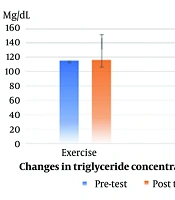
Consistent with Table 2, the aquatic exercise group showed a significant Group × Time effect for total cholesterol (F = 18.42, P = 0.001, effect size = 0.398; Figure 1). No significant Group × Time effect was observed for triglycerides (F = 3.56, P = 0.072, effect size = 0.112; Figure 2) or HDL-C (F = 3.21, P = 0.081, effect size = 0.104; Figure 3). Significant Group × Time effects were observed for LDL-C (F = 14.87, P = 0.001, effect size = 0.342; Figure 4), HOMA-IR (F = 11.28, P = 0.001, effect size = 0.298; Figure 5), and glycosylated hemoglobin (HbA1c) (F = 15.63, P = 0.001, effect size = 0.365; Figure 6).
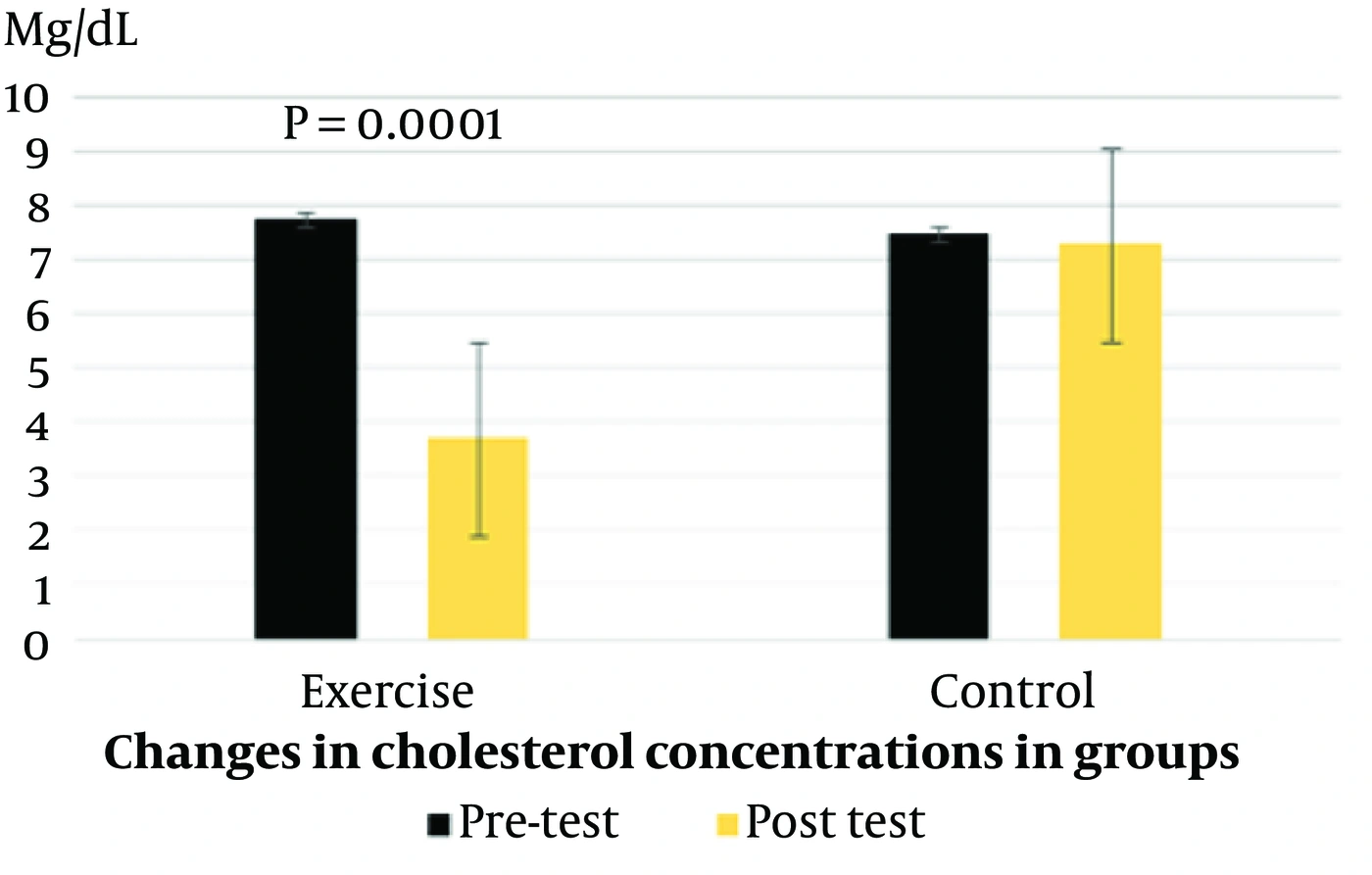
Figure 1.
Total cholesterol
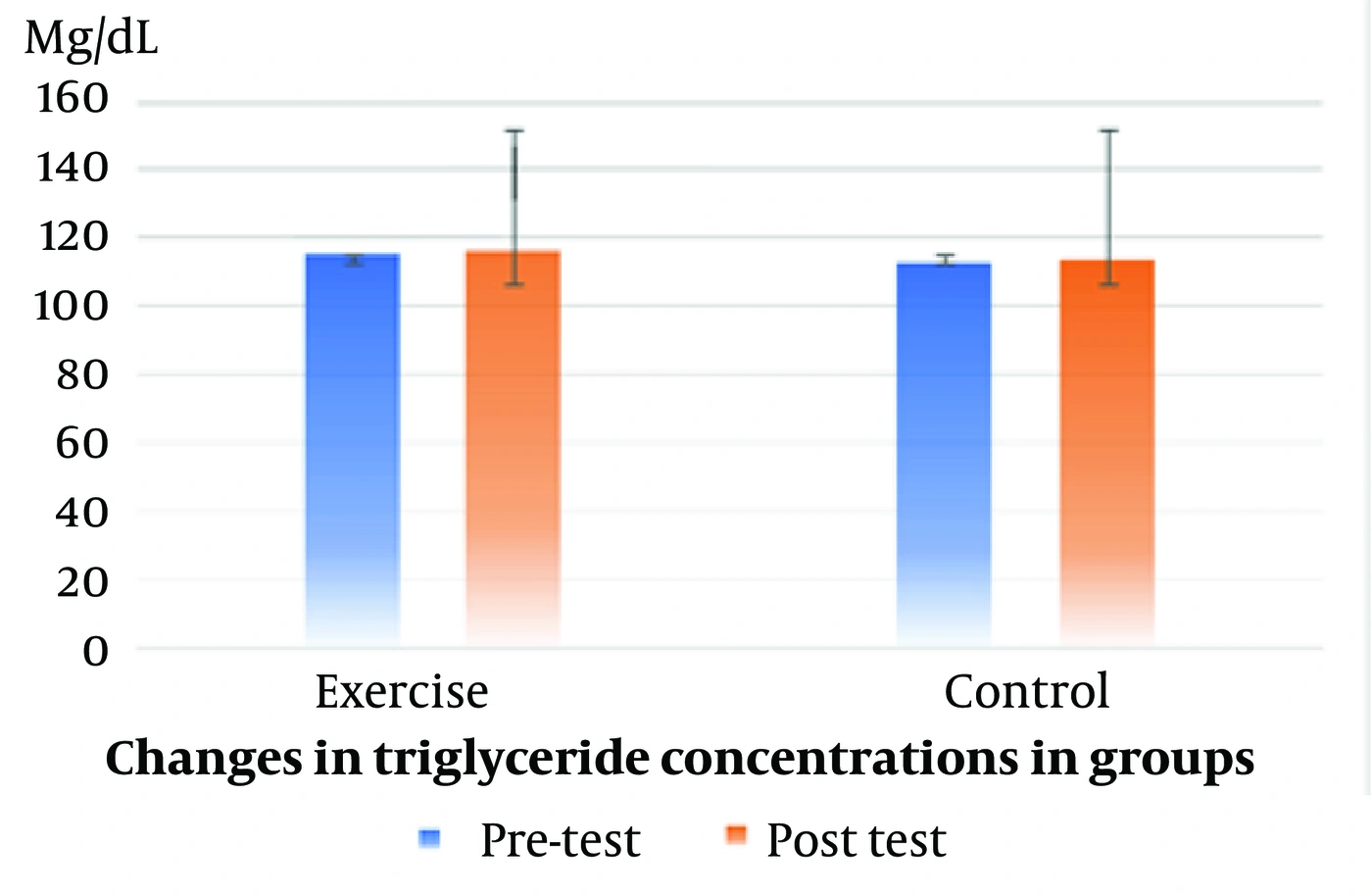
Figure 2.
Triglyceride concentrations
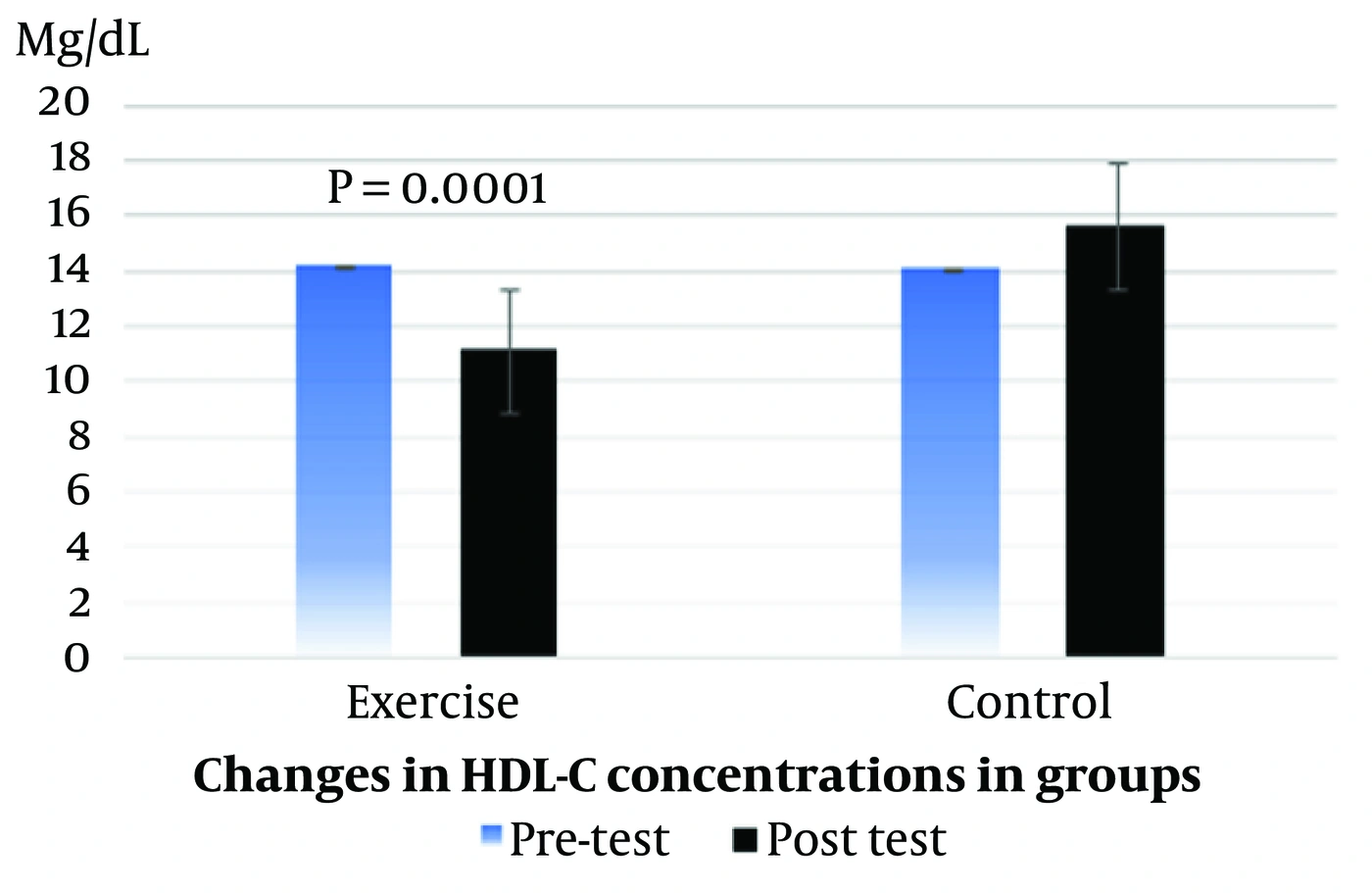
Figure 3.
Changes in HDL-C concentration
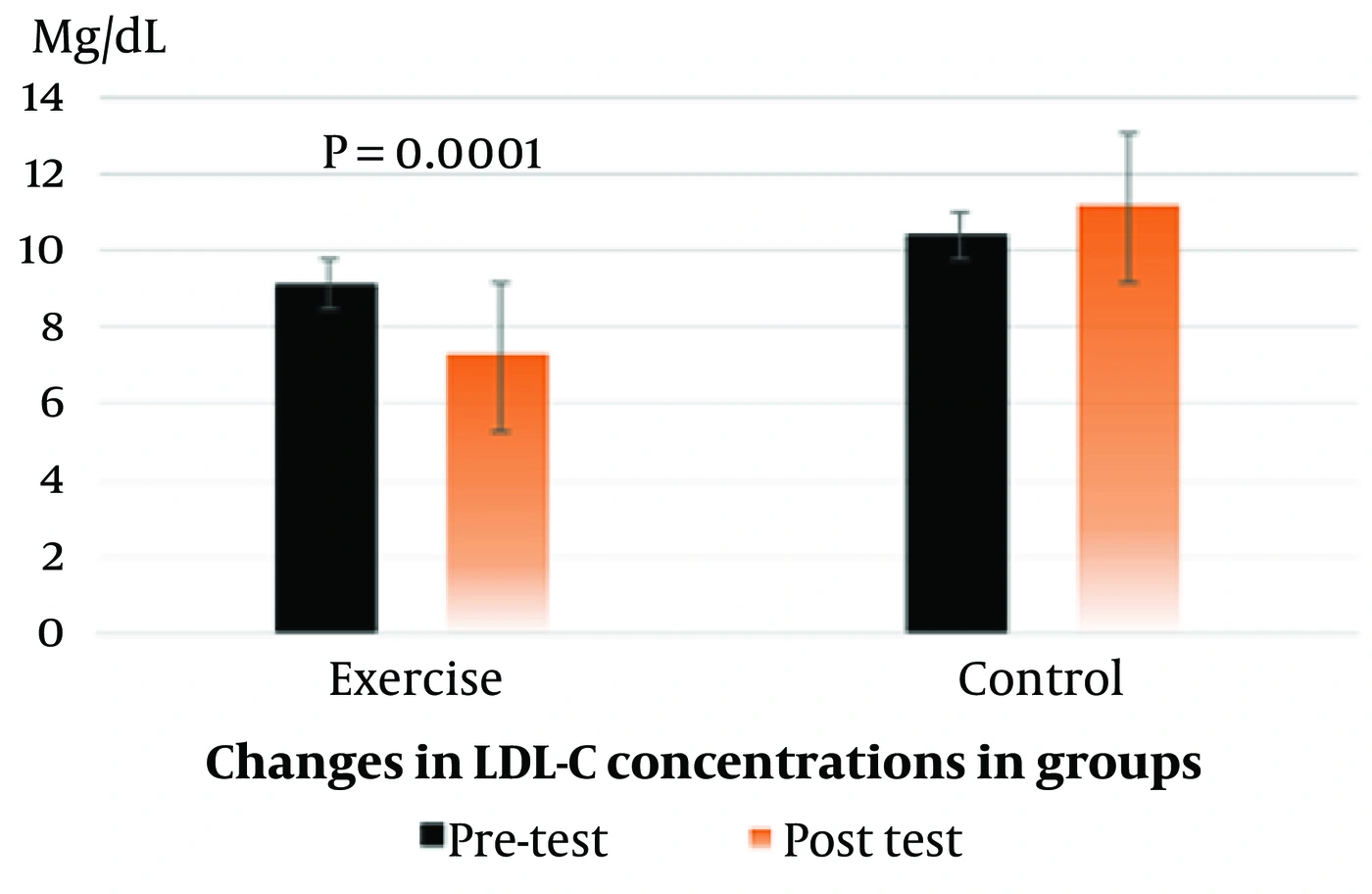
Figure 4.
Changes in LDL-C concentration
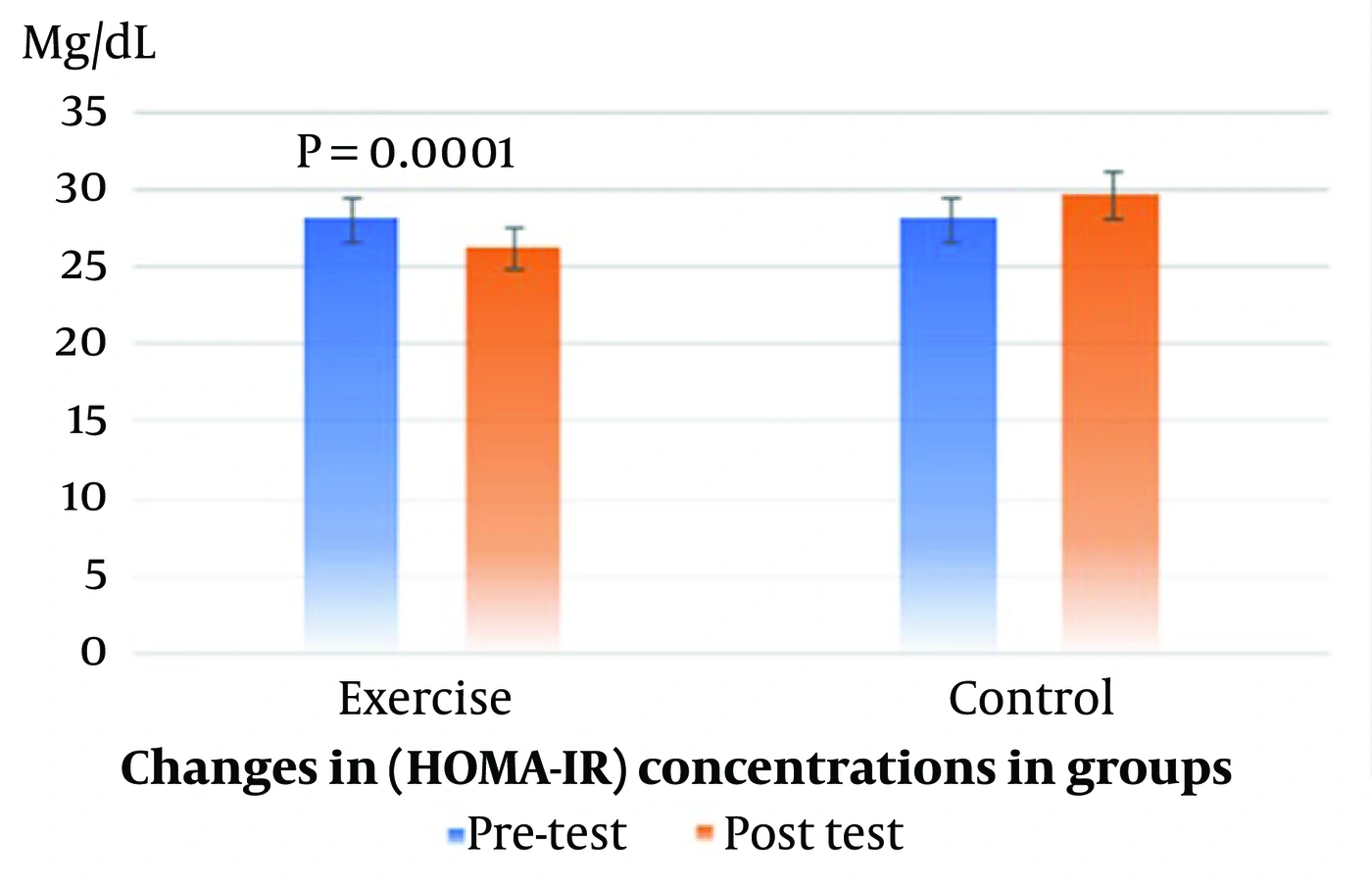
Figure 5.
HOMA-IR concentration
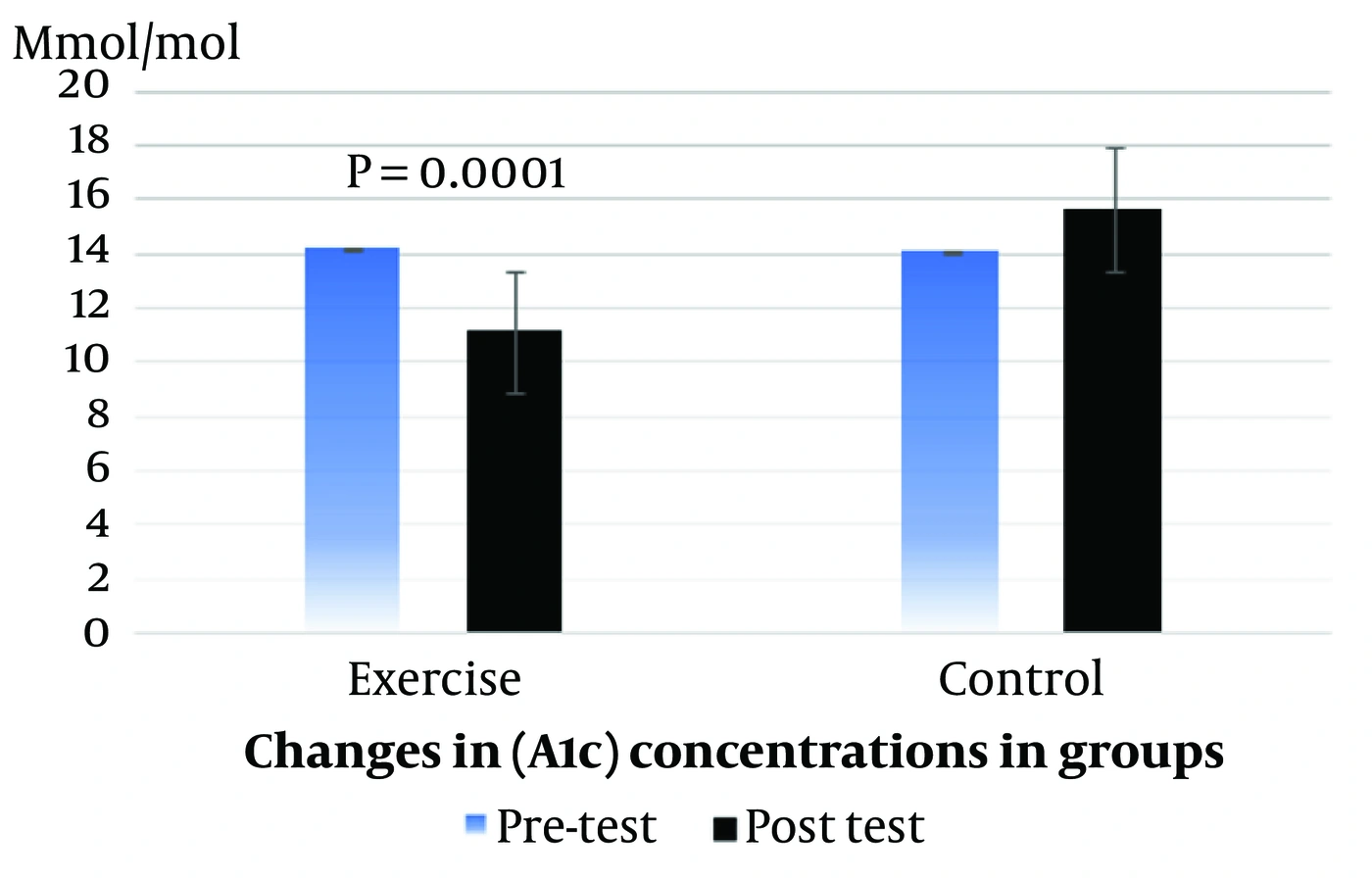
Figure 6.
Glycosylated hemoglobin (HbA1c)
5. Discussion
The findings suggest that regular aquatic exercise can reduce cardiovascular disease risk and improve overall metabolic health. By reducing muscle tension and stress, aquatic exercise may improve muscle oxygenation, increase reliance on fat stores, and gradually reduce body fat and cholesterol (18). The results of the present study are consistent with those reported by Yun et al. (14) and Dağıstan et al. (17). According to Demarie et al. (19), heart rate and oxygen consumption were higher during aquatic exercise, indicating greater energy and fat expenditure because of water viscosity. Aquatic exercise also induces peripheral responses, including increased venous return and decreased antigravity activity, as well as central responses, including increased cerebral blood flow, likely because of greater activity in the somatosensory cortex (19).
No significant changes in triglyceride concentrations were observed in the exercise group. As the body shifts toward fat metabolism, stored TG is broken down and used as fuel. Another key mechanism is increased lipoprotein lipase (LPL) activity in muscle tissue, which is responsible for TG hydrolysis (19). Aquatic exercise increases insulin sensitivity, reduces insulin resistance, and improves lipid metabolism. Research suggests that exercise-induced triglyceride reduction may be mediated by changes in enzyme activity, such as acyl-CoA synthetase and monoglyceride lipase (20). Triglycerides are stored in the liver and muscle tissue but cannot be directly oxidized; instead, they first undergo lipolysis, a process catalyzed by hormone-sensitive lipase in adipose tissue and muscle fibers. This effect may be mediated primarily by activation of lipases and modulation of hormone receptors involved in lipid metabolism, leading to decreased triglyceride synthesis and increased degradation (21). Therefore, the changes observed in this study may be attributed to increased LPL activity and decreased hepatic metabolism.
The findings of this study are consistent with those of Doewes et al. (7). The results show that the aquatic exercise group experienced an increase in HDL-C levels. Some studies suggest that this response may be mediated by activation of the transcription factor PGC-1α, which increases lipid oxidation and stimulates HDL-C production. Increased lipid oxidation may also be attributed to increased gene expression of lipid transport proteins such as CD36, FATP1, and CPT1, which increase free-fatty-acid uptake and facilitate beta-oxidation. HDL collects excess cholesterol from peripheral tissues and transports it to the liver for excretion. In contrast, LDL is involved in atherosclerotic plaque formation (22). These findings are also discussed in the broader literature on exercise, obesity, dysglycemia, and lipid metabolism (4).
Clinical and experimental evidence suggests that aquatic exercise has positive effects on brain function. Exercise regulates FGF-2 expression, and growth factors may mediate some of the positive effects of exercise on the brain (23). One pathway involved in fat reduction is the hypothalamic-pituitary pathway (24). The hypothalamus controls homeostasis as well as blood circulation, respiration, and digestion. During exercise-induced homeostatic changes, the hypothalamic-pituitary axis promotes the secretion of factors such as the fibroblast growth factor family, which may contribute to reductions in visceral and subcutaneous fat by promoting angiogenesis in adipose tissue, increasing heat production, and enhancing metabolic processes, ultimately contributing to reductions in fat, including LDL (25).
Regular training plays a significant role in enhancing autonomic nervous system function and reducing cardiovascular risk (26, 27). Recent studies have shown that moderate-intensity aquatic exercise significantly increases heart rate variability, improves cardiac autoregulation, and reduces oxidative stress and inflammation, thereby improving cardiac function, reducing the incidence of CVD, improving the neurovascular interface of the heart, and promoting cardiac repair (27).
This study showed that aquatic exercise significantly improved HbA1c levels, thereby improving insulin sensitivity, reducing body fat, and enhancing cardiovascular function. Other findings showed that aquatic exercise significantly reduced HOMA-IR. These results are consistent with those reported by Dionne et al. (25), who investigated outcomes associated with aquatic exercise training. Moderate-intensity, prolonged aerobic exercise increases glycolysis at a faster rate, thereby reducing blood glucose levels and insulin secretion.
Obesity contributes to insulin resistance through 2 main mechanisms: impaired insulin signaling and damage to or apoptosis of pancreatic beta cells. Long-term exercise training can reduce these effects by reducing fat mass, improving insulin sensitivity, and modulating adipokines. Endurance exercise, both acute and chronic, has been shown to improve insulin resistance through mechanisms including transient muscle contractions, increased glucose uptake, and increased skeletal muscle mass. Improved insulin function may be mediated by increased insulin receptor protein concentration, protein kinase B activity, and glycogen synthesis. In addition, aerobic exercise increases GLUT4 expression, reduces intracellular TG accumulation, and increases fatty acid oxidation, all of which contribute to improved insulin sensitivity (27).
5.1. Study Limitations
Study limitations included the lack of control for lifestyle, sleep patterns, daily activities, psychological status, and nutrition.
5.2. Conclusions
Aquatic exercise is a safe and effective alternative for overweight women. It reduces stress on the joints and improves selected lipid and metabolic risk factors and insulin sensitivity, making it a potentially valuable strategy for reducing cardiovascular disease risk in overweight populations.