1. Background
Gentamicin sulphate (GS) is considered as one of the aminoglycoside antibiotics used to treat infection especially against Gram-negative bacteria such as Pseudomonas, Proteus and Serratia [1-3]. Nephrotoxicity is one of the most important side effects of the use of gentamicin resulted in reactive oxygen species generation such as superoxide anion, hydrogen peroxide and hydroxyl radicals in the kidney [4-9]. Gentamicin-induced nephrotoxicity increased the activity of superoxide dismutase [5, 10, 11], glutathione peroxidase [12] and catalase in animal models. Thus; they are more sensitive to reactive oxygen species (ROS) effects. Gentamicin-induced nephrotoxicity increases the level of serum creatinine and urea, tubular necrosis and glomerular congestion but decrease glomerular filtration rate [13-15]. In studies done on antioxidant compounds such as curcumin [16] olive leaf extract [5], green tea and coenzyme Q10 [6] and rosmarinic acid [17] such as antioxidant compounds played effective roles in reduction or decrease of renal injuries caused by using of gentamicin.
A number of natural antioxidant such as vitamin E and phenolic compounds are known to have protective effects on liver injury and nephrotoxicity [18]. Chemical drugs as antioxidant have many side effects; therefore, screening for new natural antioxidants is still attractive because they are safe and good alternative for prevention of nephrotoxicity induced by GS. A growing body of research indicates that nutritional deficiencies such as antioxidants contribute to the development of nephrotoxicity.
Carvacrol or cymophenol (2-methyl-5-isopropyl phenol) is a predominant monoterpenic phenol which occurs in many essential oil of the family Labiatae including Origanum satureja, Thymbra, Thymus and Corydothymus species [19, 20]. Carvacrol knows as a strong antioxidant has an antioxidant characteristic that its characteristic is similar to vitamin E, C and butyl hydroxyl toluene (BHT) [21, 22].
It seems that carvacrol also has such characteristic because most of the antioxidant has anti carcinogenic and antiplatelet characteristics [23, 24]. The possible protective effects of carvacrol on structural lesions of kidney tissue in lesions of gentamicin-induced nephrotoxicity male rats have not yet been reported.
2. Objectives
Hence in this research, the inhibitory effect of carvacrol on structural lesions of kidney tissue caused by gentamicin-induced nephrotoxicity will be considered in an animal model.
3. Materials and Methods
In this experimental study, 32 male Sprague-Dawley rats (200 g to 220 g) were prepared from Pasteur Institute of Tehran and they were allowed to adapt themselves with the new location for 1 week. They were kept at a room temperature of 22ºC and a humidity of 50 ± 10% with 12-hours light/dark cycles. This study was approved by the animal ethics committee of Lorestan University of Medical Sciences and was in accordance with the national health and medical research council guidelines. The animals were randomly assigned to 4 groups (8 per group): 1- Control group 2- Sham group treated with 74 mg/kg carvacrol (purchased from Sigma Chemical Company) i.p. for 12 days without treatment with gentamicin. 3- Gentamicin-induced nephrotoxicity received 100 mg/kg gentamicin i.p. for 12 days. 4- Nephrotoxicity group received 100 mg/kg gentamicin and 74 mg/kg carvacrol i.p. for 12 days. After 12 days treatment animals were anesthetized and blood samples of their hearts were obtained and keeps at room temperature for 30 minutes and then centrifuged at 3000 rpm for 15 minutes for serum separation. Their right kidneys were excised for tissue processing and were fixed in 10% formaldehyde solution after tissue processing of their kidney paraffin sections (5 µm thicknesses) were prepared and stained by hematoxylin and eosin.
3.1. Renal Function Parameters
Serum creatinine and urea were measured by autoanalyzer (Biotechnical instruments BT 1000) Parsazmoon, Tehran, Iran.
3.2. Renal Histological Analysis
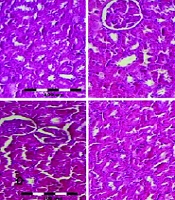
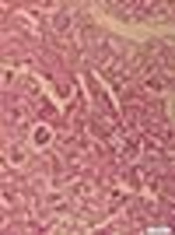
After tissue processing of rat kidneys paraffin sections (5 µm thicknesses) were prepared and stained by hematoxylin and eosin. Forty regions of proximal convoluted tubules near of each kidney at the magnification of × 400 were observed to consider the histopathological changes such as eosinophilic casts, leukocyte infiltration and tubular necrosis. Caramel method was utilized to assess these changes semiquantitively [25]:
0 = no damage; 1 = damage mild, patchy isolated; 2 = damage less than 25%; 3 = damage between 25% - 50%; 4 = more than 50% damage.
The results of each change were reported separately.
3.3. Statistical Analysis
All values are expressed as mean ± SD. Data between groups were first tested Kruskal-Wallis one-way and then between two groups were analyzed by Mann-Whitney U test. Statistical analyses were performed using SPSS-16. A P value < 0.05 was considered statistically significant.
4. Results
The level of serum urea is shown in Table 1. Our study demonstrated that the level of serum urea in untreated nephrotoxic rats was significantly (4.00-fold) higher than that of the control animals. Treatment of nephrotoxic animals with carvacrol could not significantly (57.10%) inhibit serum urea in comparison with untreated nephrotoxic group. The level of serum urea in sham, similar to the level found in the nephrotoxic treated animals. The level of serum creatinine is shown in Table 1. Our study demonstrated that the level of serum creatinine in untreated nephrotoxic rats was significantly (4.44-fold) higher than that of the control animals. Treatment of nephrotoxic animals with carvacrol could not significantly inhibit serum creatinine in comparison with untreated nephrotoxic group.
Table 1.
Effect of Carvacrol on Serum Urea and Creatinine During Gentamicin-Induced Nephrotoxicitya
| Groups | Serum Urea, mg/dL | Serum Creatinin, mg/dL |
|---|---|---|
| 43.83 ± 4.71 | 0.61 ± 0.07 | |
| 50.00 ± 4.02 | 0.7 ± 0.03 | |
| 175.43 ± 39.47 | 2.71 ± 0.27 | |
| 75.25 ± 20.33 | 2.93 ± 0.49 |
aValues are expressed as Mean ± SEM.
bP < 0.05 as compared with gentamicin-induced nephrotoxicity without treatment group.
cP < 0.05 as compared with control group.
The level of eosinophilic casts is shown in table 2. Our study demonstrated that the level of the eosinophilic casts in untreated nephrotoxic rats was significantly (72.16-fold) higher than that of the control animals. Treatment of nephrotoxic animals with carvacrol could not significantly inhibit eosinophilic casts in comparison with untreated nephrotoxic group. The level of eosinophilic casts in sham, similar to the level found in the nephrotoxic treated and untreated animals. The level of leukocyte infiltration is shown in Table 2. Our study demonstrated that the level of the leukocyte infiltration in untreated nephrotoxic rats was significantly (23.87-fold) higher than that of the control animals. Treatment of nephrotoxic animals with carvacrol could not significantly inhibit leukocyte infiltration in comparison with untreated nephrotoxic group.
Table 2.
Effect of Carvacrol on Histopathological Parameters During Gentamicin-Induced Nephrotoxicitya
| Groups | Eosinophilic Casts | Leukocyte Infiltration | Tubular Necrosis |
|---|---|---|---|
| 0.042 ± 0.041 | 0.125 ± 0.048 | 0.188 ± 0.07 | |
| 3.512 ± 0.0893 | 2.272 ± 0.109 | 2.483 ± 0.122 | |
| 3.031 ± 0.094 | 2.984 ± 0.106 | 3.333 ± 0.094 | |
| 3.125 ± 0.147 | 2.727 ± 0.133 | 2.412 ± 0.153 |
aValues are expressed as Mean ± SEM.
bP < 0.05 as compared with gentamicin-induced nephrotoxicity without treatment group.
cP < 0.05 as compared with control group.
The level of leukocyte infiltration in sham, similar to the level found in the nephrotoxic treated and untreated animals. The level of tubular necrosis is shown in Table 2. Our study demonstrated that the level of the tubular necrosis in untreated nephrotoxic rats was significantly (12.82-fold) higher than that of the control animals. Treatment of nephrotoxic animals with carvacrol could significantly (27.63%) inhibit tubular necrosis is in comparison with untreated nephrotoxic group. The level of tubular necrosis in sham, similar to the level found in the nephrotoxic treated animals.
5. Discussion
According to the findings of this study, it can be concluded that GS injection in rats for 12 days can lead to renal disorder in rats. The con-current administration of GS with carvacrol (74 mg/kg) for 12 days at least partially resulted in decreased of renal injuries caused by GS therapy. In this study the level of both serum urea and tubular necrosis significantly decreased in gentamicin-induced-nephrotoxicity groups treated with carvacrol compared to gentamicin-induced-nephrotoxicity groups none treated with carvacrol.
Although GS has an effective role in treatment of Gram negative bacteria, its administration has been limited because of increasing the chance of acute renal failure in 10% - 20% of patients treated with this drug [26]. Gentamicin-induced-nephrotoxicity can cause renal injuries due to ROS generation [4, 14, 15]. Antioxidant compounds such as melatonin [27], vitamin E and probacol [28] etc. have been utilized to decrease the rat of renal injuries caused by gentamicin-induced-nephrotoxicity.
Previous our study showed that Satureja khozestanica essential oil has hypolipidemic effects and reduce glomerular hypertrophy, glomerulosclerosis and loss of glomerular number in untreated diabetic nephropathy rats [29, 30]. Also, previous our study showed that S. khozestanica essential oil is a source of potent antioxidants and prevents the oxidation of LDL in vitro [31]. The main component of S. khozestanica essential oil is carvacrol as a good antioxidant [32]. Although carvacrol knows as a strong antioxidant [21, 22], it seems that it can decrease renal injuries caused by gentamicin-induced-nephrotoxicity due to its antioxidant characteristic. In current study, the level of serum urea and creatinine significantly increased in gentamicin-induced nephrotoxicity group that such findings were similar to the previous studies that the increase in level of serum urea and creatinine maybe not only due to the glomerular injuries, but also due to the decrease of glomerular filtration [5, 16, 17, 33, 34]. Gentamicin-induced nephrotoxicity treated with carvacrol group the level of urea significantly declined. It can be speculated that the decrease of serum urea likely may be due to antioxidant characteristic of carvacrol because in other studies antioxidants such as garlic extract [16], olive leaf extract [5], rosmaric acid [17], and aminoguanidin [35] also have reported a decline level of serum urea and creatinine. In this study, the level of eosinophilic casts, leukocyte infiltration and tubular necrosis significantly increased in nephrotoxic group, while carvacrol therapy only significantly decreased the level of tubular necrosis. In similar studies that considered the effects of different antioxidants, the decrease in the rate of tissue injuries caused by gentamicin-induced-nephrotoxicity by using antioxidants have also been reported [6, 16, 17, 28, 36].
From these studies it can be concluded that the decrease in the level of tubular necrosis after treatment with carvacrol may be due to its antioxidant characteristic from the current study. We can conclude that administration of carvacrol and GS in rats can prevent gentamicin-induced renal toxin at least partially.
Antioxidant therapy is one of the most important treatment strategies for kidney damage patients for the prevention and slowing of kidney damage complications progression. However, the possible underlying molecular protective mechanisms of carvacrol were not completely explained by our results. Also our results showed that carvacrol has some beneficial effects in prevention and slowing of kidney damage complications progression but it can not be introduced to nephrotoxic patients for inhibition and progression of kidney damage complications.
This study showed that carvacrol has beneficial effects, in decreasing the elevated serum urea and tubular necrosis but has not beneficial effects, in decreasing the elevated serum creatinine, eosinophilic casts, and leukocyte infiltration in nephrotoxic rats. Hence, this study showed that carvacrol can probably decrease some nephrotoxic complication such as nephropathy in nephrotoxic patients.