Fulltext
The full text of this article is available on the PDF file.
Zahedan Journal of Research in Medical Sciences
The Official Journal of Zahedan University of Medical Sciences
Image Credit:Zahedan J Res Med Sci
Authors
Background : Today, the Internet has become a part of our everyday life and online communications have made it easy for people to develop interpersonal relationships. However, certain problems and difficulties have arisen from this issue. One of these problems, which have been prevalent among couples and families, is extramarital internet relationships or internet infidelity. The present research has been done to study people's attitudes towards this phenomenon.
Materials and Methods : A 43-item Internet Infidelity Questionnaire (IIQ) was presented on a website designed for this purpose. 481 Iranian users who were members of Farsi language forums and chat rooms were selected through available community sampling and enrolled in the study. To analyze research data, descriptive statistics and the t-test were used.
Results : The results showed that either women or men considered online sexual activities of their partners as traitorous compared with friendly and emotional activities in cyberspace. In addition, women in comparison with men had a more negative attitude towards their partners’ internet activity (especially online sexual activities).
Conclusion : This study expanded our understanding of the traditional concept of infidelity that had merely limited it to face-to-face sexual and emotional behavior. The results also showed that women had more negative attitudes towards such activities compared to men.
© 2012, Author(s). This open-access article is available under the Creative Commons Attribution 4.0 (CC BY 4.0) International License (https://creativecommons.org/licenses/by/4.0/), which allows for unrestricted use, distribution, and reproduction in any medium, provided that the original work is properly cited.
Nooripour R, Abdi MR, Bakhshani S, Alikhani M, Hosseinian S, et al. Exploring Validity and Reliability of Internet Infidelity Questionnaire among Internet Users in Iran. Int J High Risk Behav Addict. 2017;6(1):e34928. doi: https://doi.org/10.5812/ijhrba.34928
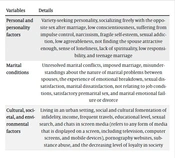
Yousefi S, Ramazanian Bafghi Z, Ahmadi A, Joulaei H, Bolhari J, et al. Spirituality Enhanced with Cognitive-Behavioral Techniques in Extramarital Infidelity: A Literature Review. Zahedan J Res Med Sci. 2024;26(2):e135837. doi: https://doi.org/10.5812/zjrms-135837
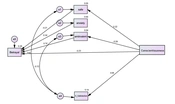
Salehzadeh S, Ghanbari Hashem Abadi BA, Nejat H. Structural Equation Modeling Modeling of the Tendency Toward Marital Infidelity Based on Significant Five Personality Factors Mediated by Attachment Styles and Sexual Satisfaction. J Health Rep Technol. 2024;10(1):e142998. doi: https://doi.org/10.5812/jhrt-142998

Zeinali A, Amirsardari L. Predicting Infidelity Proneness Using Early Maladaptive Schemas. Jentashapir J Cell Mol Biol. 2018;9(1):e11892. doi: https://doi.org/10.5812/jjhr.11892
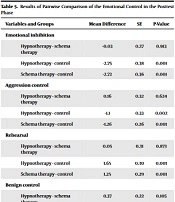
Talaeizadeh M, Eftekhar Saadi Z, Heidari A, Johari Fard R. The Effectiveness of Hypnotherapy and Schema Therapy in Improving Emotional Control in People Affected by Marital Infidelity. J Clin Res Paramed Sci. 2023;12(1):e136463. doi: https://doi.org/10.5812/jcrps-136463
Last Update: 2 weeks ago
Last Update: 2 weeks ago
Last Update: 2 weeks ago
Last Update: 9 hours ago
Last Update: 13 hours ago
Last Update: 5 days ago