Fulltext
The full text of this article is available on the PDF file.
Zahedan Journal of Research in Medical Sciences
The Official Journal of Zahedan University of Medical Sciences
Image Credit:Zahedan J Res Med Sci
Authors
Background: Thoracotomy is a surgical procedure to access the chest components, which is often performed after severe bleeding caused by heart damage, lung laceration and other similar injuries.
Materials and Methods: This is a cross-sectional study which was conducted on all patients with penetrating chest trauma during April 2000 to October 2008.
Results: In 5% of cases, thoracotomy was used for treatment in which severe bleeding was the main surgical indication. It was the most common finding followed by lung laceration thoracotomy.
Conclusion: Most urban injuries are treatable by chest tube. About 3 to 10 percent of cases may require a thoracotomy in which severe bleeding is the most common indication of surgery.
© 2012, Author(s). This open-access article is available under the Creative Commons Attribution 4.0 (CC BY 4.0) International License (https://creativecommons.org/licenses/by/4.0/), which allows for unrestricted use, distribution, and reproduction in any medium, provided that the original work is properly cited.
Fallah P, shafigh Y, Jeddi N, Yadegari S. Management of asymptomatic patients following stab wound to the chest. J Inflamm Dis. 2024;7(5):e155010. doi:
Shadidi Asil R, Zardoui A, Vatuizade L, Zamani A, Hatampour Geraviani K. Emergent Surgical Intervention for a Right Ventricular Stab Wound in a Young Man: A Case Report. Int Cardiovasc Res J. 2026;20(1):e167339. doi: https://doi.org/10.5812/icrj-167339

Karbalaikhani A, shishegar A, Dehkhoda S. Penetrating Heart Injury: a case report. Ann Mil Health Sci Res. 2013;11(2):e66698. doi:
Hessami MA, Fakhri M. The Study of the Patients with Thorax Injury in Kermanshah Truma Center (2002-5). J Kermanshah Univ Med Sci. 2008;12(2):e80090. doi:
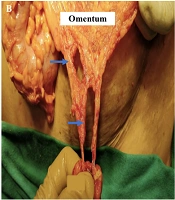
Kumar R, Sharma R, Pao A. Abdomino-Thoracic Impalement: Challenges and Management in Remote Set up in North-East India. J Arch Mil Med. 2022;10(3):e123155. doi: https://doi.org/10.5812/jamm-123155
More by these authors
Last Update: 3 weeks ago
Last Update: 3 weeks ago
Last Update: 3 weeks ago
Last Update: 3 hours ago
Last Update: 6 hours ago
Last Update: 4 days ago