
1. Introduction
Penetrating cardiac injuries (PCIs) are uncommon but clinically significant traumas that may result from stab wounds, gunshot wounds, or iatrogenic complications. Patients with PCIs may present with varying degrees of hemodynamic instability, and prompt diagnosis can be lifesaving. Hemodynamic instability, mediastinal widening on chest radiography, and pericardial effusion on ultrasound suggest PCI (1). Emergency department thoracotomy (EDT) is necessary for some patients with PCI, cardiac arrest, or profound hemorrhagic shock when transfer to the operating room (OR) is not feasible (2). However, mortality is significantly higher among patients who undergo EDT (2, 3).
In this case report, we present a young male patient who sought care in the emergency department (ED) after sustaining a stab wound to the chest wall. The injury occurred on the left side, raising suspicion for a cardiac stab wound. However, the patient’s vital signs and bleeding status were notably stable on arrival in the emergency room (ER). This report describes a diagnostically challenging penetrating cardiac injury in an initially hemodynamically stable patient who was successfully managed by a general surgery team in a resource-limited setting without immediate cardiothoracic surgical support. Although penetrating cardiac injuries are well described, reports emphasizing delayed hemodynamic deterioration and definitive repair by general surgeons remain limited, particularly from centers without on-site cardiothoracic services. The documentation and execution of these surgical interventions adhered to the CARE guideline criteria for case reports (4).
2. Case Presentation
A 25-year-old man presented to the ER approximately 30 minutes after sustaining a stab wound to the chest during a physical altercation. On arrival, a 2-cm penetrating wound was noted in the fourth left intercostal space, medial to the nipple, in the left parasternal area of the torso, with no signs of active bleeding. On admission, the patient was alert, had a Glasgow Coma Scale score of 15, and was speaking normally. He had dyspnea but maintained stable vital signs, including a blood pressure of 120/70 mmHg, a heart rate of 88 beats per minute (bpm), oxygen saturation of 95% on room air and 97% with oxygen supplementation, a body temperature of 37.2°C, and a respiratory rate of 25 breaths per minute. Physical examination revealed a soft, nontender abdomen, and there was no active external bleeding. Rectal examination showed an empty rectum, whereas lung auscultation revealed decreased breath sounds on the left side.
During the first 20 minutes after arrival, while the primary and secondary trauma surveys were completed, the patient remained hemodynamically stable. Focused assessment with sonography for trauma (FAST) revealed a pericardial effusion, which was confirmed by immediate echocardiography. Portable chest radiography showed near-complete opacification of the left hemithorax, prompting immediate chest tube insertion approximately 25 minutes after arrival. This resulted in evacuation of 1200 mL of blood (Figure 1). Within 10 minutes after chest tube insertion, the patient developed acute hemodynamic deterioration, with a decrease in blood pressure to 80/50 mmHg and an increase in heart rate to 110 bpm. Ongoing intrathoracic hemorrhage and evolving cardiac tamponade were suspected. Resuscitation with 2 units of packed red blood cells was initiated, and the patient was transferred emergently to the OR. The total time from ED arrival to surgical incision was approximately 45 minutes.
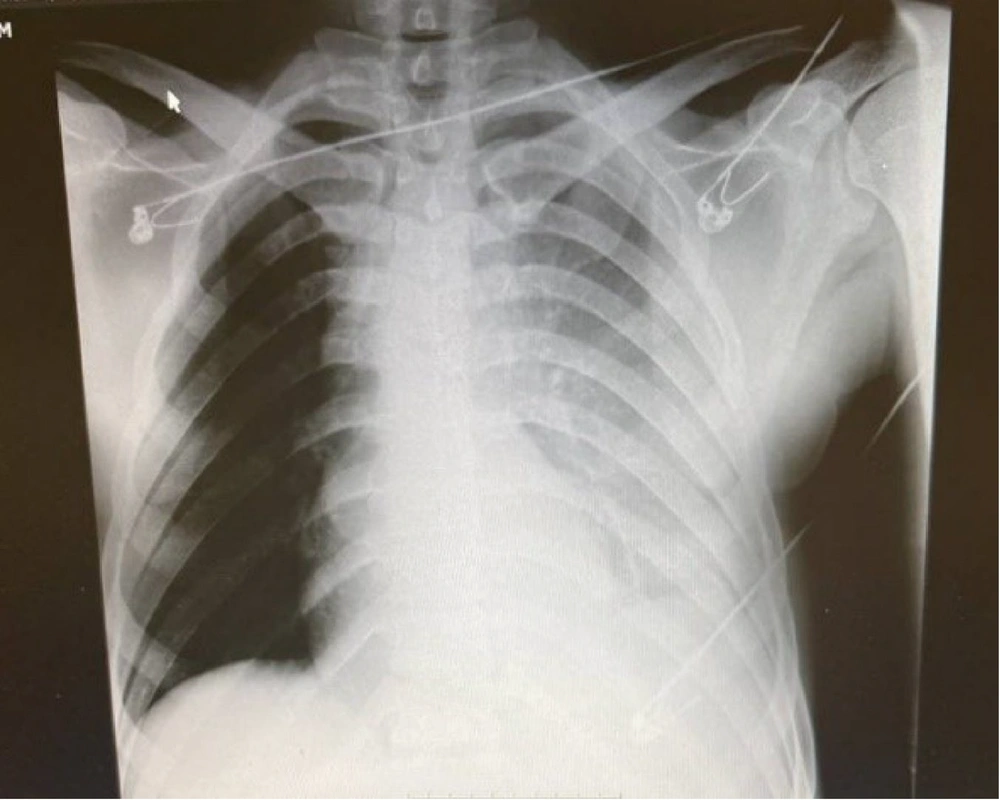
Figure 1.
Portable anteroposterior chest radiograph obtained on admission showing near-complete opacification of the left hemithorax, consistent with a massive left-sided hemothorax in the setting of penetrating chest trauma.
The patient underwent a left anterolateral thoracotomy through the fourth intercostal space under general anesthesia. Initial exploration of the left hemithorax revealed no lung parenchymal or other intrathoracic organ injuries; therefore, the massive hemothorax was attributed solely to the right ventricular laceration. Approximately 200 - 300 mL of residual blood remained in the pleural cavity in addition to the 1200 mL previously evacuated through the chest tube. Examination of the pericardium revealed an approximately 50-mL hematoma and a small full-thickness myocardial laceration measuring approximately 1 cm on the anterior free wall of the right ventricle, which was sealed with a clot (Figure 2). After the pericardium was opened with cautery, forceful bleeding occurred from the right ventricle. The bleeding was successfully controlled using a Satinsky clamp, and the laceration was repaired with continuous 3 - 0 polypropylene sutures.
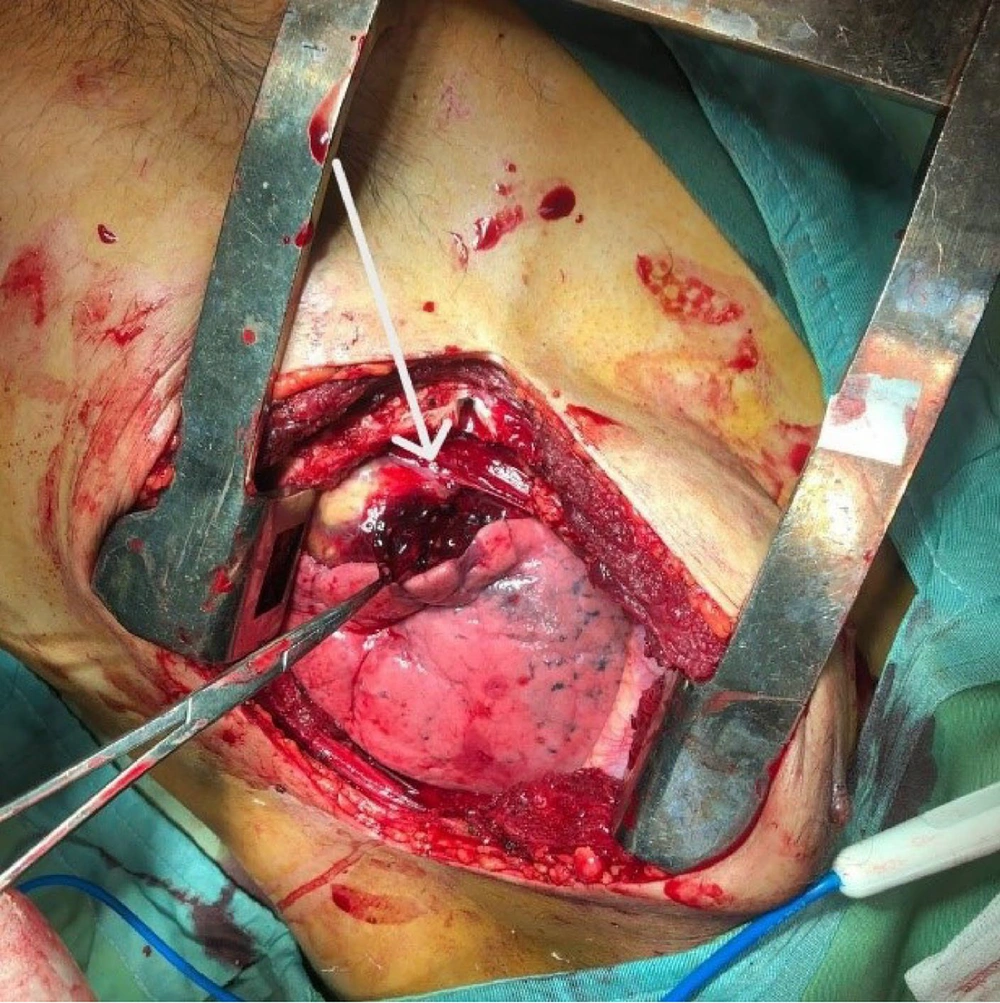
Figure 2.
Intraoperative view during left anterolateral thoracotomy showing a clotted hematoma overlying the anterior surface of the right ventricle (arrow), corresponding to the site of an underlying full-thickness myocardial laceration identified after pericardiotomy.
After the procedure, the pericardial cavity and left hemithorax were irrigated with saline. Brief oozing from the ventricular suture site was managed with coagulant powders. To address ongoing drainage and prevent recurrence of pericardial effusion, the pericardium was partially approximated after placement of a 28-French chest tube. Transient hypotension occurred because this tube was obstructed by clotted blood, which resolved after replacement with a 32-French drain. Finally, the chest wall was closed, and the patient was transferred to the intensive care unit once hemodynamic stability was ensured. The patient was successfully managed without cardiopulmonary bypass. He remained intubated, and appropriate fluid replacement, transfusion with packed red blood cells and fresh frozen plasma (2 units each), and medical treatments, including antibiotics, were administered.
Subsequent echocardiography 2 days after the operation showed preserved left ventricular systolic function, with an ejection fraction of 50%. The right ventricle also showed normal function, with mild to moderate tricuspid regurgitation. Because our center is a general surgery referral center and cardiac surgeons were not available, the patient was transferred to a cardiothoracic surgery center and admitted to the cardiac surgery ward. During his stay at the second center, he had an uneventful recovery and was discharged on the sixth day after surgery with stable vital signs and a hemoglobin level of 10 g/dL.
3. Discussion
In this case report, we describe the clinical course of a 25-year-old male who presented to the ED after a precordial stab injury. The patient showed signs of respiratory distress but otherwise had normal vital signs. FAST revealed a small pericardial effusion around the heart, necessitating thoracotomy.
PCIs can present with a wide spectrum of physiologic states, including moribund, hypovolemic, and tamponade states. In severe cases, patients may present with cardiopulmonary arrest, requiring EDT (2, 5). Some patients may appear deceptively stable on initial evaluation despite significant underlying cardiac damage. As a result, classic signs of cardiac tamponade or shock may be absent at presentation, creating a diagnostic challenge and a potentially false sense of reassurance. Temporary containment of hemorrhage by pericardial clot formation, small myocardial lacerations, or preserved compensatory mechanisms, particularly in young patients, may delay the onset of overt hemodynamic compromise (5-9). Our patient presented similarly; the initial assessment showed normal blood pressure and no cervical venous distension, which further complicated the diagnostic assessment. A few case reports of hemodynamically stable patients with PCIs have been published (10).
Trauma management algorithms endorsed by organizations such as the American Association for the Surgery of Trauma emphasize that clinical stability does not exclude serious cardiac injury and support early imaging and prompt operative intervention when pericardial effusion is identified. However, in some cases, even FAST examinations may fail to detect an effusion because the pericardial sac has already drained into the thoracic cavity (11). In our case, the patient’s initial hemodynamic stability likely reflected transient compensation, which rapidly deteriorated after decompression of the hemothorax and progression of tamponade physiology, reinforcing the dynamic and unpredictable nature of penetrating cardiac trauma.
Most penetrating injuries to the right ventricle can be managed with simple suture repair. However, more extensive damage may require cardiopulmonary bypass by a cardiothoracic surgeon to decompress the right ventricle and maintain perfusion, thereby preventing severe hypotension. An autologous flap is also recommended to maintain robust hemostasis (12). In our patient, however, the right ventricular laceration was relatively small, measuring 1 cm. This injury was effectively managed with primary myocardial repair. Postoperative echocardiography showed preserved right ventricular systolic function with mild to moderate tricuspid regurgitation. This finding was not associated with clinical signs of right-sided heart failure. The observed tricuspid regurgitation may have been attributable to postoperative alteration of the right ventricle or transient impingement of the tricuspid valve during suturing of the laceration, rather than direct valvular injury.
Although PCIs have high prehospital mortality rates, most patients who arrive at the hospital can be managed by a general surgeon (7). Our medical center did not have an attending cardiothoracic surgeon. However, the surgical team provided appropriate care and performed the emergency surgery. The patient was stable enough to be transferred to another center where a cardiothoracic surgeon was readily available. This may be the situation for many medical centers worldwide, where general surgeons are on the front line in trauma rooms.
3.1. Conclusions
This case illustrates the dynamic presentation of penetrating cardiac injury and the importance of vigilant assessment in initially stable patients. Prompt, tailored surgical repair of a right ventricular laceration led to a favorable outcome. Selected cases can be safely managed by general surgeons in the absence of immediate cardiothoracic support.