Fulltext
The full text of this article is available on the PDF file.
Zahedan Journal of Research in Medical Sciences
The Official Journal of Zahedan University of Medical Sciences
Image Credit:Zahedan J Res Med Sci
Authors
Background: Photodynamic therapy (PDT) using 5-aminolevulinic acid (ALA) to produce an intracellular photo-sensitizer, a protoporphyrin molecule IX (PPIX) which absorbs light and targets cells, is a promising cancer treatment. Unfortunately, treatment failures are still a common occurrence when ALA is used. In this study, in order to enhance the efficacy of ALA-dependent photodynamic therapy, the effects of photodynamic therapy on melanoma cancer cells were studied after treating them with tocopherol succinate.
Materials and Methods: In this experimental study melanoma cells were cultured in RPMI 1640 medium for 24 h. then, cells were treated with tocopherol succinate (6μm/ml). After 48 and 72 hours, the mediums were replaced by serum-free medium in the darkness, with ALA, 0.1mg/ml and then cells incubated for 4h. After that, cells were irradiated by using Nd: YAG laser (532 nm). After 24h, cell survival was measured by the MTT assay.
Results: Twenty-four hours after PDT, among compared groups, pretreated cells with tocopherol succinate showed significant lower cell viability than control group.
Conclusion: Induction of differentiation by using tocopherol succinate augmented intracellular PPIX accumulation in cells treated with ALA. Therefore phototoxic cell death after exposure to 532nm light enhances significantly in tocopherol succinate-pretreated cells. This study suggests that tocopherol succinate may act as a biological enhancer of ALA based photodynamic therapy.
© 2012, Author(s). This open-access article is available under the Creative Commons Attribution 4.0 (CC BY 4.0) International License (https://creativecommons.org/licenses/by/4.0/), which allows for unrestricted use, distribution, and reproduction in any medium, provided that the original work is properly cited.
Karbalaei A, Mohammadalipour Z, Rahmati M, Khataee A, Moosavi MA. GO/TiO2 Hybrid Nanoparticles as New Photosensitizers in Photodynamic Therapy of A375 Melanoma Cancer Cells. J Skin Stem Cell. 2017;4(2):e63984. doi: https://doi.org/10.5812/jssc.63984
Hadadian S, Moradzadegan A. Investigating the Toxicity Caused by Photodynamic Therapy with a Low-power Diode Laser with a Wavelength of 810 nm Compared to a Combination of Curcumin in Breast Cancer Cells. Gene Cell Tissue. 2023;11(1):e138519. doi: https://doi.org/10.5812/gct-138519
Mousavi Hosseini K, Jalili MA. Synthesis of Vitamin E Novel Analogues as Anti-Cancer Compounds. Jundishapur J Nat Pharm Prod. 2016;11(1):e32350. doi: https://doi.org/10.17795/jjnpp-32350
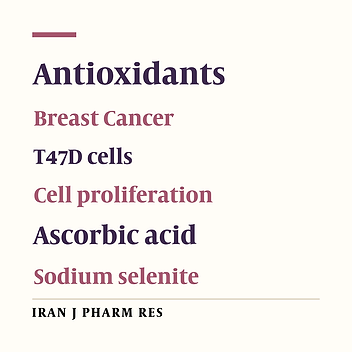
Azizi E, Shoaibi S, Ludewige G, Oveisi MR. The Inhibitory Effects of Ascorbic Acid, α-Tocopherol, and Sodium Selenite on Proliferation of Breast Cancer Cell Lines. Iran J Pharm Res. 2022;2(3):e127634. doi: https://doi.org/10.22037/ijpr.2010.45
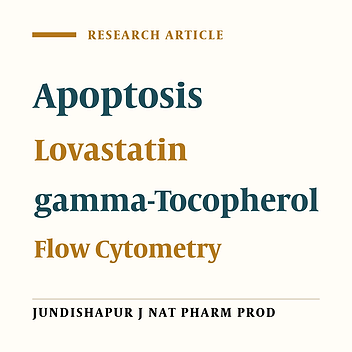
Zeidooni L, Rezaei M, Hashemi Tabar M. Gamma Tocopherol and Lovastatin Additively Induced Apoptosis in Human Colorectal Carcinoma Cell Line (HT29). Jundishapur J Nat Pharm Prod. 2012;7(4):153-158. doi: https://doi.org/10.17795/jjnpp-4860
Last Update: 3 weeks ago
Last Update: 3 weeks ago
Last Update: 3 weeks ago
Last Update: 7 hours ago
Last Update: 1 day ago
Last Update: 4 days ago