Fulltext
The full text of this article is available on the PDF file.
Zahedan Journal of Research in Medical Sciences
The Official Journal of Zahedan University of Medical Sciences
Image Credit:Zahedan J Res Med Sci
Authors
Background: Knee osteoarthritis (OA) is one of the common disabling conditions in human. Joint mobilization is a passive rhythmic accessory movement therapy that is used in the treatment of OA. In this study, the effect of grade one mobilization, on pain reduction of knee OA has been investigated.
Materials and Methods: This study was an unidirectional blind clinical trial with random sampling from patients admitted to sarcheshme physiotherapy clinic in 2007. Thirty participants were divided into 3 groups randomly: group 1: Mobilization + Exercise therapy, group 2: Exercise therapy and group 3: Mobilization. Ultrasound with the intensity below 0.2 W/Cm2 was used for all groups as placebo. The treatment was done in 10 sessions during 3 weeks. Outcome was measured using was WOMAC questionnaire form (Likert Type). Measurements were done before and after treatment and one week after final treatment session. Friedman, Wilcoxon and Kruskal-Wallis tests were used for data analysis included.
Results: Comparison of pain between before and after treatment showed significant differences in group 1 (P=0.01) and group 3 (P=0.04) but was not significant in group 2 (P=0.135). The difference of pain at follow up visit was significant only in group 1 in comparison to before treatment (P=0.007). Pain reduction between before and after treatment (P=0.504) and before treatment and follow up session (P=0.18), showed no significant differences, between 3 groups.
Conclusion: This study showed that grade 1 mobilization can decrease the pain of knee OA. If exercise therapy is used combined with mobilization, the effect of treatment will continue at least for about one week.
© 2010, Author(s). This open-access article is available under the Creative Commons Attribution 4.0 (CC BY 4.0) International License (https://creativecommons.org/licenses/by/4.0/), which allows for unrestricted use, distribution, and reproduction in any medium, provided that the original work is properly cited.
Tavakkoli M, Bahrpeyma F. The effect of mobilization on improvement of physical function in knee osteoarthritis. J Kermanshah Univ Med Sci. 2011;15(1):e69713. doi:
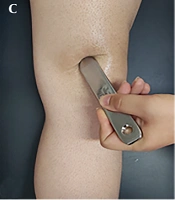
Jafarsalehi B, Boozari S, Torkaman G. Exploring the Impact of Instrument-Assisted Soft Tissue Mobilization on Functional Measures and Quality of Life in Knee Osteoarthritis Patients: A Randomized Controlled Trial. Middle East J Rehabil Health Stud. 2025;12(1):e152345. doi: https://doi.org/10.5812/mejrh-152345
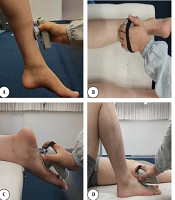
Karimi Soloklo Z, Boozari S, Kahrizi S. The Effect of Short-Term Instrument-Assisted Soft Tissue Mobilization on Lower Limb Muscle Strength and Sit-to-Stand Kinetics in Patients with Knee Osteoarthritis: A Randomized Controlled Trial. Middle East J Rehabil Health Stud. 2025;12(3):e159368. doi: https://doi.org/10.5812/mejrh-159368
Soleimani F, Derisfard F, Negahban H, Esfandiarpour F. Effectiveness of knee exercises versus combined knee and hip exercises in treatment of patellofemoral pain: A randomized clinical trial. koomesh. 2017;19(3):e152901. doi:

Mohamadi S, Bakhtiary AH, Moghimi J, Ghorbani R, Tabesh A. Local Quadriceps Vibration Training in Knee Osteoarthritis: A Randomized Controlled Clinical Trial. Middle East J Rehabil Health Stud. 2014;1(1):e20837. doi: https://doi.org/10.17795/mejrh-20837
Last Update: 3 weeks ago
Last Update: 3 weeks ago
Last Update: 3 weeks ago
Last Update: 2 hours ago
Last Update: 1 day ago
Last Update: 4 days ago