1. Background
Osteoarthritis (OA) is the most prevalent synovial joint disease worldwide with the most frequent involved joint being the knee. OA is a main cause of chronic disability in the elderly (1). Major symptoms and findings of OA are pain and physical disability, which limits the functional activities (1). OA can cause functional disability that may compromise the quality of life in the elderly patients and increase the risk for hypertension, diabetes and cardiovascular disease (2). Therefore, the main goal of physiotherapy is to reduce pain and restore or maintain optimal physical functioning in these patients (3). Vibration training is one of the physiotherapy modality that is recently used extensively as an exercise intervention (2). The effectiveness of vibration in pathological conditions has been investigated widely (4-9). Its beneficiary effect on the management of acute soft tissue injury (6) and knee OA (10) has been shown. It has been shown as a safe and time-saving rehabilitation method that may increase muscle strength and improve balance control and proprioceptive function in women with knee OA (8).
Most studies have used whole body vibration (WBV), while local vibration applied to the muscle may also have the beneficial effects (11). Applying local mechanical vibration may induce muscle movement imagination for faster muscle re-education (11) and plastic changes in proprioceptive processing, leading to an improvement in knee joint control (12). Furthermore, it has been shown that local vibration may stimulate mechanoreceptors, which their afferent signals may relief the pain perception through the gate control theory (13); however, there has been a little interest regarding the beneficiary effect of local vibration on the knee OA complications, which have been improved by the WBV (13). As using small portable vibrator for local vibration on the muscle may have the benefits of WBV in addition to the portability of the device (11), patients may easily use it as a treatment modality at home.
2. Objectives
In order to find the effectiveness of local vibration application on knee OA complications, a single-blind randomized controlled trial was designed to investigate the changes in the muscle torque, balance, pain perception, and physical function after local quadriceps muscle vibration in women with knee OA.
3. Patients and Methods
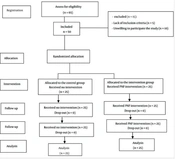
This randomized, controlled, clinical trial was approved by the Ethical Committee of Semnan University of Medical Sciences and was registered in Iranian Registry Clinical Trial. A total of 50 patients with knee OA (40 with bilateral knee OA) were recruited from an outpatient rheumatology clinic. All subjects signed an informed consent and the rights of the subjects were protected. After each participant’s eligibility was confirmed, they were assigned randomly to one of the two experimental and control groups. After familiarization with process of the study, patients signed informed consent forms. Inclusion criteria for patients with knee OA were the age of 30 to 80 years old and being diagnosed with knee OA by American College of Rheumatology (ACR) with grades of 1, 2, or 3 by Kellgren-Lawrence scale (14). Patients had to be ambulatory without assistance and had the complaints of OA for at least one year. Patients were excluded if they had other conditions such as diabetes, musculoskeletal, cardiovascular, neuromuscular, or respiratory diseases, surgery or other invasive therapies within the preceding three months, trauma to the knee within the preceding week, artificial hip or knee joint, using medication for knee OA, regular and professional exercise, and severe total body weakness. The randomization was envelope based with concealed allocation until all baseline measurements were performed. The two intervention programs consisted of 15 training sessions within a four-week period. All assessments were completed before and after intervention and also after a four-week follow-up period by an observer blinded to the group allocation.
3.1. Intervention
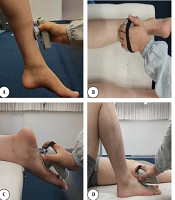
Both experimental and control groups undertook a 15 sessions (five weeks) conventional physiotherapy protocol for knee OA followed by a four-week follow-up period. The conventional physiotherapy protocol included transcutaneous electrical nerve stimulation (TENS), hot pack, and strengthening exercises for quadriceps muscle (quadriceps setting and straight leg raise exercises) with increased training load (15). At each physiotherapy session and in addition to the conventional physiotherapy protocol, local vibration was applied over the quadriceps muscle of the participants in the experimental group. The vibration was applied using a 50 Hz vibrator apparatus (Model VR-7N ITO, Tokyo, Japan) that was placed over the midline of the anterior aspect of the thighs (immediately over the quadriceps muscle) while the participant was in the supine position with extended hip and knee joints. The participant was asked to provide a background isometric contraction in quadriceps muscles during vibration. Vibration training protocol included five sets of 60 seconds vibration with 60 seconds rest between each set during sessions one through five, which increased to 90 seconds from session six through ten and to 120 seconds from session 11 through 15.
3.2. Outcome Measures
The staff who assessed the outcomes were different from those administering the treatments and they were blinded to the type of treatment. Outcome measures for each subject consisted of knee pain measurement, six-minute walk test (6 MWT), quadriceps to hamstring (Q/H) peak torque ratio, balance indices, and self-reported functional performance measurement.
3.3. Measurement of Knee Pain
Knee pain perception was measured by means of a visual analogue scale (VAS) on which the patients could indicate their assessment along a 10-cm line ranging from zero, representing “no pain at all”, to ten, representing “the most severe pain that I can imagine”.
3.4. Measurement of Active Knee Flexion Range of Motion
To measure the active knee flexion range of motion (ROM), the participant laid in supine position while the examiner ensured that the other lower limb remained extended on the bed throughout the test to minimize pelvic movement. The examiner lifted the lower leg so that the hip and knee were flexed to 90 degrees. From this position, participant was asked to flex the knee actively until the firm resistance or pain was felt. During this procedure, a standard 360-degree plastic goniometer with two arms of 45-cm length and 4.5-cm width was used to determine the maximum knee flexion ROM using the greater trochanter, lateral femoral epicondyle, and lateral malleolus as anatomical reference points.
3.5. Measurement of Six-Minute Walking Test
The 6 MWT was used to quantify walking ability (16). Individuals were free to continue using their walking aid or not. The 6 MWT was recorded indoors in a well-lit 25-m tiled hallway. The recorded score was the total walked distance during six minutes. Participants were instructed to “walk as quickly and safety as they can” for six minutes and then walked distance was recorded.
3.6. Quadriceps to Hamstring Peak Torque Ratio
The Q/H peak torque ratio was used to evaluate any change in the performance of knee extensor and flexor muscles. The isokinetic concentric quadriceps and hamstring muscles peak torques were measured by Biodex isokinetic system (Model 4Pro, Biodex, USA). Subjects set with the backrest at an 85º angle and were instructed to grip the sides of the seat during the testing. The thigh, pelvis, and trunk were stabilized with straps. An adjustable lever arm was attached to the subject's leg by a padded cuff just proximal to the medial malleolus. The axis of rotation of the dynamometer arm was positioned just lateral to the lateral femoral epicondyle. Gravity corrections to torque were calculated by a computer software. Conventional concentric continuous isokinetic tests were used. Subjects were familiarized with test procedures by performing three consecutive warm-up trials one of which was a maximal contraction. There was a 120-second interval between the warm-up and test procedure. During concentric tests, the subject was asked to push the lever arm of the dynamometer up and down continuously through the ROM between 10º and 90º of knee flexion. All subjects were encouraged verbally to exert maximal effort during the test. The participants performed five maximal continuous flexion-extension repetitions for each angular velocity of 30° per second, 60° per second, and 90° per second in each leg. The order of speed was from slower to faster. A 60-second rest was allowed between two consecutive contractions. Then the machine measured the peak torque of quadriceps and hamstring muscle during knee extension and flexion, consecutively.
To ensure the test accuracy and reproducibility, a group of ten randomly selected subjects repeated the isokinetic tests two weeks after the first set. The reliability coefficients (r) for related measures of the isokinetic tests were good to excellent and were 93% and 92% for concentric contraction of quadriceps and hamstring muscles, respectively.
3.7. Balance Indices Measurement
A Biodex Balance System (BBS) was used to evaluate dynamic and static balance indices. Its great reliability for evaluating dynamic and static postural balance has been reported in previous studies (17, 18). Its reliability was measures for different parameters as follows: anterior-posterior stability index (APSI), 0.95; medial-lateral stability index (MLSI), 0.93; and overall stability index (OSI), 0.94 (18). The BBS allows up to 20° of foot platform tilt and calculates three separate measures, namely, MLSI, APSI, and OSI, indicating the postural sway in the anterior posterior, medial-lateral directions, and overall. A higher score in each index such as MLSI indicates poor balance. It is believed that the OSI score is the best indicator of the overall patient ability to maintain balance on the free platform (17).
In order to measure the APSI, MLSI, and OSI scores, an examiner blinded to the experimental and control groups asked the subjects to step on the BBS platform with bare feet and assume a comfortable position. The feet position on the platform was different among the subjects. The exact position of the feet were detected by the graded surface of the platform and recorded in the software for further correction. The subjects were asked to maintain their foot position on the platform throughout the test session. Before starting the test procedure, participants were trained 60 seconds for adaptation to the test procedure. Then three tests were performed in static and dynamic conditions of the platform with eyes open. During the static balance test, the platform was locked under the feet, while during the dynamic test the platform was unlocked under the feet with stability levels ranging progressively from six (most stable) to one (least stable). The examiner instructed the subjects to maintain their center of foot pressure in the smallest one of concentric rings (balance zones) on the BBS monitor, namely, zone A. Each of the dynamic and static tests were repeated three times, 20 seconds each with 15-second rest interval. The APSI, MLSI, and OSI were calculated by the mean of postural sway during three static and dynamic test trials. The recorded mean values of balance indices were normalized through being divided by the subject’s height (19).
3.8. Measurement of Self-Reported Functional Performance
The Western Ontario and McMaster Universities osteoarthritis index (WOMAC), which is a self-administered questionnaire for participants with hip or knee OA, was used to evaluate the functional performance of subjects. According to the Likert version of the WOMAC, the participants were asked to indicate the degree of pain or difficulty they had experienced due to the knee OA on a scale ranging from zero (none) to four (extreme). The individual scores for each item were added to generate a summary score that could range from zero to 68, with higher scores indicating poorer function. The reliability and validity of the WOMAC have been well established previously (16).
3.9. Data Analysis
An intention to treat analysis was used to compare the possible treatment effect, which involved all patients who were randomly assigned to their groups. Baseline characteristics were analyzed using descriptive statistics and were presented as mean with standard deviation. Changes in the knee pain perception, 6 MWT, H/Q peak torque ratio, balance indices, and WOMAC questionnaire scores was compared between groups before, immediately after the treatment, and four weeks later with an independent t test and were presented as between-group mean difference in changes with a 95% confidence interval (CI). This analysis assumes that the data from both knee of the same participant were not substantially correlated, which is consistent with existing literature (20); however, to confirm this, we also performed the same analysis of the data from the right knee independent of the data from the left knees to illustrate that these data provided very similar estimates of the magnitude of the effect. The level of significance was set at 0.05 and CI was set at 0.95 for all statistical tests. We used the largest estimate of the standard deviation of the change in the muscle torque from Trans et al. study (2009) to estimate sample size. A total of 84 knees would provide 80% probability of detecting a difference of 5 Nm in quadriceps muscle peak torque at a two-sided significance level. To allow for some lost to follow-up cases, we increased the total sample size to 90. SPSS software version 18 (SPSS Inc., Chicago, IL, USA) was used to analyze the recorded data.
4. Results
A total of 50 individuals (90 knees) were enrolled in the study, familiarized with the procedures, and underwent baseline testing. Through random allocation, 25 subjects were allocated to the experimental and 25 subjects to the control groups (45 knees in each group). Baseline characteristics of the two groups are presented in Tables 1, 2, 3 and 4. No significant difference was found between groups in term of demographic data. All subjects completed the interventions as randomly allocated and completed postintervention measurement at three weeks, while three subjects (two in vibration and one in control groups) were lost to follow-up at the eighth week. The independence analyses of the data from the right and left knees confirmed that these analyses had provided very similar estimates of the magnitude of the effect (Tables 2 and 4). For the right and left knee pain, the mean difference in changes over the intervention period was 1 (95% CI, 0.05-1.4) and 1.1 (95% CI, 0.03-1.5; Table 3) in VAS, respectively. The same magnitude of the effect was also found in the active knee flexion ROM and in the Q/H peak torque ratio between the right and left knees (Tables 2 and 4).
Table 2 presents the baseline mean and the mean changes of 6MWT, knee pain perception, active knee flexion ROM, and WOMAC measurements at the end of the therapy and at four-week follow-up. After intervention, significant improvement was seen in the mean changes of all measurements within both experimental and control groups. No significance difference was found between groups after intervention in term of WOMAC and 6MWT while significantly less pain perception (right knee, P = 0.028; and left knee, P = 0.013) and more active knee flexion ROM (P < 0.05) were found in the experimental group in comparison with the control group (Table 2). After intervention, the comparison of the mean change of static and dynamic balance indices showed significant balance control improvement in both groups in term of APSI and OSI; however, significant lower postural sway was found in the experimental group in comparison with the control group at the end of treatment and at four-week follow-up (P < 0.05) (Table 3). The results of Q/H peak torque ratio are shown in Table 4. The Q/H peak torque ratio was improved significantly in both groups at 30° per second (P < 0.005) while no improvement was seen at 60° and 90° per second speed; however, no significant difference was found in the mean changes of Q/H ratio between experimental and control groups.
| Experimental Group | Control Group | P value | |
|---|---|---|---|
| Age, y | 52 ± 7 | 53 ± 9 | NS |
| Weight, kg | 77.2 ± 14 | 74.1 ± 13 | NS |
| Height, cm | 155 ± 5 | 153 ± 5 | NS |
| BMI, kg/m2 | 31.1 ± 5.5 | 31.2 ± 5.2 | NS |
a Data are presented as mean ± SD.
bAbbreviations: BMI, body mass index; and NS, not significant.
| Baseline Measurement | Before and After Intervention | Before Intervention and After 4-Week Follow-Up | ||||||||||||
|---|---|---|---|---|---|---|---|---|---|---|---|---|---|---|
| Exp | Con | Exp | P Value | Con | P Value | 95% CI | P Value | Exp | P Value | Con | P Value | 95% CI | P Value | |
| 6MWT, m | 349.2 ± 27.1 | 352.9 ± 57.6 | 33.2 ± 6.5 | < 0.0001 | 27.5 ± 7.8 | < 0.0001 | -1.6 – 14.3 | 0.132 | 32.9 ± 5.8 | < 0.0001 | 28.4 ± 7.2 | 0.001 | -0.9 – 33.9 | 0.243 |
| Right Knee Pain, VAS | 7.8 ± 2.1 | 5.8 ± 2.4 | 2.6 ± 0.4 | 0.001 | 1.6 ± 0.1 | 0.001 | 0.05 – 1.4 | 0.028 | 1.3 ± 0.3 | 0.003 | 0.6 ± 0.1 | 0.001 | 0.04 – 1.5 | 0.025 |
| Left Knee Pain, VAS | 6.9 ± 2.1 | 4.3 ± 2.4 | 2.8 ± 0.4 | < 0.0001 | 1.9 ± 0.1 | 0.003 | 0.03 – 1.5 | 0.013 | 1.5 ± 0.4 | 0.03 | 0.5 ± 0.1 | 0.02 | 0.05 – 1.8 | 0.031 |
| Right Knee Flexion, degree | 128.1 ± 8.8 | 129.8 ± 7.5 | 3.4 ± 2.9 | 0.021 | 1.7 ± 2.3 | 0.042 | 0.05 – 2.01 | 0.033 | 3.1 ± 3.4 | 0.024 | 1.5 ± 2.8 | 0.046 | 0.09 – 2.51 | 0.035 |
| Left Knee Flexion, degree | 127.3 ± 9.1 | 128.2 ± 8.6 | 3.7 ± 3.1 | 0.019 | 1.9 ± 2.8) | 0.038 | 0.09 – 2.89 | 0.031 | 3.5 ± 2.9 | 0.026 | 1.7 ± 2.5 | 0.039 | 0.06 – 2.76 | 0.029 |
| WOMAC | 33.1 ± 17.2 | 38.4 ± 14.9 | 14.8 ± 2.1 | < 0.0001 | 14.5 ± 2.3 | < 0.0001 | -5.9 – 5.4 | 0.903 | 18.2 ± 2.5 | < 0.0001 | 16.3 ± 1.9 | 0.0001 | -8.04 – 4.3 | 0.512 |
aAbbreviations: CI, confidence interval; Con, control; Exp, experimental; 6MWT, 6-Minute Walk Test; VAS, visual analogue scale; and WOMAC, Western Ontario and McMaster Questionnaire.
b Data are presented as mean ± SD.
| Balance Index | Baseline Measurement | Before and After Intervention | Before Intervention and After 4-Week Follow-Up | |||||||||||
|---|---|---|---|---|---|---|---|---|---|---|---|---|---|---|
| Exp | Con | Exp | P Value | Con | P Value | 95% CI | P Value | Exp | P Value | Con | P Value | 95% CI | P Value | |
| Static OSI | 0.46 ± 0.2 | 0.51 ± 0.2 | 0.16 ± 0.3 | 0.004 | 0.06 ± 0.1 | 0.08 | 0.01 – 0.2 | 0.04 | 0.18 ± 0.1 | 0.003 | 0.09 ± 0.1 | 0.002 | 0.05 – 0.19 | 0.03 |
| Static APSI | 0.38 ± 0.1 | 0.42 ± 0.1 | 0.13 ± 0.1 | 0.003 | 0.07 ± 0.2 | 0.01 | 0.03 – 0.2 | 0.03 | 0.14 ± 0.1 | 0.01 | 0.08 ± 0.1 | 0.03 | 0.02 – 0.15 | 0.04 |
| Static MLSI | 0.21 ± 0.1 | 0.23 ± 0.1 | 0.09 ± 0.2 | 0.06 | 0.05 ± 0.1 | 0.09 | -0.11 – 0.08 | 0.09 | 0.09 ± 0.1 | 0.9 | 0.11 ± 0.2 | 0.5 | -0.08 – 0.09 | 0.8 |
| Dynamic OSI | 2.02 ± 0.6 | 2.01 ± 0.7 | 0.49 ± 0.1 | 0.004 | 0.31 ± 0.1 | 0.04 | 0.03 – 0.51 | 0.02 | 0.66 ± 0.2 | 0.001 | 0.39 ± 0.1 | < 0.0001 | 0.01 – 0.31 | 0.02 |
| Dynamic APSI | 1.49 ± 0.5 | 1.41 ± 0.5 | 0.37 ± 0.1 | 0.01 | 0.22 ± 0.1 | 0.02 | 0.4 – 0.6 | 0.01 | 0.58 ± 0.1 | < 0.0001 | 0.31 ± 0.1 | < 0.0001 | 0.04 – 0.48 | 0.2 |
| Dynamic MLSI | 1.14 ± 0.4 | 1.06 ± 0.5 | 0.21 ± 0.1 | 0.001 | 0.16 ± 0.1 | 0.01 | -0.08 – 0.11 | 0.9 | 0.23 ± 0.1 | 0.03 | 0.19 ± 0.1 | 0.02 | -0.03 – 0.1 | 0.5 |
aAbbreviations: APSI, anterior-posterior stability index; CI, confidence interval; Con, control; Exp, experimental; MLSI, medial-lateral stability index; and OSI, overall stability index.
b Data are presented as mean ± SD.
c Measurements were normalized by dividing stability index by subject’s height in centimeters.
Table 4.
| Baseline Measurement | Before and After Intervention | Before Intervention and After 4-Week Follow-Up | ||||||||||||
|---|---|---|---|---|---|---|---|---|---|---|---|---|---|---|
| Exp | Con | Exp | P Value | Con | P Value | 95% CI | P Value | Exp | P Value | Con | P Value | 95% CI | P Value | |
| Right Q/H ratio (30°/s) | 1.71 ± 0.4 | 1.66 ± 0.3 | 0.29 ± 0.1 | 0.003 | 0.14 ± 0.1 | 0.08 | -0.2 – 0.14 | 0.76 | 0.26 ± 0.1 P | < 0.0001 | 0.16 ± 0.1 | 0.02 | -0.21 – 0.1 | 0.55 |
| Left Q/H ratio (30°/s) | 1.59 ± 0.4 | 1.68 ± 0.3 | 0.33 ± 0.1 | 0.002 | 0.21 ± 0.1 | 0.07 | -0.1 – 0.13 | 0.89 | 0.5 ± 0.1 P | < 0.0001 | 0.18 ± 0.1 | 0.03 | -0.18 – 0.11 | 0.52 |
| Right Q/H ratio (60°/s) | 1.41 ± 0.4 | 1.54 ± 0.3 | 0.17 ± 0.1 | 0.41 | 0.13 ± 0.1 | 0.19 | -0.09 – 0.16 | 0.61 | -0.16 ± 0.1 | 0.88 | -0.12 ± 0.1 | 0.26 | -0.09 – 0.16 | 0.61 |
| Left Q/H ratio (60°/s) | 1.49 ± 0.3 | 1.57 ± 0.3 | 0.15 ± 0.1 | 0.39 | 0.11 ± 0.1 | 0.18 | -0.07 – 0.21 | 0.49 | 0.13 ± 0.1 | 0.76 | 0.09 ± 0.1 | 0.22 | -0.09 – 0.16 | 0.52 |
| Right Q/H ratio (90°/s) | 1.48 ± 0.3 | 1.36 ± 0.3 | 0.12 ± 0.1 | 0.41 | 0.14 ± 0.1 | 0.53 | -0.01 – 0.32 | 0.07 | 0.09 ± 0.1 | 0.59 | 0.07 ± 0.1 | 0.66 | -0.21 – 0.15 | 0.89 |
| Left Q/H ratio (90°/s) | 1.33 ± 0.3 | 1.41 ± 0.3 | 0.16 ± 0.1 | 0.33 | 0.18 ± 0.1 | 0.57 | -0.06 – 0.25 | 0.07 | 0.12 ± 0.1 | 0.21 | 0.15 ± 0.1 | 0.32 | -0.16 – 0.21 | 0.93 |
aAbbreviations: CI, confidence interval; Q/H, quadriceps to hamstring; Con, control; and Exp, experimental.
b Data are presented as mean ± SD.
5. Discussion
This trial showed that local vibration over the quadriceps muscles significantly reduced the severity of knee pain perception, improved functional ability in term of active knee flexion ROM, and improved balance control performance in the patients with knee OA. The acceptance of the program by virtually all participants was encouraging; the sessions were experienced as pleasant and both socially and physically rewarding. The results suggest that local quadriceps vibration training may help to reduce pain perception in women with knee OA. This is in line with previous studies that showed pain reduction after vibration training (13, 21-23). It was shown that vibration stimulation was effective and in some patients even more effective than high or low frequency TENS in reducing chronic musculoskeletal pain through the gate control theory of pain (13). According to our findings, the reduction of knee pain perception was consistent with increased active knee flexion ROM, which indicated the clinical importance of local vibration application for patients with knee OA; in fact, pain reduction and restoring optimal function of the joint are the main goals of physiotherapy in these patients (3).
The other findings of the present study was the reduction of postural sway, which has been shown to be impaired in patients with symptomatic knee OA (24). Although there is no study to investigate the effect of local vibration on the balance indices in knee OA, a few studies have shown some dynamic and static balance improvements in patients with knee OA after using therapeutic interventions (25, 26), which is similar to our findings. Our findings showed superior effect of the local application of vibration along with conventional physiotherapy on improving the static and dynamic balance indices in comparison with the conventional physiotherapy alone; however, there are some controversies about the effect of vibration on balance control. While some studies have shown that vibration training protocol may lead to a significantly improved body balance in the young as well as the elderly individuals (27, 28) and in patients with Parkinson’s disease (29), some other studies showed no superior efficacy of vibration in comparison with the conventional treatment protocol in either Parkinson or stroke patients (30, 31). These controversies could be due to the different protocol of vibration application. Our findings about the beneficiary effect of vibration on the balance control performance may emphasis the clinical importance of local vibration application over quadriceps muscles in patients with knee OA.
Vibration, as a special method of strength training has attracted attention for two decades (32) and there are quite different results with regard to the technical as well as the clinical parameters (36). Although some investigations showed some increases in vertical jump height, maximal dynamic leg-press performance, and mechanical power of the arm flexors (33, 34), some others found no additional benefits in vibration over the conventional resistance training on muscle performance (35). It has been suggested that the increasing of gravitational load on the subject standing on the vibrating platform is the mechanism by which WBV may influence the neuromuscular system (35). Therefore, using local vibration instead of WVB did not lead to any change in muscle torque in our study, because there was no gravitational load due to the local application of vibration.
After intervention, there was no significant difference in 6 MWT and WOMAC scores, as determinants of functional performance (16), between study groups. It seems that local vibration training has no beneficial effect on the functional status in patients with knee OA. These findings were inconsistent with other studies concerning the effects of vibration (22, 36, 37). Based on Cardinal and Boaco's argument (2003), the mechanical characteristic of vibration may increase the gravitational load, which seems to provide an adequate stimulus for improved functional performance (38). In another study, Kawanabe et al. showed that vibration training may improve walking ability in the elderly (37); however, these two studies used WBV instead of local vibration. In addition to these reports, Kitay et al. applied the combination of local vibration, continuous passive motion, and thermotherapy in patients with knee OA and reported significant improvement in WOMAC questionnaire scores after intervention (22). According to the methodology of their study, it was not clear whether the improved WOMAC score was related to the local vibration or other intervention that were applied in combination with local vibration (22); however, this inconsistency in the application of vibration for pathological conditions can be seen in other studies that reported different results from using vibration in patients with Parkinson’s disease (30), polio myelitis (39), cerebral palsy (40), and knee OA (8). Using different parameters for vibration may be the main reason of this inconsistency.
The results of the present study revealed that adding local vibration over quadriceps muscles to conventional physiotherapy protocol may have benefits for patients with knee OA in term of reducing knee pain perception, improving knee joint ROM, and better balance control; however, it may not induce any further significant change in the patient’s functional ability in term of muscle force, 6MWT, and WOMAC index. The specific training adaptation that occurs with local vibration training requires further controlled researches in different populations with different protocols and vibration devices.