Fulltext
The full text of this article is available on the PDF file.
Zahedan Journal of Research in Medical Sciences
The Official Journal of Zahedan University of Medical Sciences
Image Credit:Zahedan J Res Med Sci
Authors
Background: Many clinical studies have shown the efficacy of pit and fissure sealants in reduction of caries. However saliva contamination during the treatment is the cause of fissure sealant failure. The purpose of this study was to evaluate the microleakage of fissure sealant applied under isolated and non-isolated conditions.
Materials and methods: In this experimental seventy six sound human premolar teeth collected from Dentistry centers of Zahedan during 2007 were investigated in two groups: isolated group and contaminated with saliva. A fissure was prepared on buccal surface of the teeth by a ¼ round bur. Fissure sealant was applied to all teeth, then test group teeth were contaminated by saliva for 5 seconds after deposing fissure sealant on the fissure. The sealed tooth was thermocycled (5-55 degrees, 2000 cycles) and then immersed in 0.5% basic fuchsin solution for 24h. The teeth were sectioned in buccal lingual dimention and the amount of microleakage was assigned by a sterio microscope and the results were evaluated by Chi-square and m ann – w hitny analysis and p <0.05 was considered significant.
Results: Significant difference was noticed in microleakage of fissure sealant in isolated and non isolated state (P=0.001). The difference in microleakage of dye in the space between enamel and sealant was significant between two groups (P=0.001). Even in some cases (31.59 %) sealant was separated from the tooth in non- isolated teeth.
Discussion: According to the results of this study it is recommended to do the teeth sealant therapy in a completely isolated situation and repeat sealant therapy if any contamination occurred after deposing the sealant.
© 2009, Author(s). This open-access article is available under the Creative Commons Attribution 4.0 (CC BY 4.0) International License (https://creativecommons.org/licenses/by/4.0/), which allows for unrestricted use, distribution, and reproduction in any medium, provided that the original work is properly cited.
Aflaki S, Askarizadeh N, Banava S. Comparing the effect of total-etch and self-etch on shear bond strength of fissure sealant on primary teeth enamel. J Inflamm Dis. 2024;15(3):e155626. doi:
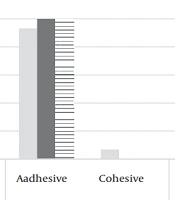
Rousta B, Farhad Molashahi N, Hosseini Tabatabaei S. The Effect of Different Sealer Removal Protocols on Micro-Tensile Bond Strength of Single Bond Plus to Dentin Exposed with Different Chemical Root Canal Irrigants: An Ex Vivo Study. Zahedan J Res Med Sci. 2023;25(4):e131442. doi: https://doi.org/10.5812/zjrms-131442
Noormandi Poor M, Rafeazadeh Shahi M. Evaluation of Apical Microleakage in MTA Apexification Model Filled with Thermoplastic Gutta percha, Luxa core Composite and Chemfil Glass – Ionomer. Zahedan J Res Med Sci. 2007;9(3):e94787. doi:
Mirkarimi M, Bargrizan M, Estiri M. The Microleakage of Polycarboxylate, Glass Ionomer and Zinc Phosphate Cements for Stainless Steel Crowns of Pulpotomized Primary Molars. Zahedan J Res Med Sci. 2013;15(1):e93131. doi:
Kaveh S, Karamifar A, Kousha S, Azarbyjani A, Mirmohammadkhani M, et al. Comparative Efficacy of MI Paste Plus and Fluoride Varnish Remineralizing Agents for Preventing White Spot Lesions in Patients on Fixed Orthodontic Treatment: A Clinical Trial. Middle East J Rehabil Health Stud. 2022;9(1):e118635. doi: https://doi.org/10.5812/mejrh.118635
Last Update: 3 weeks ago
Last Update: 3 weeks ago
Last Update: 3 weeks ago
Last Update: 3 hours ago
Last Update: 1 day ago
Last Update: 4 days ago