Fulltext
The full text of this article is available on the PDF file.
Zahedan Journal of Research in Medical Sciences
The Official Journal of Zahedan University of Medical Sciences
Image Credit:Zahedan J Res Med Sci
Authors
Background: It has been shown that improved glycemic control and lower hemoglobin A1C
level in diabetic patients will reduce the frequency of microvascular complications. However there
have been many debates on how to improve glycemic control and reduce hemoglobin A1C levels.
The aim of this review was to assess available information that supports the use of Self Monitoring
Blood Glucose (SMBG) in the care of either type 1 or type 2 diabetic patients.
Materials and Methods: This review focuses on interventional and analytical studies that
compared patients who performed SMBG with patients who did not. The data were derived from 35
interventional and observational studies published between 1983 and 2008, and also a cohort study
between 1995 and 2003. All studies were obtained from searches of multiple electronic
bibliographic databases supplemented with hand searches of references of retrieved articles.
Results: The available scientific literature demonstrates that there is substantial evidence to
support the use of SMBG in type 1 diabetes. Most studies do not show a benefit when patients with
type 2 diabetes perform
SMBG. Some studies demonstrated that SMBG as a part of educational program can be
effective on reducing hemoglobin A1C levels. There was a relationship between the number of
SMBG tests per unit time and hemoglobin A1C levels.
Conclusion: The role of SMBG in reducing hemoglobin A1C level in type 1 diabetes is known,
but most of the studies do not support the use of SMBG in type 2 diabetes currently. More rigorous
studies should be carried out.
© 2008, Author(s). This open-access article is available under the Creative Commons Attribution 4.0 (CC BY 4.0) International License (https://creativecommons.org/licenses/by/4.0/), which allows for unrestricted use, distribution, and reproduction in any medium, provided that the original work is properly cited.
Bastanhagh M, Larijani B, Khalili-Fard A, Hossein Nezhad A, Shafahi A. The assessment of the difference of capillary blood glucose level and venous glucose level measured by glucometer devices. Zahedan J Res Med Sci. 2003;5(2):e95149. doi:
Sukartini T, Nursalam N, Pradipta RO, Ubudiyah M. Potential Methods to Improve Self-management in Those with Type 2 Diabetes: A Narrative Review. Int J Endocrinol Metab. 2023;21(1):e119698. doi: https://doi.org/10.5812/ijem-119698
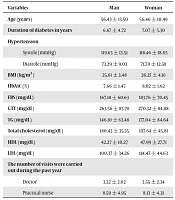
Jahangir F, Kavi E, Masmouei B, Bazrafshan M, Delam H, et al. Self-Management Status in Patients with Diabetes and Disease Control Indicators in Lamerd City, Iran. Jundishapur J Chronic Dis Care. 2020;9(2):e99992. doi: https://doi.org/10.5812/jjcdc.99992

Doustmohamadian S, Kia NS, Fatahi S. Associated factors of poor glycemic control in Iranian diabetic patients. koomesh. 2021;23(3):e149956. doi:
Rahimi MA, Farshadfar S, Soheyli A, Mohamadi M, Haseli A. Associated Factors with Adherence to Self-monitoring of Blood Glucose in Type 1 Diabetes in the First Two Decade of Person Life in Iran. J Compr Ped. 2025;16(2):e158830. doi: https://doi.org/10.5812/jcp-158830
More by these authors
Last Update: 3 weeks ago
Last Update: 3 weeks ago
Last Update: 3 weeks ago
Last Update: 4 hours ago
Last Update: 1 day ago
Last Update: 4 days ago