Fulltext
Full text is available in PDF.
International Journal of Cancer Management
The Official Journal of Cancer Research Center (CRC), Shahid Beheshti University of Medical Sciences
Authors
Background: The best management for an ovarian mass is provided by appropriate prediction of malignancy. The aim of our study is to construct and validate a new Malignancy Probability Score based on four simple sonographic findings and age.
Methods: In a cross sectional study; histopathological files of 3303 ovarian mass patients and tertiary hospitals, have reviewed within 6 years (2000-2006). Pathology, age, sonographic findings including solid area, ascetic, size and bilateralism were recorded. Logistic multivariate regression analysis SPSS18 has used to create malignancy probability scoring model. Our ovarian Malignancy Probability Score (OMPS) has constructed based on 80% of samples in a logistic regression model and has validated using the remainder of the cases.
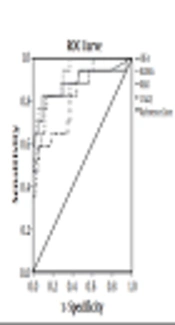
Results: Ovarian malignancy probability score (OMPS) has calculated as follow: age × 0.062 + Tumor size (cm) × 0.012+1.172(if the tumor is solid) + 1.289(if ascites is present) +0.758(if the tumor is bilateral) Sensitivity of OMPS in prediction of malignancy with cutoff value of 3.65 score number was 77.9% and its specificity was 72.9% with Area under Curve (AUC) of 83% in ROC curve.
Conclusion: OMPS is designed and tested in our research, to be proved as a simple and accurate clinical tool for ovarian malignancy prediction.
© 2010, Author(s). This open-access article is available under the Creative Commons Attribution 4.0 (CC BY 4.0) International License (https://creativecommons.org/licenses/by/4.0/), which allows for unrestricted use, distribution, and reproduction in any medium, provided that the original work is properly cited.
Bouzari Z, Rahimi H, Gholinia H, Yazdani S, Hajian-Tilaki K, et al. Cancer Antigen 125 (CA125), Human Epididymis Protein 4 (HE4), Risk of Malignancy Index (RMI), and Risk of Ovarian Malignancy Algorithm (ROMA) as Diagnostic Tests in Ovarian Cancer. Int J Cancer Manag. 2019;12(1):e59395. doi: https://doi.org/10.5812/ijcm.59395
Karimi–Zarchi M, Behtash N, Mousavi A, Ghaem Maghami F, Moddares Gilani M, et al. A Survey on the Role of Cancer Antigen 125 (CA125), Human Epididymis Protein 4 (HE4), Risk of Ovarian Malignancy Algorithm (ROMA), and Risk of Malignancy Index (RMI) in Pelvic Mass. Int J Cancer Manag. 2018;11(12):e79189. doi: https://doi.org/10.5812/ijcm.79189
Bashizadeh-Fakhar H, Rezaie-Tavirani M, Zali H, Faraji R, Kazem Nejad E, et al. The Diagnostic Value of Serum CEA, CA-125, and ROMA Index in Low-Grade Serous Ovarian Cancer. Int J Cancer Manag. 2018;11(5):e63397. doi: https://doi.org/10.5812/ijcm.63397
Deldar M, Sayehmiri K, Anbiaee R, Jalilian A. Estimation Recurrence Free Survival of the Epithelial Ovarian Cancer Using Classification and Regression Tree. Middle East J Rehabil Health Stud. 2023;10(4):e134331. doi: https://doi.org/10.5812/mejrh-134331
Yazdani S, Javadian M, Sayarifard E, Bouzari Z, Mohammadnetaj M, et al. Comparison of Three Clinical Models for Estimating the Risk of Endometrial Cancer in Post-Menopausal Women with Abnormal Vaginal Bleeding. Int J Cancer Manag. 2018;11(4):e55934. doi: https://doi.org/10.5812/ijcm.55934
Last Update: 1 month ago
Last Update: 1 month ago
Last Update: 1 month ago
Last Update: 3 days ago