Fulltext
The full text is available in PDF.
International Cardiovascular Research Journal
The Official Annually Journal of Cardiovascular Research Center, Shiraz University of Medical Sciences
Authors
Background: Chronic Heart Failure (CHF) is highly prevalent and is associated with high morbidity and mortality rates. It has been well established that excessive intake of sodium chloride (salt) induced hypertension in some populations. Although salt seems to induce cardiovascular diseases through elevation of blood pressure, it has also been indicated that salt can induce cardiovascular diseases independently from blood pressure elevation.
Objectives: The present study aimed to evaluate the association between salt consumption and inflammation in CHF patients.
Patients and Methods: This study was conducted on 86 patients between 18 and 65 years old who were diagnosed with New York Heart Association (NYHA) functional class I and II heart failure. Salt intake was calculated by using 24 hour urine sodium excretion. Besides, the association between inflammation and daily salt intake was evaluated regarding C - reactive protein (CPR), High sensitive CRP (HsCPR), Erythrocyte Sedimentation Rate (ESR), and ferritin and fibrinogen levels using Pearson correlation analysis.
Results: Our results showed a statistically significant difference between the low (n = 41) and high (n = 45) salt intake groups in terms of serum HsCRP levels (5.21 ± 2.62 vs. 6.36 ± 2.64) (P < 0.048). Additionally, a significant correlation was observed between the amount of salt consumption and HsCRP levels. In this study, daily salt consumption of the enrolled patients was 8.53 gram/day. The medications and even the blood pressures were similar in the two groups, but daily pill count, prevalence of hypertension, and coronary heart disease were higher in the high salt intake group; however, the differences were not statistically significant (P = 0.065). Also, no significant difference was observed between the groups concerning the inflammation markers, such as CRP, ESR, ferritin, and fibrinogen.
Conclusions: Neurohumoral and inflammatory factors are thought to contribute to high mortality and morbidity rates in CHF. Yet, inflammatory markers may early diagnose CHF and predict the prognosis. Excessive salt intake also worsens the inflammation as well as volume control.
© 2017, Author(s). This open-access article is available under the Creative Commons Attribution 4.0 (CC BY 4.0) International License (https://creativecommons.org/licenses/by/4.0/), which allows for unrestricted use, distribution, and reproduction in any medium, provided that the original work is properly cited.
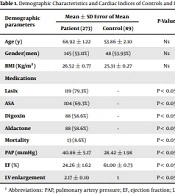
Yazdanfar S, Shakerian N, Atabi MR, Sadeghiniya A, Mard-Soltani M. Consequences of Anemia in Patients with Chronic Heart Failure. J Adv Immunopharmacol. 2022;2(1):e120279. doi: https://doi.org/10.5812/tms-3598
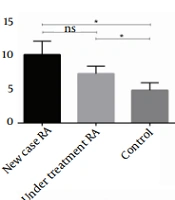
Hassan NH, Shamsi A, Soufivand P, Bahremand F, Taghaddosi M, et al. The Relationship of Inflammatory Chemokine, CXCL12, with NT-proBNP: A Marker of Congestive Heart Failure in Rheumatoid Arthritis Patients. J Kermanshah Univ Med Sci. 2023;27(4):e141254. doi: https://doi.org/10.5812/jkums-141254
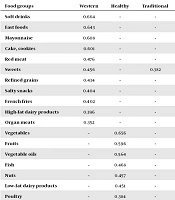
Naderinejad N, Ejtahed H, Asghari G, Mirmiran P, Azizi F. Dietary Patterns and Risk of Chronic Kidney Disease Among Tehranian Adults with High Blood Pressure. Int J Endocrinol Metab. 2020;18(1):e89709. doi: https://doi.org/10.5812/ijem.89709
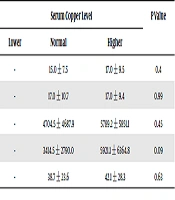
Taghavi S, Naderi N, Amin A, Mobini S, Safavirad A, et al. Serum Copper Level in Patients with Heart Failure and Its Related Factors. Multidiscip Cardio Annal. 2021;12(1):e108015. doi: https://doi.org/10.5812/mca.108015
Atabakhshian R, Kazerouni F, Raygan F, Amirrasouli H, Rahimipour A, et al. Assessment of the Relationship between Galectin-3 and Ejection Fraction and Functional Capacity in the Patients with Compensated Systolic Heart Failure. Int Cardiovasc Res J. 2017;8(4):e11675. doi:
Last Update: 2 weeks ago
Last Update: 2 weeks ago
Last Update: 2 weeks ago
Last Update: 3 days ago