Full Text
Full text is available in PDF
Authors
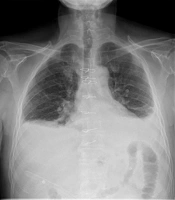
A 55-year-old man with severe right-sided empyema was admitted to our hospital. Six days before this admission, he had undergone upper GI endoscopy in another center to remove a retained chicken bone in lower esophagus and despite documented thoracic esophageal perforation, treatment was surprisingly delayed. The perforation was closed with primary sutures and reinforced with intercostal muscle flap wrap and pleural patch. Esophagography performed 3 weeks after the operation showed a well- healed esophagus without stenosis or leakage. We conclude that regardless of the time interval between the injury and the operation, reinforced primary repair is recommended for non-malignant thoracic esophageal perforation and provide a one- stage operation with preservation of the native esophagus. As far as we know, this type of procedure (with regard to its underlying infected body region and considerable controversy in delayed esophageal perforation management) has not been previously performed in Iran
© 2007, Author(s). This open-access article is available under the Creative Commons Attribution 4.0 (CC BY 4.0) International License (https://creativecommons.org/licenses/by/4.0/), which allows for unrestricted use, distribution, and reproduction in any medium, provided that the original work is properly cited.
Parsa H, Fallah P, Rezaei M, Shahmoradi S. Lateral esophagostomy with thoracic drainage in treatment of esophageal perforation. J Inflamm Dis. 2024;14(1):e155523. doi:
Tabatabaee S, Hashemi S, Eidy M, Davarpanah Jazi A. Predicting Factors for Anastomotic Leakage after Esophageal Cancer Resection. Int J Cancer Manag. 2009;2(2):e80545. doi:
Mousavi SR, Akbari ME. Comparison of Early and Late Complications in Three Esophagectomy Techniques. Int J Cancer Manag. 2017;10(6):e7644. doi: https://doi.org/10.5812/ijcm.7644
Mirjavadi SH, Estaji M, Koopaee S, Pak F, Jalaeefar A, et al. Comparison of Esophagography and Chest Computed Tomography and the Prognostic Value of Inflammatory Markers for Detecting Anastomotic Leakage After Esophageal Resection. Ann Mil Health Sci Res. 2026;24(1):e156851. doi: https://doi.org/10.69107/amh-156851
Khoshnevis J, Akbari ME, Kalantar Motamed M, Moradi A, Ebrahimi M, et al. Depth Analysis of Open Transhiatal Esophagectomy Outcomes (Orringer Technique) in Patients with Esophageal Cancer from 1990 to 2015: A 25-Year Experience Single-center Study. Int J Cancer Manag. 2023;16(1):e107922. doi: https://doi.org/10.5812/ijcm-107922
Last Update: 3 days ago
Last Update: 3 days ago
Last Update: 3 days ago
Last Update: 6 days ago