Full Text
Full text is available in PDF
Authors
Developing controlled hypercarbia is a known scheme of lowering the suprasellar part of the adenoma in order to assist the surgeon, which acts through raising the ICP and therefore the CSF pressure.
The purpose of this study is to compare the effect of introducing a lumbar drain with that of controlled hypercapnia on the quality of transsphenoidal pituitary tumor resection and CSF leak.
Fifty two patients with pituitary adenoma who underwent transsphenoidal hypophysectomy by the same surgeon were included. They were randomly divided into two groups. A lumbar drain catheter introduced into the L3-L4 subarachnoid space under local anesthesia in all patients. The same anesthesia was performed in both groups. In the study group, we used a saline injection into the subarachnoid space versus hypoventilation in the control group in order to increase the ICP according to the surgeon\'s request. The surgeon\'s satisfaction during the tumor resection and the resection time were assessed during the surgery. The CSF catheter was closed and sent with the patient for CSF drainage. If there was no CSF leak, the catheter removed 24 hours later. With evidence of a CSF leak, we used the catheter as a lumbar drain. The time taken for the leakage control was assessed.
The satisfaction came from 21 (87.5%) and 2 (9.1%) for surgeon in the first and the second group respectively (P = 0.0001). CSF leakage time in the first and the second group was 1.6 0.24 and 5 0.50 respectively. It revealed a significant difference between the two groups (P = 0.001). The mean resection time was 13.54 0.66 minutes in the study group; and 30.91 0.98 minutes in the control group.
In summary, the method described here for ICP manipulation is an effective procedure for a better visualization of the pituitary tumor during transphenoidal resection by surgeon and beneficial in managing the CSF leak following surgery.
© 2013, Author(s). The Author(s) retain copyright in the Article. Upon acceptance, the Author(s) grant Brieflands the non-exclusive right of first publication and a worldwide, perpetual, royalty-free, non-exclusive license to copyedit, format, publish, reproduce, distribute, display, preserve, archive, index, promote, and make the Version of Record available in all formats and media. Brieflands and the relevant journal will be identified as the original publisher of the Version of Record. The Article will be published under the [Creative Commons Attribution 4.0 International License (CC BY 4.0)](https://creativecommons.org/licenses/by/4.0/). The Author(s) may immediately deposit and share the Version of Record in any repository or platform. No separate permission or fee is required for uses permitted under CC BY 4.0. CCC may provide optional customized reprint services.
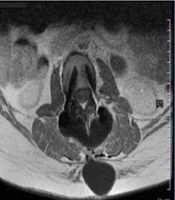
Espahbodi E, Amiresmaili N, Karimi F. Catheter-Guided Caudal Epidural Blood Patch for Refractory CSF Leak After Multiple Spine Surgeries: A Novel Case Report. Anesth Pain Med. 2025;15(6):e164698. doi: https://doi.org/10.5812/aapm-164698
Ramak Hashemi M, Bavand K, Raei M, Mahmoodi R. Effect of Intraventricular Hemorrhage on the Surgical Outcome of Ruptured Anterior Communicating Artery Aneurysm. Arch Neurosci. 2019;6(1):e83934. doi: https://doi.org/10.5812/ans.83934
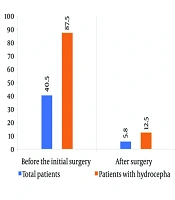
Jafari M, Rabiei Z, Arabshourabi K, Adimi M, Ahmadi A. Incidence of Hydrocephalus and Permanent Shunt Dependency Following Posterior Fossa Surgery: A Retrospective Study. Zahedan J Res Med Sci. 2026;28(4):e173001. doi: https://doi.org/10.5812/zjrms-173001
Huang CW, Tsai YF, Hsiao CY. Different MRI Signs in Predicting the Treatment Efficacy of Epidural Blood Patch in Spontaneous Intracranial Hypotension: A Case Report. I J Radiol. 2013;10(3):. doi: https://doi.org/10.5812/iranjradiol.3929
Lu Y, Wang H, Lin Y, Lin W. The Value of Changing Position in the Detection of CSF Leakage in Spontaneous Intracranial Hypotension Using Tc-99m DTPA Scintigraphy: Two Case Reports. I J Radiol. 2012;9(3):150-153. doi: https://doi.org/10.5812/iranjradiol.7956
Last Update: 1 week ago
Last Update: 1 week ago
Last Update: 1 week ago
Last Update: 10 hours ago
Last Update: 9 hours ago
Last Update: 5 days ago