Full Text
Full text is available in PDF
Authors
Induction of anesthesia and endotracheal intubation often creates a period of hemodynamic instability in hypertensive patients. Endotracheal intubation of the trachea stimulates laryngeal and tracheal sensory receptors, resulting in a marked increase in the elaboration of sympathetic amines.
This trial aimed to evaluate and compare the efficacy of fentanyl and fentanyl plus lidocaine in attenuating the hemodynamic responses to laryngoscopy and endotracheal intubation in hypertensive patients.
We conducted a prospective, randomized, double-blind trial in 37 patients with hypertension in the Rasoul-Akram Hospital, Tehran, Iran, from March to December 2011. The patients were randomly divided into two groups (fentanyl group and fentanyl plus lidocaine group). The fentanyl group received 2 mcg/kg and the fentanyl plus lidocaine group received 1.5mg lidocaine and 2mcg/kg fentanyl. Hemodynamic variables were recorded at baseline, after giving inductive anesthetic agents, and 1, 3 and 5 minutes after performing endotracheal intubation.
We evaluated 37 patients including 15 males (40.54%) and 22 females (59.46%), with a mean age of 56.08 10.85 years. There were no significant differences between the two groups regarding; heart rate, systolic blood pressure and diastolic blood pressure before induction, 3 minutes before intubation and 1, 3 and 5 minutes after intubation.
Fentanyl and fentanyl plus lidocaine effectively decreased the hemodynamic response to tracheal intubation, however, neither fentanyl nor fentanyl plus lidocaine, could inhibit all hemodynamic responses, moreover fentanyl plus lidocaine was not more effective than fentanyl alone.
© 2013, Author(s). The Author(s) retain copyright in the Article. Upon acceptance, the Author(s) grant Brieflands the non-exclusive right of first publication and a worldwide, perpetual, royalty-free, non-exclusive license to copyedit, format, publish, reproduce, distribute, display, preserve, archive, index, promote, and make the Version of Record available in all formats and media. Brieflands and the relevant journal will be identified as the original publisher of the Version of Record. The Article will be published under the [Creative Commons Attribution 4.0 International License (CC BY 4.0)](https://creativecommons.org/licenses/by/4.0/). The Author(s) may immediately deposit and share the Version of Record in any repository or platform. No separate permission or fee is required for uses permitted under CC BY 4.0. CCC may provide optional customized reprint services.
Soltani Mohammadi S, Maziar A, Saliminia A. Comparing Clonidine and Lidocaine on Attenuation of Hemodynamic Responses to Laryngoscopy and Tracheal Intubation in Controlled Hypertensive Patients: A Randomized, Double-Blinded Clinical Trial. Anesth Pain Med. 2016;6(2):e34271. doi: https://doi.org/10.5812/aapm.34271
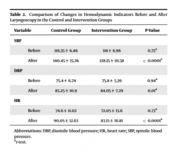
Aminisaman J, Nazari J, Aminisaman Y, Kawyannejad R. Investigating the Effects of Fentanyl and Nitroglycerin on Hemodynamic Changes During Laryngoscopy: A Randomized Trial. J Clin Res Paramed Sci. 2023;12(2):e142407. doi: https://doi.org/10.5812/jcrps-142407
Hosseini Jahromi S, HosseiniValami S, Abdollahpour A. Comparing the effect of propofol-alfentanil with ketamine-alfentanil on endotracheal intubation without muscle relaxation. J Inflamm Dis. 2024;15(4):e155659. doi:
Imani F, Alebouyeh M, Taghipour Anvari Z, Faiz SHR. Use of Remifentanil and Alfentanil in Endotracheal Intubation: A Comparative Study. Anesth Pain Med. 2011;1(2):61-65. doi: https://doi.org/10.5812/kowsar.22287523.2130
Pouraghaei M, Moharamzadeh P, Soleimanpour H, Rahmani F, Safari S, et al. Comparison Between the Effects of Alfentanil, Fentanyl and Sufentanil on Hemodynamic Indices During Rapid Sequence Intubation in the Emergency Department. Anesth Pain Med. 2014;4(1):e14618. doi: https://doi.org/10.5812/aapm.14618
Last Update: 1 week ago
Last Update: 1 week ago
Last Update: 1 week ago
Last Update: 8 hours ago
Last Update: 7 hours ago
Last Update: 5 days ago