
1. Background
Poisoning is a clinical condition resulting from exposure to a toxic substance in an amount sufficient to disrupt normal physiological processes and cause harmful local or systemic effects. Exposure may occur through ingestion, inhalation, dermal absorption, injection, or other routes. The severity of poisoning depends on the characteristics of the toxic agent, the dose, the route and duration of exposure, and individual susceptibility. Poisoning may be acute or chronic and can range in severity from mild, self-limited symptoms to life-threatening organ dysfunction and death (1-4).
Pharmaceutical poisoning is a major component of acute intoxication and remains an important reason for emergency medical care. Epidemiological characterization of the toxic agents encountered in a given setting is essential for clinical preparedness, antidote availability, medication safety initiatives, and prevention planning. Evidence from Iran indicates substantial geographic variation in poisoning patterns, while pharmaceutical agents are among the most frequently reported causes of poisoning in adults in many Iranian settings (5, 6).
Although most poisoning events are manageable and do not inevitably result in death, severe complications and mortality remain important concerns, with substantial consequences for patients, families, and health systems (5, 6). Poisoning may be intentional or unintentional, and the distribution of intent varies across age groups and clinical settings (7, 8). Understanding these patterns is important for tailoring prevention and emergency care strategies to the populations served.
Both intentional and unintentional poisonings impose substantial clinical and public health burdens. The epidemiology of poisoning varies across settings according to the availability of medications and other toxic agents, patterns of substance use, access to health care, and local socioeconomic conditions (7, 8). The distribution of intent also varies by age and setting, underscoring the importance of describing poisoning patterns within specific populations rather than assuming that findings from one region are directly generalizable to another.
Because poisoning patterns are strongly context-dependent, hospital-based surveillance can provide clinically useful information about the agents and patient groups most frequently encountered by emergency services. However, such data describe the population reaching a particular health care facility and should not be interpreted as population-level incidence without appropriate denominators.
Although several studies have investigated poisoning in Iran, relatively few have provided a longitudinal description of poisoning presentations over an extended period in a single emergency department.
2. Objectives
This study aimed to characterize the demographic profile, recorded toxic agents, timing of presentation, and documented clinical outcomes of patients presenting with acute poisoning to the emergency department of Imam Reza Hospital in Tehran over the six-year period from 2018 to 2023. This longitudinal, hospital-based dataset provides a local reference for surveillance and prevention planning, although its descriptive design does not establish population-level incidence or causal temporal associations.
3. Methods
3.1. Study Design, Setting, and Patient Selection
This retrospective descriptive study used the medical records of patients who presented to the emergency department of Imam Reza Hospital, Tehran, with documented acute poisoning between 2018 and 2023. The unit of analysis was the patient. A total of 118 poisoning records available during the study period were included in the analysis. The study describes the characteristics of these included cases and does not estimate poisoning incidence among all emergency department attendees because annual emergency department denominators were unavailable in the study dataset. The manuscript consistently uses the designation “retrospective descriptive study.”
3.2. Data Collection and Variables
Demographic characteristics (age and sex), toxic-agent category, timing of poisoning, and final documented outcome were extracted from the medical records using a predesigned data collection form. The poisoning category recorded in each medical record was based on the International Classification of Diseases, Tenth Revision, Clinical Modification (ICD-10-CM), and these recorded categories were used for analysis. Because the available manuscript dataset did not contain the underlying patient-level ICD-10-CM code strings, category labels were retained as recorded rather than retrospectively assigning unverified codes. Exact code-level verification should be performed against the source coding records before publication if these records are available.
The toxic agents were categorized into 36 groups, as recorded in the medical records: benzodiazepines; methanol; other alcohols; antidepressants; 4-aminophenol derivatives; nonsteroidal anti-inflammatory drugs (NSAIDs); anticoagulant antagonists, vitamin K and other coagulants; non-opioid analgesics, antipyretic and antirheumatic drugs; narcotics and hallucinogens; methadone; dehydration-related toxicity; pethidine; ganglionic blockers; antineoplastic and immunosuppressive drugs; organic solvents; unspecified gases, fumes, and vapors; autonomic nervous system agents; anticoagulants; antifungal and topical disinfectant/anti-inflammatory agents; foodborne toxins; exposure to unidentified venomous animals; barbiturates; antiepileptic and sedative-hypnotic drugs; beta-adrenergic receptor antagonists; unknown systemic or hematologic agents; antihypertensive drugs; antidiarrheal medications; halogenated aromatic hydrocarbons; corrosive acids and acid-like substances; thallium; carbon monoxide; arthropod venom; marine animal toxins; psychostimulants; phenothiazines; and unidentified agents. The classification was retained as documented in the source records rather than reorganized according to pharmacological mechanism or chemical structure. Outcomes were grouped as full recovery, partial recovery, death, referral to other healthcare centers, or unknown/incomplete documentation.
3.3. Handling of Multiple Agents and Missing Information
The available dataset was organized around one recorded toxic-agent category per patient, as presented in Table 1. The manuscript does not contain sufficient patient-level information to reconstruct all possible co-ingestions or determine a standardized hierarchy for selecting a primary agent when multiple agents were involved. Accordingly, the reported percentages represent included patients assigned to the recorded category, not individual toxic exposures. Patients who were transferred or had incompletely documented outcomes were retained in the descriptive analysis and reported separately.
Table 1.
Toxic Agents Among Poisoned Patients Presenting to the Emergency Department of Imam Reza Hospital a
| Toxic agents | Frequency | Relative Percentage |
|---|---|---|
| Benzodiazepines | 13 | 11.0 |
| Methanol | 11 | 9.3 |
| Antidepressants | 7 | 5.9 |
| 4-aminophenol derivatives (e.g., acetaminophen) | 7 | 5.9 |
| NSAIDs | 7 | 5.9 |
| Anticoagulant antagonists, vitamin K and other coagulants | 6 | 5.1 |
| Non-opioid analgesics, antipyretic and antirheumatic drugs | 5 | 4.2 |
| Narcotics and psychedelic drugs (hallucinogens) | 4 | 3.4 |
| Methadone | 4 | 3.4 |
| Dehydration-related toxicity | 4 | 3.4 |
| Pethidine | 3 | 2.5 |
| Ganglionic blockers | 3 | 2.5 |
| Antineoplastic and immunosuppressive drugs | 3 | 2.5 |
| Organic solvents | 3 | 2.5 |
| Unspecified gases, fumes, and vapors | 3 | 2.5 |
| Autonomic nervous system agents | 3 | 2.5 |
| Anticoagulants | 2 | 1.7 |
| Antifungal and topical disinfectant/anti-inflammatory agents | 2 | 1.7 |
| Other alcohols | 2 | 1.7 |
| Foodborne toxins | 2 | 1.7 |
| Exposure to unidentified venomous animals | 2 | 1.7 |
| Barbiturates | 1 | 0.8 |
| Antiepileptic and sedative–hypnotic drugs | 1 | 0.8 |
| Beta-adrenergic receptor antagonists | 1 | 0.8 |
| Unknown systemic or hematologic agents | 1 | 0.8 |
| Antihypertensive drugs | 1 | 0.8 |
| Antidiarrheal medications | 1 | 0.8 |
| Halogenated aromatic hydrocarbons | 1 | 0.8 |
| Corrosive acids and acid-like substances | 1 | 0.8 |
| Thallium | 1 | 0.8 |
| Carbon monoxide | 1 | 0.8 |
| Arthropod venom | 1 | 0.8 |
| Marine animal toxins | 1 | 0.8 |
| Psychostimulants | 1 | 0.8 |
| Phenothiazines | 1 | 0.8 |
| Unidentified agents | 8 | 6.8 |
a Abbreviation: NSAIDs, nonsteroidal anti-inflammatory drugs.
3.4. Poisoning Intent and Outcome Assessment
Poisoning intent (e.g., intentional self-harm, accidental exposure, assault, or undetermined intent) was not among the variables extracted for this analysis and therefore could not be reliably reported. Outcome categories were those documented in the medical records: full recovery, partial recovery, death, referral to another healthcare center, or unknown/incomplete documentation. The available records did not allow independent adjudication of the clinical definitions or timing of full versus partial recovery. Mortality was recorded as death documented during the available hospital episode; the dataset did not permit a separate population-level estimate of poisoning-related mortality. These limitations have been explicitly acknowledged.
3.5. Statistical Analysis
Data were summarized using descriptive statistics, including frequencies and percentages for categorical variables and the mean, standard deviation (SD), median, and interquartile range (IQR) for continuous variables. No inferential statistical tests were performed to assess temporal or seasonal associations. In particular, annual emergency department denominators were unavailable; therefore, annual and monthly distributions are presented as counts and proportions of the included poisoning cases rather than as incidence rates. Statistical analyses were performed using the available dataset.
3.6. Ethical Considerations
The study was approved by the Ethics Committee of AJA University of Medical Sciences (IR.AJAUMS.REC.1403.259). Because the study used patients' hospital records spanning six years while maintaining confidentiality, obtaining informed consent from the patients was neither feasible nor necessary.
4. Results
A total of 118 patients presented to the emergency department with poisoning during 2018 - 2023. Most patients (79.7%) were male. The youngest patient was 15 years old, and the oldest was 85 years old. The mean age was 34.2 years (SD = 20.3), and the median age was 23.5 years (IQR = 25.2). The highest frequency was observed among patients aged 20 - 29 years, followed by those aged 15 - 19 years; patients aged 50 - 59 years had the lowest frequency. Demographic characteristics are summarized in Table 2.
Table 2.
Demographic Characteristics of Poisoned Patients Presenting to the Emergency Department of Imam Reza Hospital (2018 - 2023)
| Variables | Frequency | Relative Percentage |
|---|---|---|
| Gender | ||
| Male | 94 | 79.7 |
| Female | 24 | 20.3 |
| Age (y) | ||
| < 20 | 28 | 23.7 |
| 20 - 29 | 48 | 40.7 |
| 30 - 39 | 9 | 7.6 |
| 40 - 49 | 7 | 5.9 |
| 50 - 59 | 5 | 4.2 |
| 60 - 69 | 9 | 7.6 |
| ≥ 70 | 12 | 10.2 |
The largest annual numbers of included poisoning cases were recorded in 2023 (n = 38) and 2018 (n = 30), whereas fewer cases were recorded in 2020 (n = 5) and 2021 (n = 7). Because annual emergency department denominators were unavailable and no inferential time-series analysis was performed, these differences are presented as descriptive variations in the number of included cases rather than as evidence of a change in poisoning incidence (Figure 1).
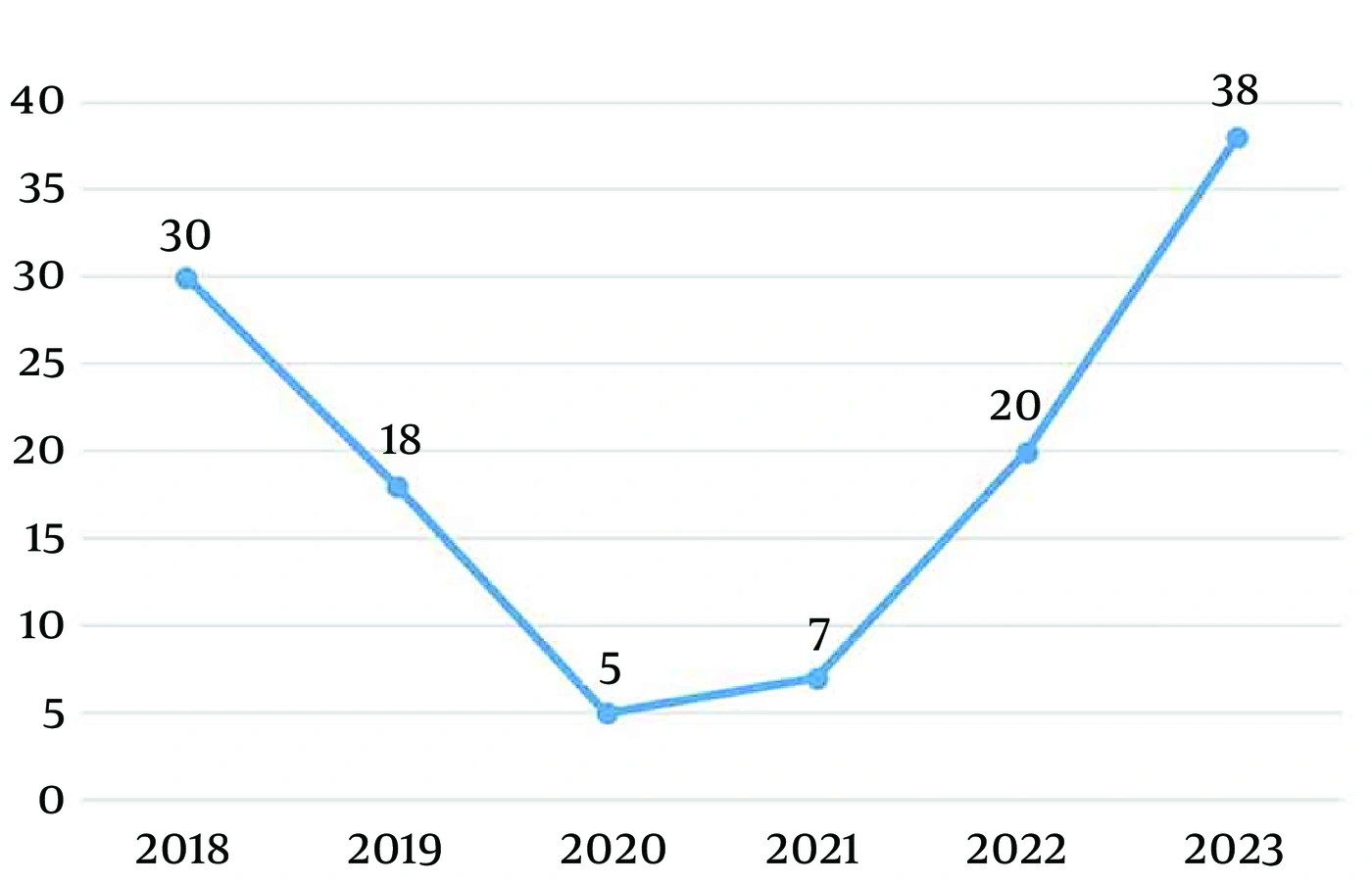
Figure 1.
Annual distribution of poisoning cases (2018 - 2023)
Among the included records, the highest monthly frequencies occurred between June and September, whereas fewer cases were recorded during autumn and winter. Because monthly emergency department denominators were unavailable, this distribution should be interpreted as a descriptive pattern within the study sample rather than as evidence of a statistically demonstrated seasonal effect (Figure 2).
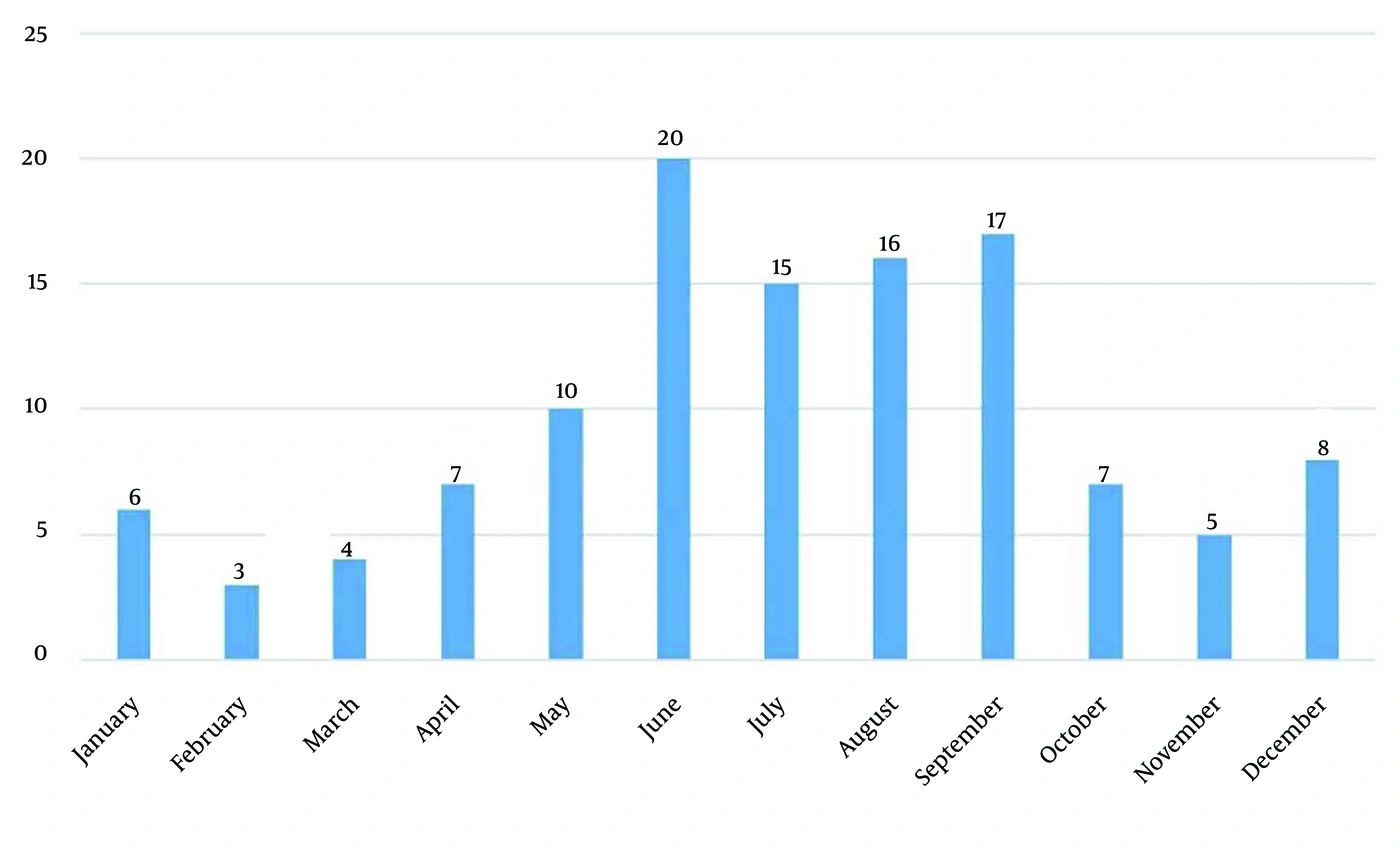
Figure 2.
Monthly distribution of poisoning cases
Of the 118 patients, 100 (84.7%) had documented full or partial recovery and were discharged. Six patients (5.1%) died during the available hospital episode. Twelve patients (10.2%) were either transferred to other hospitals or had incomplete outcome documentation. Because the available records did not permit independent adjudication of outcome definitions or post-transfer outcomes, these categories are reported as documented rather than as independently verified endpoints (Figure 3).
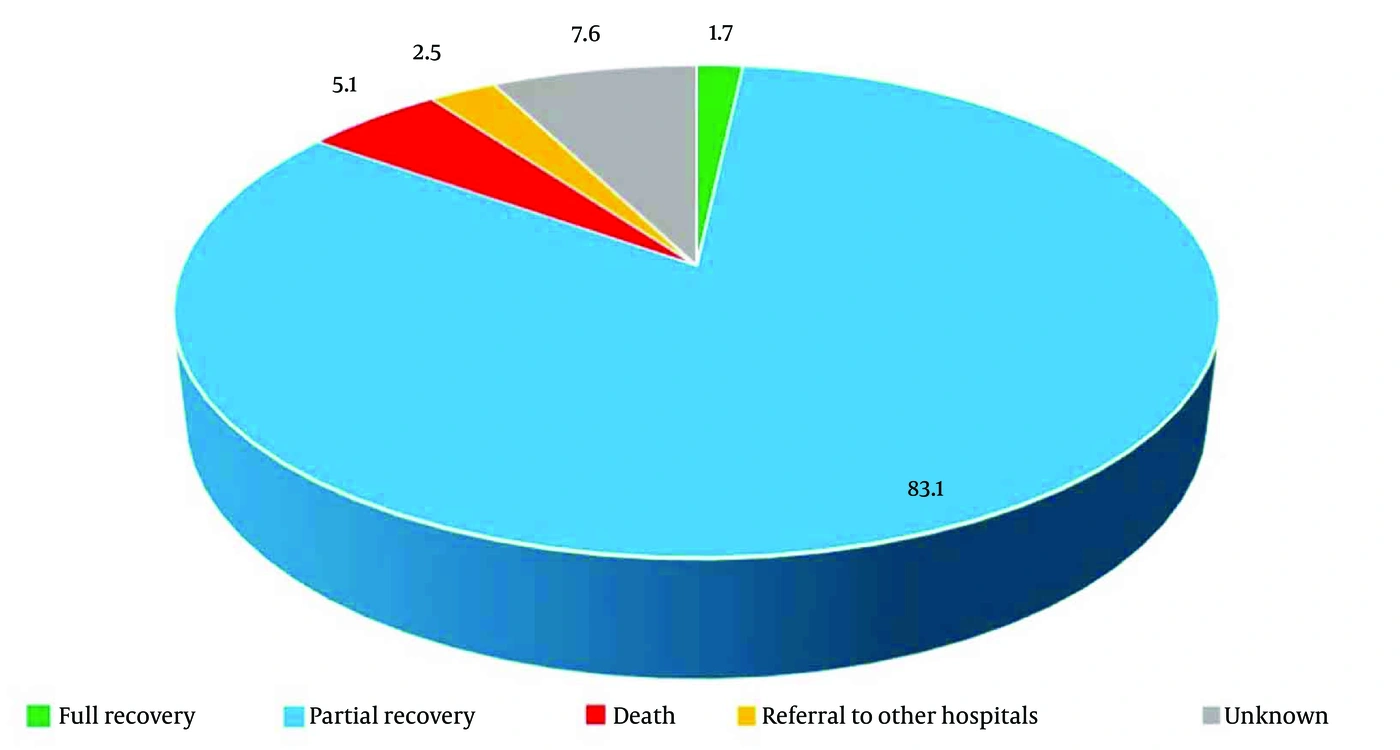
Figure 3.
Distribution of final clinical outcomes
Benzodiazepines; methanol; antidepressants; 4-aminophenol derivatives (e.g., acetaminophen); NSAIDs; anticoagulant antagonists, vitamin K and related coagulants; non-opioid analgesics, antipyretic and antirheumatic drugs; narcotics and hallucinogens; and methadone were the most common toxic agents identified. Detailed frequencies are presented in Table 1.
5. Discussion
The present study describes the toxic-agent profile documented among patients presenting with acute poisoning to a single emergency department over six years. The most frequently recorded categories included benzodiazepines; methanol; antidepressants; 4-aminophenol derivatives (e.g., acetaminophen); NSAIDs; anticoagulant-related categories; non-opioid analgesics, antipyretic and antirheumatic drugs; narcotics/hallucinogens; and methadone. The predominance of pharmaceutical agents is broadly consistent with evidence from Iranian hospital-based studies and international emergency department reports, although the relative contribution of individual agents varies across settings (9, 10).
Benzodiazepines were the most frequently recorded toxic-agent category in this cohort (11.0%). This finding is consistent with contemporary emergency department and toxicology surveillance data showing that psychoactive medications are frequently involved in poisoning presentations (11-13). The prominence of benzodiazepines may reflect their widespread availability and clinical use; however, because the present study did not systematically record poisoning intent or co-ingestion at the patient level, the mechanisms underlying their frequency cannot be established from these data.
Antidepressants, 4-aminophenol derivatives (primarily acetaminophen/paracetamol), NSAIDs, and other non-opioid analgesics were also among the more frequently recorded categories. Similar pharmaceutical profiles have been reported in contemporary emergency department studies (11, 12). These comparisons should be interpreted cautiously because differences in case definitions, healthcare settings, coding practices, and the availability of denominator data may influence the observed distribution of toxic agents.
Methanol accounted for 9.3% of the included cases and was the second most frequently recorded toxic-agent category. Methanol poisoning has been an important toxicological concern in Iran, including during the COVID-19 pandemic, when a large outbreak was documented and attributed to multiple interacting social and policy factors (14). In the present study, however, the data are insufficient to determine the source of exposure or establish whether the observed frequency reflects an outbreak, local availability, or other contextual factors. The finding should therefore be interpreted as a feature of this hospital-based cohort rather than as evidence of a broader regional trend.
Methadone and other narcotic/hallucinogenic categories were also represented among the included cases. International surveillance demonstrates substantial geographic variation in the substances involved in opioid-related poisoning, reflecting differences in drug availability and patterns of use (13, 15). In the present study, the available descriptive data do not allow conclusions regarding prescribing practices, opioid substitution therapy, or community-level exposure patterns.
Taken together, the findings indicate that pharmaceutical agents accounted for many of the poisoning categories recorded in this emergency department cohort, with methanol also representing a notable category. These observations may inform local clinical preparedness, medication safety initiatives, and toxicological surveillance. However, they should not be interpreted as estimates of poisoning patterns in Tehran or Iran as a whole because the study was conducted at a single hospital and lacked population or emergency department denominators.
A larger proportion of the included cases was recorded between June and September. Similar seasonal variation has been described in some hospital-based poisoning studies (16). However, because the present study lacked monthly emergency department denominators and did not perform inferential analyses, we cannot determine whether the observed distribution represents a true seasonal increase in poisoning incidence. Possible explanations, including changes in outdoor activity, occupational exposure, or environmental conditions, remain hypotheses that require confirmation in studies with appropriate denominators and exposure data.
Fewer poisoning cases were recorded during 2020 and 2021 than during the other study years. This observation coincided with the COVID-19 pandemic, during which substantial changes in emergency department utilization were reported internationally (17, 18). However, without annual emergency department denominators and population-level exposure data, the present study cannot determine whether the lower number of recorded cases reflects a true reduction in poisoning, altered healthcare-seeking behavior, changes in exposure, or a combination of these factors. Reports of changes in poisoning exposures during the pandemic further support the need for cautious interpretation (19).
Young adults represented the largest age group in this cohort, with the highest frequency among individuals aged 20 - 29 years, followed by those aged 15 - 19 years. Similar age distributions have been reported in hospital-based poisoning studies (9, 10, 20). The concentration of cases in younger age groups highlights the potential value of prevention strategies focused on medication safety, substance-use education, and early recognition of poisoning; nevertheless, the present descriptive design cannot establish specific behavioral or causal mechanisms.
5.1. Limitations
Several limitations warrant consideration. First, the study was conducted at a single hospital and included relatively few poisoning cases, limiting generalizability to other hospitals or the wider population. Second, the retrospective design depended on the completeness and accuracy of existing medical records, and the findings may therefore be affected by missing information and selection bias. Third, total emergency department visits and population denominators were unavailable, precluding calculation of annual or monthly incidence rates and limiting interpretation of temporal and seasonal differences. Fourth, poisoning intent and detailed patient-level co-ingestion information were unavailable in the extracted dataset, and outcomes after transfer to other hospitals could not be independently verified. Finally, the study retained toxic-agent categories as recorded in the source records; exact patient-level ICD-10-CM code strings were unavailable in the extracted dataset for independent code-level verification. These limitations should be considered when interpreting the findings.
5.2. Conclusions
This retrospective single-center study provides a six-year descriptive profile of acute poisoning presentations to the emergency department of Imam Reza Hospital in Tehran. Pharmaceutical agents, particularly benzodiazepines, antidepressants, acetaminophen-related products, and other analgesics, were frequently recorded, and methanol was also a prominent toxic-agent category. Most included patients had documented full or partial recovery, although mortality was recorded in 5.1% of cases. The annual and monthly distributions observed in this cohort should be interpreted as descriptive findings rather than as estimates of incidence or evidence of temporal or seasonal effects. These findings may support local poisoning surveillance, clinical preparedness, and prevention planning; however, confirmation in larger multicenter studies with complete denominator data and standardized information on poisoning intent and co-ingestion is warranted.