Fulltext
Full text is available in pdf
Image Credit:Ann Mil Health Sci Res
Authors
Background: Many studies showed trainings with high intensity and enough volume leads to the enhancement of muscle mass and testosterone concentration. Other studies reported no increase in catabolic state in concurrent and endurance training, and no change or reduction in testosterone amount in endurance group. The aim of this study was assessment of concurrent training effect on testosterone/cortisol ratio and muscular fitness in soldiers’ wrestler.
Materials and Methods: This quasi-experimental study was conducted on 24 Soldiers wrestler with average age of 20/625±1/135yr, height 172/710±5/180, and average weight of 68/442±50860kg, BMI 22/928±0/281 voluntarily and randomly were divided into three groups (each groups n=8). Endurance training consisted of running to 65% of maximum heart rate for 16 minutes during the first week, reaching 80% of maximum heart rate for 30 minutes during the 8 weeks. The strength training consisted of 6 movements. Concurrent training was a combination of two strength and endurance training in each step, respectively. 5cc venous blood was collected during three sets; pre-test, after 4 and 8 week at 8 o’clock in the morning and the measurement was done with ELISA. Repetition maximum test (RMT) was estimated for evaluation of muscle fitness in pre-test and posttest. Blood data analysis with statistical method, with repetition amount in three groups was performed. ANOVA and t-test was used for comparison of variable scores between groupsand a significant level was considered(p<0. 05).
Results: In all the movements, the strength group showed a significant increase, endurance group had a reduction in bench-press, pull down curl and shoulder, and in concurrent group in all movements except squat a significant increase was noticed (p < 0. 05).comparison between 3groups in terms of muscle fitness development in bench-press(P=0/000F=29/93), lateral pull downcurl F=56/06P=0/00), and shoulder press (F=51/06P=0/00)presented a significant difference. In three measurement sets in testosterone/cortisol ratio a significant difference was observed. (F=16/204 P= 0/000).
Conclusion: combination of the strength and endurance training can have an impact on reduction of catabolic state induced endurance training.
© 2013, Annals of Military and Health Sciences Research. This open-access article is available under the Creative Commons Attribution-NonCommercial 4.0 (CC BY-NC 4.0) International License (https://creativecommons.org/licenses/by-nc/4.0/), which allows for the copying and redistribution of the material only for noncommercial purposes, provided that the original work is properly cited.
Lewis Mathunjwa M, Djarova T, Shaw I, Shaw BS. Effects of Four Weeks of Concurrent Taekwondo Plus Resistance Training on Post-exercise Blood Biomarkers of Physiological Stress in Previously-Trained Individuals. Asian J Sports Med. 2021;12(4):e107380. doi: https://doi.org/10.5812/asjsm.107380
Hejazi K, Hosseini SA. Influence of Selected Exercise on Serum Immunoglobulin, Testosterone and Cortisol in Semi-Endurance Elite Runners. Asian J Sports Med. 1970;3(3):34689. doi: https://doi.org/10.5812/asjsm.34689

Eslami R, Yari M, Lotfi N. Comparison of Acute Hormonal Responses to High and Low-Intensity Resistance Exercise with Blood Flow Restriction in Young Wrestlers. Ann Mil Health Sci Res. 2019;17(1):e86452. doi: https://doi.org/10.5812/amh.86452
Soheili S, Sori R, Rezaian N. Hormonal adaptations to moderate-intensity endurance training in sedentary obese men. koomesh. 2013;14(2):e152565. doi:
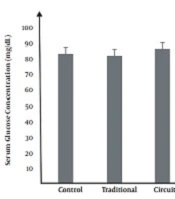
Zeraatgar M, Ghanbari-Niaki A, Rahmati-Ahmadabad S. Comparison of the Effects of 6 Weeks of Traditional and Wrestling-Technique-Based Circuit Training on the Blood Levels of Lactate, Lactate Dehydrogenase, Glucose, and Insulin in Young Male Wrestlers. Thrita J Neu. 2021;10(2):e122183. doi: https://doi.org/10.5812/thrita.122183
Last Update: 1 week ago
Last Update: 1 week ago
Last Update: 1 week ago
Last Update: 4 hours ago
Last Update: 7 hours ago
Last Update: 5 days ago