
1. Context
The increased prevalence and the consequences of autism spectrum disorder (ASD) in the future life of the child and the family culminate in constant efforts to better understand the biomarkers and symptoms of ASD (1) to be able to use their results for timely diagnosis and subsequently the development of accurate and purposeful interventions of the neurological motor rehabilitation type. Autism spectrum disorder is a general term for a group of neurodevelopmental disorders with clinical manifestations substantially associated with impaired “socio-communicative skills and poor social interaction”, “limited and repetitive” behaviors, and sensory problems (1). This disorder has increased over the last few years, and the prevalence rate is currently 1 in 54 children (2). The economic burden concerning caring for ASD children is considerable and includes costs such as ASD-related healthcare services, education, health, and treatment for families (3).
New studies have paid much attention to the motor development category to benefit from this category for early diagnosis. On the one hand, motor disorders typically appear before socio-communicative symptoms; therefore, much more attention has been paid to this area (4, 5). For example, a prospective study on infants at high risk for ASD indicated that parental worry about the children’s motor development (the incidence of motor delay) at 6 months of age could significantly predict ASD diagnosis; however, parental worry about socio-communicative issues and stereotyped behaviors until 12 months of age could not predict ASD (6). A longitudinal study using standardized developmental tests on infants at high risk of autism demonstrated that gross and fine motor skills at 6 months of age had a high ability to predict ASD diagnosis at 24 - 26 months of age (7). The aforementioned findings, along with growing research evidence, indicate that motor disorders are among the symptoms that can be used as the first recognizable symptoms to speed up the early diagnosis process and denote the need to switch the focus from socio-communicative impairments to a motor viewpoint (8-10).
In a cohort study in 2019, Licari et al. investigated the prevalence of motor problems in autistic children and showed that motor problems could be regarded as an important diagnostic criterion in autistic children; however, this has not happened yet due to the lack of sufficient studies. Two thousand eighty-four autistic individuals with a mean age of 6 years participated in this study. Based on this study, individuals who have abnormal non-verbal and stereotyped behaviors also have common motor problems; similarly, these problems increase with age (11). Motor problems in ASD children refer to motor development delays, lack of motor coordination, impaired balance, fine motor problems, and low motor skills. Barbeau et al. compared motor problems in autistic children with and without speech delay. Motor abnormalities are evident in autistic children in terms of speed, coordination, posture, and walking; nevertheless, the amount of data is not enough to prove this issue. In this study, 30 normal children and 30 autistic children (18 with speech delay and 12 without speech delay) were investigated in terms of perceptual-motor skills and motor functioning. Children with speech delay were slower in the Purdue Pegboard test than their normal counterparts; nonetheless, visual processing speed was higher in both groups of autistic children than in normal children. Autistic children had more difficulties in motor skills than normal children (12). Therefore, theories are trying to explain the causes and reasons of behavioral symptoms in autism using motor problems.
Despite the important articles and research to use the topics of motor development and motor delay to help with early diagnosis, this area has not been given special attention, and a research gap is observed; accordingly, despite adding sensory problems to the diagnosis of children with ASD and giving importance to stereotyped behaviors that show movement, movement issues have been neglected; that is why new theories seek to explain the causes of behavioral symptoms in autism disorder using movement problems. This systematic review investigated questions such as whether behavioral symptoms are related to movement problems of children with ASD and whether movement problems and delay help the early diagnosis of children with ASD.
Several studies have been conducted concerning the motor issues of autistic children to date. In this study, we tried to include the most recent articles that have not also been used before. In previous studies dealing with autism diagnosis, no attention was paid to motor issues. Since early diagnosis greatly helps start treatment faster and motor problems appear earlier than other symptoms, the articles seem to seek to explain and use motor impairments to diagnose autism. Therefore, the present study aims to assess the relationship between motor impairments and behavioral symptoms of autism.
2. Evidence Acquisition
The search terms used were as follows: (Autism* OR “autism spectrum disorder” OR “autism spectrum condition” OR PDD-NOS OR ASD OR ASC) AND (“motor impairment OR motor delay OR motor skills OR gross and fine movements OR fundamental movements OR diagnosis and behavioral symptoms”) AND (Predictors OR “risk factors” OR “correlation). PubMed, Google Scholar, Scopus, ProQuest, and Web of Science were searched separately. Limiters of English and Persian language and peer-reviewed studies were set to ensure the quality of the review. The date of the search is within the 2000 of these databases to April 2022 (Figure 1. PRISMA).

Figure 1.
PRISMA flowchart demonstrating search strategy for article inclusion.
Based on the PICO model, the research process was carried out in such a way that the patients were children diagnosed with ASD. In the intervention part, studies that have examined the movement topic (no movement intervention was carried out) in the control topic, with the normal group or other groups, should be investigated, and the subject of the results should be to find the relationship between motor domain and behavioral symptoms of autism.
2.1. Eligibility Criteria
The criteria for inclusion in the article were cases in which motor deficits in autistic children were investigated, cross-sectional research, a control group exist, and the English and Persian languages of the study. The age of children should be between 6 months and 14 years.
2.2. Data Extraction
The exclusion criteria were articles in which movement intervention was carried out, the desired study did not state the results, and the sample was not a study of autistic children. To review the article, after reviewing the title and summary of the article, the full text of the article was reviewed to measure the quality of the articles. The CASP scale was used, based on which 11 grades were used to review the articles; the CASP and the CEBM levels of evidence scale were used to evaluate the evidence levels (Table 1). The three originally described philosophical dimensions of EBM were (a) the best research evidence, (b) clinical experience, and (c) patient values; this has been the fundamental basis of the EBM. These three dimensions help cover the areas of research, clinical, and patient care and help lead toward patient-centered care based on the best research and clinical expertise.
Table 1.
CEBM Level of Evidence Scale (Center for Evidence-Based Medicine)
| Type of Study | Level |
|---|---|
| Systematic reviews of randomized controlled trials | 1a |
| Individual randomized controlled trials | 1b |
| All or no studies | 2a |
| Systematic reviews of cohort studies | 2b |
| Individual cohort studies or low-quality randomized controlled trials | 3a |
| Systematic reviews of case-control studies/individual case-control studies | 3b |
| Case series, poorly designed cohorts, or case-control studies | 4 |
| Expert opinion without explicit critical, or based on physiology, bench research, or "first principles” | 5 |
3. Results
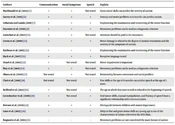
After reviewing the articles and based on the inclusion and exclusion criteria, 17 articles were selected, which are shown in Figure 1 of the process of reviewing and selecting articles (PRISMA). The research process was conducted by the author and a colleague separately. A total of 320 articles were initially reviewed, and 124 articles were included in the study, of which 75 were fully available. Finally, 17 articles were selected, and all articles were scored according to the criteria of CASP et al. They got moderate and had average quality. Additionally, according to CEBM, the articles had moderate to weak evidence levels. The results of the evaluation of the quality of the articles based on the CASP criteria are reported in Table 2 and Table 3. Additionally, Table 4 shows details of the results of the articles on the relationship between movement problems and behavioral symptoms, such as social interaction, communication, and speech problems.
Table 2.
Results of the Evaluation of the Quality of the Articles Based on the CASP Criteria
| Authors | Test and Control Group | Age | Method | Conclusion | CASP | CEBM |
|---|---|---|---|---|---|---|
| MacDonald et al. (2014) (5) | 110 ASD; 26 NL; 23 DL | 14 to 33 M | Mullen scales and the Autism Diagnosis Observation Schedule. | Based on this study, fine and gross motor skills can predict the severity of autism. Children with poor motor skills have more social communication deficits. | 8 | 1b |
| Sacrey et al. (2015) (6) | 69; LRASD; 168 HRASD; 18 NL | 6; 24; 36 M | Mullen's Early Learning Scale, the Early Learning Composite, the Vineland Adaptive Behavior Scales, the Adaptive Behavior Composite, the Autism Symptoms Scale, and the Autism Diagnosis Interview Scale | Sensory and motor problems at 6 months can predict autism; however, repetitive behaviors and social and communication skills after 12 months cannot predict autism symptoms. | 8 | 2b |
| LeBarton and Landa (2019) (7) | 140 ASD | 6; 24; 36; M | The Peabody Developmental Motor Scales-2, Mullen's Early Learning Scale, Early Learning Collection, and Autism Diagnostic Observational Questionnaire | The findings of this study indicate that there is damage to the motor function of autistic infants. The findings emphasize the examination and monitoring of the motor function of infants with a high risk of autism. | 6 | 3b |
| Fournier et al. (2010) (8) | 83 ASD; 51 NL | Meta-analysis | Based on this study, movement problems in autistic children are diverse and remain throughout their lives, which can be used as a diagnostic criterion. | 9 | 1a | |
| Guinchat et al. (2012) (10) | 459 ASD | 6 to 12 M | Mullen Scales of Early Learning and the Autism Diagnosis Observation Schedule | Based on the results of this study, it was determined that to diagnose and determine the danger signs of autistic children, attention should be paid to the movement, emotional problems, and activity level of the child. | 6 | 3b |
| Barbeau et al. (2015) (12) | 39 ASD; 30 NL | 24 to 36 M | Peabody Developmental Motor Scales-2, Mullen's Early Learning Scale, Early Learning Collection, and Autism Diagnostic Observational Questionnaire | The findings of this study indicate that there is damage to the motor function of autistic infants. The findings emphasize the examination and monitoring of the motor function of infants with a high risk of autism. | 5 | 1b |
| Green et al. (2009) (13) | 101 ASD | 10 M to 14/3M | Mullen's Early Learning Scale, the Early Learning Composite, the Vineland Adaptive Behavior Scales, Adaptive Behavior Composite, Autism Symptoms Scale, Autism Diagnosis Interview Scale | Motor damage is caused as a result of brain damage, which is related to the degree of mental retardation and the severity of the symptoms of autism disorder. | 6 | 3b |
| May et al. (2016) (14) | - | - | Simple review | Based on the results of this study, movement problems and delays occur before social and communication symptoms. Movement problems can be used as a diagnostic criterion; however, further studies are required to draw better conclusions. | 5 | 4 |
| Dyck et al. (2007) (15) | 29 ASD; 20 NL | 4 to 13 y | Social communication questionnaire, autism diagnosis interview, Wechsler Intelligence Scale for Children, clinical assessment of basic language skills, the McCarron Social and Developmental Recognition Scale questionnaire | In this study, it was observed that developmental abnormalities are related to most abilities, and social communication symptoms have a significant relationship with movement problems and received language skills. | 8 | 1b |
| Bedford et al. (2015) (16) | 209 ASD | 2, 5, 7 and 9 y | Weiland's adaptive behavior scale, Mullen's early learning scale, and observational autism diagnosis scale | According to the parents' report, the age of starting to walk is related to the beginning of speech; however, the time of gross motor development, non-verbal language, and severity of autism are not related to speech; however, the development of gross movements can predict verbal and non-verbal communication. | 6 | 3b |
| Ohara et al. (2020) (17) | 16 study | Systematic review | Of the 16 studies, 12 studies confirmed the existence of a significant relationship between movement and social problems, and 3 studies confirmed the existence of a strong relationship between fine movements and social problems. | 6 | 2a | |
| Choi et al. (2018) (18) | 30 HRASD; 69 LRAS; 71 NL | 36 M | Observational autism diagnosis scale, social communication questionnaire, and autism developmental disorder screening | Children with a high risk of autism between the ages of 6 and 24 months showed more motor development delay, and fine skills at the age of 6 months can predict speech at the age of 3 years. | 8 | 1b |
| Gernsbacher et al. (2008) (19) | 115 ASD; 46 NL | 6 to 24 M | Study 1 investigated the oral and hand-motor skills of infants; Study 2 confirmed the early predictions of infants and toddlers with historical home video; Study 3 evaluated the relationship between the speech-motor skills of autistic children and their speech fluency. | Based on this study, oral motor skills, manual manipulation, and fluency of speech have a significant relationship with communication skills, and this relationship challenges new diagnostic criteria to consider these skills. | 8 | 1b |
| Lane et al. (2012) (20) | 30 ASD | 32 M | Bayley Scales of Infant Development | Delay in fine and gross motor skills at a young age is one of the characteristics of infants referred to the ASD clinic. Furthermore, the BSID-III may not be sensitive enough to distinguish between children referred to with and without ASD. | 6 | 3b |
| Bugnariu et al. (2013) (21) | 7 ASD; 7 NL | 2 to 12 y | In child-friendly interactive virtual environments, motor performance was assessed while children performed dynamic tasks, such as pointing, reaching, standing balance, and walking. | The findings show that although movement problems are not considered the main feature of autism, growing evidence shows that the developmental trajectories of balance, walking, and reaching have a different slope (slower speed) than the control group. | 7 | 1b |
| Lloyd et al. (2011) (22) | 162 ASD | 12 to 36 M | Weiland Adaptive Behavior Scale and MSEL | According to the results of this study, children's fine and gross movements are defective in movement scale and Wayland, and movement interventions in these children should be taken seriously. | 6 | 3b |
| Bricout et al. (2019) (23) | 22 ASD; 20 NL | 1 to 11 y | European Physical Fitness Test Battery, the Physical and Neurological Exam for Subtle Signs, and the Movement Assessment Battery | Principal component analysis and cumulative hierarchical cluster analysis allow the classification of children based on movement tests, correctly distinguishing clusters between children with and without movement disorders. | 7 | 1b |
Abbreviations: ASD, autism spectrum disorder; CEBM, center for evidence-based medicine; CASP, critical appraisal skills programme.
Table 3.
CASP Scale a
| Authors | 1 | 2 | 3 | 4 | 5 | 6 | 7 | 8 | 9 | 10 | 11 | Total |
|---|---|---|---|---|---|---|---|---|---|---|---|---|
| MacDonald et al. (2014) (5) | 1 | 1 | 1 | 1 | 0 | 0 | 1 | 1 | 0 | 1 | 1 | 8 |
| Sacrey et al. (2015) (6) | 1 | 1 | 1 | 1 | 0 | 0 | 1 | 1 | 1 | 1 | 0 | 8 |
| LeBarton and Landa (2019) (7) | 1 | 0 | 1 | 0 | 0 | 1 | 0 | 0 | 1 | 1 | 1 | 6 |
| Fournier et al. (2010) (8) | 1 | 1 | 1 | 1 | 1 | 1 | 0 | 1 | 0 | 1 | 1 | 9 |
| Guinchat et al. (2012) (10) | 1 | 0 | 1 | 0 | 0 | 1 | 0 | 0 | 1 | 1 | 1 | 6 |
| Green et al. (2009) (13) | 1 | 1 | 0 | 1 | 0 | 0 | 0 | 0 | 1 | 1 | 1 | 6 |
| Barbeau et al. (2015) (12) | 1 | 0 | 0 | 1 | 0 | 0 | 1 | 0 | 0 | 1 | 1 | 5 |
| Dyck et al. (2007) (15) | 1 | 1 | 1 | 1 | 0 | 0 | 1 | 1 | 0 | 1 | 1 | 8 |
| Lloyd et al. (2011) (22) | 1 | 0 | 1 | 0 | 0 | 1 | 0 | 0 | 1 | 1 | 1 | 6 |
| May et al. (2016) (14) | 1 | 0 | 0 | 1 | 0 | 1 | 0 | 1 | 0 | 0 | 1 | 5 |
| Ohara et al. (2020) (17) | 1 | 1 | 1 | 0 | 0 | 0 | 0 | 1 | 1 | 1 | 0 | 6 |
| Choi et al. (2018) (18) | 1 | 1 | 0 | 1 | 0 | 1 | 1 | 1 | 0 | 1 | 1 | 8 |
| Bedford et al. (2015) (16) | 1 | 0 | 1 | 0 | 0 | 1 | 0 | 1 | 1 | 1 | 0 | 6 |
| Gernsbacher (2008) (19) | 1 | 1 | 1 | 0 | 1 | 0 | 1 | 1 | 0 | 1 | 1 | 8 |
| Bricout et al. (2019) (23) | 1 | 1 | 1 | 0 | 0 | 0 | 1 | 1 | 0 | 1 | 1 | 7 |
| Lane et al. (2012) (20) | 1 | 0 | 1 | 0 | 0 | 1 | 0 | 0 | 1 | 1 | 1 | 6 |
| Bugnariu et al. (2013) (21) | 1 | 0 | 1 | 1 | 0 | 0 | 1 | 1 | 0 | 1 | 1 | 7 |
a Yes = 1; No = 0
Table 4.
Results of Article Relationship Between Motor and Behavioral Symptoms a
| Authors | Communication | Social Symptoms | Speech | Explain |
|---|---|---|---|---|
| MacDonald et al. (2014) (5) | + | + | Not tested | Gross motor skills can predict the severity of autism. |
| Sacrey et al. (2015) (6) | + | + | + | Sensory and motor problems at 6 months can predict autism. |
| LeBarton and Landa (2019) (7) | + | + | + | Emphasizing the examination and monitoring of the motor function |
| Fournier et al. (2010) (8) | + | + | + | Movement problems can be used as a diagnostic criterion. |
| Guinchat et al. (2012) (10) | + | + | Not tested | Attention should be paid to the movement. |
| Green et al. (2009) (13) | + | + | + | Motor damage is related to the degree of mental retardation and the severity of the symptoms of autism. |
| Barbeau et al. (2015) (12) | + | + | + | Emphasizing the examination and monitoring of the motor function |
| Dyck et al. (2007) (15) | + | + | + | Receptive language tested |
| Lloyd et al. (2011) (22) | + | Not tested | Not tested | Motor impairment is important. |
| May et al. (2016) (14) | + | + | Not tested | Movement problems can be used as a diagnostic criterion. |
| Ohara et al. (2020) (17) | Not tested | + | Not tested | Relationship between movement and social problem |
| Choi et al. (2018) (18) | Not tested | Not tested | + | Fine skills at the age of 6 months can predict speech at the age of 3 years. |
| Bedford et al. (2015) (16) | + | Not tested | + | The age at which they start to walk is related to the beginning of speech. |
| Gernsbacher et al. (2008) (19) | + | Not tested | + | Oral motor skills, manual manipulation, and fluency of speech have a significant relationship with communication. |
| Bricout et al. (2019) (23) | + | + | + | Distinguish between children with motor impairment. |
| Lane et al. (2012) (20) | + | + | + | Delay in fine and gross motor skills at a young age is one of the characteristics of infants referred to the ASD clinic. |
| Bugnariu et al. (2013) (21) | - | - | - | Movement problems are not considered the main feature of autism. |
Abbreviation: ASD, autism spectrum disorder.
a (+) Positive relationship with motor; (-) Negative relationship with motor.
4. Conclusions
An important yet neglected aspect of motor development in ASD is fundamental motor skills (FMS). Fundamental motor skills are visible motor patterns of gross motor skills that “involve large muscles of the upper and lower organs and the trunk” (24) and include “object control, motor skills, and balance skills” (25). Object control skills include touching and controlling objects with hands or feet, for example, throwing, catching, dribbling, kicking, rolling, and hitting. Moreover, motor skills engage the body to move in different directions; these skills encompass jumping, galloping, bounding, sliding, and leaping. Balance skills aim to control the body during a specific task and involve maintaining balance on one leg, balance with ball motor skills, and maintaining body control during a task (26). In their research, Pan et al. assessed the FMS in children with ASD and attention deficit hyperactivity disorder (ADHD) using three groups, including autism, ADHD, and normal and concluded that in object control and movement patterns, autistic children had more problems than ADHD and normal children (26).
Some researchers believe that autism can be diagnosed based on children’s motor problems and even distinct from other diagnoses, such as learning disorders or ADHD. Accordingly, Miyahara et al. compared the motor patterns of autistic children with learning disorders and observed that autistic children had lower levels of gross motor skills and ball skills than those with learning disorders (27). In another study, Green et al. assessed the motor impairments of ASD children and concluded that these children had deficits in motor skills (13). Manjiviona and Prior showed that 50% of children with Asperger’s syndrome and 67% of children with autism had impairments in Henderson’s Test of Motor Impairments (28). Ghaziuddin and Butler observed that motor problems were shown to be common using the Bruininks-Oseretsky Motor Skills Test in children with Asperger’s syndrome, autism, or pervasive developmental disorders, which had not been specified in other ways (29). As inferred from the articles, autistic children show motor problems even when using different motor tests. In these studies, autistic children were also compared to children with other disorders, and autistic children were shown to have more motor problems than those with other disorders, such as ADHD.
In 2016, May et al. investigated a multidisciplinary perspective on the motor impairment of autism spectrum children as a diagnostic criterion. The aforementioned study was a simple review article that, based on the review of various articles, showed that autistic children, compared to normal children in gross movements, motor coordination, walking, upper limb movements, and postural stability are problematic. Movement problems can show themselves before the occurrence of disturbances in social interactions and speech. Delay and movement problems can be of great help as a criterion and behavioral indicator in the diagnosis of autistic children (14). In a study, Dyck et al. investigated the relationship between symptoms and abilities of autistic children. The samples of this study were 29 children aged 4 to 13 years who had a definitive diagnosis of autism. Autism symptoms, intelligence, language, motor coordination, and social cognition were assessed, and children with autism had low ability in all measures. There were significant differences between intelligence quotient (IQ) and theory of mind, fine and gross motor coordination. The most common difference between IQ scores and motor coordination was observed in 86% of children. There was also a significant relationship between social interactions and motor coordination (15).
May et al. (2016) examined the relationship between motor development and the severity of stereotyped and repetitive behaviors in autistic children, and 147 parents of children and adults (with an average age of 8 years) answered questions related to motor development and abnormal motor behaviors. Tip-toe walking) and they responded stereotypically. In this study, it was observed that there is a significant relationship between motor damage and repetitive and stereotyped behaviors, and it indicates the ability to predict the occurrence of repetitive behavior through motor development delay (14). In 2016, Ketcheson, Huck, and Ulrich conducted an article entitled “Effects of Early Movement Interventions on Movement Skills, Social Interactions, and Movement Activity Levels”. In this study, which was conducted on 20 autistic children aged 4 - 6 years, they received movement interventions for 4 hours a day, 5 days a week for 8 weeks. Based on the results of the study, motor interventions improved the control of objects, movements, and gross movements. These authors considered the importance of implementing motor interventions in the treatment of autistic children (30).
Provost et al. investigated the comparison of motor delay in children with autism spectrum and motor delay of 21 to 41 months. In this study, 56 children (42 male and 14 female) participated, and motor development between these two groups was investigated. Children with autism and motor delay were delayed in motor development; however, there was no difference between these two groups in terms of the amount of this delay (31).
Hedgecock et al. investigated the relationship between gross motor development delay and the behavior and quality of life of autistic children. In this study, 3253 autistic children aged 2 to 6 years were included in the study. The quality of life of autism spectrum children has a significant relationship; for this reason, these children should be evaluated as soon as possible in terms of gross motor development (32).
Dowd et al. wrote in 2010 in an article entitled "Can motor skills impairment in autistic children be the main criterion for autism diagnosis". According to the aforementioned article, there is a relationship between motor skills and social communication skills in autistic children (33). In 2018, Choi et al. conducted a study to investigate the relationship between fine motor skills and expressive speech in children with high and low risk of autism. In this study, 71 normal children, 30 children with a high risk of autism, and 69 children with a low risk of autism were selected. Based on the linear hierarchical model, children with a high risk of autism develop slower in fine skills than normal children between the ages of 6 and 24 months, and fine motor skills at 6 months can predict expressive speech at 3 years old (18). In 2008, Ozonoff et al. investigated motor development, motor abnormalities, and warning signs of autism spectrum. In the aforementioned study, autistic, normal, and motor delay children in terms of motor development (grasping, rolling, sitting, crawling, and walking) were evaluated using home videos. Noticeable differences were observed in palmar, archer, and walking patterns, and movement abnormalities and delays in protective skills were not observed (34).
In a review article, Downey and Rapport examined the movement activity of autistic children. Physiotherapists should use movement activity as a main measure of autistic children. In this article, 49 studies were included, and it was observed that the amount of research carried out in this field is very limited and incomplete. Autistic children have problems in the field of movement, and appropriate interventions should be implemented in this field (35). In 2019, Bricout et al. investigated motor capacities in autistic boys. The purpose of the aforementioned study was to determine the specific motor profile of autistic male children and to determine the most appropriate motor test. In the aforementioned study, 22 autistic children with an average age of 10 years and 20 healthy children with an average age of 10 years were selected. Additionally, 42 movement tests were taken from them. These children had problems with flexibility, strength, endurance, manipulation, and ball skills (23).
In 2012, Lane et al. wrote an article entitled the motor characteristics of autistic children. In the aforementioned study, 30 children with an average age of 32 months were tested using the Bailey test, version 3, and 8 months are delayed compared to normal children from the point of view of fine motor development. Therefore, gross and fine motor development can be used as an early diagnosis criterion (20). Gabis et al. showed that motor delay is a common danger alarm in female children compared to boys. In the aforementioned study, 467 children with an average age of 3.5 years were included in the study. According to the study, 60% and 47% of female and male children have motor delays, respectively. In addition, 49% and 36% of female and male children show general delay, respectively. Female children’s walking delay can be used as a diagnostic criterion (36).
In 2013, Bugnariu et al. investigated motor performance in children with autism. In this study, 7 autistic children and 7 normal children aged 2 to 12 years were evaluated in terms of walking, standing balance, reaching, pointing, and dynamic tasks. Autistic children have problems in walking, reaching, and balancing compared to normal individuals. According to the authors, although movement problems are not a diagnostic criterion, they can be a useful help in this field (21).
Jansiewicz et al. investigated the distinguishable motor signs between autistic, Asperger's, and normal children. In the aforementioned study, 40 autistic male children and 55 normal children aged 6 to 17 years were included. According to the results of the study of these children in terms of movement problems, autistic children were distinguishable from normal children (37). In a study involving 162 autistic children aged 12 to 36 months, Liyod, MacDonald, and Lord examined movement issues, and it was shown that autistic children are delayed in gross and fine movements, compared to normal children (22).
In 2007, Ming et al. conducted a study on the prevalence of movement problems in twins of the autism spectrum. In the aforementioned study, 154 children were evaluated using the cohort method in terms of movement disorders, such as hypotonia, walking on the toes, movement apraxia, and reduced flexibility. Ankle and gross motor delays were evaluated. Hypotonia was the most common motor symptom (38), which improved with time, followed by motor apraxia (23), toe walking (29), and gross motor delay (9). It was observed in these children, according to the authors, that movement injuries are common in these children and require timely therapeutic interventions (38).
Bhat et al. investigated motor delay with communication problems in twin infants at risk of autism spectrum. In this study, 24 high-risk twins and 24 low-risk twins with autism at the ages of 3 and 6 months and then 36 months were studied based on the cohort method. Most of the twins with a high risk of autism had a motor delay, compared to children with low risk, and had more communication problems (67 - 73%) (39).
Holloway et al. investigated the relationship between gross movements and social skills of autistic male children. In the aforementioned study, 21 autistic children were evaluated based on Peabody Test 2, Miller's participation scale, and social skills improvement scale. The highest correlation was observed between general gross movement skills and social skills. Moreover, stability was central to these skills. Specifically, stability, movement accuracy, and manipulation of objects can predict social skills (40).
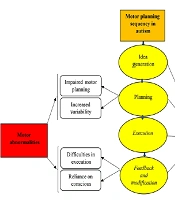
Paying attention to early symptoms and interventions in autistic children has received much attention from researchers in recent years. Due to the rapid growth of the brain at lower ages and attention to the golden growth time for performing proper treatment, most researchers seek early diagnosis. The motor domain of autistic children has been overlooked in the past years; however, the stages of motor development and motor delay have recently received much attention from researchers. According to studies performed by Bedford et al. (16), Ohara, et al. (17), Dowd, et al. (33), motor symptoms are associated with behavioral symptoms of autistic children. This motor developmental delay does not improve with time. This association might be sought in brain circuits where, based on research, the cerebellum and basal nuclei are injured and related to motor delay. Some studies even regard frontostriatal circuit (conscious planning of movement) and cerebellum (unconscious planning of movement) injuries as significant issues (31). Even in some cases, these children benefit from the frontostriatal area to compensate for the impaired cerebellum; this circuit also requires increased attention and motor control, making it difficult for the child.
Finding more specific relationships between motor and social skills might help in designing effective motor skill interventions for improved social functioning among individuals with ASD. Among studies of gross motor skills, object control/aiming and catching skills, which include ball throwing, catching, and kicking, were observed to be most likely to be related to social skills, based on repeated findings of these links in previous research. Previous studies have reported that lower-level object control/aiming and catching skills are prominent characteristics of individuals with ASD (17).
Unfortunately, many ASD children do not receive an early diagnosis, and the diagnosis is delayed until 3 years of age. This delay hinders performing specialized and accurate treatments on these children; however, by benefitting from motor problems and topics, early diagnosis can be achieved. The research literature on autistic children has shown that motor problems are significantly associated with socio-communicative symptoms and school-related problems; accordingly, Van Waelvelde et al.’s study showed that the existence of motor problems and injuries led to autistic children’s reduced quality of life (41). The existence of these problems has caused motor issues to be controversial as even the central nucleus of the problems of autistic children. Rinehart N and McGinley J even recognized the motor problems of autism as the central nucleus of this disorder, which occupational therapists and physiotherapists should maneuver more in this section (42).
Articles have not yet investigated the behavioral symptoms and motor problems. According to the present information, it can be concluded that motor impairment is possibly associated with the behavioral symptoms of ASD. Further research is required to determine the exact relationship between motor subsets and behavioral symptoms. Among the limitations of this study were the age of the studied samples and the lack of specialized articles on communication and movement problems that require further investigation and research. Considering the limited research conducted in the field of behavioral and motor symptoms, it is suggested that research be conducted in some fields, including communication and sensory problems.