
1. Background
Low back pain (LBP), with or without radiculopathy, is a prevalent musculoskeletal complaint that contributes to disability and adversely affects individuals’ quality of life (1). Approximately 60% to 80% of adults experience at least one episode of LBP during their lifetime, and the recurrence rate is notably high (2). Treatments for LBP range from pharmacologic and physical therapies to spinal surgery. Among these approaches, spinal injections are minimally invasive techniques widely administered by interventional pain specialists (3). Injection approaches include epidural, sacroiliac (SI) joint, and facet joint injections performed under fluoroscopic guidance (4). Other minimally invasive nonsurgical interventions, including multiwave locked system (MLS) laser therapy, have also demonstrated beneficial effects in reducing pain in patients with chronic LBP (5).
A healthy lifestyle is an important factor that may contribute to improved outcomes after spinal injections. Optimal health behaviors play an important role in reducing the incidence of noncommunicable diseases such as diabetes, cardiovascular disease, and LBP (6). Bohman et al. investigated four lifestyle factors—physical activity, alcohol consumption, smoking, and a healthy diet—in relation to LBP (7). They showed that women with healthy lifestyles experienced less LBP and had a better prognosis for occasional pain. Previous studies have also investigated the efficacy and safety of spinal injections. Verheijen et al. compared epidural steroid injections with placebo and found significant short-term improvements in LBP and disability in the steroid group (8). Cohen et al. reviewed the safety and neurologic adverse effects of spinal injections (9) and reported that epidural steroid injection is a safe and effective minimally invasive method. Recent randomized controlled trials have also compared different adjuvant agents used in spinal injections and reported favorable analgesic outcomes in patients with chronic LBP (10). Neurologic and systemic adverse effects rarely occur after injection. Pain at the injection site, vasovagal reactions, and increased radicular pain are among the most common complications.
2. Objectives
The current literature on LBP treatment provides limited information on changes in health behaviors after interventional therapies. To our knowledge, this is the first study to investigate how health behaviors may change after spinal injections for LBP. Specifically, we assessed changes in three health behaviors: Physical activity, healthy diet, and ergonomic behavior. We also evaluated factors related to the efficacy and safety of spinal injections, including Numeric Rating Scale (NRS) pain severity, analgesic use, physical therapy utilization, and post-injection signs and symptoms.
3. Methods
3.1. Study Design
We conducted a single-arm, before-after longitudinal study without a control group to assess changes in the efficacy and safety of spinal injections and in three major health behaviors—nutritional habits, physical activity, and ergonomic habits—before and one year after spinal injection. The validated questionnaire included a clinical assessment, the NRS, and a modified version of the Health Behavior and Stages of Change Questionnaire (HBSCQ) (11, 12). No formal sample-size calculation was performed because the study was exploratory and included all eligible patients referred during the study period.
3.2. Setting
Patients included in this study were referred to a tertiary center for spinal injections. Patients were recruited between January 2022 and December 2023. Baseline assessments were completed before spinal injection procedures with researcher guidance, and follow-up evaluations were conducted one year after the intervention via standardized telephone interviews. To minimize interviewer-related variability, all assessments followed a standardized questionnaire with predefined instructions. Nevertheless, because researchers administered both baseline and follow-up assessments, observer (interviewer) bias cannot be completely excluded. Although the same questionnaire structure and interviewer guidance were used at both time points, differences in the mode of administration may have influenced participant responses. Confirmed diagnoses and injection types were retrieved from patients' hospital health records.
3.3. Participants
A total of 198 eligible patients with spinal abnormalities, herniated disc, canal stenosis, SI joint dysfunction, or a combination of these conditions underwent spinal injections and completed the baseline assessment. During the one-year follow-up period, 45 patients (22.7%) were lost to follow-up, resulting in a final analytic sample of 153 patients (77.3% retention). Documented reasons for loss to follow-up included changes in contact information, relocation, failure to respond to telephone follow-up, and missed follow-up visits. Only patients with available baseline and one-year follow-up data were included in the final analysis. Baseline comparisons between retained participants and those lost to follow-up were not possible because incomplete follow-up records were unavailable for some excluded participants.
Herniated disc and canal stenosis were confirmed by physical examination findings consistent with radicular back pain and evidence of disc protrusion on magnetic resonance imaging (MRI). SI joint dysfunction was confirmed based on physical examination and retrospective pain relief following injection. All physical examinations were performed by a sports medicine and spine specialist with more than 10 years of experience. When more than one clinically relevant spinal pathology was present, patients were classified in the "more than one diagnosis" category.
The inclusion criteria were age 18 - 65 years, LBP, ability to speak Persian, and referral to the Yas Hospital spine department. Patients were excluded if they had a history of malignant disease, back pain due to trauma, severe spinal deformity, inflammatory spondyloarthropathy, spinal infection or malignancy, previous HIV infection, pregnancy, uncontrolled diabetes mellitus, active skin or soft-tissue infection at the planned injection site, or any other contraindication to spinal injection, as determined by the treating physician. Among participants with a history of previous spinal surgery, only those who had undergone non-instrumented (non-fixation) spinal procedures were included. Patients with spinal fixation devices or other spinal instrumentation were not eligible.
3.4. Procedure
Patients were monitored before injection, sedated while the injection site was prepared, and locally anesthetized. Injections were performed under C-arm guidance. Iodixanol dye was injected to confirm the correct injection site. The injection mixture consisted of 1 cc triamcinolone and 4 cc lidocaine 1%. Patients were routinely monitored during the immediate post-procedure observation period, and injection-related adverse effects or complications were documented before discharge.
3.5. Ethical Approval
The study was approved by the institutional review board (IR.TUMS.NI.REC.1401.078). All patients completed informed consent forms before enrollment and were free to withdraw from the study without consequences.
3.6. Variables and Instruments
The NRS and a modified version of the HBSCQ were used to evaluate pain and health behavior. The background and medical assessment questionnaire, designed based on previous studies, assessed quantitative variables such as height, weight, age, symptom duration, and analgesic consumption, as well as qualitative variables including sex, marital status, substance use, medical history, diagnosis, physiotherapy, brace use, herniated disc level, surgical history, injection details, adverse effects, and injection type (13). The primary outcomes were changes in pain severity and health-behavior scores, including dietary habits, physical activity, and ergonomic behavior, one year after spinal injection. Secondary outcomes included changes in analgesic consumption, physical therapy utilization, and post-injection safety outcomes.
Participants reported the names of all analgesic medications they were currently using. Individual medications were subsequently classified into broader pharmacologic categories (eg, nonsteroidal anti-inflammatory drugs [NSAIDs], gabapentinoids, herbal agents, and opioids/opium) for statistical analysis to simplify presentation and avoid sparse categories. Participants also reported the daily frequency of analgesic medication use. For analysis, analgesic dosage was categorized according to the self-reported number of tablets consumed per day as follows: Low dose (≤ 1 tablet/day), moderate dose (2 - 3 tablets/day), and high dose (≥ 4 tablets/day). These categories were used to simplify comparisons of analgesic consumption before and after spinal injection.
The NRS, a validated scale from 0 (no pain) to 10 (most severe pain), was used to evaluate pain severity before and after injection (14). The HBSCQ was used to evaluate behavioral change before and after spinal injections. The original questionnaire was designed based on the transtheoretical model (TTM) and contains five items: smoking, alcohol consumption, nutritional habits, physical activity, and use of mammography and/or ultrasonography (11). We modified this questionnaire to evaluate behavioral change in patients with LBP. Two HBSCQ items, nutritional habits and physical activity, were retained, and an item on ergonomic behavior was added. Ergonomic habits included lifting objects properly, maintaining correct posture while standing or sitting, and avoiding non-ergonomic chairs and beds.
The modified HBSCQ was designed to evaluate participants' stages of health-behavior change rather than the quantitative amount of each behavior. Accordingly, physical activity, dietary habits, and ergonomic behavior were assessed using a five-stage TTM model of behavioral adoption rather than objective measures such as minutes of physical activity per week, exercise intensity, dietary intake, or duration of ergonomic practices. Each behavioral change was scored on a five-stage ordinal scale: 1 = no interest in change, 2 = planning to change, 3 = intending to change, 4 = recently started behavioral change, and 5 = successfully changed and maintained the behavior for more than six months. Higher scores indicated greater engagement in positive health-behavior changes and more advanced stages of behavioral adoption.
The content validity of the modified HBSCQ was assessed by a group of experts, including a spine specialist, neurosurgeon, neuroscientist, psychologist, and epidemiologist, who evaluated whether the items measured the intended concepts. All three items achieved full agreement (Content Validity Ratio = 1.00 and Content Validity Index = 1.00). Additional psychometric evaluation of the modified questionnaire, including internal consistency, test-retest reliability, and construct validity, was not performed.
3.7. Statistical Analysis
Data were screened for missing, incomplete, or inconsistent questionnaire responses before analysis. Because the proportion of missing item-level data among retained participants was low, complete-case analysis was performed, and participants with missing baseline or follow-up outcome data were excluded from the corresponding analyses. No imputation was performed. Binary and nominal variables were summarized using frequencies and valid percentages. Because the study variables were not normally distributed, paired continuous and ordinal outcomes, including pain severity and health-behavior scores, were compared before and after spinal injection using the Wilcoxon signed-rank test. Paired categorical outcomes, including analgesic use, analgesic dose category, and physical therapy utilization, were analyzed using the marginal homogeneity test.
Multivariable linear regression analyses were performed to evaluate associations between baseline patient characteristics and post-injection outcome scores, including pain severity, dietary habits behavior, physical activity behavior, and ergonomic behavior. All covariates were entered simultaneously into the regression models and included age, sex, diagnosis, analgesic use, injection type, and baseline values of the corresponding outcome variables. The "more than one method" category was selected as the reference group because it was considered to represent patients with more complex clinical presentations requiring combined interventional approaches. Regression coefficients (β) with 95% confidence intervals (CIs) were reported. Results were presented as numbers of positive and negative change scores, frequencies of paired outcome categories, and beta coefficients from the Wilcoxon signed-rank, marginal homogeneity, and multivariable regression analyses. All analyses were performed using IBM SPSS Statistics version 26, with P < 0.05 considered statistically significant. Analyses of associations by sex and injection type were exploratory and were conducted to identify potential factors associated with post-injection outcomes.
4. Results
4.1. Participant Characteristics
The study included 153 patients with LBP (mean age, 50.97 ± 13.95 years) treated with spinal injections. Table 1 provides detailed demographic information. Overall, 101 patients (65%) were female, 130 (83%) were married, and 141 (89%) were non-smokers and non-drinkers. Disc herniation was diagnosed in 57 patients (37%), and 55 patients (35.6%) had multiple diagnoses at the time of injection. Twenty-two patients presented with LBP alone, whereas 131 presented with LBP accompanied by additional symptoms (eg, radicular pain and/or neurologic symptoms), which were categorized as multiple presentations. Formal comparisons of baseline clinical severity and diagnostic characteristics across injection-type groups were not performed.
Table 1.
Demographic Information
| Variables | Frequency | Percentage |
|---|---|---|
| Gender | ||
| Female | 101 | 65 |
| Male | 52 | 35 |
| Marital status | ||
| Single | 23 | 15 |
| Married | 130 | 83 |
| Smoke or alcohol consumption | ||
| None | 141 | 89 |
| Smoking | 13 | 8 |
| Alcohol | 3 | 2 |
| Diagnosis | ||
| Herniated disc | 57 | 37 |
| Spinal stenosis | 176 | 11.7 |
| SI joint dysfunction | 24 | 15.6 |
| More than one diagnosis | 55 | 35.6 |
| Duration of symptoms before injection (mon) | ||
| < 3 | 10 | 6.5 |
| > 3 | 143 | 93.4 |
| Clinical presentation before injection | ||
| Single presentation (low back pain) | 22 | 15 |
| More than one presentation | 131 | 85 |
| Pre-injection bracing | ||
| Yes | 44 | 29 |
| No | 109 | 71 |
| Surgical history | ||
| None | 88 | 56 |
| Previous non-instrumented spine surgery | 44 | 28 |
| Other-site surgeries | 25 | 16 |
| Site of injection | ||
| SI joint | 68 | 44.4 |
| One site (L1 - S2) | 42 | 27.4 |
| More than one site | 43 | 28.1 |
| Type of injection | ||
| Epidural | 58 | 38 |
| SI joint | 61 | 40 |
| More than one method | 34 | 22 |
| Injection side effects (symptoms) | ||
| None | 121 | 79 |
| Pain at injection site | 24 | 15 |
| Increased back pain | 3 | 2 |
| Headache | 6 | 4 |
| Injection side effects (signs) | ||
| None | 147 | 96 |
| Hyperglycemia | 3 | 2 |
| Increased blood pressure | 3 | 2 |
Among the patients, 88 (56%) had no surgical history, and 44 reported bracing before injection. Injection sites included L1-S2 (27.4%, n = 42), the SI joint (44.4%, n = 68), and multiple sites (28.1%, n = 43). Most patients received epidural (38%, n = 58) or SI joint injections (40%, n = 61), whereas 22% (n = 34) received multiple injection methods. The mean number of spinal injection sites per patient was 1.31 ± 0.52. Post-injection adverse effects were categorized as signs and symptoms. Twenty-four patients reported pain at the injection site, and three experienced increased LBP. In addition, three patients had elevated blood pressure, and three had post-injection hyperglycemia.
4.2. Pain and Health-Behavior Outcomes
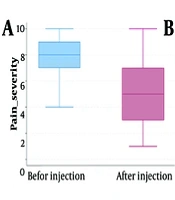
Table 2 shows changes in pain severity and health-behavior scores. Median pain severity decreased significantly (P < 0.001). Previous studies indicate that a change of 2 or more points on the NRS is required to demonstrate a clinically significant reduction in pain (15). In this study, the median NRS pain severity score decreased from 8 before injection to 5 after injection. In total, 116 patients experienced decreased pain severity after injection. Health-behavior scores, including dietary habits, physical activity, and ergonomic behavior, also improved significantly after injection (P < 0.001) (Figure 1B - D). Specifically, 41, 43, and 60 patients reported improvements in dietary habits, physical activity, and ergonomic behavior scores, respectively.
Table 2.
Assessment of Main Outcome Scores Before and After Injection a
| Outcomes | Before | After | Increased | Decreased | Not Changed | P-Value b |
|---|---|---|---|---|---|---|
| Pain severity score | 8 (2) | 5 (4) | 12 | 116 | 25 | < 0.001 |
| Dietary habits behavior | 2 (2) | 3 (3) | 41 | 5 | 108 | < 0.001 |
| Physical activity behavior | 2 (2) | 2 (3) | 43 | 12 | 99 | < 0.001 |
| Ergonomic behavior | 3 (4) | 5 (1) | 60 | 7 | 87 | < 0.001 |
a Values are expressed as median (IQR) or number. Abbreviation: IQR, interquartile range.
b Based on the Wilcoxon signed-rank test.

Figure 1.
Comparison of primary outcome scores before and after spinal injection. Panel A: Numeric Rating Scale (NRS) pain severity score (range, 0 - 10; higher scores indicate greater pain); Panel B: dietary habits behavior score; Panel C: ergonomic behavior score; Panel D: physical activity behavior score assessed using the modified Health Behavior and Stages of Change Questionnaire (HBSCQ). Behavioral scores range from 1 to 5, corresponding to stages of change (1 = precontemplation, 2 = contemplation, 3 = preparation, 4 = action, and 5 = maintenance), with higher scores indicating greater adoption and maintenance of healthy behaviors.
4.3. Analgesic Use and Physical Therapy
According to Table 3, the number of patients taking any type of analgesic decreased significantly from 104 to 69. The number of patients receiving conventional physical therapy also decreased significantly from 77 before injection to 21 after injection (P < 0.001). Daily analgesic consumption showed a decreasing trend after injection; however, the difference did not reach statistical significance (P = 0.06).
Table 3.
Comparison of Categorical Outcomes Before and After Injection
| Variables | Before Injection | After Injection | P-Value a |
|---|---|---|---|
| Use of analgesic | 0.001 | ||
| None | 49 | 84 | |
| NSAID | 67 | 41 | |
| GABA analogue | 24 | 21 | |
| Herbal agents | 6 | 3 | |
| Opiates | 7 | 4 | |
| Daily analgesic tablet consumption (dose) | 0.06 | ||
| Low | 70 | 49 | |
| Medium | 23 | 18 | |
| High | 11 | 2 | |
| Conventional physical therapy | < 0.001 | ||
| Yes | 77 | 21 | |
| No | 76 | 132 |
a Based on the marginal homogeneity test.
4.4. Factors Associated with Post-Injection Outcomes
Table 4 shows associations between baseline patient characteristics and the main post-injection outcome scores. Among patients with LBP, the post-injection pain severity score was, on average, 1.49 points lower in male patients than in female patients (P = 0.003). Regarding behavior change, after adjustment for baseline values, the physical activity behavior score was higher among patients who received an epidural injection than among those who received more than one injection method (β = 0.60; P = 0.04). The post-injection ergonomic behavior score was significantly lower among patients who received epidural or SI joint injection than among those who received more than one injection method. After adjustment for baseline values, male patients also had significantly lower post-injection ergonomic behavior scores than female patients (β = -0.51; P = 0.02).
Table 4.
Multivariable Linear Regression Analysis of Factors Associated with Post-Injection Outcome Scores a
| Covariates and Categories | Pain Severity β (95% CI) | P-Value | Physical Activity β (95% CI) | P-Value | Dietary Habits β (95% CI) | P-Value | Ergonomic Behavior β (95% CI) | P-Value |
|---|---|---|---|---|---|---|---|---|
| Age | -0.027 (-0.05, 0.01) | 0.12 | -0.008 (-0.03, 0.01) | 0.34 | -0.01 (-0.04, 0.02) | 0.16 | 0.007 (-0.01, 0.02) | 0.38 |
| Gender | ||||||||
| Female | Ref | Ref | Ref | Ref | Ref | Ref | Ref | Ref |
| Male | -1.49 (-2.45, -0.48) | 0.003 b | 0.15 (0.10, 1.21) | 0.35 | -0.25 (-1.14, 0.03) | 0.20 | -0.51 (-1.19, -0.17) | 0.02 b |
| Diagnosis | ||||||||
| Herniated disc | Ref | Ref | Ref | Ref | Ref | Ref | Ref | Ref |
| Spinal stenosis | -0.61 (-1.72, 1.20) | 0.24 | 0.01 (-0.99, 0.66) | 0.96 | -0.01 (-0.99, 0.66) | 0.96 | -0.42 (-1.03, 0.49) | 0.19 |
| SI joint dysfunction | -0.58 (-2.27, 0.52) | 0.32 | 0.18 (-0.53, 1.06) | 0.59 | 0.03 (-0.71, 0.88) | 0.89 | 0.03 (-0.51, 0.94) | 0.91 |
| More than one diagnosis | -0.62 (-1.27, 0.77) | 0.42 | -0.05 (-0.62, 0.53) | 0.84 | -0.12 (-0.64, 0.51) | 0.53 | -0.33 (-1.06, 1.04) | 0.15 |
| Analgesic consumption | ||||||||
| None | Ref | Ref | Ref | Ref | Ref | Ref | Ref | Ref |
| One type analgesic | -0.48 (-1.15, 2.09) | 0.46 | 0.20 (-0.67, 0.43) | 0.46 | 0.29 (-0.48, 0.62) | 0.18 | -0.16 (-0.23, 1.11) | 0.51 |
| More than one type analgesic | -0.11 (-0.28, 1.94) | 0.85 | -0.02 (-0.42, 0.84) | 0.95 | -0.01 (-0.20, 1.25) | 0.96 | -0.11 (-0.06, 1.19) | 0.72 |
| Type of injection | ||||||||
| More than one method | Ref | Ref | Ref | Ref | Ref | Ref | Ref | Ref |
| Epidural | 0.37 (-1.20, 1.21) | 0.61 | 0.60 (0.34, 1.04) | 0.04 b | -0.19 (-0.58, 0.78) | 0.40 | -0.57 (-0.78, 0.43) | 0.03 b |
| SI joint | 0.05 (-0.91, 1.33) | 0.08 | 0.53 (-0.13, 0.73) | 0.07 | 0.15 (-0.83, 0.43) | 0.51 | -0.86 (-1.08, -0.12) | 0.002 b |
a Abbreviations: CI, confidence interval; Ref, reference category.
b P < 0.05 was considered statistically significant.
5. Discussion
Several reports have demonstrated the efficacy and safety of spinal injections for LBP; however, to our knowledge, data on changes in health behaviors after spinal injections for LBP are lacking. We conducted this study to evaluate changes in three health-behavior domains—physical activity, healthy diet, and ergonomic habits—while also assessing injection efficacy and safety.
The most notable finding was the improvement in health-behavior scores after injection. Improvement in ergonomic behavior was more prominent than that in the other two behaviors, although all three improved significantly after injection. Habit change is a complex, multifactorial process influenced by multiple factors over time. As reported previously, the frequency of a habit is a strong predictor of its future maintenance (16). Inappropriate health behaviors, such as non-ergonomic habits during activity or rest, insufficient physical activity in daily routines, and poor dietary habits, are common patterns associated with chronic or recurrent LBP (17). In this study, however, health-behavior scores improved after minimally invasive therapy. The primary purpose of spinal injections is to control LBP in acute or chronic phases through analgesic treatment, but behavioral changes were also observed after injection (18). If these behavioral changes are maintained, they may be associated with improved long-term outcomes and reduced recurrence of LBP.
Existing literature provides limited information on how invasive or minimally invasive interventions for LBP might lead to changes in health behavior. However, several reports have shown that changes in health behaviors may improve LBP. For example, Rodrigues et al. reported that improved ergonomics among computer office workers was associated with a lower rate of LBP (19). Kajiki et al. also demonstrated a preventive role of ergonomic behavior change in short-term LBP incidence (20). Patients' motivation to change ergonomic habits after injection may therefore reflect a bidirectional relationship between LBP and health-behavior change.
Changes in ergonomic habits were more pronounced than changes in the other two behaviors. This may be related to the direct relationship between LBP and ergonomic habits, which could lead to better adherence in this domain (21). We also found that ergonomic habit improvement was greater in male than in female patients. Sex differences are important in behavioral change, and differences in psychological responses and coping mechanisms may contribute to this disparity (22). However, the observed sex-related differences should be interpreted cautiously because the study was not specifically designed or powered for subgroup analyses, and residual confounding may have influenced these findings. Injection type also appeared to affect ergonomic behavior change. Patients who underwent only epidural or SI joint injections exhibited better ergonomic behavior change than those who received more than two types of injection. Differences between injection-type groups should be interpreted cautiously because these analyses were exploratory, and the groups may have differed in baseline clinical complexity, symptom severity, or treatment indication. Patients receiving more than one injection method may have represented a subgroup with more complex or refractory conditions requiring combined interventions. Therefore, associations between injection type and behavioral outcomes may partially reflect underlying clinical differences rather than an independent effect of a specific injection approach.
Physical activity improved significantly after spinal injection, although the magnitude of change was less prominent than that for ergonomic and dietary habits. These findings differ from previous research. Mancuso et al. conducted a prospective analysis of patients who underwent spinal surgery and reported lower physical activity levels than in the general population two years after surgery (23). Several explanations may account for this difference. Most importantly, the present study compared patients' behavior before and after injection and showed improvement relative to baseline. The type of procedure may also have affected the results. Spinal injections are minimally invasive and impose fewer restrictions on movement and less fear of spinal injury than spinal surgery, potentially allowing patients to remain more physically active.
Previous studies have highlighted the importance of physical activity in reducing the likelihood of developing LBP, and this relationship is well recognized among medical practitioners (24). One possible explanation for increased physical activity after a minimally invasive procedure is physician guidance and emphasis on physical activity, which may motivate patients to obtain better results from the injection. Several reports have shown that physician counseling can influence patients' attitudes and motivate them to increase physical activity (25, 26).
Data on dietary habit change in LBP are limited, but dietary behavior has been evaluated after invasive procedures such as obesity surgery. Teixeira et al. compared dietary habit changes in surgical and conservative treatment groups among patients with severe obesity and reported greater behavioral change after invasive intervention (27). This finding may suggest that patients who choose invasive therapeutic methods are also motivated to change their health behaviors. Our findings regarding dietary behavior after spinal injection are consistent with reports of dietary habit changes after invasive interventions.
The median NRS pain severity score decreased from 8 before injection to 5 after injection. This finding is consistent with earlier studies (28). We also observed a sex difference in pain severity reduction, with men experiencing greater pain reduction than women after the procedure. This finding differs from previous studies suggesting no sex difference in pain reduction after injection (29). A possible explanation may be the longer follow-up period of 12 months in our study, which could influence LBP relapse differently in men and women. Analgesic use and physical therapy utilization also decreased after injection, supporting injection efficacy. Injection adverse effects were evaluated as signs and symptoms and were reported in 5% and 21% of patients, respectively. The most frequent adverse effect was pain at the injection site, which resolved after several days. Collectively, these findings suggest that spinal injection is a safe procedure.
The relationship between pain and health behaviors is also likely to be bidirectional. Pain relief following spinal injection may facilitate healthier behaviors by improving functional capacity and reducing fear of movement, whereas improvements in physical activity, ergonomic practices, and other health behaviors may themselves contribute to further pain reduction and recovery. Because of the observational design, the direction of these associations cannot be determined.
5.1. Study Limitations
This study has several limitations that may have influenced the accuracy of the results. The absence of a non-intervention or comparator group is an important limitation. Consequently, causal inferences regarding the independent role of spinal injection in changing health behaviors cannot be established. The observed changes may partially reflect regression to the mean, natural symptom fluctuation, physician recommendations, concurrent treatments, or increased patient motivation over time rather than the injection procedure alone.
The one-year interval between the intervention and follow-up assessment is another important limitation. Although this extended follow-up enabled evaluation of longer-term behavioral changes, it also increased the likelihood that factors unrelated to the injection itself, including natural symptom fluctuation, spontaneous recovery, physician counseling, additional treatments, or lifestyle modifications, influenced pain and health-behavior outcomes. Participants were also recruited from a tertiary care center, which may limit generalizability to the broader population.
Behavioral outcomes were assessed using self-reported responses and a modified HBSCQ with limited psychometric evaluation beyond expert content validation. Formal reliability and construct-validity testing were not performed. Differences between the in-person baseline assessment and telephone-based follow-up interviews may also have influenced participant responses and measurement comparability. Furthermore, because researchers administered the questionnaires and guided participants during data collection, observer (interviewer) bias and socially desirable responses may have influenced some reported behavioral outcomes despite the use of standardized interview procedures. Maintaining new behavior over the long term is a major challenge. Future research should follow patients for longer periods to determine how new behavioral patterns become established and identify ways to support their maintenance.
5.2. Conclusions
Overall, improvements in health behaviors related to LBP were observed following spinal injection, particularly in ergonomic habits. However, because of the single-arm before-after design, these findings should be interpreted as associations rather than evidence of a direct causal effect. Although this study focused on health-behavior changes, the findings also supported the safety and efficacy of spinal injection for clinical outcomes in patients with LBP.