
1. Background
Chronic granulomatous disease (CGD) is a primary immunodeficiency disorder that impairs granulocyte function, including that of neutrophils and monocytes, because of NADPH oxidase dysfunction (1). NADPH oxidase reduces oxygen molecules and generates reactive oxygen species (ROS), such as hydrogen peroxide, hypochlorous radicals, and secondary amines, which can kill microorganisms. Various molecular defects can lead to CGD; however, all affect one or more components of NADPH oxidase in phagocytic cells. The most commonly affected protein in CGD is gp91PHOX, which is encoded by a gene on the X chromosome and is therefore inherited in an X-linked pattern. In addition to X-linked inheritance, mutations affecting p22PHOX, p44PHOX, and p67PHOX are inherited in an autosomal recessive pattern. Mutations in any NADPH oxidase subunit can cause CGD (2-8).
The exact incidence of CGD in Iran remains unclear (9). The incidence of CGD is approximately 1 in 250,000 in the European population (2, 5). Its prevalence ranges from approximately 1 in 1 million in Italy to 1 in 70,000 in the Israeli Arab population (4, 7). Although CGD can manifest at any age, it is more commonly diagnosed in children younger than 5 years (3-5). Recurrent infections with catalase-positive microorganisms are a common manifestation of CGD (10, 11).
Iran has high rates of consanguinity (12), which may increase the prevalence of autosomal recessive CGD. However, comprehensive data on microbial infections in Iranian children with CGD are lacking. Identifying local pathogens is important for evidence-based prophylaxis and for reducing morbidity and mortality.
The major sites affected by infection are the lungs, skin, lymph nodes, and liver. These infections can cause pneumonia, skin and soft-tissue abscesses, purulent adenitis, bacteremia or fungemia, and superficial infections such as cellulitis and impetigo (3).
The most common pathogenic microorganisms in these patients are catalase-positive organisms, including Staphylococcus, Klebsiella, Serratia, Aspergillus, Burkholderia, and Nocardia. Salmonella and BCG are also common, followed by Streptococcus, Meningococcus, Acinetobacter zogeni, Candida, tuberculous and nontuberculous mycobacteria, Proteus, Actinomyces, and Leishmania, although these are less prevalent (5).
Recent regional studies have highlighted increasing antimicrobial resistance in Gram-negative bacteria (eg, extended-spectrum beta-lactamase [ESBL]-producing Enterobacteriaceae such as Klebsiella) and Gram-positive bacteria (eg, methicillin-resistant Staphylococcus aureus [MRSA] in pediatric pneumonia), underscoring the need for localized microbial surveillance in immunocompromised populations, such as patients with CGD (13, 14).
2. Objectives
Because CGD is rare, delayed diagnosis and infectious complications are common. Therefore, identification of the microorganisms responsible for these infections is important for preventing complications. This study aimed to determine the clinical presentation and microbial etiology of infections in Iranian children with CGD over a 5-year period (2014 - 2019).
3. Methods
3.1. Study Design and Participants
This retrospective consecutive case series was conducted among patients with CGD. The study included all patients with CGD admitted to Mofid Children's Hospital and Masih Daneshvari Hospital from April 2014 to April 2019. Patients were identified through the immunology clinic registry. All available patients aged < 18 years with confirmed CGD (NBT < 5% or DHR stimulation index < 10) and a history of hospitalization for an infection workup at either hospital were included. Patients with missing imaging or culture results and those whose guardians declined retrospective consent for the use of medical records were excluded.
All patients were informed about the purpose of the study, and written informed consent for the retrospective review of medical records was obtained from parents or legal guardians. The study protocol followed the Declaration of Helsinki, and the Ethics Committee of Shahid Beheshti University of Medical Sciences approved the study (IR.SBMU.MSP.REC.1400.030).
3.2. Nitroblue Tetrazolium Testing
Nitroblue tetrazolium testing was used to detect neutrophil dysfunction in patients with CGD. Blood samples were treated with nitroblue tetrazolium solution and phorbol-myristate-acetate (PMA), after which smears were prepared and stained with Wright stain to assess formazan deposits within neutrophils. In patients with CGD, NBT test results were reduced; CGD was diagnosed when normal neutrophil activity was below 5% (15).
3.3. Dihydrorhodamine Testing
Dihydrorhodamine flow cytometry assays were performed using the PHAGOBURST kit (BD, USA). Heparinized blood samples were obtained, and cells were stimulated in separate test tubes with Escherichia coli, PMA, and fMLP as a low physiological stimulus, according to the manufacturer's instructions. The tubes were placed in a water bath at 37°C for 10 minutes, treated with dihydrorhodamine 123, and incubated for an additional 10 minutes at 37°C. Erythrocytes were then removed using lysing solution, followed by incubation for 20 minutes at room temperature and washing. Finally, the cells were analyzed using a FACSCalibur Flow Cytometer (Becton Dickinson, USA), and the percentage of cells generating reactive oxygen metabolites was assessed using Cell Quest software (Becton Dickinson, USA) relative to nonstimulated control samples. A DHR stimulation index < 10 was considered positive for CGD.
3.4. Data Collection
A checklist was developed to collect relevant patient information, including age, age at diagnosis, sex, height, weight, frequency of admissions, type of microorganism, clinical presentation (particularly infectious signs), type of culture sample, method used to obtain a positive culture, details of invasive procedures, imaging results, serum immunoglobulin levels, and final patient status. All available data were recorded; however, because the histories provided by most parents were inconsistent, age at onset could not be reliably documented.
3.5. Microbiological Methods
A total of 42 clinical samples were collected from the 30 patients: wound/abscess drainage (n = 15), bronchoalveolar lavage (n = 10), blood (n = 8), tissue biopsy (n = 5), cerebrospinal fluid (n = 2), middle-ear aspirate (n = 1), and mastoid curettage (n = 1). According to the available medical records, samples were obtained before the initiation of antibiotics whenever clinically feasible. Middle-ear aspirate was collected by tympanocentesis performed by an otolaryngologist under sterile conditions in a patient with severe otitis media. In cases of severe mastoiditis, a surgical sample was obtained. Cerebrospinal fluid was collected by lumbar puncture in cases of meningitis. Cultures were performed using blood agar, MacConkey agar, chocolate agar, and Sabouraud dextrose agar, with incubation at 37°C for bacteria and 30°C for fungi, with extension as needed for slow-growing organisms. BacTec (automated blood culture system) was used for all blood samples. Polymerase chain reaction was used selectively for sterile-site samples or culture-negative cases with high clinical suspicion (eg, Aspergillus or Nocardia). An organism was considered causative if it was isolated from a sterile site, repeatedly isolated from the same site, or identified as a single dominant isolate with concordant clinical and radiological findings. Contamination was minimized through clinical assessment and repeated sampling when possible.
3.6. Statistical Analysis
Statistical analyses were performed using SPSS version 26. Qualitative variables were described using frequencies and percentages. Quantitative variables were reported as the mean, standard deviation, median, and interquartile range (IQR), as appropriate. Fisher's exact test was used to analyze associations among admission frequency, lesion type, responsible microorganism, growth retardation, and immunoglobulin levels. P < 0.05 was considered statistically significant.
4. Results
Thirty consecutive patients with CGD who presented to Mofid Children's Hospital and Masih Daneshvari Hospital between April 2014 and April 2019 were included. The flowchart of patient inclusion is shown in Figure 1. Initially, 36 patients were identified; four were excluded because of incomplete data, and two were excluded because consent was not provided, resulting in six exclusions.
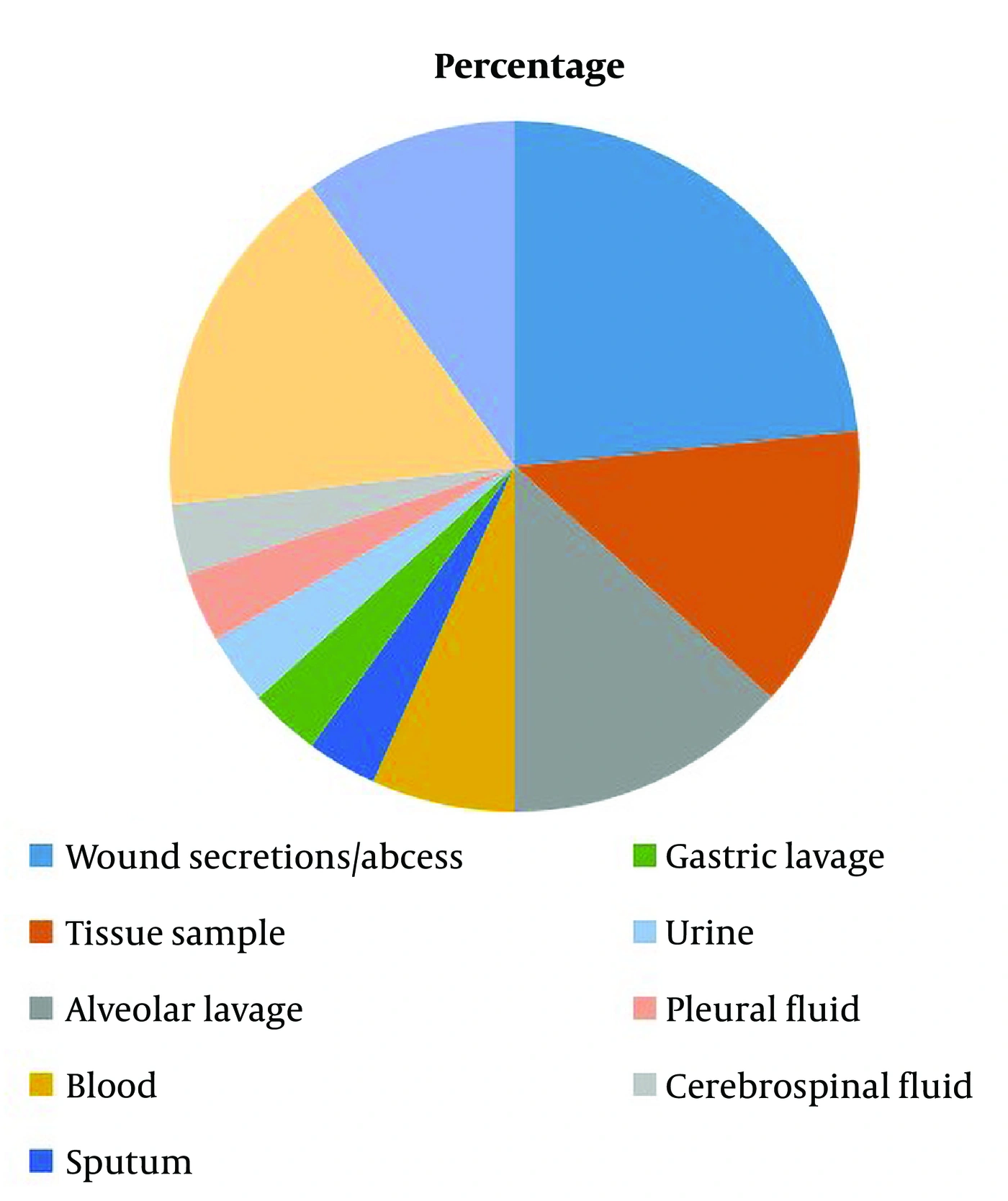
Figure 1.
Flowchart of patient inclusion in the study
Of the 30 patients, 19 (63.3%) were male. The mean age was 107.96 ± 59.08 months, and the median age at diagnosis was 60 months (IQR, 24 - 108). Because most parental histories were unclear, the median age at onset could not be calculated. The mean number of hospital admissions was 1.89 (IQR, 1 - 2), and the median length of hospital stay was 25 days (IQR, 14 - 42).
Failure to thrive was present in 13.3% of patients. In addition, 46.7% were offspring of consanguineous parents, and 21% had a positive family history of CGD. The median follow-up duration among survivors was 36 months (IQR, 18 - 60), with eight patients followed for more than 4 years.
Lymphadenopathy was reported in 23.3% of patients, and abscesses were reported in 20%. Table 1 presents the frequency and percentage of infections leading to hospitalization.
Table 1.
Frequency and Percentage of Infections Leading to Hospitalization in Children with CGD a
| Diagnosis | Values (Total = 30) |
|---|---|
| Pneumonia | 8 (26.7) |
| Lymphadenopathy | 7 (23.3) |
| Abscess | 6 (20.0) |
| Soft-tissue infections | 4 (13.3) |
| Otitis media | 1 (3.3) |
| Urinary tract infection | 1 (3.3) |
| Septic arthritis | 1 (3.3) |
| Meningitis | 1 (3.3) |
| Mastoiditis | 1 (3.3) |
a Values are expressed as No. (%).
Most clinical samples comprised wound discharge/abscess samples, bronchoalveolar lavage samples, and tissue samples, as detailed in Figure 2. More than one clinical sample was collected and analyzed in five patients, whereas information on the collected samples was unavailable for three patients.
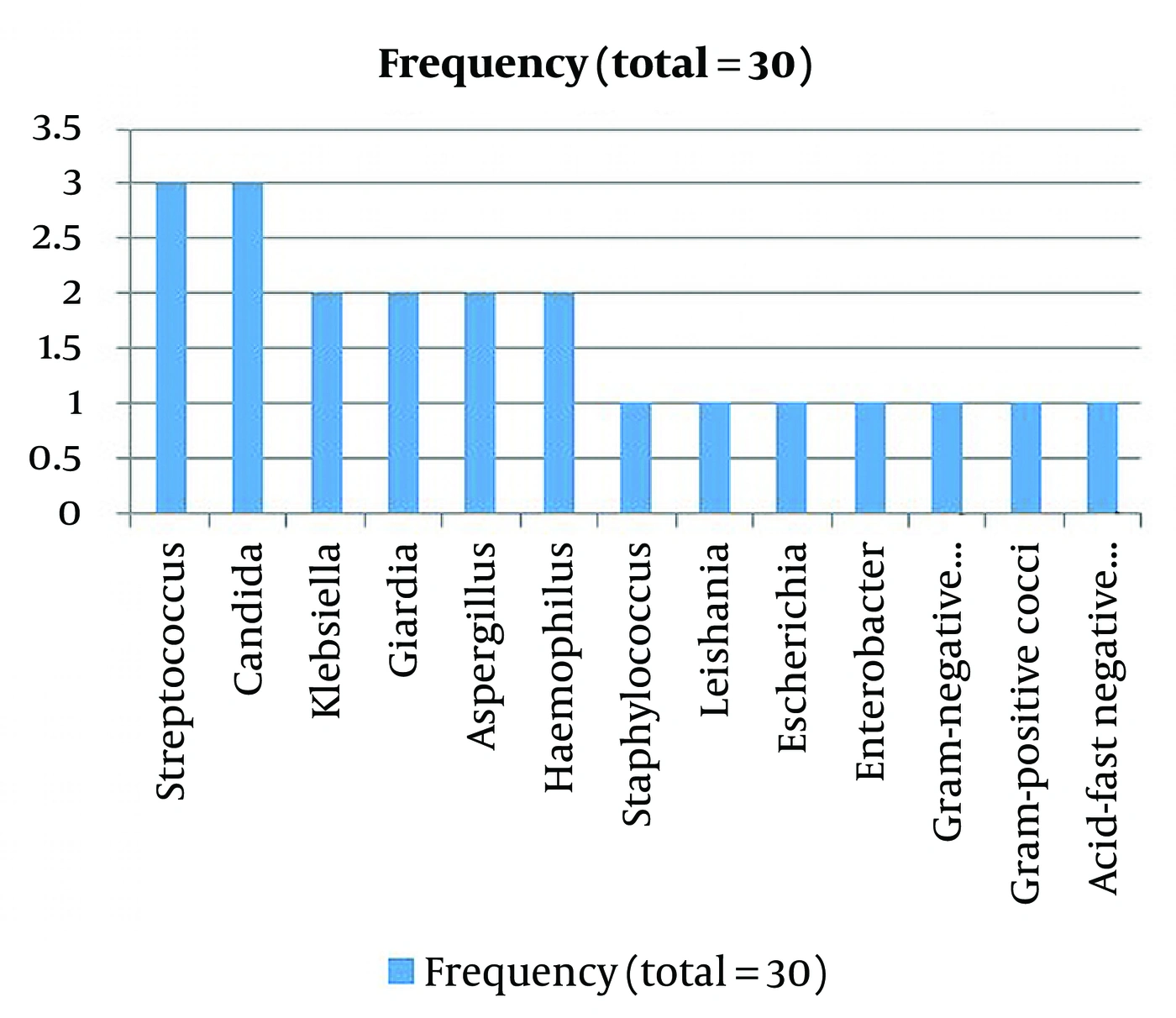
Figure 2.
Frequency and percentage of clinical samples obtained from patients
The most common microorganisms causing infection were Streptococcus species (n = 10, 33.3%) and Candida (n = 9, 30%). Figure 3 shows the frequency of microorganisms causing infection. No microorganism was identified in three patients. In six patients, more than one microorganism was responsible for infection; their characteristics and corresponding microorganisms are summarized in Table 2.
Table 2.
Clinical Characteristics and Related Microorganisms in Cases of Polymicrobial Infection
| No. | Gender | Age (mo) | Microorganisms | Clinical Complaint |
|---|---|---|---|---|
| 1 | Female | 74 | Klebsiella/Candida | Weakness and lethargy |
| 2 | Male | 109 | Invasive Aspergillus/Burkholderia/Gram-positive cocci/Streptococcus viridans | Prolonged fever |
| 3 | Male | 63 | Klebsiella/Serratia | Lower-limb ulcer |
| 4 | Male | 38 | Aspergillus/Gram-negative bacteria | Skin lesions with pus discharge around the neck and back |
| 5 | Female | 163 | Pseudomonas/Mycobacterium/Nocardia | Fever |
| 6 | Male | 174 | Candida/Nocardia | Prolonged coughing |
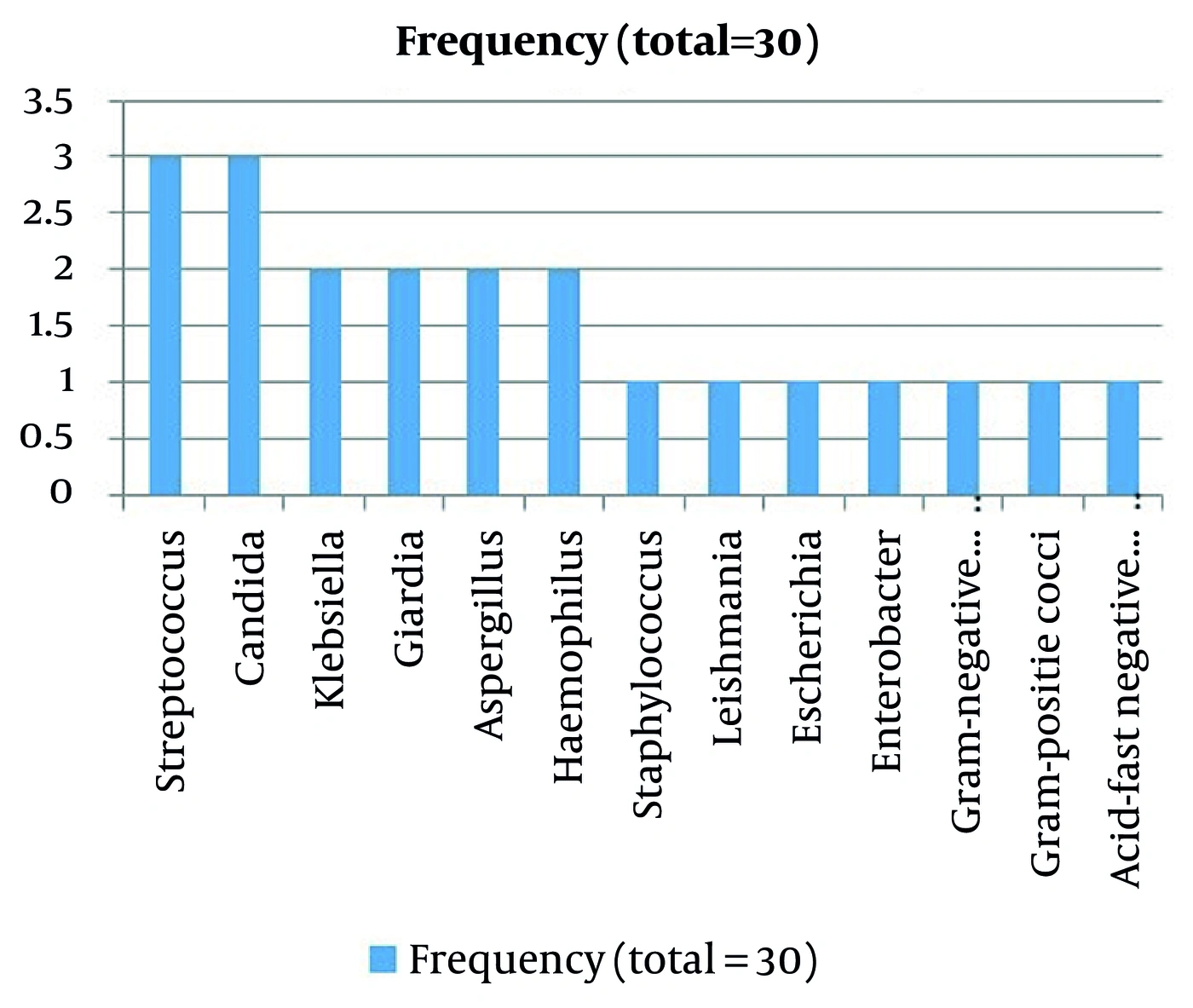
Figure 3.
Percentage and frequency of microorganisms causing infection in patients
Polymicrobial infections were identified in six patients (20%) (Table 2). All isolates were considered clinically relevant based on the site, quantity, and radiological findings. For statistical analysis, each organism was treated as a separate variable in Fisher's exact test.
Various imaging methods were used to evaluate clinical lesions based on patient complaints or abnormal examination findings. Computed tomography (CT), used to diagnose granulomas, and ultrasonography, used to diagnose abscesses, were the most common imaging modalities, performed in 43.3% and 20% of patients, respectively. Both modalities were used in 23.3% of patients. Table 3 summarizes imaging findings for abscesses, lymphadenopathy, and granulomas.
Table 3.
Imaging Findings in Patients
| Imaging Finding | Absolute Frequency (Total = 30) | Relative Frequency (%) |
|---|---|---|
| Abscess | 7 | 23.3 |
| Lymphadenopathy | 7 | 23.3 |
| Granuloma with lymphadenopathy | 4 | 13.3 |
| Granuloma alone | 3 | 10.0 |
| Granuloma with abscess | 2 | 6.7 |
| Abscess and lymphadenopathy | 2 | 6.7 |
| Normal | 4 | 13.3 |
The median (IQR) serum immunoglobulin levels were IgA, 180 (110 - 290); IgM, 105 (80 - 140); IgG, 1200 (900 - 1600); and IgE, 80 (20 - 200) units per milliliter.
During the study period, two patients died of sepsis and multiorgan failure (mortality rate, 6.7%). One was a 48-month-old male who was not receiving prophylaxis before admission. He received broad-spectrum antibiotics but subsequently developed Klebsiella bacteremia and Candida fungemia. The other was a 72-month-old female born to consanguineous parents. Despite receiving broad-spectrum antibiotics on admission, she developed invasive Aspergillus pneumonia and ultimately died of sepsis and respiratory failure. The remaining 28 patients were discharged in good general condition.
Fisher's exact test was used to assess associations between microorganism type and lesion type, growth status, immunoglobulin (Ig) levels, and the number of hospital admissions. No significant associations were found between microorganism type and lesion type (abscess or lymphadenopathy), growth status, immunoglobulin levels, or the number of hospital admissions (P > 0.05).
5. Discussion
Streptococcus spp. (33.3%) and Candida spp. (30.0%) were the most common pathogens in this 5-year retrospective case series of 30 Iranian children with CGD, in contrast to the global predominance of Staphylococcus and Aspergillus. Pneumonia (26.7%) and lymphadenopathy (23.3%) were the leading presentations. No association was found between pathogen type and clinical or immunological variables (Fisher's exact P > 0.05). Although the overall composition of pathogenic microorganisms in patients with CGD is similar, studies indicate geographic variation in the prevalence of microorganisms involved in infections among patients with CGD (16).
Lin et al. evaluated nine patients with CGD over 22 years. Genetic evaluation showed that most had X-linked CGD, specifically a mutation in the CYBB gene. Patients with the X-linked form had an earlier age at onset and diagnosis. The most common infection sites were the skin and soft tissues, and the predominant microorganisms were Staphylococcus, Serratia, and Salmonella species. Only one patient died during the study (17). In contrast, we could not identify the causative mutations in our patients with CGD. Lung and skin infections were the most frequent in our patients, but the responsible microorganisms differed from those reported by Lin et al., with Streptococcus and Candida being the most common. These findings highlight geographic variation in the presentation of CGD. The mortality rate in our study was significantly lower than that reported by Lin et al. (17).
A multicenter study conducted across 14 European countries included 429 patients with CGD. X-linked CGD was the most common form in the assessed population. In Arab and North African populations, however, autosomal recessive CGD was highly prevalent. Patients with autosomal recessive CGD had a lower mortality rate and longer survival than those with X-linked CGD. Similar to our findings, pneumonia and skin infections were the most common presentations. The study also reported ear, eye, joint, and brain infections. Autoimmune and rheumatological manifestations were observed in that population but were absent in ours. The main pathogens responsible for lung infections were Aspergillus and Candida, whereas Staphylococcus aureus was the most common cause of lymphadenitis. The predominant pathogens included Staphylococcus aureus, Aspergillus species, and Salmonella (6). In contrast, Pseudomonas and Burkholderia species were very rare in our study, collectively accounting for less than 3% of the infectious microorganisms identified.
A study by Gao et al., conducted over 10 years at a children's hospital in Beijing, included 159 patients. Most patients developed the condition before 1 year of age, which was notably younger than that reported by Wu et al. (18, (19). The most common symptoms were pneumonia and skin infections, and Aspergillus and Mycobacterium tuberculosis were the most prevalent infectious pathogens. The mortality rate reported by Gao et al. was approximately 43%, the highest among the evaluated studies (19). In an Egyptian study of 15 patients with CGD, all participants had lung infections, often accompanied by abscesses. The most common bacterial agents were Staphylococcus aureus and Klebsiella pneumoniae, whereas the predominant fungal agents were Aspergillus and Candida (16). In our study, Streptococcus and Candida were the most frequently encountered pathogens. Our findings closely align with those of El-Mokhtar et al. (16) but differ from European (6) and Chinese (19) cohorts, supporting geographic variation in CGD microbiology.
Beyond microbial composition, geographic differences also extend to antimicrobial resistance profiles. A Turkish study in East Anatolia reported 31.9% ESBL production in Escherichia coli urinary tract infections, with high resistance (> 50%) to trimethoprim-sulfamethoxazole and fluoroquinolones, which are commonly used prophylactic agents in CGD (13). Such patterns may influence Gram-negative infections (eg, Klebsiella and Serratia in our polymicrobial cases; Table 2), highlighting the potential need for carbapenem-sparing alternatives, such as nitrofurantoin or fosfomycin, in Iranian CGD management. Similarly, in Chinese pediatric pneumonia cohorts, MRSA accounted for 44.3% of Staphylococcus aureus cases, with near-universal resistance to beta-lactams but retained susceptibility (> 94%) to vancomycin and trimethoprim-sulfamethoxazole (14). Although Staphylococcus was less prevalent in our series, these findings reinforce the value of monitoring regional staphylococcal trends, particularly for pneumonia (26.7% of our cases), to guide empirical therapy in CGD.
Akar et al. studied 63 patients in Turkey and identified lymphadenopathy (44 of 63), growth disorders (33 of 63), and hepatomegaly (27 of 63) as the most common physical examination findings. Pulmonary infections, skin abscesses, and lymphadenitis were the infections most frequently leading to hospitalization. In our study, clinical hepatomegaly was observed in only one patient, growth disorders in 13%, and lymphadenopathy in 23%. These frequencies were lower than those reported by Akar et al., although the findings regarding clinical infections were broadly similar. Akar et al. also reported inflammatory bowel disease in six patients (20). In contrast, our patients had no rheumatological or immunological manifestations, possibly because of our smaller sample size. Wu et al. studied 48 patients at a hospital in Shanghai and also reported respiratory infections, gastrointestinal infections, lymphadenitis, and skin abscesses as the most common infections leading to hospitalization (18). Sepsis, thrush, and hepatosplenomegaly were reported in 23%, 23%, and 40% of patients, respectively (18). Clinical manifestations may therefore vary by region. The clinical manifestations in our study more closely resembled those reported by Akar et al.
Prevention of fungal and bacterial infections commonly includes prophylactic antifungal and antimicrobial agents (21). Prophylactic drug coverage varies across settings. In Europe, an average of 71% of patients received maintenance antibiotic therapy and 53% received prophylactic antifungal therapy, whereas the corresponding percentages differed in Iran (21). The most commonly used prophylactic drugs are trimethoprim-sulfamethoxazole and itraconazole (22).
Hematopoietic stem cell transplantation is considered a curative treatment for CGD, with increasing evidence supporting its effectiveness (23). Cole et al. reported that children who did not undergo bone marrow transplantation experienced more severe infections and had more hospitalizations and surgeries (24). In our study, only one patient had undergone bone marrow stem cell transplantation and was in good condition at the end of the study period.
5.1. Study Limitations
This study included a limited number of patients at only two centers, and its retrospective design limited the availability of prophylaxis data. Given the rarity of CGD, nationwide prospective studies with larger samples and longer follow-up periods would help determine the precise incidence and microorganisms implicated in infections among patients with CGD. In addition, many patients did not have genetic confirmation of the CGD subtype.
Nonsterile samples, including wound and bronchoalveolar lavage samples, may contain contaminants. Streptococcus may reflect commensal flora in some cases, although sterile-site and repeated isolates support its pathogenic role.
5.2. Conclusions
Pneumonia, lymphadenopathy, and abscesses are among the most common complications of CGD in Iranian children. In this study, Streptococcus and Candida species were the leading microorganisms causing infections that resulted in hospitalization. These findings may support consideration of local microbiological patterns when reviewing prophylactic strategies.