
1. Background
Measles, a highly contagious viral disease caused by a virus of the Morbillivirus genus, remains one of the leading causes of vaccine-preventable deaths globally, despite the availability of a safe and effective vaccine for more than 50 years (1).
Characterized by high fever, maculopapular rash, and respiratory symptoms, measles can lead to severe complications, including pneumonia, encephalitis, and death, particularly among malnourished children and immunocompromised individuals (2). Iran initiated its first measles immunization program in 1967 using three imported live attenuated vaccines: Edmonston B, Schwartz, and Bikenham-31. In the same year, the Razi Institute began domestic production of a measles vaccine based on the Sugiyama strain, adapted in calf kidney cells, which achieved approximately 95% seroconversion. By 1975, more than 7.5 million children had been immunized with this vaccine. A routine 2-dose measles vaccination schedule was introduced in the mid-1990s, with the first dose administered at 9 months and the second at 15 months or later. In 2004, the monovalent measles vaccine was replaced with the measles-mumps-rubella (MMR) vaccine in the National Infant Immunization Program (3).
According to the World Health Organization (WHO), measles incidence in Iran increased sharply between 2021 and 2024, largely because of decreased vaccine coverage during the COVID-19 pandemic, cross-border transmission from neighboring countries with low immunization rates, and weaknesses in surveillance systems. Although national vaccination coverage exceeds 90%, localized outbreaks persist, particularly in border provinces such as Hormozgan, Sistan and Baluchestan, Khuzestan, and Khorasan, where logistical challenges and transient populations impede consistent immunization efforts (4, 5). Between 2004 and 2008, more than 4,300 suspected measles cases were reported nationwide, with southern regions, including Bandar Abbas, experiencing recurrent outbreaks because of declining herd immunity and the introduction of imported genotypes (6).
A significant concern is the durability of vaccine-induced immunity. Research indicates that measles immunoglobulin G (IgG) antibodies can decrease over time, placing older children and adolescents at risk of infection even if they are fully vaccinated (7). For example, Nokhodian et al. (8) found that only 65.8% of Iranian students aged 7 - 18 years were seropositive, indicating potential immunity gaps as children age. They concluded that despite high levels of vaccination coverage with 2 doses of MMR, IgG antibodies were not detected in a considerable proportion of children and adolescents. Given that Iran is in the elimination phase of measles, monitoring MMR immunity during this period is crucial. Contact with residents of countries where measles or rubella has not yet been eliminated may pose challenges to maintaining elimination in Iran.
Additionally, emerging evidence suggests that different measles virus genotypes may affect antibody neutralization efficacy. Specifically, the B3 genotype has lower geometric mean titers (GMTs) than the D4 and H1 genotypes, which may compromise protection in areas where B3 is prevalent (9). Recent seroepidemiological research in Hormozgan Province reported a high level of measles IgG seropositivity (94.7%) among children aged 2 - 6 years, indicating the success of current vaccination programs in maintaining population immunity. However, the study also emphasized the need for continued monitoring because of waning immunity in older children and the possible influence of viral genotype variations on antibody efficacy. These findings underscore the importance of region-specific surveillance, particularly in border provinces with high population movement, such as Hormozgan (10).
Measles is so contagious that 1 infected person can spread the virus to 12 - 18 susceptible individuals, making the disease a critical indicator of weaknesses in health systems. Public health guidance has emphasized ensuring that children in the United States and those traveling internationally who are aged 6 months or older are current on MMR vaccination.
Although global measles vaccination efforts prevented an estimated 56 million deaths between 2000 and 2021, recent years have seen alarming resurgences worldwide (11). The implementation of a comprehensive strategy for measles elimination in Iran has markedly reduced the frequency of measles and rubella to < 1 case per 1,000,000 (12).
The WHO reported an 18% increase in global measles cases and a 43% increase in associated deaths between 2021 and 2022. Low- and middle-income countries bear the greatest burden of this resurgence, underscoring the persistent threat posed by millions of unvaccinated children.
This backsliding has been attributed to multiple factors, including COVID-19-related disruptions to routine immunization, vaccine hesitancy, and population mobility (13). According to WHO reports, Iran has made significant progress toward measles elimination. The measles goals for 2030 reflect the commitment of all 6 WHO regions to achieving regional measles elimination (14).
However, localized outbreaks have occurred in recent years, particularly in Hormozgan Province. Located in southern Iran along the Persian Gulf, Hormozgan is a strategic region with a high volume of international trade and migration. Its proximity to countries with suboptimal vaccination coverage, such as Afghanistan and Pakistan, increases the risk of imported measles cases (15). Hormozgan's unique epidemiological position makes it particularly vulnerable to measles importation. The province hosts substantial Afghan and Pakistani migrant populations, many from regions with measles vaccination coverage below 70%.
Both high and low temperatures reduce the frequency of measles, whereas low relative humidity is a risk factor for measles morbidity (16). Although prior research has examined measles epidemiology within Iran, limited attention has been paid to the dynamic epidemiological situation in high-risk border regions. Over the past 4 decades, Iran has hosted millions of documented and undocumented refugees (17). Measles vaccination coverage has steadily declined since the beginning of the COVID-19 pandemic. A significant deficit occurred in 2022, with approximately 40 million children globally missing a measles vaccine dose—25 million failing to receive their initial dose and an additional 14.7 million missing their second dose, according to a joint WHO and Centers for Disease Control and Prevention publication. This decline constitutes a major setback to global efforts to achieve and maintain measles elimination, thereby increasing the susceptibility of millions of children to infection. In 2022, an estimated 9 million measles cases were reported worldwide, resulting in 128,000 associated deaths. Notably, 22 countries faced significant and disruptive outbreaks. The combination of eroded vaccination coverage, compromised measles surveillance, persistent disruptions and delays in immunization services attributable to COVID-19, and sustained large outbreaks during 2022 signifies a persistent measles threat across all global regions.
Comprehensive data on recent trends from 2019 to 2023 in Hormozgan, a critical hotspot, remain limited.
2. Objectives
Given these concerns, this study aimed to investigate the epidemiological trends of measles in Hormozgan Province from 2019 to 2023. By analyzing demographic patterns, vaccination status, and case distribution over time, this study provides insights into the current measles burden and identifies key areas for intervention to strengthen outbreak prevention and control efforts.
Measles is preventable through vaccination; however, outbreaks persist. In Hormozgan, specific demographic and geographic factors increase vulnerability to imported cases. To formulate effective public health strategies, it is essential to understand local transmission dynamics. This study adds to the existing evidence on measles epidemiology in Iran and supports evidence-based policymaking to advance national and global measles elimination objectives.
3. Methods
3.1. Participants and Sampling
This retrospective, cross-sectional study included 256 confirmed and suspected measles cases reported in Hormozgan Province between 2019 and 2023. Based on an estimated prevalence of 5% from prior surveillance, a minimum sample size of 217 cases was required (95% CI, 5% margin of error). Convenience sampling was used to select participants from the health network database. Participants aged < 14 years were included. All suspected measles cases were managed according to national and WHO surveillance guidelines. Individuals presenting with fever, maculopapular rash, and at least 1 of the following symptoms—cough, coryza, or conjunctivitis—were classified as suspected cases. Blood samples collected within 28 days of rash onset were tested for measles-specific IgM antibodies using enzyme-linked immunosorbent assay (ELISA), with positive results considered laboratory-confirmed. For equivocal or negative IgM results with strong clinical suspicion, throat or nasopharyngeal swabs were analyzed by PCR to detect measles RNA. Laboratory analyses were performed at the Hormozgan Provincial Reference Laboratory, and confirmed cases were immediately reported for contact tracing and vaccination of susceptible individuals.
The inclusion criteria were laboratory-confirmed cases (IgM-positive or PCR-positive) or clinically suspected cases meeting WHO case definitions, with complete demographic and vaccination data. The exclusion criteria were incomplete medical records or cases without diagnostic confirmation.
3.2. Study Design and Data Collection
Convenience sampling was used to select participants from case reports obtained from hospitals, clinics, and regional health centers. Data were collected using a questionnaire covering demographic and clinical variables, including age, gender, immunization records from the Iranian Ministry of Health, nationality (Iranian/non-Iranian), travel history, contact with confirmed cases, season, symptoms (fever, maculopapular rash, cough, conjunctivitis, etc.), and complications (encephalitis, pneumonia, otitis media, etc.).
3.3. Statistical Analysis
Data were extracted and analyzed using SPSS version 22 (IBM Corp., Armonk, NY, USA). Descriptive statistics, including frequencies, percentages, means, and standard deviations (mean ± SD), were used to summarize demographic variables and vaccination coverage. The chi-square test was used to assess associations between categorical variables, including vaccination status, gender, nationality, and measles confirmation status. The independent-samples t-test was used to compare mean ages between confirmed and suspected cases. To identify independent predictors of laboratory-confirmed measles, binary logistic regression analysis was performed, including variables such as age group, vaccination status, nationality, and year of occurrence. Model fit was assessed using the Hosmer-Lemeshow test. A P value < 0.05 was considered statistically significant in all analyses.
3.4. Ethical Considerations
The study adhered to the Declaration of Helsinki and received ethical approval from the Ethics Committee of Hormozgan University of Medical Sciences (Approval ID: IR.HUMS.REC.1403.178).
4. Results
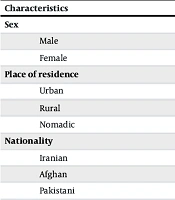
From 2019 to 2023, Hormozgan Province documented a total of 256 confirmed and suspected measles cases. The mean age of the affected children was 3.34 ± 3.07 years (range, 1 month to 14 years). The highest proportion of cases occurred among infants younger than 1 year (32.4%), followed by children aged 1 - 4 years (28.1%). Children aged 10 - 14 years accounted for only 6.3% of cases. There was no significant age difference between genders (P = 0.43). Males constituted 60.2% (n = 154) of the study population, and females accounted for 39.8% (n = 102); this difference was also not statistically significant (P = 0.43) (Table 1).
Table 1.
Annual and Seasonal Distribution of Measles and Suspected Cases in Hormozgan Province, 2019 - 2023 a
| Year | Total Cases | Confirmed Measles | Clinically Suspected Measles | Seasonal Distribution (Dec - May) |
|---|---|---|---|---|
| 2019 | 145 (56.6) | 35 (24.1) | 110 (75.9) | 110 (75.9) |
| 2020 | 37 (14.5) | 8 (21.6) | 29 (78.4) | 25 (67.6) |
| 2021 | 40 (15.6) | 7 (17.5) | 33 (82.5) | 28 (70.0) |
| 2022 | 34 (13.3) | 5 (14.7) | 29 (85.3) | 20 (58.8) |
| 2023 | 0 (0) | 0 (0) | 0 (0) | 0 (0) |
| Total | 256 (100) | 55 (21.5) | 201 (78.5) | 183 (71.5) |
a Values are expressed as No. (%). Data collection ended in March 2023. Seasonal distribution represents cases occurring between December and May. Percentages for confirmed and clinically suspected cases are calculated within each year.
The largest number of cases occurred in 2019, with 145 cases (56.6%), followed by a sharp decline in subsequent years: 14.5% in 2020, 15.6% in 2021, and 13.3% in 2022. The annual trend in measles cases in Hormozgan Province from 2019 to 2023 is shown in Figure 1, illustrating the sharp decline after 2019.
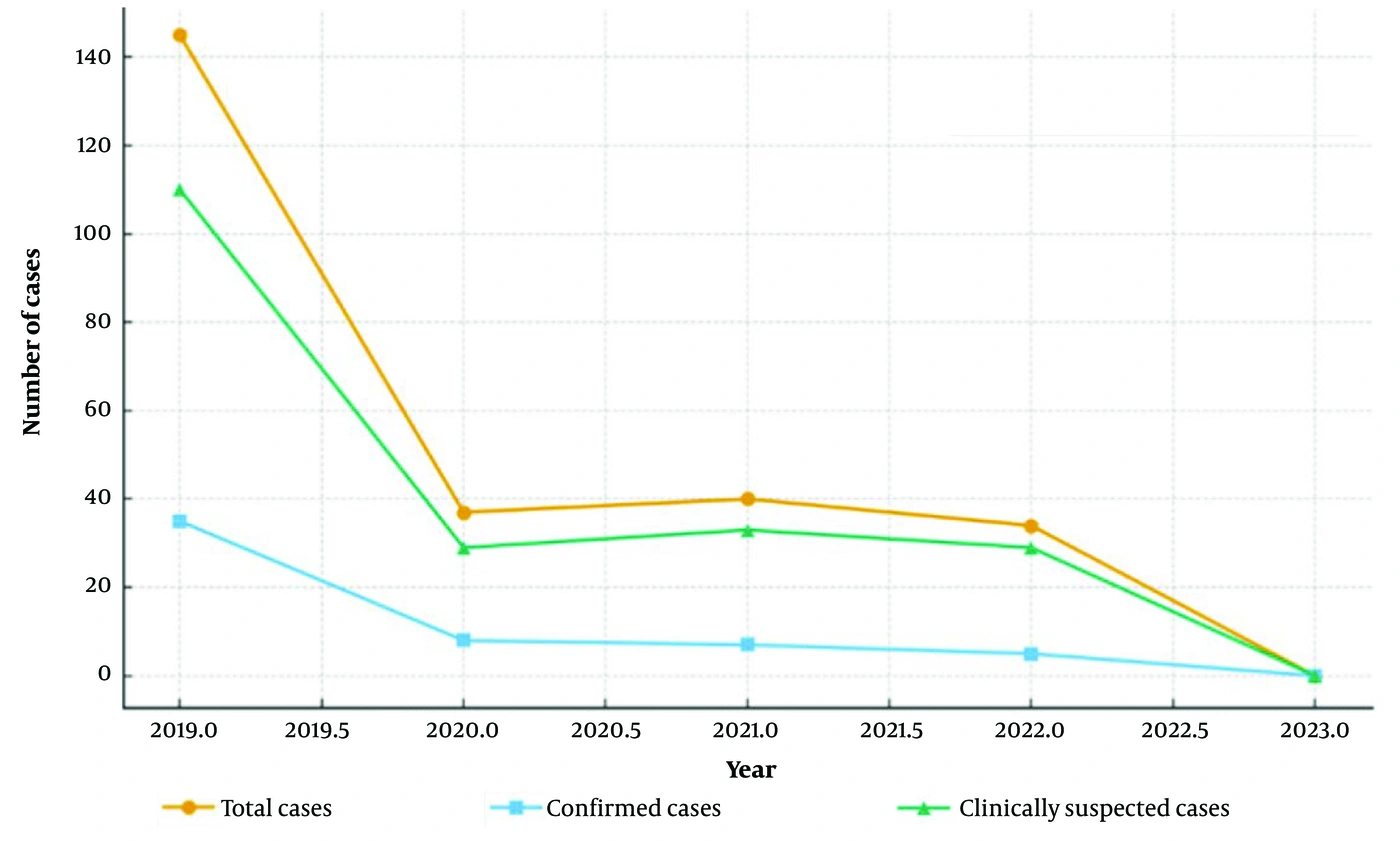
Figure 1.
Time trends measles cases in Hormozgan province (2019 - 2023)
No cases were recorded in 2023 before data collection ended in March. Seasonal analysis indicated that 71.5% (183/256) of cases occurred between December and May (winter-spring) (Table 2).
Table 2.
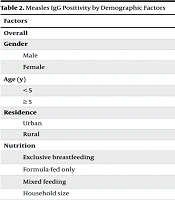
Vaccination, Nationality, Age, Gender, and Measles Status a
| Characteristics | Total (n = 256) | Confirmed Measles | Clinically Suspected Measles | OR (95% CI) | P-Value |
|---|---|---|---|---|---|
| Age (y) | 3.34 ± 3.07 | 2.63 ± 2.59 | 3.53 ± 3.17 | 0.95 (0.88 - 1.00) | 0.054 |
| Gender | 1.32 (0.70 - 2.40) | 0.43 | |||
| Male | 154 (60.2) | 36 (23.4) | 118 (76.6) | ||
| Female | 102 (39.8) | 19 (18.6) | 83 (81.4) | ||
| Vaccination history | 6.12 (3.08 - 12.14) | < 0.001 | |||
| Vaccinated | 103 (40.2) | 14 (9.2) | 139 (90.8) | ||
| Unvaccinated | 153 (59.8) | 41 (39.8) | 62 (60.2) | ||
| Nationality | 1.12 (0.45 - 2.70) | 0.82 | |||
| Iranian | 221 (86.3) | 47 (21.3) | 174 (78.7) | ||
| Non-Iranian | 35 (13.7) | 8 (22.9) | 27 (77.1) |
a Values are expressed as mean ± SD or No. (%) unless otherwise indicated. Percentages are calculated within each characteristic category. P-values indicate statistical significance for the difference in measles confirmation versus clinically suspected cases within each category.
Among all cases, 103 children (40.2%) had documentation of at least 1 measles-containing vaccine (MCV) dose, whereas 153 (59.8%) were unvaccinated. Laboratory-confirmed measles was more prevalent among unvaccinated children, with 41 cases (39.8%), compared with 14 cases (9.2%) among vaccinated children. Conversely, vaccinated children constituted the majority of clinically suspected cases (139 cases, 90.8%). These differences were statistically significant (P < 0.001) (Table 1). Iranian children accounted for 86.3% (n = 221) of cases, whereas 13.7% (n = 35) were non-Iranian, primarily Afghan and Pakistani migrants. No significant association was found between nationality and measles confirmation (P = 0.82) (Table 1).
Of all reported cases, 55 (21.5%) were laboratory-confirmed, whereas 201 (78.5%) were clinically suspected. Confirmed cases were slightly younger (2.63 ± 2.59 years) than clinically suspected cases (3.53 ± 3.17 years), but this difference was not statistically significant (P = 0.054). A binary logistic regression model was used to identify independent predictors of laboratory-confirmed measles. The outcome variable was measles confirmation (yes/no), and predictors included age, gender, vaccination status, nationality, and year of diagnosis. Vaccination status emerged as the only significant predictor; unvaccinated children had a markedly higher risk of confirmed measles (adjusted odds ratio [AOR] > 3, P < 0.01). Other variables were not significant.
In multivariable logistic regression analysis, unvaccinated children had significantly higher odds of confirmed measles than vaccinated children (OR = 6.12; 95% CI, 3.08 - 12.14; P < 0.001). Age, gender, and nationality were not significantly associated with measles confirmation. These results indicate that vaccination status was the strongest independent predictor of confirmed measles in this cohort.
5. Discussion
This study describes the epidemiology of measles in Hormozgan Province, demonstrating a substantial burden among young children and a higher confirmation rate among unvaccinated children. These findings reflect key global epidemiological concerns while also underscoring region-specific challenges that warrant tailored public health responses.
The marked decline in confirmed measles cases after 2019 in Hormozgan occurred against a background of international reports of measles resurgence. Similar resurgence has been reported in other countries. For instance, data from Pakistan demonstrated a 2-fold increase in measles cases during 2022, largely due to vaccination interruptions during pandemic-related lockdowns (18). As in Hormozgan, a large proportion of cases in Sindh Province occurred in children younger than 5 years (62%), highlighting the vulnerability of infants and toddlers, particularly those too young to receive the first vaccine dose. In Hormozgan, the mean age of affected children was 3.34 years, and a substantial share of cases occurred among infants younger than 12 months, a population at high risk due to the absence of vaccine-derived immunity and waning maternal antibodies. Globally, it is estimated that 120 million children missed measles vaccination in 2020, including approximately 40 million in Pakistan alone (19).
Persistently low vaccination coverage remains a critical challenge. In Pakistan, for example, only 66% of children received the first measles-containing vaccine (MCV1) and 45% received the second dose (MCV2) as of 2018, figures well below the 90%-95% coverage needed to achieve herd immunity (20). In Hormozgan, non-Iranian children accounted for 13.7% of all reported cases, and nationality was not significantly associated with measles confirmation. Nevertheless, ensuring vaccination access for mobile, marginalized, or undocumented populations remains an important regional public health concern. This is consistent with evidence from conflict-affected or displaced populations, in which vaccination coverage has often fallen below 50% (21). Afghan refugees in Iran, for example, have faced systemic barriers to health care access, including language barriers, financial constraints, and fear of deportation, which reduce vaccine uptake (22). These structural challenges contrast with those in high-income European settings, where outbreaks among migrant groups are more commonly driven by vaccine hesitancy or misinformation rather than access barriers (23). Therefore, region-specific interventions are essential: In Hormozgan, improving vaccine accessibility and integrating migrant populations into national immunization programs are priorities, whereas European strategies must address misinformation and hesitancy.
Notably, 59.8% of measles cases in this study occurred in unvaccinated children, whereas 40.2% were reported among those with a documented vaccination history. These data raise important questions regarding vaccine timing and immunogenicity. Administering MCV1 too early, when maternal antibodies may still interfere, could reduce the immune response and contribute to breakthrough cases. Although achieving high coverage of both doses remains critical to interrupt transmission, our findings suggest that optimizing the timing of the first dose may also enhance long-term immunity (24).
The regional epidemiological context further underscores the urgency of these interventions. The WHO South-East Asia Region (SEAR) adopted measles and rubella elimination targets by 2023, aiming for ≥ 95% 2-dose coverage; however, COVID-19-related service disruptions delayed progress (25). In high-income countries, breakthrough cases are rare and typically occur in immunocompromised individuals (e.g., children undergoing chemotherapy), with the vast majority of cases linked to unvaccinated persons.
The high proportion of cases among infants younger than 1 year in Hormozgan supports previous findings by Guerra et al., indicating that maternal antibodies wane more rapidly in endemic areas, leaving infants susceptible earlier than expected (26). This highlights the potential value of targeted outbreak-response measures, including supplemental immunization campaigns or maternal immunization strategies to enhance passive protection.
The gender distribution showed a modest male predominance (60.2%), but the difference was not statistically significant. While some evidence suggests differences in measles frequency between sexes (27), in settings such as Hormozgan, this disparity may also reflect cultural or behavioral factors, such as preferential health care-seeking for male children. Overall, measles is not known to have a strong gender bias, and this finding likely reflects contextual rather than biological factors.
Finally, this study underscores the need to enhance surveillance capacity. The absence of viral genotyping limits the ability to distinguish imported from endemic cases, and serological assays (e.g., IgG avidity testing) could help clarify the extent of true vaccine failures. Future research incorporating molecular epidemiology will be critical for guiding control strategies, particularly in provinces with high migration flows.
5.1. Conclusions
This study demonstrates that measles remains a public health concern in Hormozgan Province, with the highest burden observed among unvaccinated children. Although non-Iranian children were represented in the study population, nationality was not significantly associated with measles confirmation. The findings highlight the sharp decline in measles incidence after 2019, reflecting the effectiveness of vaccination efforts but also revealing persistent immunity gaps among vulnerable populations. To achieve and sustain measles elimination, regional health authorities should prioritize strengthening routine immunization coverage, improving vaccine access for migrant and hard-to-reach communities, and enhancing surveillance and laboratory confirmation systems. Integrating migrant health services into national immunization programs and implementing targeted outreach campaigns are critical steps toward reducing future outbreaks and supporting regional and national health security goals.