1. Background
Infection control is an integral part of pediatric practices. Nosocomial infections (NIs) are a major complication adults and children (1, 2). The national nosocomial infections surveillance system (NNIS) is a surveillance system to obtain national data on nosocomial infections. NNIS defines as a localized or systemic nosocomial infection that is resulted from adverse reaction to the presence of an infectious agent (s) or its toxin (s) which was not present or incubated at the time of admission to the hospital (3, 4).
Fast improvements in diagnostic and therapeutic procedures have significantly helped the progressed in medical fields but the large number of invasive methods causes many health care problems every day. In the United States between 5-10% of hospitalized patients in acute care units suffer NI (1, 5-9). The frequency of NI in children seems to be lower and is negatively correlated with age, which is ranging from 7-9 % for infants younger than 1 year old to 1.5-4 % for hospitalized l0 year-old children (10, 11).
Monitoring of NIs is very difficult especially with limited resources, but it is vital if infection control measures are appropriately implemented and assessed. Nowadays substantial progress has been made in measuring the burden of nosocomial infections in pediatric patients, particularly in certain populations such as patients in critical care units and after certain procedures. As a result, preventive measures have been subjected to new and additional studies. The importance of different nosocomial infections has been investigated in several studies (12-15). In Iran, same as most developing nations, the true impact and effect of this problem is not clear (16, 17). The impact of different nosocomial infections has been well documented in several studies (13-15).
2. Objectives
In this study we evaluate the nosocomial infections terms of microbiological findings using the national nosocomial infections surveillance system (NNIS).
3. Patients and Methods
In an epidemiological surveillance study, the nosocomial infections were evaluated in Tabriz Children's Hospital as a 200-bed subspecialty hospital during 14 months (2010-11) based on Iranian national nosocomial infection surveillance (NNIS) system definitions.
Based on nosocomial infections detection algorithm and with the use of medical records, high-risk patients suspected to nosocomial infections were identified and characterized. In this study, four types of NIs were selected: bloodstream infection, lower respiratory tract infections (LRTIs) urinary tract infections (UTIs) and post-surgical wound infections. The NNIS system criteria (3, 16-18) to define 4 major nosocomial infections are as follows:
Surgical site infections (SSIs) were defined as infections occurring within 30 days after the operative procedure and involving the site of incision, with purulent discharge from the site of incision, or diagnosis of infection by the surgeon or attending physician, and its categorization was considered (19).
Urinary tract infections (UTI) were defined as the existence of following signs or symptoms with no other recognizable cause: fever (> 38°C), urgency, frequency, dysuria, or suprapubic tenderness; and positive dipstick for leukocyte esterase and/or nitrate, physician diagnosis of a UTI, or both.
Pneumonia (PNEU) was defined as rales or dullness to percussion on physical examination of the chest; a new or progressive infiltrate reported in a chest radiographic examination; consolidation, cavitation, or pleural effusion; or new onset of purulent sputum or change in character of sputum.
Blood stream infections (BSI) were defined as the existence of at least 1 of the following clinical signs or symptoms with no other recognized cause: fever (> 38°C), hypotension (systolic pressure ≤ 90 mmHg), or oliguria (< 20 cm3/h); blood culture was not done or no organisms or antigen detected in blood; and no apparent infection at another site and physician instituted treatment for sepsis (16).
The each patient information after diagnosis of infection were collected and encoded. In order to prevent the possibility of blood infection, in the absence of clinical symptoms and laboratory findings conformity, blood culture was repeated.
Infection control nurse reviewed the history of fever, changes in surgical wounds, prescription of new antibiotics or any change in antibiotic regimen and probable case of NI based on physician's clinical suspicious daily and all weekly positive cultures. The nurse presented all suspicious cases to infection control physician (a sub-specialist of pediatric infectious disease) and after diagnoses confirmation, nosocomial infections were registered. The data included the name, age, sex, ward, location of infection, organism and its susceptibility pattern to current antibiotics and infection onset dates. Also time of admission and discharge and the last patient's condition on discharge were collected.
It should be noted that since the primary objective of this study was to determine the prognosis, patients were followed until they achieved a complete treatment interventions (discharge or death). Also to follow up patients after discharge, their records and list of visited patients in the emergency ward of children’s hospital, in order to record future references of investigated samples, were collected. Quantitative variables were compared by using student t-test. In all of investigated cases, the results have been statistically known significant in case of P ≤ 0.05.
4. Results
Total number of hospitalized patients was 7730 cases that 103 of them had NI. Of 103 patients, 58 cases (56.3%) were male and 45 cases (43.7%) were female. The mean age of patients with NI was 21.59 ± 3.87 months and the average duration of hospital stay was 25.53 ± 17.63 days. The total number of hospitalized days in all patients (7730 cases) was 30147 days. The difference between the mean hospital stay days of patients with NI and non-infected patients (3.9 ± 1.5) was significant (t = 87.104, df = 7831, P < 0.0001). Incidence of nosocomial infections was 1.33 infections per 100 hospital discharges and 0.34 infections per 100 hospital days.
The demographic data, hospital stay, mortality rate and relevant data of patients during hospitalization according to the type of infection were shown in Table 1. The prevalence of NI was neonate (56 cases, 54.4%), 1-12 months (17 cases, 16.5%), > 60 month (16 cases, 15.5%), 12-24 months (8 cases, 7.8%) and 24-60 months (6 cases, 5.8%) respectively.
Table 1.
Antibiotic Resistance of Isolated Microorganisms
| Acinetobacter | Enterococcus | Staphylococci | gr- Bacilli | Enterobacter | MRSAa | Pseudomonas | E. Coli | Serratia | Klebsiella | CONSa | |
|---|---|---|---|---|---|---|---|---|---|---|---|
| Penicillin | - | - | - | - | - | 100 | - | - | - | - | 100 |
| Oxacillin | - | - | 0 | - | - | 100 | - | - | - | - | 100 |
| Cotrimoxazol | 100 | 0 | 0 | 0 | 0 | 0 | 100 | 50 | 100 | 70 | 100 |
| Gentamicin | 0 | 67 | 0 | 50 | 25 | 0 | 100 | 50 | 60 | 70 | 100 |
| Amikacin | 0 | 0 | 50 | 50 | 25 | 25 | 50 | 86 | 100 | 87 | 100 |
| Ampicillin | - | - | - | - | - | - | - | 50 | - | - | - |
| Cephalexin | 100 | 33 | - | 50 | 100 | - | 100 | 86 | 100 | 87 | 100 |
| Erytdromycin | - | 0 | - | - | - | - | - | 20 | - | - | 100 |
| Vancomycin | - | 0 | 0 | - | - | 0 | - | - | - | - | 89 |
| Nitrofurantoin | - | - | - | - | - | - | - | 29 | 100 | - | - |
| Rifampin | - | - | 0 | - | - | 0 | - | - | - | - | 100 |
| Tobramycin | - | - | - | - | - | - | 100 | - | - | - | - |
| Ticarcillin | - | - | - | - | - | - | 100 | - | - | - | - |
| Chloramphenicol | 100 | 100 | 50 | 100 | 0 | 0 | 100 | 100 | 80 | 70 | 60 |
| Clindamycin | - | - | 0 | - | - | 0 | - | - | - | - | 89 |
| Cefotaxime | 100 | 0 | 100 | 100 | 50 | 0 | 100 | 29 | 50 | 87 | 89 |
| Ciprofloxacin | 0 | 0 | 100 | 0 | 0 | 25 | 0 | 29 | 20 | 17 | 89 |
| Nalidixic acid | - | - | - | - | - | - | - | 100 | - | - | - |
| Ceftazidime | 100 | 100 | 100 | 100 | 100 | 25 | 100 | 50 | 20 | 87 | 83 |
| Ceftizoxime | 100 | 100 | 100 | 50 | 100 | 0 | 100 | 50 | 50 | 87 | 100 |
| Ceftriaxone | 100 | 33 | 100 | 50 | 100 | 25 | 100 | 50 | 50 | 87 | 89 |
| Imipenem | - | - | - | - | - | - | 100 | 50 | 50 | 52 | - |
| Cefixime | - | 100 | 100 | - | 100 | 100 | 100 | 50 | 50 | 100 | 100 |
aAbbreviation: CONS, coagulase-negative Staphylococcus; MRSA, methicillin resistance Staphylococcus aureus.
All patients were treated with antibiotics based on their infections. Gram-negative organisms (47 cases, 45.6%) and Gram-positive (43 cases, 41.7%) were the most common infectious agents. Overall, we recorded 71 cases of bacteremia (68.9%), 14 (13.6%) cases of UTIs, 10 (9.7%) case of LRTIs and 8 (7.8%) cases of wound infection.
Our data showed that neonate unit had the highest portion of infections (32%) followed by NICU (22.3%) and hematology unit (16.5%) and PICU (12.6%), respectively. The frequencies of admission wards according to the type of infection are presented in Table 2. Also frequencies of infection invasive procedures are shown in Table 3. Total parenteral nutrition was used in 29.6% of patients with bacteremia, 42.9% with UTI, 70% with LRTIs and 37.5% with wound infections.
Table 2.
The Demographic and Clinical Data of Patients During Hospitalization According to the Infection Types
| Variable | UTIa | Pneumonia | SSIa | BSIa | All |
|---|---|---|---|---|---|
| Patient, No. | 14 | 10 | 8 | 71 | 103 |
| Age, Mean (SD), mo | 22.43 (6.59) | 16.14 (13.93) | 16.98 (9.02) | 22.72 (5.05) | 21.59 (3.87) |
| Weight, Mean (SD), kg | 8.19 (5.29) | 5.81 (2.3) | 6.7 (4.15) | 8.02 (1.08) | 7.27 (0.8) |
| Sex, No. (%) | |||||
| Male | 5 (35.7) | 4 (40) | 4 (50) | 45 (63.4) | 58 (56.3) |
| Female | 9 (64.3) | 6 (60) | 4 (50) | 26 (36.6) | 45 (43.7) |
| Ward, No. (%) | |||||
| Infants | 3 (20.04) | (20) 2 | 3 (37.5) | (35.2) 25 | (32) 33 |
| NICUa | 0 (0) | 4 (40) | 11 (12.5) | 18 (25.4) | 23 (22.3) |
| Oncology | 2 (14.3) | 0 (0) | 11 (12.5) | 14 (19.7) | 17 (16.5) |
| PICUa | 4 (28.6) | 3 )30) | 0 (0) | 6 (8.5) | 13 (12.6) |
| Internal | 4 (28.5) | 1 (10) | 0 (0) | 4 (5.6) | 9 (8.7) |
| Surgery | 1 (7.1) | 0 (0) | 3 (37.5) | 1 (1.4) | 5 (4.9) |
| Infection | 0 (0) | 0 (0) | 0 (0) | 3 (4.2) | 3 (2.9) |
| Hospital stay, Mean (SD), d | 29.4 (18.09) | 20.22 (11.59) | 27 (15.8) | 25.52 (18.54) | 25.53 (17.63) |
| Immunocompromised, No. (%) | 4 (28.6) | 0 (0) | 2 (25) | 19 (26.8) | 25 (24.3) |
| Fever (during hospitalization), No. (%) | 2 (14.3) | 1 (10) | 1 (12.5) | 14 (19.7) | 18 (17.5) |
| Arterial catheter, No. (%) | 0 (0) | 1 (10) | 0 (0) | 1 (1.4) | 2 (1.9) |
| Foley catheter, No. (%) | 9 (64.3) | 3 (30) | 1 (12.5) | 17 (23.9) | 30 (29.1) |
| Tracheostomy, No. (%) | 0 (0) | 0 (0) | 0 (0) | 0 (0) | 0 (0) |
| Endotracheal suctioning, No. (%) | 6 (42.9) | 10 (100) | 1 (12.5) | 32 (45.1) | 49 (47.6) |
| Intubation, No. (%) | 6 (42.9) | 9 (90) | 1 (12.5) | 30 (42.3) | 46 (44.7) |
| Mechanical ventilation, No. (%) | 6 (42.9) | 9 (90) | 1 (12.5) | 30 (42.3) | 46 (44.7) |
| TPN a, No. (%) | 6 (42.9) | 7 (70) | 3 (37.5) | 21 (29.6) | 37 (35.9) |
| Mortality, No. | 4 | 1 | 1 | 21 | 27 |
a Abbreviation: BSI, bloodstream infection; NICU, neonatal intensive care unit; PICU, pediatric intensive care unit; UTI, urinary tract infection; SSI, surgical site infection; TPN, total parenteral nutrition.
Table 3.
The Frequency of Invasive Procedures According to Type of Infection a
| Invasive Action | UTIa, No. (%) | Pneumonia, No. (%) | SSIa, No. (%) | BSIa, No. (%) | All, No. (%) |
|---|---|---|---|---|---|
| Laparotomy | 2 (50) | 1 (20) | 4 (50) | 9 (3.17) | 16 (23.2) |
| Umbilical venous catheter | 0 (0) | 2 (40) | 0 (0) | 6 (11.5) | 88 (11.6) |
| Intrathecal injection + bone marrow aspiration | 0 (0) | 0 (0) | 0 (0) | 6 (11.5) | 6 (8.7) |
| Colostomy placement | 0 (0) | 0 (0) | 1 (12.5) | 5 (9.6) | 6 (8.7) |
| Bone marrow aspiration | 1 (25) | 0 (0) | 0 (0) | 5 (9.6) | 6 (8.7) |
| Insertion of central Venous line | 1 (25) | 1 (20) | 0 (0) | 3 (5.8) | 5 (7.2) |
| Cut down | 0 (0) | 0 (0) | 0 (0) | 4 (7.7) | 4 (5.8) |
| Thoracotomy | 0 (0) | 0 (0) | 1 (12.5) | 2 (3.8) | 3 (4.3) |
| Intrathecal injection | 0 (0) | 0 (0) | 0 (0) | 3 (5.8) | 3 (4.3) |
| Blood exchange | 0 (0) | 0 (0) | 0 (0) | 3 (5.8) | 3 (4.3) |
| Intraosseous infusion | 0 (0) | 0 (0) | 0 (0) | 1 (1.9) | 1 (1.4) |
| Bronchoscopy | 0 (0) | 0 (0) | 0 (0) | 1 (1.9) | 1 (1.4) |
| Bronchoscopy + central venous catheter insertion | 0 (0) | 1 (20) | 0 (0) | 0 (0) | 1 (1.4) |
| Chest tube insertion | 0 (0) | 0 (0) | 0 (0) | 1 (1.9) | 1 (1.4) |
| Peritoneal dialysis catheter placement | 0 (0) | 0 (0) | 1 (12.5) | 0 (0) | (1.4) 1 |
| Umbilical venous catheter + Chest tube placmente | 0 (0) | 0 (0) | 0 (0) | 1 (1.9) | 1 (1.4) |
| Ascitic fluid tap + endoscopy | 0 (0) | 0 (0) | 0 (0) | 1 (1.9) | 1 (1.4) |
| Portal vein Catheter placmente | 0 (0) | 0 (0) | 1 (12.5) | 0 (0) | 1 (1.4) |
| Laparotomy + Blood exchange | 0 (0) | 0 (0) | 0 (0) | 1 (1.9) | 1 (1.4) |
| Total | 4 (28.6) | 5 (50) | 8 (100) | 52 (73.2) | 69 (67) |
a Abbreviation: UTI, urinary tract infection; SSI, surgical site infection; BSI, bloodstream infection.
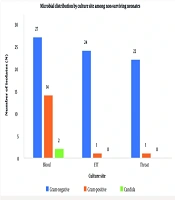
The results showed that Gram-negative organisms were the most frequent microorganism in comparison with others with a frequency of 45.6%, followed by Gram-positives with 41.7%, Yeast with 4.9% and mixed growth with 2.9% frequencies. The culture results were negative in 4.9% of cases (Table 4).
Table 4.
Collected Samples Culture Results
| Culture Result | UTIa | Pneumonia | SSIa | BSIa | All |
|---|---|---|---|---|---|
| Gram-negative | 71.42 | 50 | 75 | 36.6 | 45.63 |
| Gram-positive | 7.14 | 0 | 25 | 56.3 | 41.74 |
| Mixed | 0 | 0 | 0 | 4.2 | 2.91 |
| Yeast | 21.4 | 0 | 0 | 2.8 | 4.85 |
| Negative culture | 0 | 50 | 0 | 0 | 4.85 |
a Abbreviation: UTI, urinary tract infection; SSI, surgical site infection; BSI, bloodstream infection.
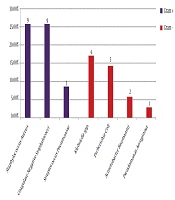
The most common pathogenic organisms were coagulase-negative Staphylococci (35%) followed by Klebsiella , Serattia , E. coli , Pseudomona and Candida (Table 5). The frequency of antimicrobial resistant isolated organisms was high. Half of isolated S. aureus were Methicillin resistant. 87% of Klebsiella were resistant to third generation Cephalosporins, resistance to Aminoglicosides was 80%, and to Imipenem was 52%. 100% of isolated pseudomonas were resistant to third generation Cephalosporins and Imipenem. Antibiotic resistant of isolated organisms is presented in Table 1 in detail. Of 103 investigated patients, 21 cases with septicemia, 4 cases with urinary tract infection, 1 case with lower respiratory tract infection and 1 case with wound infection were expired. So the mortality rate of patients with nosocomial infections in our study was 26.2% (27 cases of 103 patients with NI).
Table 5.
Isolated Organism According to the Type of Infection a
| Organism Type | UTIb, No. (%) | Pneumonia, No. (%) | SSIb, No. (%) | BSIb, No. (%) | All, No. (%) |
|---|---|---|---|---|---|
| Coagulase-negative Staphylococci | 0 (0) | 0 (0) | 0 (0) | 36 (50.7) | 36 (35) |
| Klebsiella | 4 (28.6) | 3 (60) | 2 (25) | 14 (19.7) | 23 (22.3) |
| Serratia | 1 (7.1) | 3 (60) | 1 (12.5) | 5 (7) | 10 (9.7) |
| Yeast | 3 (21.4) | 1 (20) | 0 (0) | 6 (8.5) | 10 (9.7) |
| E. Coli | 5 (35.7) | 0 (0) | 1 (12.5) | 1 (1.4) | 7 (6.8) |
| Pseudomonas | 0 (0) | 2 (40) | 1 (12.5) | 3 (4.2) | 6 (6.1) |
| MRSA b | 0 (0) | 0 (0) | 1 (12.5) | 3 (4.2) | 4 (4.1) |
| Enterobacter | 0 (0) | 0 (0) | 0 (0) | 4 (5.6) | 4 (4.1) |
| Gram-negative Bacilli | 0 (0) | 0 (0) | 0 (0) | 4 (5.6) | 4 (4.1) |
| Staphylococci | 0 (0) | 0 (0) | 1 (12.5) | 3 (4.2) | 4 (4.1) |
| Enterococcus | 2 (14.3) | 0 (0) | 1 (12.5) | 0 (0) | 3 (2.9) |
| Acinetobacter | 0 (0) | 0 (0) | 0 (0) | 1 (1.4) | 1 (1) |
a In some cases more than one microorganism was isolated.
b Abbreviation: MRSA, methicillin resistance Staphylococcus aureus; UTI, urinary tract infection; SSI, surgical site infection; BSI, bloodstream infection.
5. Discussion
Healthcare-associated infections are an important cause of mortality worldwide. They cause substantial morbidity, prolong hospital stays and increase costs. Hospital sector in Turkey had to be spent an additional 48 million US $ in 1995 for medical management of nosocomial infections (20).
In Wisplinghoff et al. study, the rate of resistance to methicillin among S. aureus infections increased from 22% in 1995 to 57% in 2001 (21) that was higher than Kresken et al. (22).
The overall incidence of NIs in this study (1.33) is consistent with the results of Canadian and European studies. Ford-jones et al. reported an average of 0.17% to 14% according to age and pediatric specialty (23).
Wisplinghoff et al. had reported that CONS and Candida species were more likely to be isolated from patients influencing empirical antibiotic therapy like patients in ICUs, whereas S. aureus and E. coli were more commonly isolated from patients hospitalized in non-ICU wards (21). Depending on definition method, the type of infection, and analysis method, the additional hospital stay ranged in various studies from 1 to 35 days (13, 14, 24).
Welliver et al. in a prospective study on the epidemiology of nosocomial infections during a 12-month period in a large pediatric hospital, reported that the rate of NIs per 100 discharged patients was 4.1 (10). Raymond et al. in a 6-month prospective study by evaluating 20 units of eight European countries (5 pediatric intensive care units (PICUs), 7 neonatal units, 2 hematology-oncology units, 8 general pediatric units) reported the overall incidence of 2.5% ranging from 1% in general pediatric units to 23.6 in PICU (25). In our study, the NIs incidence (1.33) is lower than the reported of 7.7% for 1623 Australian children (11).
We recorded 71 (69.8%) was caused by bactermia as the most common type of NI, that was consistent with reports of Urrea et al. (51.7) (26) and Gentile et al. (46.1%) (27) and Ben Jaballah (68.2%) (28) but it was higher than the reports of Raymond (36%) (25) Muhlemann (37%) (29) and Tantrachee-wathron (28.6%) (30). However, in these studies the bactermia was known as the most common type of infection.
Hilmar et al. reported that one-half of all nosocomial BSIs occur in the critical-care setting. In their study the most common organisms causing BSIs were coagulase-negative staphylococci (CONS) compromising 31% of all isolated organisms (21).
The rate of 13.61 of urinary tract infections in our study, was consistent with the report by Raymonds (11%) (25). The UTI frequency (13.61) was low similar to previous study and was lower than in adults (30-40%) probably because urinary catheter are less frequently used for children. The lower rate of LRTIs in our study (9.7%) is comparable with the results of Gentile et al. (11%) (27) but is lower than the results of other studies. Coagulase negative staphylococci infect children more often than the adults, and were the most frequent isolated pathogen in our hospital (35%) especially neonate and hematology units.
Richard et al. (31) reported that coagulase-negative staphylococci (36%) were the most common blood isolated microorganisms of NIs, but in Welliver et al. (10) study, Staphylococcus aureus was the most commonly isolated pathogen.
In the present study Staphylococcus aureus was isolated in 8.2% of patients. Similar to Raymond et al. (25) study the frequency of antimicrobial resistance of Klebsiella and other gram negative bacilli was high. Candida was a pathogen with increasing importance. Infections due to antibiotic resistant bacteria were associated with increased length of stay in PICU after infection onset and increased mortality.
Mohiuddin et al. reported that 100% of E. coli was resistant to Ampicillin. In their study they reported a significant increase in resistance to Ceftriaxone, Ceftazidime, Ciprofloxacin and Gentamicin. In Pseudomonas infections a significant increase in resistance to antibiotics were also observed (32). The variation in the isolation of organisms in different studies could be due to the use of different antibiotics and the elimination of susceptible organisms by the antibiotic resistant organisms.
As previous reports the difference between hospital stay days in patients with NI and non-infected patients was significantly meaningful. 26.9% of our patients died. In our study the incidence of nosocomial infection have been underestimated because viral infections were not included due to limitations in medical equipment and also because of the absence of post discharge surveillance. In summary in this study the most frequent isolated organisms included coagulase-negative Staphylococcus, Klebsiella, Serratia, yeast, E. coli and Pseudomonas respectively. According to the antibiotic resistance patterns, the lowest antibiotic resistant in each organisms was as follow:
Coagulase-negative Staphylococci had the lowest antibiotic resistant against the Chloramphenicol, Klebsiella against Ciprofloxacin, Serratia, against Ciprofloxacin and Ceftazidime, E. coli against Erythromycin and finally Pseudomonas had the lowest antibiotic resistant against Ciprofloxacin.
Increasing frequency of anti-microbial resistant isolated emphasizes the necessity for bacteriological monitoring of hospitalized children.