
Shortage of Coronavirus RT-PCR Kits Increased the Spread of Infection in Kurdistan Region of Iraq

Author(s):
Nawfal HusseinNawfal HusseinNawfal Hussein ORCID1,*, Ibrahim NaqidIbrahim NaqidIbrahim Naqid ORCID1
1Department of Biomedical Sciences, College of Medicine, University of Zakho, Kurdistan, Iraq
*Corresponding Author: Department of Biomedical Sciences, College of Medicine, University of Zakho, Kurdistan , Iraq. Email: [email protected]

Archives of Clinical Infectious Diseases:Vol. 17, issue 6; e102896
Published online:Dec 13, 2022
Article type:Letter
Received:Mar 19, 2020
Accepted:Nov 15, 2022
How to Cite:Hussein N, Naqid I. Shortage of Coronavirus RT-PCR Kits Increased the Spread of Infection in Kurdistan Region of Iraq. Arch Clin Infect Dis. 2022;17(6):e102896. doi: https://doi.org/10.5812/archcid-102896

Dear Editor,
In December 2019, cases of unexplained severe respiratory tract infection emerged in Wuhan, Hubei, China (1). A novel bat-origin coronavirus was proposed as a possible causative agent for the infection, and nucleic acid sequencing analysis identified the novel coronavirus (1). On 30 January 2020, the infection was declared as a Public Health Emergency of International Concern by the World Health Organization (WHO). On 11 March 2020, the WHO declared the coronavirus disease (COVID-19) a global pandemic. In February 2020, the first cases of COVID-19 infection were reported in Kurdistan Region, Northern Iraq. With the appearance of the first COVID-19 cases in Iraq, strict control measures were implemented to stop the spread of the infection. Since then, more than 2.5 million people contracted the infection in Iraq, with 25,358 recorded deaths (2).
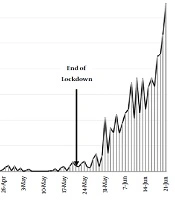
During the early outbreak period, Iraqi authorities, including Kurdistan Regional government, decided to close the borders on 22 February 2020 and urged all Iraqi citizens to return home (3). In Kurdistan Region, all individuals returned from Iran, Italy, South Korea, and China were examined clinically and classified into two groups including suspected cases and symptom-free individuals. To confirm the suspected cases, swab testing by reverse transcription polymerase chain reaction (RT-PCR) was performed. On the other hand, all symptom-free individuals were quarantined for 14 days (3). People in quarantine were examined twice a day clinically, and if fever and/or symptoms of respiratory tract infection developed, samples were taken and sent to RT-PCR. If these people did not develop fever or symptoms of respiratory tract infection, they were released from the quarantine. PCR test could not be performed for all quarantined subjects before the release due to the shortage of the supply of PCR testing kits. Although all the released subjects were requested to refer to health centers if they developed symptoms, the number of mild infections was not clear. Then, a sharp increase in morbidity and mortality was recorded in Kurdistan Region (4). To investigate the increase in number of COVID-19 cases, the healthcare authorities decided to survey the released subjects. It was found that 39/1726 (2.26%) of the subjects were positive without having symptoms. Furthermore, the quarantine could not be extended beyond 14 days due to social stigma and lack of required infrastructure to deal with such an outbreak.
RT-PCR was proposed as a diagnostic tool for COVID-19. In this regard, many studies compared different diagnostic tools, such as computed tomography (CT) scan as well (5). It was concluded that RT-PCR is of higher sensitivity and specificity than CT scan, particularly if multiple samples are used (5). In addition, CT scan is more laborious and more expensive than RT-PCR (5). We believe that the shortage in RT-PCR supply and the release of patients from quarantine without diagnosis played a major role in the sharp increase in the number of COVID-19 cases and increased the spread of infection in the region.
To conclude, during the early outbreak period, the shortage of the supply of testing kits increased the spread of COVID-19. The test could not be performed on all subjects before releasing from quarantine, and there was a waiting list for suspected cases. The COVID-19 pandemic spotlights the crucial need for international scientific collaboration to develop diagnostics tools in order to combat health emergencies. The international collaboration must include rapid access to diagnostic tools.
Footnotes

  • Authors' Contribution: Both authors drafted and approved the final version.

  • Conflict of Interests: Both authors are employees at the University of Zakho and have no personal or professional relationship with any commercial medical companies.

  • Ethical Approval: The scientific and ethics committee of College of Medicine, University of Zakho, Kurdistan Region, Iraq, approved the study. The ethical approval number was Z202011.

  • Funding/Support: This study was supported in part by grant Z1190 from the University of Zakho.

References

  • 1.
    Zhao W, Zhong Z, Xie X, Yu Q, Liu J. Relation Between Chest CT Findings and Clinical Conditions of Coronavirus Disease (COVID-19) Pneumonia: A Multicenter Study. AJR Am J Roentgenol. 2020;214(5):1-6. [PubMed ID: 32125873]. https://doi.org/10.2214/AJR.20.22976.
  • 2.
    Hussein NR. Covid-19, Cholera and Crimean-Congo Hemorrhagic Fever in Iraq: A Country with Three Outbreaks. Mediterr J Hematol Infect Dis. 2022;14(1). e2022077. [PubMed ID: 36425148]. [PubMed Central ID: PMC9652012]. https://doi.org/10.4084/MJHID.2022.077.
  • 3.
    Hussein NR, Saleem ZSM, Rashad BH, Naqid IA, Ibrahim N, Musa DH, et al. Home management scheme for patients with severe covid-19 in Duhok city, Kurdistan region of Iraq: a possible role for family physicians. J Family Med Prim Care. 2021;10(11):4260-3. [PubMed ID: 35136799]. [PubMed Central ID: PMC8797100]. https://doi.org/10.4103/jfmpc.jfmpc_166_21.
  • 4.
    Hussein NR. The Role of Self-Responsible Response Versus Lockdown Approach in Controlling COVID-19 Pandemic in Kurdistan Region of Iraq. Int J Infect. 2020;7(4). https://doi.org/10.5812/iji.107092.
  • 5.
    Tahamtan A, Ardebili A. Real-time RT-PCR in COVID-19 detection: issues affecting the results. Expert Rev Mol Diagn. 2020;20(5):453-4. [PubMed ID: 32297805]. [PubMed Central ID: PMC7189409]. https://doi.org/10.1080/14737159.2020.1757437.

Copyright

Copyright © 2022, Author(s). This is an open-access article distributed under the terms of the Creative Commons Attribution-NonCommercial 4.0 International License (http://creativecommons.org/licenses/by-nc/4.0/) which permits copy and redistribute the material just in noncommercial usages, provided the original work is properly cited.

Similar Articles

19
Apr
2020
Journal of Kermanshah University of Medical Sciences

Possible Factors Associated with Low Case Fatality Rate of COVID-19 in Kurdistan Region, Iraq

Nawfal R Hussein

Hussein NR. Possible Factors Associated with Low Case Fatality Rate of COVID-19 in Kurdistan Region, Iraq. J Kermanshah Univ Med Sci. 2020;24(1):e103393. doi: https://doi.org/10.5812/jkums.103393

1
Sep
2020
 	International Journal of Infection

The Role of Self-Responsible Response Versus Lockdown Approach in Controlling COVID-19 Pandemic in Kurdistan Region of Iraq

Nawfal R Hussein

Hussein NR. The Role of Self-Responsible Response Versus Lockdown Approach in Controlling COVID-19 Pandemic in Kurdistan Region of Iraq. Int J Infect. 2020;7(4):e107092. doi: https://doi.org/10.5812/iji.107092

20
May
2020
Hepatitis Monthly

The Impact of COVID-19 Pandemic on the Elimination of Viral Hepatitis in Duhok City, Kurdistan Region of Iraq

Nawfal Hussein

Hussein N. The Impact of COVID-19 Pandemic on the Elimination of Viral Hepatitis in Duhok City, Kurdistan Region of Iraq. Hepat Mon. 2020;20(5):e104643. doi: https://doi.org/10.5812/hepatmon.104643

28
Jun
2020
Journal of Kermanshah University of Medical Sciences

Data Suggesting That COVID-19 May Have Existed in the Kurdistan Region of Iraq at the Time of the Outbreak in Wuhan Province of China

Hadi Mohammed Abdullah,
Shakhawan M. Ali,
Dana Khdr Sabir

Abdullah HM, Ali SM, Sabir DK. Data Suggesting That COVID-19 May Have Existed in the Kurdistan Region of Iraq at the Time of the Outbreak in Wuhan Province of China. J Kermanshah Univ Med Sci. 2020;24(2):e105758. doi: https://doi.org/10.5812/jkums.105758

5
Oct
2022
Arch Pediatr Infect Dis

Prevalence and Clinical Presentation of COVID 19 in Health Care Workers in Two Main Hospitals During the Pandemic in Shiraz, Iran

Marzieh Jamalidoust,
Zahra Ashkan,
Gholamreza Pouladfar,
Sadaf Asaei,
Nasrin Aliabadi,
Pejman Abbasi
,et al.

Jamalidoust M, Ashkan Z, Pouladfar G, Asaei S, Aliabadi N, et al. Prevalence and Clinical Presentation of COVID 19 in Health Care Workers in Two Main Hospitals During the Pandemic in Shiraz, Iran. Arch Pediatr Infect Dis. 2022;10(4):e121753. doi: https://doi.org/10.5812/pedinfect-121753

Download PDF70.58 KB

Crossmark

Crossmark

Checking

Share on
Cited by
Metrics

Ordering Reprints

Articles are published under the Creative Commons license stated on each article. No permission or royalty fee is required for uses permitted by that license. CCC handles optional bulk and customized reprint orders. Any quotation covers production and delivery services only, not copyright permission. > Request Reprints from CCCÂ