Cover image of the article: The Impact of COVID-19 Pandemic on the Elimination of Viral Hepatitis in Duhok City, Kurdistan Region of Iraq

Image Credit:Hepatitis Monthly

The Impact of COVID-19 Pandemic on the Elimination of Viral Hepatitis in Duhok City, Kurdistan Region of Iraq

Authors

Nawfal HusseinNawfal Hussein ORCID1,*
1Department of Biomolecular Sciences, College of Medicine, University of Zakho, Zakho, Iraq
*Corresponding Author: Department of Biomolecular Sciences, College of Medicine, University of Zakho, Zakho, Iraq. Tel: +96-4627649807, Email: nawfal.hussein@yahoo.com

Hepatitis Monthly:Vol. 20, issue 5; e104643
Published online:May 20, 2020
Article type:Letter
Received:May 06, 2020
Accepted:May 10, 2020
How to Cite:Hussein N. The Impact of COVID-19 Pandemic on the Elimination of Viral Hepatitis in Duhok City, Kurdistan Region of Iraq. Hepat Mon. 2020;20(5):e104643. doi: https://doi.org/10.5812/hepatmon.104643

Dear Editor,
In November 2019, several cases of acute respiratory distress syndrome emerged in Wuhan, Hubei, China (1). A novel SARS-CoV-2 virus was then identified as a causative agent for coronavirus infectious disease (COVID-19). On the 11th, March 2020, the World Health Organization (WHO) declared COVID-19 a global pandemic as the infection had spread to more than 150 countries (2). The impact of the pandemic on the health system was profound and led to reduced access to healthcare and a dramatic reduction in health services. Previous outbreaks such as Ebola showed that a temporarily severely compromised health system may lead to long-term deleterious consequences (3).
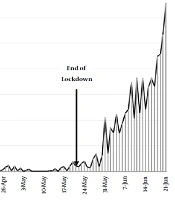
In 2016, the WHO declared an ambitious hepatitis elimination project by reducing new infections by 90% and reducing hepatitis-related mortality by 65% by 2030. In Duhok city, the Kurdistan Region of Iraq, a local initiative was established to combat and eliminate viral hepatitis. However, hepatitis elimination plans have been disrupted due to the burden and the pressure of COVID-19 on the health system and the impact of social distancing requirements or community reluctance. In Duhok city, strict social distancing measures were imposed with the appearance of first cases in Iraq. A state-imposed community-wide containment was declared, including a state-imposed curfew in the city. During the curfew, the health system was severely compromised, including closing all primary healthcare centers, including those offering vaccinations and viral hepatitis screening programs. In addition, 375 patients with chronic active HBV are registered in Azadi Hospital, which is the only center that offers treatment and regular follow-up for HBV patients. During the lockdown, none of the patients received the required care for HBV infection management. Besides, three patients with HCV are registered in the hospital. They have been receiving Harvoni for 12 weeks. Unfortunately, the treatment course has been disrupted. Hence, the COVID-19 outbreak undermined the three pillars of hepatitis elimination in Duhok: early diagnosis, treatment, and vaccination. In this difficult time, healthy skepticism should be reserved, and the foundation of clinical equipoise should be retained. Otherwise, our efforts to eliminate hepatitis will be negated and we may fall prey to the burden of new outbreaks of hepatitis. Obviously, the COVID-19 pandemic will have a long-term legacy and deleterious consequences on different parts of public health, particularly viral hepatitis elimination programs. The importance of hepatitis elimination makes it imperative for Duhok city and all countries to resume and keep the continuity of the elimination plan.
Footnotes

  • Conflict of Interests: The author declared no conflict of interests.

  • Funding/Support: It is not declared by the author.

References

Copyright

Copyright © 2020, Author(s). This is an open-access article distributed under the terms of the Creative Commons Attribution-NonCommercial 4.0 International License (http://creativecommons.org/licenses/by-nc/4.0/) which permits copy and redistribute the material just in noncommercial usages, provided the original work is properly cited.

Similar Articles

1
Sep
2020
The Role of Self-Responsible Response Versus Lockdown Approach in Controlling COVID-19 Pandemic in Kurdistan Region of Iraq

The Role of Self-Responsible Response Versus Lockdown Approach in Controlling COVID-19 Pandemic in Kurdistan Region of Iraq

Nawfal R Hussein

Hussein NR. The Role of Self-Responsible Response Versus Lockdown Approach in Controlling COVID-19 Pandemic in Kurdistan Region of Iraq. Int J Infect. 2020;7(4):e107092. doi: https://doi.org/10.5812/iji.107092

19
Apr
2020
Possible Factors Associated with Low Case Fatality Rate of COVID-19 in Kurdistan Region, Iraq

Possible Factors Associated with Low Case Fatality Rate of COVID-19 in Kurdistan Region, Iraq

Nawfal R Hussein

Hussein NR. Possible Factors Associated with Low Case Fatality Rate of COVID-19 in Kurdistan Region, Iraq. J Kermanshah Univ Med Sci. 2020;24(1):e103393. doi: https://doi.org/10.5812/jkums.103393

25
Jul
2020
Impact of COVID-19 on the Medical Education: Experience from Kurdistan Region of Iraq

Impact of COVID-19 on the Medical Education: Experience from Kurdistan Region of Iraq

Nawfal R Hussein,
Zana Sidiq M. Saleem,
Dildar H Musa,
Nashwan Ibrahim,
Ibrahim A Naqid

Hussein NR, M. Saleem ZS, Musa DH, Ibrahim N, Naqid IA. Impact of COVID-19 on the Medical Education: Experience from Kurdistan Region of Iraq. J Med Edu. 2020;19(1):e106889. doi: https://doi.org/10.5812/jme.106889

13
Dec
2022
Shortage of Coronavirus RT-PCR Kits Increased the Spread of Infection in Kurdistan Region of Iraq

Shortage of Coronavirus RT-PCR Kits Increased the Spread of Infection in Kurdistan Region of Iraq

Nawfal Hussein,
Ibrahim Naqid

Hussein N, Naqid I. Shortage of Coronavirus RT-PCR Kits Increased the Spread of Infection in Kurdistan Region of Iraq. Arch Clin Infect Dis. 2022;17(6):e102896. doi: https://doi.org/10.5812/archcid-102896

20
Dec
2020
The First Case of COVID-19 Reinfection in Duhok City, Kurdistan Region of Iraq: A Case Report

The First Case of COVID-19 Reinfection in Duhok City, Kurdistan Region of Iraq: A Case Report

Nawfal Rasheed Hussein,
Dildar H Musa,
Ibrahim Abdulqader Naqid,
Zana Sidiq M.Saleem,
Nashwan Ibrahim

Hussein NR, Musa DH, Naqid IA, Sidiq M.Saleem Z, Ibrahim N. The First Case of COVID-19 Reinfection in Duhok City, Kurdistan Region of Iraq: A Case Report. J Kermanshah Univ Med Sci. 2020;24(4):e111454. doi: https://doi.org/10.5812/jkums.111454

More by these authors

Nawfal HusseinPubMedScholar
Share
Cited by
Metrics