1. Context
Dengue virus (DV) is an arthropod-borne virus belongs to the family of Flaviviridae, which is transmitted to humans through the bite of an infected Aedes mosquito. There are four serotypes (1 to 4) of the viruses (1-3). Signs and symptoms of infection begin about 4 - 7 days after the mosquito bite and last between 3 - 10 days. Most of the individuals do not become symptomatic (70% - 80%), but some of them (10% - 20%) are symptomatic with clinical presentation like flu syndrome and sometimes the severe forms of disease including dengue hemorrhagic fever (DHF) or dengue shock syndrome (DSS) happen (3-5). In severe form of the disease, there are severe vomiting and uncontrolled hemorrhage in the skin and also blood in urine and stool. There are liver and spleen enlargement. Hepatitis, abdominal pain, hemorrhage, dangerously low blood pressure, and coma are major complications of the disease. Today, dengue is endemic in Asia, Africa, South American countries, and the Caribbean region. About 40% of the world’s population live in countries where the risk of transmission is high. The world health organization (WHO) estimates that every year about 500,000 cases with DHF (22,000 deaths) occur (6, 7). Treatment is supportive and patients should rest and use acetaminophen. Balancing fluids and electrolytes are very important, when DSS is happened. Real-time polymerase chain reaction (RT-PCR) assays, IgM and IgG-ELISA, and the NS1 ELISA-based antigen assay are commercially available for diagnosis of dengue virus (7, 8). Until now, there is no approved vaccine to prevent infection. Mosquito control is the main way for the prevention of dengue and for control of epidemic, coordinated inter-organizational efforts are needed (3, 7, 8). Here, we aimed to review published papers about this disease and study about the epidemiology, clinical manifestation, treatment, and prevention.
2. Evidence Acquisition
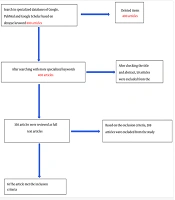
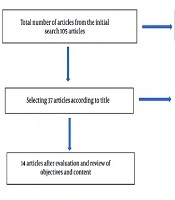
We searched medical databases including PubMed and Scopus from March 1960 to February 2015. The key words for the review of literature were as follows: dengue, dengue fever, dengue hemorrhagic fever, epidemiology, transmission routes, clinical manifestation, treatment and prevention. We found many papers about dengue virus but we selected about 35 articles, which were published recently and showed the main points about the disease. Also, for more understanding of epidemiology, we used older papers.
3. Results
In the review of literatures, we found data on epidemiology of dengue, transmission routes, clinical manifestations, and treatment and prevention routes as belows:
3.1. Epidemiology
Dengue virus is an arthropod-borne virus, which belongs to the family of Flaviviridae, genus flavivirus (a family which includes other vector-borne viruses such as west Nile virus, Japanese encephalitis virus, and yellow fever virus, which all of them are single-stranded RNA viruses). Dengue fever (DF) occurs when one of the four serotypes of virus infects human (1, 2, 6, 9). Infection with one serotype cannot protect human against the other serotypes. It is important to know involvement with each serotype of virus can put the patient at a greater risk for severe forms of infection like dengue hemorrhagic fever (DHF) and dengue shock syndrome (DSS). Dengue virus is transmitted to human by the mosquito (Aedes aegypti and Aedes albopictus), which are found throughout the world (4, 5, 9, 10). Signs and symptoms of infection begin about 4 - 7 days after the mosquito bite and last between 3-10 days. For transmission of the virus by mosquito, it must feed on a body of infected person during a 5-day period when the load of viral is high. This time begins several hours before the patient is symptomatic. Most of people never become symptomatic (70% - 80%), but they can infect the mosquitoes and the cycle of transmission is continued (3, 7, 11-13). When an infected mosquito bite the healthy people, the virus needs an incubation period between 8 and12 days in order to mosquito can transmit virus to another person. This mosquito is infected for all of its life (days or a few weeks later) (3, 7, 14-16). Now, dengue is endemic in at least 100 countries in Asia (more in South-east), Africa, the Americas, and the Caribbean and it is transmitted by Aedes aegypti and Aedes albopictus). However, in the Western Hemisphere, the Aedes aegypti mosquito is the most important vector. Climate changes can have a significant effect on the incidence and prevalence rate of infection. In many of tropical and subtropical countries, dengue is endemic and disease occurs every year, when rainfall is optimal for breeding (1, 4, 6, 14-16). Dengue epidemic happens when a large numbers of mosquitoes feed on the large numbers of people who have no immunity to one of the serotypes. It is said that the four serotypes of virus were originated from monkeys and then transmit to humans in Southeast Asia and some parts of Africa about 100 - 800 years ago (1-3, 6, 7, 15-18). Until the second world war, DF was restricted to some countries of the world (Southeastern Asia and Africa), but with beginning of the 2nd world war, transportation of Aedes mosquitoes by cargo could play an important factor for dissemination of the viruses around the world. Today, about 2.5 billion people (near 40% of the world’s population) live in countries where the risk of transmission is high. World health organization estimates that about 50-100 million of world populations become infected yearly, and among them 500,000 DHF with 22,000 deaths (more among young children) are reported (1, 6, 14, 19). Travellers who returning to Europe countries usually get DF from South-east Asia, particularly Thailand and Philippines; however, in the USA dengue found in travelers returning from Mexico and Dominican Republic (20). Autochthonous spread has been reported from the south of France and Croatia, and in 2012 the first European dengue outbreak since the 1920’s occurred in Madeira, resulting in over 2,000 cases that among these patients, 120 cases were hospitalized (15, 20).
3.2. Clinical Manifestations
The spectrum of dengue disease can differ from a mild, nonspecific febrile syndrome to classic DF, and a severe form of the disease, including DHF and DSS (3, 4, 7). The principal symptoms of dengue fever are high fever, severe headache, severe muscle and bone pain, severe retro-orbital pain, joint pain, rash, and sometimes mild bleeding from nose or gums. Fever with other manifestations usually last from 2 to 7 days. When the fever decreases, sometimes other symptoms such as severe abdominal pain, vomiting, and difficulty in breathing develop (3, 7, 14). These manifestations are due to excessive permeability of the smallest blood vessels, which lead to escaping of fluids from the blood vessels into the peritoneum and pleural cavity. This process can lead to failure of the circulatory system and then lead to shock, and even death, if the balance of fluid and electrolytes is not corrected (4, 5, 17). Dengue hemorrhagic fever and DSS occur after two or seven days of beginning fever, when the clinical and laboratory warning signs are presented. Patient with DHF has a low platelet count and hemorrhagic tendency (e.g., skin hemorrhages, bleeding nose or gums) (1, 14, 17). It is reported that younger children and people with their first dengue infection have a milder illness than older children and adults. High-risk groups include pregnant women, children, the elderly, and people with comorbidities such as obesity, diabetes, hypertension, and immunocompromised individuals. These patients should be observed at least once daily or admitted to hospital for close observation. Infection with any of the four dengue serotypes can produce the full spectrum of disease and severity. There are three phases of DHF: the febrile phase, the critical phase (plasma leakage), and the convalescent phase (3, 4, 7, 14, 17-23). Sudden increase in the hematocrit (≥ 20% increase from baseline), ascites, pleural effusion, and a low serum albumin level are the evidences of severe forms. Evidence of plasma leak should be monitored for early changes in hemodynamic parameters. Warning signs which usually occur at or after the defervescence phase included sudden change from high to normal or subnormal temperatures, persistent vomiting, abdominal pain, lethargy, pleural effusion, ascites, increases in hematocrit with rapid decrease in platelet count (≤ 100,000 cells/mm3), bleeding nose or gum, and liver enlargement (≥ 2cm). Criteria for severe form include severe plasma leakage, which lead to shock or severe ascites and/or respiratory distress, and severe organ involvement (ALT or AST > 1000, impaired consciousness, and renal or cardiac failure; severe mucosal or cutaneous bleeding). All patients with DHF and DSS recover rapidly with careful monitoring, if they were monitored and managed correctly (2, 5, 14, 17). It is important to know that in the early febrile phase, dengue begins with clinical signs and symptoms similar to malaria and also many of other bacterial diseases (meningococcal infection and leptospirosis) and viral infections (influenza, measles, rubella, and Middle East respiratory syndrome or MERS). A detailed travel history is important, focused on timing and duration of stay in endemic areas, dengue seasonality and epidemic activity in the places visited, and predominant urban or rural stay.
3.3. Diagnosis
Dengue infection is characterized by a low titer antibody response in the first infection. IgM antibody is the first immunoglobulin to appear. Then, IgG antibody can be detectable at the end of the first week of disease and then slowly increases. Although, sometimes, high levels of IgG are present even in the acute phase (3, 5, 7, 24, 25). In secondary infection, IgG level is promptly and significantly raised and the IgM level increases slowly and even IgM false-negative reactions are observed in this phase. Near 80% of all dengue cases have a detectable IgM antibody after five days of the beginning of illness, and about 99% of the patients will show IgM-antibody between day six to ten of illness, which can be detectable for 3 months (3, 7, 24). Enzyme-linked immunosorbent assay (ELISA) is an important test for the routine dengue diagnosis and has a sensitivity and specificity of approximately 90% and 98%, respectively. The RT-PCR assay has been developed and this test is commercially available today. The nonstructural protein 1 (NS1) of the dengue viral genome has been shown to be a useful test for the diagnosis of acute dengue infections. The NS1 antigen can be detectable in the serum of the infected patients just one day post onset of symptoms (3, 4, 7, 26). Now, the NS1 ELISA test is commercially available for diagnosis of DV. Other test that helps to find complications such as pleural fluid accumulation and ascites is ultrasound. Echocardiography can assess cardiac function in refractory shock or when myocarditis is suspected. Brady-arrhythmias can be observed and ECG should be performed if the patient is symptomatic.
3.4. Treatment
There is no specific treatment for dengue infection and to now, no antiviral therapies have shown benefit (27, 28). However, bed rest, diminishing the fever usually by acetaminophen, and a suitable fluid replacement therapy in DSS can be effective, if therapy begins correctly and promptly (1, 3, 5). Patients with DSS and DHF frequently need to be hospitalized. Patients should use acetaminophen and avoid aspirin and other nonsteroid anti-inflammatory drugs, which could worsen bleeding (3, 4, 14, 17). If the disease gets worse in the first 24 hours after the fever, the patient should refer to a hospital immediately to check and monitor for severe forms and complications.
3.5. Prevention
Six dengue fever vaccines are in development, and the results of phase III trial were published in July 2014. However, there is no FDA-approved vaccine available yet (3, 4, 29-34). The best way to prevent mosquito bite is elimination of the places where the mosquito lays the eggs, such as artificial containers that hold water for pets and gardening indoor or around the home. Adult mosquitoes usually bite human during the day and at night when the lights are on. Using the repellent on the skin, wearing long sleeves and pants also are other protection tools. Sleeping under a mosquito bed net is another way. If there is someone who is sick in the house, extra precautions are needed to prevent mosquitoes bite (3, 27, 31-34). Therefore, mosquito control is the best way for the prevention of dengue and when the epidemic form occurs, coordinated efforts in the community are needed to increase the level of people awareness about transmission and prevention routes. The weak points for this study were: 1- We could not receive article from ISI site; so, we were on scientific sanction. 2- We found many papers about DV, but we study about 35 papers which were newer and could help us for this study. The strength point was collaboration of library staff for searching of useful papers.
4. Conclusions
Dengue virus is not highly contagious and virus cannot be spread directly from person to person. The spectrum of disease is different from a nonspecific febrile syndrome to a classic dengue fever like DHS and DSS. Understanding the epidemiology and clinical manifestation, and prompt diagnosis, and also coordinated efforts in the community for disease control are important issues. Dengue fever is one of the most rapidly emerging infectious diseases in the world, and due to international travel it continues to spread as a travel-related infection. Awareness about dengue fever, its complications, and also management is very important for healthcare staff to decrease mortality and morbidity.