
1. Background
After AIDS, tuberculosis is the second most common reason of death due to a single-agent infectious disease, world-wide. Annually, over nine million new cases of TB, and almost two million deaths from TB, are estimated to occur around the world. In addition, most of these deaths (≥ 90%) occur in developing countries (1). With regard to the neighboring of Sistan-Baluchestan province of Iran to Afghanistan and Pakistan, high rates of TB prevalence has been observed in this region (64.3% of which were smear positive TB), and the incidence of tuberculosis in the province included 48.5/100000 and 28.8 /100000 PTB with positive smear. This province has the highest incidence of positive smear TB in Iran (2, 3). Although one third of the world’s population is infected with M. tuberculosis, only 10% of them actually develop tuberculosis. This is strongly dependent on immune defense of the host against M. tuberculosis (1). The defense system against M. tuberculosisis complex and this infection is controlled by different groups of cells like macrophages, monocytes, T CD4, T CD8 lymphocytes (4). The cells interfere with the production of cytokines, for example, Th1 cells generate IL-2 and INF-γ contribute to resistance against tuberculosis, whereas Th2 cells that produce IL-4, 10 and IL-13 are related to disease progression. The regulatory cytokines, such as IL-10, seem to have a key role in reactivation of tuberculosis (5).
TNF-α seem to play multiple roles in defense responses and lung tissue damage or granuloma formation. Treatment of rheumatoid arthritis with tumor necrosis factor inhibitors also predisposes individuals to a significant increase in TB risk (6, 7). Some studies indicated association of vitamin D receptor, IL-1, IL-4, IL-10, IL-13,TNF-α and INF-γ with susceptibility to tuberculosis (4-7). In addition, a research suggested that immunotherapy with the cytokines may be effective in treatment of multidrug resistant tuberculosis (MDR-TB) (8). The study of cytokine gene polymorphisms is a helpful tool to predict the genetic susceptibility to diseases in special communities. Polymorphism in cytokine genes are known to influence cytokine levels and may also be associated with susceptibility/resistance to tuberculosis or outcome and clinical forms of this disease (9-13). The pattern of cytokine gene polymorphisms is different in various populations (14).
2. Objectives
In this study polymorphic variants of the TNF-α and IL-10 genes in tuberculosis patients with different clinical forms were evaluated and then compared to healthy controls. To observe the association of these polymorphisms with PTB and EPTB, allelic and genotypic frequencies of IL-10 gene (-1082, -819, -592) and TNF-a gene (-308, -238) were also compared between these groups.
3. Patients and Methods
This case-control study was performed on 100 patients with tuberculosis and 194 healthy subjects. All participants signed written informed consent. The diagnosis of PTB was based on clinical, radiological, sputum acid fast bacillus (AFB) smear positivity, culture, pathology of tissue and response to anti-tuberculosis chemotherapy. The patients were diagnosed and treated at Boo-Ali Hospital, the reference hospital for the treatment of infectious diseases in Sistan- Baluchestan province, Iran. Blood samples were collected in tubes containing ethylenediaminetetraacetic acid (EDTA) and then sent to the Laboratory of Infectious Diseases and Tropical Medicine Research Center, Zahedan and frozen at -20ºC until DNA extraction.
3.1. DNA Sampling and Genotyping
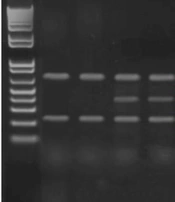
DNA was isolated from whole blood collected with EDTA as anticoagulant, using a “salting out” method. All cytokine typing was performed by polymerase chain reaction with a sequence-specific primers (PCR-SSP) assay using identical amplification and detection conditions, enabling rapid and cost-efficient analysis of polymorphisms. The PCR-SSP kit used was the Heidelberg cytokine gene polymorphism SSP kit (Heidelberg University, Heidelberg, Germany). Amplification was performed using a PCR Techne Flexigene apparatus (Rosche, Cambridge, UK) under the following conditions: initial denaturation 94°C, 2 min; denaturation 94°C, 10 seconds; annealing + extension 65°C, 1 minute (10 cycles); denaturation 94°C, 10 seconds; annealing 61°C, 50 seconds; extension 72°C, 30 seconds (20 cycles). The presence or absence of PCR products was visualized by 2% agarose gel electrophoresis.
After electrophoresis, the gel was placed on a UV transilluminator and then a picture for interpretation and documentation was taken. Each of the primer mixes contained a control primer pair that amplified either a part of the B-globin gene or a part of the C-reactive protein (CRP) gene. The B-globin control primers produce an 89-bp fragment, while the primer pairs amplifying the CRP gene produced a 440-bp amplicon. The allele and genotype frequencies of the following cytokine genes were determined: IL-10 (G/A -1082, C/T -819, C/A -592) and TNF-a (G/A-308, G/A -238).
3.2. Statistical Analysis
The statistical analysis of the results was performed using SPSS for Windows (version 17.0) and a P value of less than 0.05 was considered as statistically significant.
4. Results
Fifty patients with PTB, 50 patients with EPTB and 194 healthy blood donors were genotyped. One hundred and ninety four healthy individuals were investigated in this study, of which 111 subjects were from Fars ethnic group, and 87 subjects were from Baloch ethnic group. There were 20 Fars and 30 Baloch in PTB group and 18 Fars and 32 Baloch subjects in EPTB group. There was no significant difference among the groups regarding sex and race (P > 0.05) (Table 1). The genotype frequency of IL-10 (G/A-1082), (C/T-819) and TNF-a (G/A-308), (G/A-238) did not show any significant differences between the two groups of healthy controls and patients with the two forms of TB studied (P > 0.1) (Table 2). Significantly increased frequency of AA genotype of IL-10 (C/A-592) polymorphism was observed in EPTB patients compared to NHS and PTB patients (20% vs. 10.8% and 12% P = 0.05) and high frequency of AC genotype was observed in EPTB patients compared to NHS (50% vs. 34% P = 0.05). Frequencies of high producing IL-10 (-819) T allele were significantly over-represented in EPTB group in comparison to both healthy blood donor and PTB groups (47.7% vs. 36.9%, P = 0.035; 47.7% vs. 31.8%, P = 0.03, respectively). Frequency of IL-10 (-592) A allele was significantly increased in EPTB patients compared to NHS and PTB patients (51% vs. 37%, P = 0.01; 51% vs. 33%, P = 0.01; respectively). However, the frequency of IL-10 (-819) C/T alleles, IL-10 (-1082) G/A alleles, TNF-α (-308) G/A alleles and TNF-α (-238) G/A alleles did not show any significant difference in the groups studied (P > 0.05) (Tables 3 and 4).
| Character | Pulmonary TB (n = 50) | Extra -pulmonary TB (n = 50) | Healthy control (n = 194) |
|---|---|---|---|
| Gender | |||
| Female | 28 (56) | 23 (46) | 97 (50) |
| Male | 22 (44) | 27 (54) | 97 (50) |
| Ethnic Groups | |||
| Fars | 20 (40) | 18 (36) | 98 (51) |
| Baloch | 30 (60) | 32 (64) | 96 (49) |
a Abbreviation: TB, tuberculosis.
b Data are presented as No. (%).
Table 2.
| Genotypes | PTB | EPTB | Normal Subjects | P Value |
|---|---|---|---|---|
| TNFα (308) | 0.6 | |||
| AA | 0 | 0 | 1 (0.5) | |
| AG | 10 (20) | 5 (10) | 35 (18.4) | |
| GG | 37 (74) | 41 (82) | 158 (81.4) | |
| TNFα (238) | 0.1 | |||
| AA | 0 | 0 | 0 | |
| AG | 6 (12) | 3 (6) | 22 (11.3) | |
| GG | 41 (82) | 42 (84) | 172 (88.6) | |
| IL-10 (1082) | 0.4 | |||
| AA | 12 (24) | 20 (40) | 67 (34.5) | |
| AG | 30 (60) | 24 (48) | 106 (54.6) | |
| GG | 2 (4) | 1 (2) | 11 (5.7) | |
| IL-10 (819) | 0.1 | |||
| TT | 21 (42) | 12 (24) | 71 (36.6) | |
| CT | 18 (36) | 22 (44) | 92 (47.4) | |
| CC | 5 (10) | 10 (20) | 21 (10.8) | |
| IL-10 (592) | 0.05 | |||
| AA | 6 (12) | 10 (20) | 21 (10.8) | |
| AC | 17 (34) | 25 (50) | 93 (47.9) | |
| CC | 21 (42) | 9 (18) | 70 (36.1) |
a Abbreviations: EPTB, extrapulmonary Tuberculosis; PTB, pulmonary tuberculosis.
b Data are presented as No. (%).
Table 3.
| Allele | EPTB | Normal Subjects | OR 95%CI | P Value |
|---|---|---|---|---|
| TNFα (308) | 0.09 | |||
| A | 5 (5.4) | 37 (9.7) | 1.8 | |
| G | 87 (94.6) | 351 (90.3) | (0.9-3.6) | |
| TNFα (238) | 0.61 | |||
| A | 3 (3.3) | 22 (6) | 1.3 | |
| G | 87 (96.7) | 366 (94) | (0.4-3.9) | |
| IL-10 (1082) | 0.26 | |||
| A | 64 (71) | 240 (65.6) | 0.7 | |
| G | 26 (29) | 128 (34.4) | (0.4-1.2) | |
| IL-10 (819) | 0.05 | |||
| T | 42 (47.7) | 134 (36.6) | 1.58 | |
| C | 46 (52.3) | 234 (63.4) | (0.989-2.523) | |
| IL-10 (592) | 0.014 | |||
| A | 45 (51.1) | 135 (36.9) | 0.559 | |
| C | 43 (48.9) | 235 (63.1) | (0.35-0.89) |
a Abbreviations: CI, confidence intervals; EPTB, Extrapulmonary tuberculosis; OR, Odds ratio.
b Data are presented as No. (%).
Table 4.
| Allele | PTB | EPTB | OR (95% CI) | P Value |
|---|---|---|---|---|
| TNFα (308) | 0.144 | |||
| A | 10 (10.6) | 5 (5.4) | 1.8 | |
| G | 84 (89.4) | 87 (94.6) | (0.8-4) | |
| TNFα (238) | 0.79 | |||
| A | 8 (8.3) | 3 (3.3) | 1.19 | |
| G | 88 (91.7) | 87 (96.7) | (0.3-4.6) | |
| IL-10 (1082) | 0.169 | |||
| A | 54 (61.4) | 64 (71) | 0.6 | |
| G | 34 (38.6) | 26 (29) | (0.34-1.2) | |
| IL-10 (819) | 0.031 | |||
| T | 28 (31.8) | 42 (47.7) | 1.9 | |
| C | 60 (68.2) | 46 (52.3) | (1.060-3.613) | |
| IL-10 (592) | 0.015 | |||
| A | 29 (32.9) | 45 (51.1) | 0.47 | |
| C | 59 (67.1) | 43 (48.9) | (0.255-0.865) |
a Abbreviations: CI, confidence intervals; EPTB, extrapulmonary tuberculosis; PTB, pulmonary tuberculosis OR, odds ratio.
b Data are presented as No. (%).
5. Discussion
In the present study, an association of polymorphic variants of the TNF-α and IL-10 genes, with tuberculosis and its relationship with clinical forms of tuberculosis was investigated (Table 2). Allelic and genotypic frequencies of IL-10 gene (-1082, -819, -592) and TNF-a gene (-308, -238) were compared between these groups (Tables 3 and 4). The results showed IL-10 gene polymorphism (C/A -592) play a key role in susceptibility to or protection against extra-pulmonary tuberculosis development in Iranian population. But in Ansari et al. study, the frequency of IL10 -1082 genotype was correlated to disease site (PTB, EPTB) as well as disease severity. IL-10 seems to have a critical role during the chronic or latent tuberculosis (10). Also, in a cytokine gene polymorphism analysis performed by Ben-Selma W et al. it was suggested that TNF-a _308 A allele was associated with increased susceptibility risk to EPTB and the _1082 AG genotype was significantly associated with increased risk development of EPTB in Tunisian populations. None of the IL-10 _819 and _592 C/A alleles or genotypes was associated with PTB and EPTB groups (11). In a Turkish study, Oral et al. showed that IL-10-1082 G allele frequency was significantly associated with tuberculosis but did not show any significant difference with clinical forms of the disease (12). Henao et al. have suggested that IL-10 low-producer polymorphism is associated with pleural TB (13).
In this study, none of the IL-10 genes (-1082, -819) or TNF-a genes (-308, -238) were associated with PTB and EPTB or the control group. In a study on a group of patients with tuberculosis from Bashkorstan population of Russia, polymorphism of the TNF-α gene at -308 positions has been investigated. They found that the frequency of TNFα allele in tuberculosis patients was significantly higher than that of controls (15). Similarly, Varahram et al. suggested an association between -308A allele and PTB (16). In 2004 Amirzargar et al. studied cytokine gene polymorphisms in PTB and healthy controls, for TNFα an insignificant tendency was found at position -308 A/G polymorphism where the G allele was carried by 80% of cases and 65% of controls. At position -238 a negative association was found at the GA polymorphism (17). Similar to our results, Selvaraj et al. suggested that the genotype frequencies of IL-10 (-1082 and -819) were not different between patients and NHS (18). Results of the present study showed IL-10 gene polymorphism (C/T –819, C/A –592) play key roles in susceptibility to or protection against extra pulmonary tuberculosis development in the Iranian population. Cytokine gene polymorphisms and cytokine production influence the balance of the immune response. With evaluation of cytokine gene polymorphisms, we can predict the susceptibility to and resistance against TB. The evaluation also allows us to understand its pathogenesis, helping to find better methods for the prevention of tuberculosis.