
1. Background
Burn patients, due to disruption of skin barrier and depression of immune system responses, are at high risk of infection colonization and general systemic disorder, which can worsen their clinical outcome, morbidity, and mortality (1). Thus, burn wounds, as a serious form of trauma, provide suitable sites for multiplication of bacteria. One of the most common bacterial infections in hospitalized patients with burn wounds is infection with methicillin resistant S. aureus (MRSA) (2). During the recent years, the high rate of infection with MRSA in burn units has been considered as a serious threat in both developing and developed countries (1). The first MRSA isolate was reported in 1961 from UK. (3) Since then, numerous research has revealed a steady increase in the incidence of infections caused by MRSA (4). It has been established that methicillin resistance primarily results from the presence of mecA gene, which encodes a modified penicillin-binding protein (PBP2α) that has low affinity to methicillin; as a result, S. aureus develops ability to resist against cell wall destruction (5, 6). The mec genes are located on a mobile genetic element with the size of 21 - 67 kbp called staphylococcal cassette chromosome (SCC) element that serves as the vehicle for gene exchange among staphylococcal species (7). A complex of the SCCmec gene contains: a. mec gene complex and its regulators that contain mecA gene, IS431mec, and regulatory genes, b. cassette chromosome recombinase (ccr) genes, which are composed of recombinase genes ccrA and ccrB or ccrC that encode recombinase and mediate the insertion and excitation of SCCmec into and from the chromosomes, and c. the Junkyard (J) area (J1, J2, and J3), which, as a nonessential component of the cassette, is located between and around the mec and ccr complexes (8, 9). SCCmec typing method is used only for typing MRSA isolates. So far, 11 different types of SCCmec (I-XI) have been characterized based on their structural organization, different allotypes, and genetic content (7). According to previous studies, hospital acquired-MRSA (HA-MRSA) and community acquired-MRSA (CA-MRSA) can be distinguished from each other based on their SCCmec type: SCCmec types I, II, and III are related to HA-MRSA, while SCCmec types IV and V are prominent types in CA-MRSA (6, 10). During the past decades, MRSA strains have shown a wide pattern of resistance not only to β-lactams but also to other therapeutic options such as macrolides, lincosamides, and aminoglycoside. Rapid dissemination of MRSA with multi-drug resistance (MDR) in burn units has significantly limited the choice of available therapeutic options for treatment of burn infections and it presents a particularly difficult challenge in this context (4). High prevalence of MDR MRSA in burn patients can lead to increase of economic burden and restriction of therapeutic options for burn wound infections.
2. Objectives
In the present study, attempts were made to evaluate the distribution of SCCmec types and investigate the antimicrobial susceptibility patterns of the MRSA strains in a referral burn hospital in the capital of Iran.
3. Methods
3.1. Bacterial Strains
The study was conducted during a 12-month period from October 2015 to September 2016. The research was approved by the ethics committee of Shahid Beheshti University of Medical Sciences, Tehran, Iran (IR.SBMU.MSP.REC.9752). For isolating burn wounds from pus and hemorrhaging tissues, swab sticks and scalpel blades were utilized. In the present study, all S. aureus strains isolated from burn patients were included. Duplicate S. aureus isolates were excluded from the study. Obtained samples from burn patients were transported to the laboratory within 4 hours of collection and processed immediately. Standard biochemical tests including Gram staining, growth patterns on mannitol salt agar, catalase test, rabbit plasma coagulase test, and DNase were used to identify S. aureus. To identify positive S. aureus isolates definitively, they were subjected to polymerase chain reaction (PCR) for nucA gene (11). It is noteworthy that all the equipment and kits in this research were calibrated and certificated by manufacturer. According to Clinical and Laboratory Standards Institute (CLSI) (12), MRSA isolates were identified using a cefoxitin disc (30 µg) on Mueller Hinton agar plates supplemented by 4% NaCl and were definitively confirmed by amplification of mecA gene via PCR (13). MRSA isolates were stored in tryptic soy broth (TSB; Merck, Germany) containing 20% glycerol at -70°C for further investigation.
3.2. Antimicrobial Susceptibility Testing
In vitro susceptibility of MRSA isolates was determined by Kirby-Bauer disk agar diffusion method according to CLSI guidelines (12). The following antibiotics, obtained from Mast (Mast Diagnostics, Group Ltd, Merseyside UK), were tested: teicoplanin (TEC 30 µg), ampicillin (AP 10 µg), clindamycin (CD 2 µg), erythromycin (E 15 µg), amikacin (AK 30 µg), gentamicin (GM 10 µg), linezolid (LZD 30 µg), mupirocin (MUP 20 µg), rifampicin (RP 5 µg), quinupristin-dalfopristin (SYN 15 µg), and tetracycline (T 30 µg). The minimum inhibitory concentration (MIC) for vancomycin was determined by E-test strips (AB BIODISK, Sweden) method. MDR was defined as resistance of MRSA to 3 or more unique antimicrobial drug classes in addition to beta-lactams. S. aureus ATCC25923 was used as the standard reference strain for quality control in every test run.
3.3. Genomic DNA Extraction
The total genomic DNA from cultured strains was prepared using QIAamp DNA Mini Kit (Qiagen GmbH, Hilden, Germany) according to the manufacturer’s instruction with the modification of adding Lysostaphin (15 µg/mL) (Sigma-Aldrich, USA) used for cell wall lysis. DNA purity was determined using spectrophotometer.
3.4. PCR Assay for Detection of Toxin Encoding Genes
3.5. Multiplex PCR for SCCmec Typing
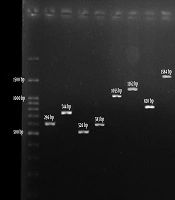
Different types of SCCmec were characterized by specific primers described by Boy et al. (6). SCCmec types were identified by comparing the banding patterns of MRSA to ATCC 10442 (SCCmec type I), N315 (SCCmec type II), 85/2082 (SCCmec type III), MW2 (SCCmec type IVa), and WIS (SCCmec type V), as reference strains. PCR amplification was performed in a volume of 50 mL via EmeraldAmp MAX PCR Master Mix (Takara, Japan) for all PCR reactions. PCR conditions for amplification of the SCCmec elements by thermocycler (Eppendorf co., Hamburg, Germany) were as follows: initial denaturation for 5 minutes at 94°C, 35 cycles of denaturation at 94°C for 40 minutes, annealing at 56°C for 45 seconds, and extension at 72°C for 1 minutes. The final extension was carried out at 72°C for 4 minutes. PCR products were analyzed using electrophoresis on 1% agarose gel. In addition, DNA bands were visualized by staining via ethidium bromide and photographed under UV illumination.
4. Results
In the present study, 189 MRSA isolates were investigated. All MRSA strains, which were positive in terms of the mecA gene, were also phenotypically methicillin resistant. Participants were of both sexes: 39 (20.6%) were female and 150 (79.4%) were male, with the mean age of 39 years (median: 42.1 years, ranging from 11 months to 68 years). The majority of MRSA isolates belonged to the patients in the age group of 20 - 35 years (68.8%). The results of antimicrobial susceptibility patterns of isolates are presented in Table 1.
Table 1.
The Susceptibly Pattern of 189 MRSA Isolates from Burn Patients to 12 Antimicrobial Agentsa
| Antibiotics (Discontent) | Interpretation of Antibiotic Susceptibility Testing | ||
|---|---|---|---|
| Resistant, n (%) | Intermediate, n (%) | Sensitive, n (%) | |
| Ampicillin (10 µg) | 189 (100) | 0 (0) | 0 (0) |
| Vancomycin A | 0 (0) | 0 (0) | 189 (100) |
| Teicoplanin (30 µg) | 0 (0) | 0 (0) | 189 (100) |
| Clindamycin (2 µg) | 144 (78.3) | 4 (2.1) | 41 (21.7) |
| Erythromycin (15 µg) | 144 (78.3) | 0 (0) | 45 (23.8) |
| Amikacin (30 µg) | 163 (86.2) | 6 (3.2) | 20 (10.6) |
| Gentamicin (10 µg) | 149 (78.8) | 0 (0) | 40 (21.2) |
| Tetracycline (30 µg) | 136 (71.9) | 3 (1.6) | 50 (26.5) |
| Rifampicin (5 µg) | 59 (31.2) | 5 (2.7) | 125 (66.1) |
| Linezolid (30 µg) | 0 (0) | 0 (0) | 189 (100) |
| Mupirocin (20 µg) | 51 (27) | 1 (0.5) | 137 (72.5) |
| Quinupristin-Dalfopristin (15 µg) | 33 (17.5) | 0 (0) | 156 (82.5) |
aE- test was used for determination of antibiotic susceptibility testing.
Fortunately, susceptibility to linezolid, teicoplanin, and vancomycin was 100%. All the MRSA strains were inhibited by vancomycin at similar MIC50 and MIC90 of 1 µg/mL. The highest rate of resistance was observed against ampicillin. The drug resistance rate of MRSA to other tested antibiotics was between 17.5% for quinupristin-dalfopristin and 86.2% for amikacin. Antimicrobial susceptibility testing showed that the rate of MDR among our isolates was 100%. Six different patterns of antibiotic resistance were recognized in MRSA isolates, which are given in Table 2.
Table 2.
Distribution of SCCmec Types and Antibiotic Resistance Patterns in MRSA Isolated from Burn Patients
| Resistance Profile | Number of Isolates (%) | SCCmec Type (n, %) | PVL, n (%) | tst, n (%) |
|---|---|---|---|---|
| AP, CD, E, AK, GM, T, RP, MUP, SYN | 25 (13.2) | III (25, 13.2) | (0) | 7 (3.7) |
| AP, CD, E, GM, T, RP, MUP | 26 (13.8) | III (16, 8.5), IV (10, 5.4) | 4 (2.1) | 10 (5.3) |
| AP, CD, E, AK, GM, RP, SYN | 8 (4.2) | III (8, 4.2) | (0) | 0 (0) |
| AP, CD, E, AK, GM, T | 45 (23.8) | III (45, 23.8) | (0) | 12 (6.4) |
| AP, CD, E, AK, T | 40 (21.2) | IV (40, 21.2) | 10 (5.3) | 0 (0) |
| AP, AK, GM | 45 (23.8) | III (41, 21.7), IV (4, 2.1) | 2 (1.1) | 4 (2.1) |
Abbreviations: AP, ampicillin; AK, amikacin; CD, clindamycin; E, erythromycin; GM, gentamicin; MUP, mupirocin; RP, rifampicin; SYN, quinupristin-dalfopristin; T, tetracycline.
The predominant resistance profile among our isolates included resistance to 6 antimicrobial drugs and to 3 antimicrobial drugs, which were common among 31 (41.3%) and 30 (40%) isolates, respectively.
Multiplex-PCR analysis revealed that most isolates harbored SCCmec type III (71.4%) only, followed by SCCmec type IV (28.6%). In other words, other SCCmec types were not identified. All PVL positive isolates (8.5%) belonged to SCCmec type IV. Among 189 isolates analyzed in the present study, 33 (17.5%) harbored tst encoding gene.
5. Discussion
Burn patients are predisposed to several infections and MRSA that, as a major cause of morbidity and mortality, is a challenge for public health (4). Given the continuous changing pattern of antibiotic resistance in MRSA isolates and widespread emergence of MDR-MRSA, it is essential that resistance patterns be evaluated periodically and antibiotic therapy be guided by susceptibility testing (15-17). That is why the accurate and early determination of MRSA is of key importance in the prognosis of infections caused by S. aureus. The prevalence rate of MRSA in the present study was 94.5%. In agreement with our results, Abbasi-Montazeri et al. (18), Namvar et al. (10), and Khosravi et al. (19) reported the rates of 88.6%, 72.7%, and 87.36% for MRSA in burn patients in Iran, respectively. The high prevalence rate of MRSA in burn patients was also reported in Korea (98%) (1), China (98%) (20), Iraqi Kurdistan (88%) (21), and India (78%) (22). Discrepancies in the prevalence of MRSA in different geographic areas can be attributed to poor implementation of standard infection prevention and control programs in burn units. It is worth noting that linezolid, teicoplanin, and vancomycin exhibited a similarly excellent antimicrobial activity in the current study, which is in line with the findings of other studies (10, 18, 23). Mupirocin, as an important agent in the treatment of different types of staphylococcal skin infections, is used for control of MRSA outbreaks. The present study showed that mupirocin resistance phenotype was observed in 27% of MRSA isolates. This finding confirmed previous similar observations by Shahsavan et al. (24) from Tehran, Iran (25%).
Conversely, many other studies from India (25), Greek (26), and Jordan (27) reported low resistance rates of mupirocin among MRSA isolates examined. The high mupirocin resistance rate in burn patients, as demonstrated in the current study, supports the concern that using mupirocin in clinical practice should be revised. Macrolide antibiotics, especially clindamycin, are used as important anti-staphylococcal agents in treatment of wound infections. The results obtained in the current study showed increasing resistance to clindamycin (%78.3) for MRSA isolates, that is in accordance with other studies in Korea (69%) (1) and USA (65%) (28). The high level of clindamycin resistance may be associated with inconsistent use of this antibiotic in clinical practice and community and also constitutive and inducible resistance. The rate of resistance to rifampicin was higher in our study (31.2%) compared to those reported in other studies from Germany (2%) (29) and Iran (5%) (24). In contrast to the results of the present study, high level of resistance to rifampicin was reported from Iraqi Kurdistan (57%) (21). The drug resistance rate of MRSA to gentamicin was 78.8% in the present study that was more common than that reported in Brazil (3.1%) (30), while it was lower than that reported rate from China (98.4%) (20). In line with the findings of the current study, Ronat et al. (31) reported low resistance rate to quinupristin-dalfopristin (12%) in S. aureus isolates from burn-associated bacteremia in an Iraqi burn care unit. The drug resistance pattern of MRSA isolates in the present study was in accordance with the results of Parhizgari et al. (32) and Ko et al. (33) studies. These differences in antibiotic resistance pattern of MRSA isolates reflect different policies for infection control in hospitals, communities, and burn wards as well as treatment protocols of burn patients. Increased frequency of MDR-MRSA is a serious threat to public health. A wide distribution of MDR in the burn unit investigated in the present study confirms similar observations in China (100%) (34), Serbia (83.9%) (35), and Taiwan (75.8%) (36).
The previous studies have demonstrated that SCCmec types I, II, and III are related to HA-MRSA while SCCmec types IV and V are prominent types in CA-MRSA (6, 10). The distribution of SCCmec types among MRSA isolates indicated that SCCmec type III was the prominent type (71.4%) in the current survey. This pattern is comparable to the distribution of SCCmec types among MRSA reported in China (37) and Brazil (30), but differs from that reported by Vazquez et al. in Spain (38). This SCCmec type was previously reported as the most prevalent type in Iran by Japoni et al. (39), Mohammadi et al. (40), and Sadeghi et al. (41). A wide distribution of SCCmec type III emphasizes the nosocomial origin of these strains in burn units. Resistance to non-β lctam antibiotics and MDR pattern among isolates with SCCmec type III was more prevalent than that of SCCmec type IV. These results confirm similar observations reported by Parhizgari et al. (32) and Zetola et al. (42).
In the present study, the gene coding for pvl was found only among MRSA strains that harbored SCCmec type IV. This is contrary to the findings of Rodrigues et al. who stated that none of pvl positive MRSA strains harbored SCCmec type IV (30). The findings of the present study along with those reported in other studies (19) show high prevalence of pvl gene among MSRA strains. These findings emphasize the importance of early diagnosis and treatment of infections caused by MRSA strains harboring pvl gene. A major strength of the study was that it was performed on S. aureus strains isolated from burn patients to determine SCCmec types; however, our study has limitations including the modest sample size and the impossibility of using other methods such as pulsed-field gel electrophoresis (PFGE) and multilocus sequence typing (MLST).
To summarize, the present study revealed a high occurrence of MDR among MRSA isolates, which is a serious concern warning the clinicians. This condition could probably be avoided if prescription of antibiotics and strategies to control MRSA infections are revised. We also confirmed the presence of SCCmec type III along with a high level of MDR in burn patients. Further studies should be carried out to investigate transmission routes and epidemiology of MRSA in burn wards so that infection with MDR MRSA in burn patients can be hopefully controlled.