
1. Background
Nosocomial infections is a major cause of morbidity and mortality in burn patients and are a great concern of global public health in both developing and developed countries. Due to loss of the functional skin barrier, burn patients are prone to general systemic disorder, bacterial colonization and various infections (1).
More than 70% of deaths in burn patients occur due to bacterial infections. It is well established by many published data that Staphylococcus aureus, in particular methicillin resistant S. aureus (MRSA) strains, is one of the most common pathogens and have become increasingly common in burn wounds (1, 2). The first MRSA isolate was reported in 1961 from the UK (3). Since then, studies have revealed a steady increase in the incidence of infections caused by MRSA. Resistance to methicillin is mediated by mecA gene, which is carried within a large heterologous mobile genetic element called Staphylococcal cassette chromosome mec (SCCmec). So far, 11 different types of SCCmecI (SCCmecI-XI) have been classified based on their structural organization and genetic content. SCCmec types I to III are the most prominent types in nosocomial MRSA (4).
During the past several decades, in spite of the introduction of a variety of new therapeutic agents, MRSA strains still show a remarkable ability for rapid dissemination of resistance; to the extent that, currently, one of the threats to public health is the increasing prevalence of multi-drug resistance (MDR) amongst MRSA isolates (5). An increase of resistance not only leads to increased economic burden, but also has limited the treatment options for burn wound infections.
Although, the mechanisms of resistance amongst bacteria are very different and complex, it has been shown that horizontal gene transfer mediated by mobile genetic elements, e.g., plasmids and transposons, contributes to the spread of antibiotic resistance genes amongst bacteria. However, recently it has been well established that spreading multi resistance in MRSA strains are linked to integrons (5, 6). They are widely known for their role in the spreading of MDR amongst both Gram-positive and especially Gram-negative pathogens (7). The basic structures of these elements consists of two conserved segments (5′and 3′-CS) and an internal variable region (VR) that contains gene cassettes encoding antibacterial resistance determinants. All known integrons are composed of genes such as gene that encode an integrase (intI), recombination site (attI), and an outward orientated promoter (Pc), which directs transcription of the captured genes (8). To date, several classes of integrons have been described based on the homology of their integrase genes. Class 1 integrons are the most ubiquitous amongst both Gram-positive and especially in Gram-negative resistant clinical isolates. Class 2 integrons are less common than class 1 and have been frequently reported in Gram-negative bacteria. Other classes of integrons have rarely been reported (6).
It is well established that the combination of genotyping methods helps to describe different MRSA clones and analysis of the dynamics of S. aureus transmission in burn units (9). Despite the fact that SCCmec typing is used only for typing in MRSA isolates, protein A gene of S. aureus (spa typing), as a DNA sequence-based method with moderate discrimination, high throughput and good inter-laboratory reproducibility has emerged as an effective and rapid method for typing of all S. aureus isolates based on the number of tandem repeats and the sequence variation in region X of the protein A gene (8).
2. Objectives
The present study could provide data regarding the understanding of the molecular characterization of MRSA isolates by spa typing; identify different SCCmec types, and also frequency different classes of integron in a referral burn hospital in the capital city of Iran (Tehran).
3. Methods
3.1. Bacterial Strains
Between July 2015 and January 2016, the cross-sectional study was conducted on 106 MRSA isolates collected from burn wound patients who were admitted to a referral burn hospital in Tehran, Iran. Different clinical samples were transported to the laboratory within 4 hours of collection and were processed immediately. Isolation and identification of S. aureus isolates was performed based on conventional microbiological procedures such as colony morphology, Gram staining, growth on mannitol salt agar and production of catalase, coagulase, and DNase. MRSA screening was carried out using a cefoxitin disc (30 µg) on Mueller Hinton agar (Merck, Germany) plates supplemented with 4% NaCl and then confirmed by the PCR amplification of the mecA gene. Confirmed MRSA isolates were stored in Tryptic Soy Broth (TSB; Merck, Germany) containing 20% glycerol at -70°C for molecular investigation.
3.2. Antimicrobial Susceptibility Testing
Susceptibility testing was performed using a panel of 12 antibiotic disks for all isolates by the Kirby-Bauer disk diffusion procedure according to the guidelines of the clinical and laboratory standards institute (CLSI) (10). Antimicrobial drugs obtained from Mast (Mast Diagnostics, Group Ltd, Merseyside UK) were as follows: teicoplanin (TEC 30 µg), penicillin G (PG 10 U), clindamycin (CD 2 µg), erythromycin (E 15 µg), amikacin (AK 30 µg), gentamicin (GM 10 µg), linezolid (LZD 30 µg), mupirocin (MUP 200 µg), rifampicin (RP 5µg), quinupristin-dalfopristin (SYN 15 µg), and tetracycline (T 30 µg). The minimum inhibitory concentration (MIC) for vancomycin was determined by the E-test strips (AB BIODISK, Sweden) method. Multidrug resistance (MDR) was defined as a resistance of MRSA to 3 or more unique antimicrobial drug classes in addition to beta-lactams. The standard reference strain of S. aureus ATCC25923 was used as a quality control (QC) strain in every test run.
3.3. Genomic DNA Extraction
The QIamp DNA Mini Kit (Qiagen GmbH, Hilden, Germany) for genomic DNA extraction were used according to the manufacturer’s instruction. Lysostaphin (Sigma-Aldrich, USA), to a final concentration of 15 µg/mL, was used for cell wall lysis. DNA purity was determined by taking the optical density (OD) of the sample at 280 nm for protein concentration and at 260 nm for DNA concentration with the help of a spectrophotometer. The ratio OD260 /OD280 was calculated and a DNA sample within the range of 1.6 - 2 was considered as pure. Samples above this range were considered contaminated with protein and those below by RNA.
3.4. PCR Assays for Detection of Toxin-Encoding Genes
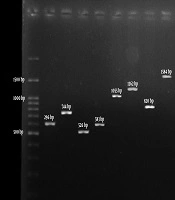
3.5. Multiplex PCR Amplification for SCCmec Typing
Different types of SCCmec were identified by comparing the banding patterns of MRSA to ATCC 10442 (SCCmec type I), N315 (SCCmec type II), 85/2082 (SCCmec type III), MW2 (SCCmec type IVa), and WIS (SCCmec type V), as reference strains (Table 1).
3.6. Spa Typing
Different spa-types were determined by PCR as previously described (8). The primer sequences are listed in Table 1. PCR products were subjected to DNA sequencing of both strands by Macrogen (Seoul, South Korea). The sequences obtained were edited using the Chromas software (Version 1.45, Australia). Edited sequences were assigned to particular spa types according to the guidelines described by the spa typing website (http://www.spaserver.ridom.de).
3.7. Amplification of Integrons
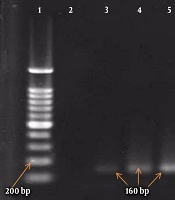
The presence of integron classes in MRSA isolates was investigated by PCR as previously described by Moura et al. (13). The expected amplified products, 280 bp for integron class 1 and 233 bp for integron class 2 were separated on 1% agarose gel (Invitrogen, Carlsbad, CA, USA) in TAE buffer and electrophoresis at 80 V for 1 hour. Bands were visualized using an ultraviolet light (UVI tec, Cambridge, UK) after staining with ethidium bromide (Sigma-Aldrich, USA).
Table 1.
Oligonucleotide Primers Used in This Study
| Target | Primer | Primer Sequence (5′ → 3′) | Product Size (bp) |
|---|---|---|---|
| mecA | F | AGAAGATGGTATGTGGAAGTTAG | 583 |
| R | ATGTATGTGCGATTGTATTGC | ||
| luk-PV | F | TTCACTATTTGTAAAAGTGTCAGACCCACT | 180 |
| R | TACTAATGAATTTTTTTATCGTAAGCCCTT | ||
| tsst-1 | F | TTATCGTAAGCCCTTTGTTG | 398 |
| R | TAAAGGTAGTTCTATTGGAGTAGG | ||
| intI1 | F | CCTCCCGCACGATGATC | 280 |
| R | TCCACGCATCGTCAGGC | ||
| intI2 | F | TTATTGCTGGGATTAGGC | 233 |
| R | ACGGCTACCCTCTGTTATC | ||
| spa | F | AGACGATCCTTCGGTGAGC | Variable |
| R | GCTTTTGCAATGTCATTTACTG | ||
| SCCmec | Fβ | ATTGCCTTGATAATAGCCYTCT | 937 |
| R α3 | TAAAGGCATCAATGCACAAACACT | ||
| F ccrC | CGTCTATTACAAGATGTTAAGGATAAT | 518 | |
| R ccrC | CCTTTATAGACTGGATTATTCAAAATAT | ||
| F 1272 | GCCACTCATAACATATGGAA | 415 | |
| R 1272 | CATCCGAGTGAAACCCAAA | ||
| F 5RmecA | TATACCAAACCCGACAACTAC | 359 | |
| R 5R431 | CGGCTACAGTGATAACATCC | ||
| F | ATCATTAGGTAAAATGTCTGGACATGATCCA | 433 | |
| R | GCATCAAGTGTATTGGATAGCAAAAGC |
3.8. Statistical Analysis
A statistical analysis was performed using the SPSS software for Windows (version 18.0; SPSS Inc., Chicago, IL).
4. Results
A total of 106 MRSA isolates were investigated. Of these isolates, 85 (80.2%) were men and 21 (19.8%) were women. Results of antimicrobial susceptibility testing of the 106 MRSA isolates revealed that all of the isolates were susceptible to vancomycin (MIC50 and MIC90 1 µg/mL), teicoplanin, and linezolid. The most frequent resistance was observed for penicillin (100%), amikacin (83.9%), and erythromycin (84%). The lowest rate of resistance was observed for quinupristin-dalfopristin (19.8%), high-level mupirocin-resistant (31.3%), and rifampicin (37.7%). Antibiotic resistance pattern of 106 MRSA isolates collected from burn patients are presented in Table 2.
Table 2.
Antibiotic Resistance Pattern of 106 MRSA Isolates Collected From Burn Patientsa
| Antibiotics (Disc Content) | Interpretation of Antibiotic Susceptibility Testing | ||
|---|---|---|---|
| R | I | S | |
| Penicillin G, 10 U | 106 (100) | 0 | 0 |
| Vancomycin, 30 µg | 0 | 0 | 106 (100) |
| Teicoplanin, 30 µg | 0 | 0 | 106 (100) |
| Clindamycin, 2 µg | 81 (76.4) | 3 (2.8) | 22 (20.8) |
| Erythromycin, 15 µg | 89 (84) | 1 (0.9) | 16 (15.1) |
| Amikacin, 30 µg | 89 (83.9) | 4 (3.8) | 13 (12.3) |
| Gentamicin, 10 µg | 78 (73.6) | 0 | 28 (26.4) |
| Tetracycline, 30 µg | 87 (82.1) | 0 | 19 (17.9) |
| Rifampicin, 5 µg | 40 (37.7) | 3 (2.8) | 63 (59.4) |
| Linezolid, 30 µg | 0 | 0 | 106 (100) |
| Mupirocin, 200 µg | 33 (31.1) | 0 | 73 (68.9) |
| Quinupristin-dalfopristin, 15 µg | 21 (19.8) | 0 | 85 (81.1) |
aValues are expressed as No. (%).
In total, 97% of the isolates were MDR. The predominant MDR profiles amongst the isolates included resistance to 7 drugs (23.6%), 6 drugs (62.3%), 4 drugs (1.9%), and 3 drugs (12.3%). SCCmec typing showed that 104 (98.1%) of the MRSA isolates harbored SCCmec type III while only 2 (1.9%) MRSA isolates harbored type IV. SCCmec types I, II, V were not detected in any of the MRSA strains.
All MRSA isolates were successfully spa typed and differentiated into 6 different types. The most common spa types were t030 (66%) and t037 (14.2%). Other spa types found in smaller numbers were t065 (9.4%), t1358 (4.7%), t937 (3.8%), and t084 (1.9%). Two isolates PVL-positive belong to spa type t084. Distribution of SCCmec types and spa types in MRSA isolates with different resistance patterns are presented in Table 3.
Table 3.
Distribution of SCCmec Types and spa Types in MRSA Isolates With Different Resistance Patterns
| Resistance Profile | Number of Isolates (%) | SCCmec Type (n) | spa Types (n) |
|---|---|---|---|
| PG, AK, E, T, GM, RP, MUP | 25 (23.6) | III (25) | t030 (20), t037 (5) |
| PG, AK, E, T, CD, GM | 45 (42.5) | III (45) | t030 (29), t037 (9), t065 (7) |
| PG, AK, T, CD, RP, SYN | 13 (12.3) | III (13) | t937 (4), t030 (9) |
| PG, E, CD, GM, MUP, SYN | 8 (7.5) | III (6); IV (2) | t030 (3), t065 (3), t084 (2) |
| PG, AK, E, CD, RP | 2 (1.9) | III (2) | t030 (2) |
| PG, AP, E, CD | 9 (8.5) | III (9) | t030 (3), t037 (1), t1358 (5) |
| PG, AK, T, CD | 4 (3.8) | III (4) | t030 (4) |
Abbreviations: PG, penicillin; CD, clindamycin; E, erythromycin; AK, amikacin; GM, gentamicin; MUP, mupirocin; RP, rifampicin; SYN, quinupristin-dalfopristin; T, tetracycline.
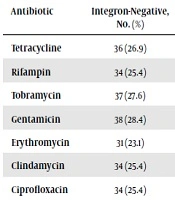
The study revealed the presence of class 1 integron in 58 (54.7%) isolates, while only 4 isolates (3.8%) carried class 2 integron. Co-existence of class 1 and 2 integrons was not detected and none of the isolates were positive for class 3 integron. Among the isolates carrying class 1 integron, spa types t030 (n = 42, 72.4%), t037 (n = 10, 17.2%), and t065 (n = 6, 10.4%) were more prevalent while all isolates carrying class 2 integrons belonged to spa type t030.
5. Discussion
The incidence of infections due to S. aureus, particularly MRSA strains, in burn patients is increasing worldwide (1, 5). Due to limited data on the distribution of MRSA genotypes isolated from burn patients in Iran, the present study was designed to provide this needed data by investigating MRSA isolated from burn patients in a referral burn hospital in Tehran.
With regards to the continuous changing pattern of antibiotic resistance in MRSA isolates, determination of antibiotic resistance pattern for epidemiological and clinical purposes is an important principle (5). As presented in Table 1, the MRSA isolates were highly resistant to penicillin (100%), erythromycin (84%), amikacin (83.9%), and tetracycline (82.1%), respectively. The antibiotic resistance pattern of MRSA isolates in the present study was parallel with the findings of Parhizgari et al. (14) and Ko et al. (15). Furthermore, similar to other study (11), the susceptibility results revealed that vancomycin, teicoplanin, and linezolid had good activity against MRSA infections. A previous study showed the emergence of MRSA with increased resistance to vancomycin in Iran (11). In line with our findings, Yali et al. (1) and Bahemia et al. (16) showed that none of the S. aureus isolates were resistant to vancomycin.
The results may reflect the appropriate prescription of these antibiotics and the successful implementation of surveillance and infection control programs in health care settings. Mupirocin is usually used for the treatment of different types of staphylococcal skin infections. The rate of high-level mupirocin-resistant in this study was 31.1%, that is in accordance with the results of another study from Iran done by Shahsavan et al. (17) (25%) but is higher than what was reported in India (5% (18), Greece (1.6%) (19), and Jordan (2.6%) (20). Unfortunately, in the present study, resistance to mupirocin was relatively high, which could be attributed to the inappropriate use of mupirocin in treatment of skin and soft tissue infections and elimination of MRSA nasal carriers among patients and medical staff. Clindamycin is an effective and reliable agent for the treatments of penicillin-allergic patients. The present study demonstrated a high level of resistance to clindamycin (76.4%), that is similar to the studies of Korea (69%) (2) and USA (65%) (21). The reason for the high rate of clindamycin resistance in this study could be attributed to the extensive use of this antibiotic in the clinic. Furthermore, 73.6% of our isolates were resistant to gentamicin, which was consistent with the findings reported by Yali et al. (1), Abbasi-Montazeri et al. (22), and Babakir-Mina et al. (23). Our results showed that 37.7% of MRSA isolates were resistant to rifampicin. Other studies have reported different rates of resistance to rifampicin in burn units which varies from 57% in Iraqi Kurdistan (23) to 2% in Germany (24).
The observation of MDR in 97% of the MRSA in this study confirms the huge challenge of MDR in public health. Similar high prevalence of MDR among MRSA have been reported amongst burn-injury patients in China (100%) (6) and Taiwan (75.8%) (5).
SCCmec type III, detected in 98.1% of the MRSA, was the dominant SCCmec type in this study and was similar to results reported previously by Parhizgari et al. from Iran (14) and Brazil (25) where high frequency of SCCmec type III was prevalent. As stated by other investigators, SCCmec types I, II, and III are related to hospital acquired-MRSA (HA-MRSA) while SCCmec types IV and V are prominent types in community acquired-MRSA (CA-MRSA) (26). The high frequency of SCCmec type III in our study emphasizes the nosocomial origin of these strains in the burn unit. SCCmec type IV was identified in 1.9% of the isolates that were also PVL- positive. Based on the previous literature, PVL prevalence varies widely amongst nations, ranging from 2% to 35% among MRSA strains (27).
The genetic diversity of the MRSA isolates was evaluated using spa typing. The common spa types in MRSA isolates vary in different geographic regions (26). Our analysis of 106 MRSA clinical isolates using spa typing revealed 6 different spa types with t030 detected in 66% of the isolates as the most prevalent spa type. Spa type t030 was previously reported in another conducted study done by Japoni-Nejad et al. (28) from Iran and is in agreement with findings of Chen et al. (29) who suggested that strains with t030 was successfully established as the dominant spa type in hospitals in China. In contrast to other reports from Iran (14), Saudi Arabia (30), and Malaysia (31), our data demonstrated low frequency of t037 (14.2%) with variability in resistances pattern, among MRSA isolated from burn-injury patients.
In this study, t065 was detected in 9.4% of the isolates. Similarly, Shakeri et al. (32), also reported spa type t065 at low frequency (1%). Sangvik et al. (33) reported that t012 (8.8%), t084 (5.6%), and t065 (5.2%) were the most common spa types identified in 728 persistent nasal carriers in North Norway. Other spa types identified with low frequency in this study included t1358 (4.7%), t937 (3.8%), and t084 (1.9%). The distribution of these spa types was in agreement with results of the previous surveys in Iran (28, 32). Although t937 was reported more in clinical S. aureus strains, there is evidence that it can be observed in methicillin sensitive S. aureus (MSSA) and as well as in strains recovered from animals (34). Additionally, the observed spa type distribution of MRSA strain isolates in our study mirrored high genetic diversity of MRSA in burn patients.
As previously stated, integrons are widely known for their role in the dissemination of antibiotic resistance amongst pathogenic bacteria. In this study, class 1 and 2 integrons were detected in 58 (54.7%) and 4 isolates (3.8%) isolates, respectively. These results are in agreement with results of the previous studies in which the detection rate of integron class 1 was more than that for integron class 2 (6, 35). Xu et al. (6)in China, reported class 1 integron in 53% of the S. aureus isolates. In contrast to our results, Guney et al. (35) from Turkey revealed that none of the isolates harbored class 1 integron. The high prevalence of class 1 integron in our study strongly supports suggestions that class 1 integron may serve as reservoirs of antimicrobial resistance in MRSA strains.
In conclusion, the present study investigated antibiotic susceptibility data, integron frequency and genetic background MRSA in burn patients that revealed vancomycin, teicoplanin, and linezolid were efficient therapeutic options for MRSA infections. We also confirmed the presence of t030, t037, t065, t1358, t937, and t084 with a high level of MDR in burn-injury patients. High occurrence of MDR in burn units has potentially catastrophic consequences. High frequency of integron class 1 emphasizes that antibiotic resistance remains a major problem. Accordingly, infection control measures to reduce the spread of multi-resistant strains and also halt the rapid evolution of antibiotic resistance must be prioritized in burn units in Iran.