
Full Text
Full text is available in PDF
Archives of Clinical Infectious Diseases
Infectious Diseases and Tropical Medicine Research Center, SBUMS
Authors
Helicobacter pylori (H. pylori) has several virulence factors such as vacA and cagA genes. Mosaicism in vacA alleles with two distinct families of vacA signal sequences (s1, s2) and two distinct families of middle region alleles (m1, m2) is reported. The aim of this study was determination of H. pylori vacA allelic types in Chaharmahal and Bakhtiyari province, Iran and their correlation with six different gastroduodenal diseases.
This cross-sectional descriptive study was performed on 200 antral gastric biopsy specimens that were obtained from patients undergoing upper gastrointestinal tract endoscopy in Hajar Hospital of Shahrekord. Initially, H. pylori strains were identified by rapid urease test (RUT) and ureC primers, and thereafter, we used seven specific primers for detection of vacA genotypes. Statistical analyses were used to find their relationship to gastric disorders.
The frequency of the vacA alleles, s1a/m1a, s1a/m1b, s1a/m2, s1b/m1a, s1b/m1b, s1b/m2, s1c/m1a, s1c/m1b, s1c/m2, s2/m1a, s2/m1b and s2/m2 were respectively, 27(16.46%), 8(4.87%), 45(28.43%), 7(4.26%), 5(3.04%), 10(6.09%), 12(7.31%), 4(2.43%), 18(10.97%), 6(3.65%), 0 and 22(13.41%).
s1a/m2 strains were the most prevalent strains in this region and there was a considerable relationship between s1a/m1a, s1a/m2, s2/m2 and s1c/m1a with some gastric disorders. As the findings are different from other regions of the world, extended molecular epidemiologic investigations are recommended in other cities of Iran.
© 2011, Author(s). This open-access article is available under the Creative Commons Attribution 4.0 (CC BY 4.0) International License (https://creativecommons.org/licenses/by/4.0/), which allows for unrestricted use, distribution, and reproduction in any medium, provided that the original work is properly cited.
Pajavand H, Alvandi A, Mohajeri P, Bakhtyari S, Bashiri H, et al. High Frequency of vacA s1m2 Genotypes Among Helicobacter pylori Isolates From Patients With Gastroduodenal Disorders in Kermanshah, Iran. Jundishapur J Microbiol. 2015;8(11):e25425. doi: https://doi.org/10.5812/jjm.25425
Ghotaslou R, Rafeey M, Milani M, Farokhi N, Ghojazadeh M. Association between Helicobacter pylori, cagA, and vacA Status and Clinical Presentation in Iranian Children. Inn J Pediatr. 2013;23(5):. doi:
Khodadadi P, Kargar M, Bijanzadeh M, Doosti A, Aghaei S. Association of cagA, cagC, virB2, and vacA Subtypes of Helicobacter pylori with Adenocarcinoma Development in Iranian Patients. Jundishapur J Microbiol. 2020;13(7):e101275. doi: https://doi.org/10.5812/jjm.101275
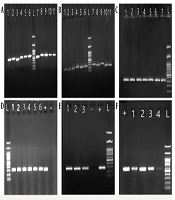
Samimi R, Samimi A, Ahmadi A, Hadadzadeh H, Khakpour M, et al. Studying the Prevalence of Helicobacter pylori Genotypes vacA, cagA, babA, sabA, and oipA in Patients with Gastrointestinal Problems. J Inflamm Dis. 2025;29(3):e161491. doi: https://doi.org/10.69107/jid-161491
Talimkhani A, Mashak Z. Prevalence and Genotyping of Helicobacter pylori Isolated From Meat, Milk and Vegetable in Iran. Jundishapur J Microbiol. 2017;10(11):e14240. doi: https://doi.org/10.5812/jjm.14240
Last Update: 1 month ago
Last Update: 1 month ago
Last Update: 1 month ago
Last Update: 5 days ago
Last Update: 1 day ago
Last Update: 2 days ago