1. Background
Postactivation potentiation (PAP) refers to an initial muscular activation with moderate/high load intensity, which results in acute improvements in muscle power and performance in subsequent explosive activities. Thus, PAP is used to elaborate physical training sessions or prior competitions due to their potential positive effects on athletic performance (1, 2).
The main mechanisms suggested responsible to improve physical performance are the phosphorylation of the myosin regulatory light chain (3, 4), and this effect occurs in greater magnitude in type II muscle fibers, which consequently favors the performance in high intensity and short duration activities (1).
However, some controversial results are observed, with some studies indicating no significant improvements on sprint performance (5-9). Many factors such as muscle fiber type (10), training experience (11), gender (12) and muscle strength level (13) can influence the individual responsiveness to PAP. In addition, evidence indicates that manipulation of the PAP protocol (intensity load, volume, rest interval) exerts a significant influence on the subsequent performance response (14).
On the other hand, an important factor is the transfer of the PAP stimulus to specific sports muscle actions. In this context, most studies investigate the influence of PAP on lower limbs and evaluate the performance improvement through vertical jumps (12, 15-27). However, a smaller number of studies investigated the effects of PAP on sprint performance, with results expressed at different distances (5-7, 13, 28-34).
Short sprint is considered as an important physical ability that determines the success of various sports modalities. Therefore, the current study aimed at conducting a systematic review on the evidence and performing a meta-analysis to obtain information about the PAP effect on the performance of short sprints.
2. Methodology
2.1. Search Strategy
A systematic review and meta-analysis of randomized, controlled studies were conducted and evaluated the PAP effect on short sprint performance. The search was performed in the following databases: PubMed, Web of Science, Cochrane, and Science Direct. The following keywords were searched: “postactivation potentiation”, “sprint”, “complex training and sprint”. The search was conducted in November 2016. The systematic review was not limited to specific years.
2.2. Inclusion and Exclusion Criteria
The studies considered eligible based on the following inclusion criteria: (i) randomized, controlled studies; (ii) peer-reviewed and published in English; (iii) used the running sprint as a performance test.
The adopted exclusion criteria were (i) sprint test greater than 40 meters; (ii) PAP performed in upper limbs; (iii) PAP performed in isometric exercises; (iv) PAP performed in jumping exercises; (v) PAP performed using isokinetic equipment; (vi) PAP performed using a vibratory platform; (vii) load intensity less than 70% of 1RM (1-repetition maximum); (viii) rest interval of less than 4 minutes between the PAP and the sprint test.
2.3. Studies Selection
One of the researchers searched the databases and excluded the duplicate articles. The evaluation of the titles and abstracts was done by 2 independent researchers in which they selected the articles pertinent to the theme of the study. The same researchers performed a complete reading of the articles and selected the eligible ones based on the inclusion and exclusion criteria. In addition, the cited references from eligible studies were also analyzed to identify relevant studies not found in the search. Disagreements in the inclusion and exclusion of studies among the researchers were resolved by consulting a 3rd reviewer.
2.4. Data Extraction
Two independent researchers did the data extraction. The extracted data included (i) study design; (ii) number of subjects; (iii) age; (iv) sets and repetition in PAP protocol; (v) intensity load in PAP protocol; (vi) rest interval between PAP protocol and sprint test; (vii) distance from the sprint test; (viii) mean ± standard deviation (SD) of sprint time. Disagreements among the researchers on data extraction were resolved by consensus.
2.5. Statistical Analysis
The sprint time data (mean ± SD) of the selected studies were analyzed using the OpenMeta (Analyst)® program. The heterogeneity between the studies was assessed by the Cochrane Q-test and the I2 inconsistency test. Due to the low heterogeneity, a fixed effect model was used for the analysis. Four meta-analyses were performed based on the final sprint distance: (i) up to 10 meter; (ii) 11 to 20 meter; (iii) 21 to 30 meter; (iv) 31 to 40 meter. Data were expressed as weighted mean differences (WMD) between the groups with 95% confidence interval (95% CI). Level of significance was P < 0.05.
3. Results
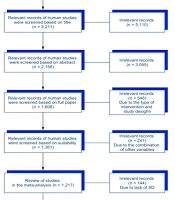
Figure 1 illustrates the flowchart of the excluded and included studies in the current systematic review. The search strategy identified 1859 records in the searched databases (PubMed, Web of Science, Cochrane, and Science Direct). After an initial reading of titles and abstracts, 35 relevant studies were selected. They were thoroughly read and according to the inclusion/exclusion criteria, 15 studies were selected. In the current meta-analysis, 11 studies were included, which presented mean ± SD data for sprint time.

Figure 1.
Flowchart of the Included Studies
3.1. Study Characteristics
Table 1 presents the characteristics and results of each study included in the current systematic review. The studies were published from 2005 to 2016. The included studies (n = 15) constitute of totally 203 subjects (PAP condition (n = 203) and control (n = 203). All of the studies evaluated males aged 16 to 25 years. The studies presented data of athletes from sports of collective modality (5-7, 9, 13, 22, 28-34), athleticism (21, 35), and resistance trained subjects (8, 9).
Table 1.
Results of the Studies on Short Sprint Performance of Postactivation Potentiation
| No. | Author, y | Subjects (Sports Modality) | Age | PAP Protocol | Results | |||
|---|---|---|---|---|---|---|---|---|
| Set × Repetitions | Load Intensity | Rest Interval, min | Distance (Sprint), m | |||||
| 01 | Bevan et al. (2010) | 16 males (rugby) | - | 1 × 3 | 91% (1RM) | 4, 8, 12, 16 | 5 and 10 | Decrease in the sprint time -5 and 10 m |
| 02 | Chatzopoulos et al. (2007) | 15 males (amateur team game players) | 22.0 ± 2.0 | 1 × 10 | 90% (1RM) | 5 | 30 | Decrease in the sprint time - 10 and 30 m |
| 03 | Crewther et al. (2011) | 9 males (rugby) | 20.1 ± 0.9 | 1 × 3 | 3RM | 4, 8, 12, 16 | 10 | ND in sprint time |
| 04 | Duncan et al. (2014) | 10 males (rugby) | 25.2 ± 5.02 | 1 × 3 | 90% (1RM) | 4 | 30 | ND in sprint time |
| 05 | Evetovich et al. (2015) | 7 males (soccer) | 20.4 ± 1.6 | 1 × 3 | 3RM | 8 | 36.6 | Decrease in the sprint time |
| 06 | Lim et al. (2013) | 12 males (sprinters) | 22.4 ± 3.2 | 1 × 3 | 90% (1RM) | 4 | 30 | ND in sprint time |
| 07 | Low et al. (2015) | 16 males (soccer) | 17.0 ± 0.6 | 1 × 3 | 91% (1RM) | 4 | 35 | Decrease in the sprint time |
| 08 | Mcbride et al. (2005) | 15 males (soccer) | 20.8 ± 1.0 | 1 × 3 | 90% (1RM) | 4 | 40 | Decrease in the sprint time -40 m, ND in the sprint time -10 and 30 m |
| 09 | Okuno et al. (2013) | 12 males (handball) | 18.7 ± 1.7 | 1 × 5, 1 × 3, 5 × 1 | 50%, 70% and 90% (1RM) | 5 | RSA 6 × 30, (15 + 15) | Improved best sprint time, Improved mean sprint time, ND fatigue |
| 10 | Rahimi (2007) | 11 males (soccer) | 22.4 ± 1.0 | 2 × 4 | 70% and 85% (1RM) | 4 | 40 | Decrease in the sprint time |
| 11 | Seitz et al. (2014) | 13 males (rugby) | 18.3 ± 0.9 | 1 × 3 | 90% (1RM) | 7 | 20 | Decrease in the sprint time |
| 12 | Till et al. (2009) | 12 males (soccer) | 18.3 ± 0.72 | 1 × 5 | 5RM | 4 | 20 | ND in the sprint time |
| 13 | Vanderka et al. (2016) | 12 males (track and field) | 16 - 18 | 2 × 6 | Maximum Power | 6 | 40 | ND in the sprint time |
| 13 males (soccer) | 17 - 19 | |||||||
| 14 | Wyland et al. (2015) | 20 males (resistance trained) | 23.3 ± 4.4 | 5 × 3 | 85% (1RM) | 4 | 5 × 9.1 | Decrease in sprint time - PAP with elastic band |
| 15 | Yetter et al. (2008) | 10 males (football, weightlifting, and track and field) | 22.3 ± 0.8 | 1 × 5, 1 × 4, 1 × 3 | 30%, 50% and 70% (1RM) | 4 | 40 | Decrease in sprint time |
Abbreviations: ND, No Significant Difference; RM, Repetition Maximum.
The PAP protocol characteristics of the studies were constituted of 1 to 5 sets and 1 to 10 repetitions. The studies used the load intensity from 70% to 91% in 1RM (6, 8, 13, 28-35). Two studies (5, 22) used the load intensity of 3RM, and one study (7) used 5RM.
Okuno et al., (33) and Yetter et al., (31) used the progression of the load intensity (30% to 90% of 1RM) between the sets. Vanderka et al., (9) used the load intensity at the individual maximum power output. The rest interval between the PAP and the sprint test ranged from 4 to 16 minutes. The total distance covered in the sprint test ranged from 5 to 40 meters in a straight line. Only 1 study (33) evaluated the best sprint time of 30 meters with a change of direction (15 + 15 meters) in a repeated sprint protocol.
3.2. Meta-Analysis
Six studies evaluated the sprint time in the final distance of up to 10 meter (7, 8, 22, 28, 30, 35). In the study by Bevan et al. (32), sprint time data were included at distances of 5 and 10 meters. Till and Cooke (7) presented the sprint time in individuals with greater (n = 6) and lower muscular strength level (n = 6), according to the 5RM test. The study by Wyland et al., (35) included data from traditional squat exercises (n = 20) and squat exercises with an elastic band (n = 20). The PAP had a positive effect (P = 0.001) on the reduction of sprint time, compared with the control condition, with a WMD value of -0.031 seconds (95% CI: -0.050, -0.012). No heterogeneity (I2 = 0, P = 0.944) was observed between the studies (Figure 2A).

Figure 2.
Forest Plot for Sprint Time in the Final Distance of Up to 10 Meters (A) and 11 to 20 Meters (B)
Three studies evaluated the sprint time in the final distance of 11 to 20 meter (7, 8, 13). Till and Cooke (7) presented the sprint time in subjects who had greater (n = 6) and lower strength levels (n = 6), according to the 5RM test. The study by Seitz et al., (13) included data from squats (n = 13) and power clean (n = 13) exercises. The PAP had a positive effect (P = 0.021) on the reduction of sprint time compared with the control condition, with a WMD value of -0.048 seconds (95% CI: -0.089, -0.007). No heterogeneity was observed (I2 = 24.35%, P = 0.252) between the studies (Figure 2B).
Four studies evaluated the sprint time in the distance of 21 to 30 meter (8, 28, 30, 33). The PAP had a positive effect (P < 0.001) on the reduction of sprint time compared with the control condition, with a WMD value of -0.060 seconds (95% CI: -0.094, -0.026). No heterogeneity was observed (I2 = 0%, P = 0.553) between the studies (Figure 3A).

Figure 3.
Forest Plot for Sprint Time in the Final Distance of 21 to 30 Meters (A) and 31 to 40 Meters (B)
Four studies evaluated the sprint time in the final distance of 31 to 40 meter (22, 28, 29, 34). The study by Rahimi et al. (29), included the data of PAP with load intensities of 70% of 1RM (n = 11) and 85% of 1RM (n = 11). The PAP had a positive effect (P < 0.001) on the reduction of sprint time compared with the control condition, with a WMD value of -0.109 seconds (95% CI: -0.141, -0.077). No heterogeneity was observed (I2 = 0%, P = 0.195) between the studies (Figure 3B).
4. Discussion
The current study aimed at performing a systematic review and meta-analysis to determine the effectiveness of PAP on short sprints performances. The main finding was that PAP significantly reduced sprint time compared with the control condition.
The results of the current study corroborated with another meta-analysis (36) that indicated an overall moderate effect in sprint activities after PAP. However, the current study expanded these findings by showing that PAP increased short sprint performance considered essential in several sports modalities.
Sprint performance can be represented in 3 phases: (a) acceleration, (b) maximum speed, and (c) deceleration (37). The acceleration phase can be subdivided into initial (0 to 12 meter) and main (12 to 35 meter) (38); thus, the ability to produce high levels of muscular strength/power at the beginning of the sprint is important to increase acceleration and short sprint performance (39).
Evidence indicates a moderate to high correlation between the maximum muscle strength and power with short sprint performance (40-43). Wisloff et al., (41) observed a high and moderate correlation between muscle 1RM strength in back squat exercises with sprint time at distances of 10 meters (r = 0.94) and 30 meters (r = 0.71). In this sense, strategies that acutely enhance muscle strength and power capacity can affect the performance of short sprints.
The current study data indicated that PAP was an efficient preconditioning method to increase acceleration capacity and reduce sprint time at distances 0 to 10 meter (WMP = -0.031 seconds), 11 to 20 meter (WMP = -0.048 seconds), 21 to 30 meter (WMD = -0.060 seconds), and 31 to 40 meter (WMD = -0.109 seconds). The improvement of short sprint performances after PAP may be related to an interaction of physiological and neural mechanisms, such as phosphorylation of the regulatory myosin light chain (4) and the increase of high-threshold motor units recruitment (11, 44, 45).
The manipulation of PAP protocols such as volume (sets and repetitions), intensity, load, and rest interval exerts influence on the subsequent athletic performance (14). According to the studies that observed positive effect of PAP on the short sprint performance (13, 22, 28-32, 34, 35), the exponential effect in the majority of the studies was a single set of 3 repetitions, performed at high load intensity (~90% 1RM) and rest interval between 4 and 8 minutes in back squat exercise. This finding is the important information for strength and conditioning coaches to prescribe PAP protocol prior to short sprints activities.
The current meta-analysis had some limitations that should be addressed. A small number of studies included the analysis of different sprint distances. Additionally, some of the included studies had small samples sizes. The major strength of the study was that the majority of studies included evaluated athletes.
Conclusively, the current systematic review and meta-analysis provide evidence that PAP induced positive effects on short sprint performance. Based on the practical applications, PAP can be an interesting, intense strategy to potentiate athletic performance if prescribed by strength and conditioning coaches before activities that involve short sprints.