
Full Text
Full text is available in PDF
Asian Journal of Sports Medicine
Sports Medicine Research Center, TUMS
Authors
Low Back Pain (LBP) is one of the most prevalent causes of disability not only in the general population but also in athletes. Despite a large number of self-reported back specific disability questionnaires, there is no specific, well documented, outcome measure for athletes suffering from back pain.
This study aimed to identify the main descriptive themes representing functional disability in athletes due to LBP.
We conducted a qualitative study using in-depth interviews to characterize the experiences of athletes with LBP. Twenty athletes with LBP were recruited and the main descriptive elements of their LBP related disability were extracted. Then a preliminary questionnaire using these themes was proposed.
The main disability indicators were pain intensity; stretching exercises, strengthening exercises, sport specific skills, back range of motion (ROM), sitting, walking, sleep patterns, self-care, and recreational activities, fear of pain and avoidance behavior, and changes in sexual activity.
The findings of this study suggest that apart from non-sports items, some sport related items should be included in the assessment of LBP disability levels in athletes. Our results have also been organized as a preliminary LBP disability questionnaire for athletes.
© 2014, Author(s). This open-access article is available under the Creative Commons Attribution 4.0 (CC BY 4.0) International License (https://creativecommons.org/licenses/by/4.0/), which allows for unrestricted use, distribution, and reproduction in any medium, provided that the original work is properly cited.

Mortazavi J, Zebardast J, Mirzashahi B. Low Back Pain in Athletes. Asian J Sports Med. 2015;6(2):e24718. doi: https://doi.org/10.5812/asjsm.6(2)2015.24718

Corkery MB, O’Rourke B, Viola S, Yen S, Rigby J, et al. An Exploratory Examination of the Association Between Altered Lumbar Motor Control, Joint Mobility and Low Back Pain in Athletes. Asian J Sports Med. 2014;5(4):e24283. doi: https://doi.org/10.5812/asjsm.24283
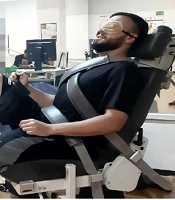
Tabatabaei SM, Moghadas Tabrizi Y, Minoonejad H. Comparison of Dynamic Balance and Ankle Proprioception in Male Athletes with and Without Non-specific Chronic Low Back Pain. J Motor Control Learn. 2025;7(3):e161829. doi: https://doi.org/10.5812/jmcl-161829

Bagheri Nesami M, Mohseni Bandpey M. Prevalence and Characteristics of Low Back Pain in Secondary School Children (Mazandaran- Iran). J Kermanshah Univ Med Sci. 2007;11(1):e81878. doi:
Ehsani F, Arab AM, Fatemy E. The relationship between abdominal muscle activity and pain, disability and fear of movement during standing postural tasks in females with chronic nonspecific low back pain. koomesh. 2016;18(2):e151133. doi:
Last Update: 1 week ago
Last Update: 1 week ago
Last Update: 1 week ago
Last Update: 1 hour ago
Last Update: 2 days ago
Last Update: 5 days ago