
1. Background
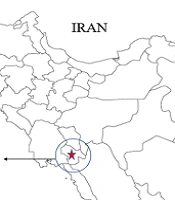
Scorpions are nocturnal arachnids with worldwide distribution from tropical to temperate, including deserts, savannas, tropical forests, and mountains over 5500 m in altitude, and the intertidal areas, and because they attack humans and are considered a threat to their lives (1, 2). Scorpions are of various lengths and sizes, ranging from 13 to 220 mm, and their morphologic structures are easily identifiable (3). Scorpion accumulation is high in the subtropical areas with a 23 - 38 geographical width bearing. They would get less variety as we go towards the poles and smaller (in size) as we go towards the tropical areas (1). Although the annual number in the world is estimated at 1 million, actual scorpion-stinging statistics are unknown (4). Only in Mexico, 150,000 cases of scorpion stings are reported yearly, of which nearly 800 - 1,000 people die, and more than 70% of them belong to 4-6-year-old children (5). According to the type of climate and weather, especially the arthropod fauna of scorpions, Iran is very rich (6). In Iran, 32 scorpion species belong to three families (7). In Iran, more than 100 thousand people annually, more than 75% of children suffer from a scorpion sting. But, only about 36 thousand cases per year are reported to be at least 7 - 60 leading to death (8). In America, about 13 - 10 thousand cases per year of scorpion stinging are reported, but only four deaths due to scorpion stinging occur every year (9). In Khuzestan province, the fourth cause of death is a scorpion sting. In this region, 25,000 cases of scorpion stings happen annually, and 95% of deaths occur due to scorpion bites from Hemiscorpios lepturus (10-12). The last comprehensive report and documentary on the Iranian scorpion, done by Dehghani and Fathi, presents a review of previous reports of scorpions in 18 genera, 29 species and subspecies, and three families 5 Buthidae, Scorpionidae, and Liochelidae reported (12). Studies and reports of scorpion species diversity and stings in Kohgiluyeh and Boyer Ahmad provinces indicate the high importance of this problem in this province (13, 14). Considering the different environmental and climatic conditions of Lendeh county, the reported cases of scorpion stings from it, and the lack of studies on identifying scorpions found in this county, the present study was conducted. The research results can be used in the prevention, control, and treatment programs and for research purposes in Iran (Figure 1).

Figure 1.
Location of Kohgiluyeh and Boyer-Ahmad province and Lendeh county
2. Methods
This is a descriptive cross-sectional study involving scorpions from different areas of Lendeh county. Scorpion capture was done according to the region's climatic conditions in the summer of 2020. Then, to increase the sampling geographical coverage and thus increase the maximum identification of species in the region, the whole city by considering factors such as climatic conditions, temperature, humidity, and geographical factors such as altitude, vegetation status, soil type, rainfall and geographical location (north, south, east, west, and center) were divided into five regions. Then, 5 villages (Barmeh Sabz, Sar-Asiab, Qiam, Idenak, Mugarmoun) were selected as sampling stations based on region division. Due to scorpions' nocturnal activity and their daily rest in permanent and temporary shelters, we captured scorpions using ultra-violet (UV) light, pitfall traps, and hand-catching methods under stones in different areas such as agricultural lands, hills, mountains, etc. It was performed for two hours at night and two hours at sunset. The collected scorpions were transferred to plastic containers with 70% ethanol and glycerin (to keep the scorpion soft), and after coding, the required information, including area name, place of hunting, type of scorpion (digger/non-digger), geographical location, village name, temperature, etc. First, all data were recorded in researcher-made questionnaires and then analyzed using descriptive statistics. All specimens were transferred to the entomology and parasitology laboratory of Behbahan Faculty of Medical Sciences to determine the species and were identified and determined using a stereomicroscope and valid diagnostic keys based on comparing morphological characteristics.
3. Results
The findings showed that five species belonging to two families (Buthidae and Liochelidae) were identified. Mesobuthus eupeus (n = 30; 50.8%) was the dominant species in Lendeh county. Other identified species included Hemiscorpios lepturus (n = 16; 27.1%), Compsobuthus matthiesseni (n = 10; 16.9%), Simonoides farzanpay (n = 2; 3.3%), and Hottentata schach (n = 1; 1.6%). Other findings of the study are given in Tables 1 , 2 and 3 in more detail below.
Table 1.
Frequency of Scorpions Caught in the Lendeh According to the Place of Collection a
| Location | Species | |||||
|---|---|---|---|---|---|---|
| Mesobuthus eupeus | Hemiscorpios lepturus | Compsobuthus matthiesseni | Simonoides farzanpay | Hottentata schach | Total | |
| Mugarmoun | 7 (11.86) | 7 (11.86) | 6 (10.16) | 0 (0) | 0 (0) | 20 (33.89) |
| Barmeh Sabz | 7 (41.17) | 8 (47.05) | 0 (0) | 2 (11.76) | 0 (0) | 17 (28.81) |
| Idenak | 9 (75) | 0 (0) | 3 (25) | 0 (0) | 0 (0) | 12 (20.33) |
| Qiam | 3 (50) | 1 (16.33) | 1 (16.33) | 0 (0) | 1 (16.33) | 6 (10.16) |
| Sar-Asiab | 4 (100) | 0 (0) | 0 (0) | 0 (0) | 0 (0) | 4 (6.77) |
| Total | 30 (50.84) | 16 (27.11) | 10 (16.94) | 2 (3.38) | 1 (1.69) | 59 (100) |
Abbreviations: No., number of samples; %, percentage of samples.
a Values are expressed as No. (%).
Table 2.
Frequency of Scorpions Caught in Lendeh County According to the Gender a
| Species | Gender | |
|---|---|---|
| Male | Female | |
| Mesobuthuseupeus | 11 (36.66) | 19 (63.34) |
| Hemiscorpioslepturus | 1 (6.25) | 15 (93.75) |
| Compsobuthusmatthiesseni | 4 (40) | 6 (60) |
| Simonoidesfarzanpay | 0 (0) | 2 (100) |
| Hottentataschach | 0 (0) | 1 (100) |
| Total | 16 (27.11) | 43 (72.89) |
a Values are expressed as No. (%).
Table 3.
Frequency of Scorpions Caught in Lendeh County According to the Time and Location of the Catch a
| Species | Capture Time | Capture Location | |||||
|---|---|---|---|---|---|---|---|
| Day | Night | Agriculture Lands | Gardens | Hills | Mountains | Other Places | |
| Mesobuthuseupeus | 21 (70) | 9 (30) | 14 (46.6) | 6 (20) | 4 (13.3) | 4 (13.3) | 2 (6.6) |
| Hemiscorpioslepturus | 11 (68.8) | 5 (32.2) | 8 (50) | 4 (25) | 1 (6.2) | 1 (6.2) | 2 (12.5) |
| Compsobuthusmatthiesseni | 8 (80) | 2 (20) | 5 (50) | 2 (20) | 0 (0) | 2 (20) | 1 (10) |
| Simonoidesfarzanpay | 0 (0) | 2 (100) | 1 (50) | 1 (50) | 0 (0) | 0 (0) | 0 (0) |
| Hottentataschach | 1 (100) | 0 (0) | 0 (0) | 0 (0) | 0 (0) | 1 (100) | 0 (0) |
| Total | 41 (69.5) | 18 (30.5) | 28 (47.5) | 13 (22) | 5 (8.5) | 8 (13.5) | 5 (8.5) |
a Values are expressed as No. (%).
4. Discussion
Determination and faunistic study of scorpions native to each region of our country because the preparation of the relevant antidote of particular importance and the necessity arises. Like most previous studies in Iran, the Mesobuthus eupeus species dominate the region. This species is widely distributed in Iran, and even in most studies of scorpion fauna, it has been reported and has more location and ecological diversity than other species. M. eupeus, due to the non-digger, is adapted to living with humans and has not been reported deaths or stings from this species, and probably a safe species (1, 13, 15). Studies were performed on the distribution of Iran's scorpion species, M. eupeus of Gonabad (29%), Hormozgan (23.7%), Shiraz (84.9%), and the Persian Gulf islands (13.5%) have been reported (15-17). Hemiscorpios lepturus species was observed in three villages (Barmeh Sabz, Qiam, Mugarmoun); this species is a very important scorpion in Iran and the main cause of deaths from stings in the country (18). Due to the delicate and short bites of this species, it initially does not pain substantially; for this reason, the patient does not refer to the medical centers. After many days, leads to acute complications such as tissue necrosis and hemolysis that eventually cause death (16). The prevalence of Compsobuthus matthiesseni species in the present study was similar to that of other studies in Iran (2, 3, 12, 13, 16, 17, 19). Two cases of Simonoides farzanpay species were found in the Barmeh Sabz village. This rare scorpion species has very limited distribution in Iran; until before this study, only it was reported in Bandar Abbas (20). One case of Hottentata schach species was found in Qiam village. H. schach is a very important scorpion in the Middle - East and African countries such as Iran (21).
4.1. Conclusions
Considering the importance of scorpion stings in Iran, identifying the fauna of scorpions seemed necessary. Observation of Hemiscorpius lepturus species in this area as the main cause of death due to scorpion stings in Iran; it can be dangerous for residents of these areas. It is inevitable to identify the region's fauna and use species for different purposes. There is very little specialized research on scorpions in Lendeh county. Hence, the present research can serve as an introduction to further research on the scorpions of this region and other neighboring counties and provinces, such as Khuzestan.