1. Context
Since the beginning of the 21st century, the concept of "sustainable development" has gradually been recognized and accepted by most countries and regions worldwide (1). With the accelerated development of economic globalization, problems such as environmental deterioration, excessive resource consumption, and unbalanced social development have become increasingly prominent, prompting countries to pursue more scientific and long-term development paths. Against this background, the concept of sustainable development emerged, emphasizing coordinated progress in economic, social, and environmental dimensions. Several countries and regions, including China, the United States, Russia, the United Kingdom, and France, have introduced policies related to sustainable development. China has implemented energy conservation and emission reduction policies and promoted green transformation (2). The United States has focused on research and development in energy and environmental protection technologies (3). Russia has explored the sustainable use of resources (4), and the United Kingdom has developed renewable energy (5). France has applied sustainable concepts in urban and transportation fields (6). Collectively, these actions provide multiple examples of global sustainable development.
As an intergovernmental international organization with a history of several decades, the United Nations (UN) is committed not only to maintaining international peace and security but also to promoting sustainable development as a key mission (7). The United Nations integrates global resources through multilateral dialogue, consultation, and cooperation to address sustainable development challenges. For example, it has promoted the implementation of emission-reduction targets by countries at climate conferences (8).
To promote sustainable development in a practical, scientific, and planned manner, the United Nations introduced a series of measures. The United Nations Summit held in September 2000 proposed the Millennium Development Goals (MDGs), which included eight goals, as shown in Figure 1 (9). It is important to note that although the MDGs are related to sustainable development, they primarily addressed the basic development needs of human society, particularly the alleviation of global poverty. Rather than focusing exclusively on sustainable development, the MDGs addressed basic survival and development needs. For example, the education-related goal of universal primary education and increased enrollment provided direction for global development.
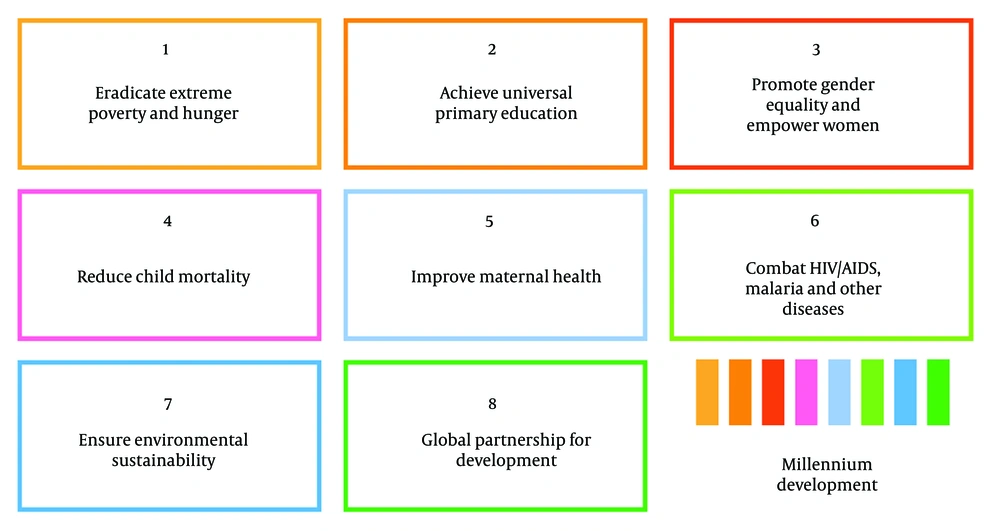
Figure 1.
The eight Millennium Development Goals (MDGs) adopted by the United Nations. Created by the authors based on information from the United Nations Millennium Development Goals official website (https://www.un.org/millenniumgoals/index.shtml).
Owing to the sustained efforts of the United Nations and its member states over the years, global poverty has been alleviated at both macro and micro levels, including in small island developing states and the least developed countries. For example, African countries have received technical assistance, infrastructure construction, and educational poverty alleviation support (10), and small island states have enhanced their climate response capabilities and economic resilience (11). By 2015, the MDGs had made considerable progress, and some countries had achieved all of them ahead of schedule (12). Meanwhile, the global call for sustainable development became increasingly strong, and MDG1 - 8 could no longer meet the development needs of the new era. Against this background, the United Nations Sustainable Development Summit held in September 2015 proposed the SDGs, building on the MDGs, to achieve sustainable development in social, economic, and environmental dimensions and to guide global sustainable development from 2015 to 2030 (13).
There are 17 SDGs, as shown in Figure 2. These goals cover all aspects of society, the economy, and the environment, representing substantial upgrades and expansions compared with the MDGs. Among them, SDG4, quality education, is closely related to global education and has received extensive attention from educators across academic fields (14).
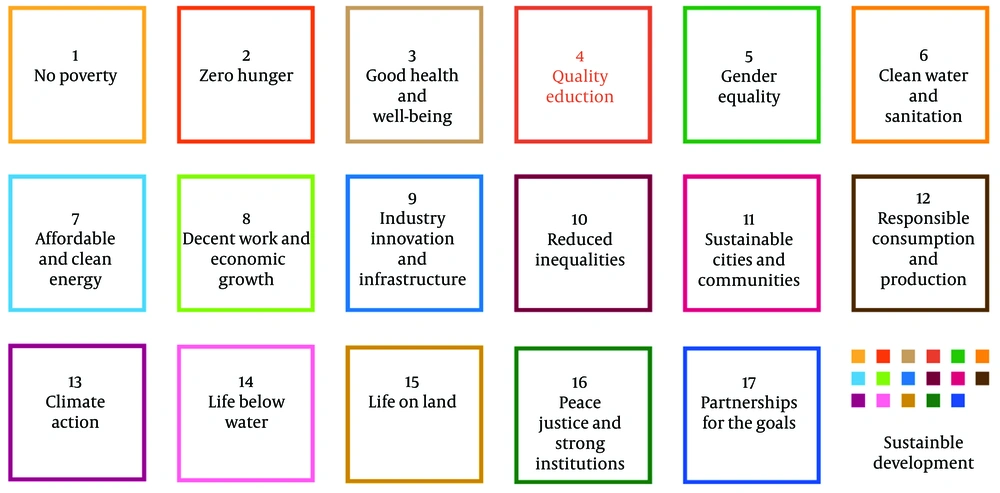
Figure 2.
The 17 Sustainable Development Goals (SDGs) adopted by the United Nations. Created by the authors based on information from the United Nations Sustainable Development Goals official website (https://sdgs.un.org/).
As researchers and practitioners in pharmaceutical education, after studying and analyzing the specific targets of SDG4, the authors believe that the core spirit of SDG4 should be incorporated into pharmaceutical education to provide useful guidance and a reference for the sustainable development of pharmacy education at the present stage.
Pharmacy is closely related to human health, and educational quality affects medical services and public health (15). Against the background of rapid development in the pharmaceutical industry, pharmacy education faces new challenges and opportunities (16). The concepts of inclusive, equitable, high-quality education and lifelong learning advocated by SDG4 offer new ideas for the development of pharmacy education. Incorporating these core concepts may help optimize the educational system and cultivate high-quality pharmacy professionals.
This narrative review introduces SDG4, focuses on its specific targets, proposes constructive opinions and suggestions for pharmacy education, provides useful information for pharmacy education policymakers, investigators, and faculty, and offers theoretical support for reforming future pharmacy education models. By analyzing the connotations of SDG4 and integrating them with pharmacy education, this review provides decision-making references for policymakers, new ideas for researchers, and practical guidance for educators; it promotes the innovative development of pharmacy education and supports the achievement of sustainable development goals. In addition, significant progress has been made in other areas of sustainable development. For instance, developing countries have improved the quality of education, expanded access to clean energy, and improved citizens' lives (17).
2. Evidence Acquisition
2.1. Literature Search and Screening
We searched for relevant literature on SDG4 and its impact on pharmacy education by systematically retrieving journal articles from PubMed and Web of Science. The search period was 2015 to 2025 to ensure that the retrieved publications reflected recent progress and the policy context of the 2030 Agenda.
The search strategy combined terms related to SDGs, education, and pharmacy. The keyword combination was: ("Sustainable Development Goals" OR "SDG" OR "SDG4") AND ("Education" OR "Pharmacy Education" OR "Health Education") AND ("Objectives" OR "Indicators" OR "Implementation" OR "Policy"). Additional searches were conducted for each specific SDG4 target, such as "4.1 Primary Education", "4.3 Higher Education", and "4.c Teachers", in combination with "Pharmacy" or "Health".
The inclusion criteria were: 1) journal articles published in English; 2) studies that explicitly discussed SDG4 or education-related goals, particularly those related to pharmacy, the medical professions, or science education; 3) policy analyses or case studies documenting the implementation of SDG4-related actions in multiple countries or regions; and 4) theoretical or empirical articles providing recommendations or assessment methods applicable to pharmacy education.
A total of 45 articles met the inclusion criteria and were used to extract the following data: 1) the conceptual framework of SDG4; 2) practical cases of implementing SDG4 in the global education system; and 3) specific recommendations or challenges in pharmacy education.
We organized the results according to the 10 targets of SDG4, namely 4.1 - 4.7 and 4.a-4.c. Under each target, we specified its educational significance for pharmacy education. In addition, policy examples from different countries, including China, Japan, Italy, Brazil, Kazakhstan, and South Africa, were included because they illustrate the implementation of SDG4 goals in different socioeconomic contexts and provide lessons for pharmacy education. We also included research articles on teacher training to support the theoretical basis for this review.
3. Results
3.1. SDG4 Framework and Its Relevance to Pharmacy Education
The overarching goal of SDG4 is to "ensure inclusive and equitable quality education and promote lifelong learning opportunities for all" (18). Under this objective, SDG4 is divided into 10 targets, namely 4.1 - 4.7 and 4.a-4.c. Targets 4.1 - 4.7 can be regarded as outcome targets, whereas targets 4.a-4.c can be regarded as implementation targets. Each target and its brief description are shown in Figure 3. The indicators corresponding to each target are summarized in Table S1 in the Supplementary File.
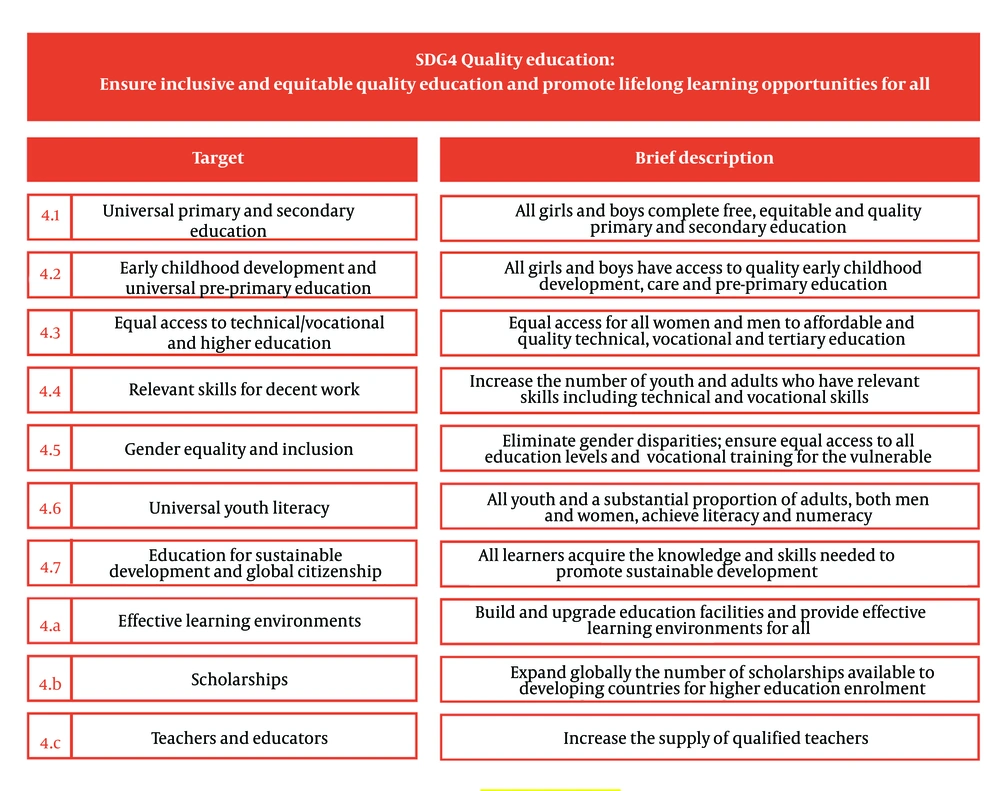
Figure 3.
Targets and brief description of SDG4 targets (4.1-4.7: outcome targets; 4.a-4.c: implementation targets). Source: Sustainable Development Goals official website-SDG4 (https://sdgs.un.org/goals/goal4#targets_and_indicators).
The SDG4 framework covers multiple dimensions of sustainable development. Outcome targets, including primary and secondary education, pre-primary education, higher education, vocational skills, inclusiveness, literacy, and global citizenship, are listed sequentially in targets 4.1 - 4.7. This framework encompasses a complete educational continuum from basic education to global citizenship and reflects a comprehensive focus on individuals’ lifelong learning needs. Targets 4.a-4.c focus on means of implementation, including learning environments, scholarships, and teacher training. These targets represent both specific goals and key mechanisms for advancing education. The indicators in Table S1 in the Supplementary File provide quantitative or semiquantitative support for implementation and evaluation. SDG4 also provides recommended strategies for all countries and regions worldwide.
Figure 3 and Table S1 in the Supplementary File indicate that SDG4 emphasizes inclusiveness and equity (19). Attention should be given to all educational stages, from 4.2 pre-primary education to 4.3 higher education, and to all populations, especially women, people with disabilities, Indigenous peoples, and other vulnerable and marginalized groups, as reflected in target 4.5 on equal access to all education levels and vocational training for vulnerable populations. Educational components, including students, teachers, the learning environment, and education-related vocational skills training, are also addressed, particularly in target 4.4 on relevant skills for decent work. If each SDG4 target is achieved, education is expected to make substantial and sustainable progress, including reduced dropout rates and increased enrollment among disadvantaged groups.
Across the 17 SDGs, there is a progressive relationship in the hierarchy of needs among SDGs 1 - 17. SDG4 ranks fourth, suggesting that it represents a relatively fundamental development need of human society. High-quality education is an important means of breaking the cycle of poverty, promoting economic development, and improving quality of life (20). It is also critical to achieving other SDGs, especially SDGs 5 - 17. In recent years, many countries and regions at different levels of economic development have implemented SDG4-based policy or research initiatives, including China (21), Japan (22), Italy (23), Brazil (24), Kazakhstan (25), and South Africa (26). These initiatives have promoted the sustainable development of education in the corresponding countries and regions to varying degrees. They have also advanced progress toward SDG4 and can provide case references for other countries and regions worldwide.
3.2. Implications for Pharmacy Education
A review of the SDG4 subgoals indicates that SDG4 is applicable to any educational field, including pharmacy education. Therefore, SDG4 also has guiding significance for the sustainable development of pharmacy education. Drawing on the authors’ research and professional experience in pharmacy education, we propose several implications of SDG4 for pharmacy education. For clarity, the main implications of targets 4.1 - 4.7 and 4.a-4.c are discussed separately. Given the authors’ expertise, except for targets 4.1, 4.2, and 4.6, the remaining items are primarily oriented toward higher pharmacy education. For each implication below, the supporting basis is indicated as follows: "Evidence-based" denotes recommendations supported by specific cited literature, whereas "Conceptual" denotes recommendations derived from the authors’ expertise, logical inference from the SDG4 framework, or educational policy reasoning. Conceptual recommendations are proposed for further discussion and empirical validation.
3.2.1. Target 4.1: Universal Primary and Secondary Education
An extracurricular pharmacy experiential learning program should be established in primary and secondary education. Evidence-based sources support this implication (27, 28). Evidence suggests that primary and secondary school is a crucial period during which students shape their worldviews, outlooks on life, and values, and acquire knowledge that may be retained in long-term or lifelong memory (27, 28). Therefore, introducing pharmacy concepts at this stage aligns with students’ developmental needs. Establishing an extracurricular pharmacy experiential learning program at this stage can provide an opportunity for early exposure to and experience with the pharmacy discipline. It can enable students who are interested in pharmacy and related majors to develop a more concrete understanding of pharmacy before tertiary education, and it can also serve as enrichment education for other students. This recommendation targets students aged 6 to 18 years and falls within public pharmaceutical literacy and pre-career exposure. It can be implemented in schools as an extracurricular activity, potentially in partnership with universities. Success could be measured by improvements in career interest, knowledge-test scores, and the number of participants engaged in pharmacy-related activities.
3.2.2. Target 4.2: Early Childhood Development and Universal Pre-Primary Education
Basic concepts about "drugs" should be introduced in pre-primary education. Evidence-based sources support this implication (29). At the pre-primary stage, children begin to interact with society and develop initial emotions and cognition regarding objects and events (29). This developmental feature provides a logical basis for introducing basic safety concepts, such as distinguishing between safe medicines and harmful narcotics. Here, "drugs" has two meanings: medicines and narcotics. At this stage, age-appropriate popular science education that introduces concepts such as safe medication and avoiding narcotics may help protect children’s healthy growth and safety. This recommendation is directed at children aged 3 to 6 years and falls within public pharmaceutical literacy, with a specific focus on foundational safety awareness. Implementation requires the involvement of preschool institutions and early childhood education centers, together with the active participation of parents. Measurable outcomes include the ability to distinguish between safe and unsafe substances, recall safety rules, and parent-reported safety practices.
3.2.3. Target 4.3: Equal Access to Technical, Vocational, and Higher Education
Governments should support pharmacy tertiary education, including technical, vocational, and higher education. Evidence-based sources support this implication (30). This goal aims to ensure equal access to affordable and high-quality technical, vocational, and tertiary education for all. This policy logic suggests that governments should play a leading role in removing barriers to pharmacy professional education (30). Accordingly, government leadership should be translated into concrete support measures implemented in coordination with industry associations and educational institutions. Specifically, support for pharmacy tertiary education should be provided from multiple perspectives, including but not limited to increasing degree opportunities, providing consultation services for entrance examinations, disseminating policy information, and establishing scholarships, so that students intending to pursue pharmacy education have equal access. This recommendation is aimed at prospective pharmacy students, especially disadvantaged groups, and addresses entry-level professional pharmacy degree education. Implementation involves education ministries, admissions offices, and scholarship bodies. Success can be evaluated through enrollment rates among underrepresented groups, scholarship numbers, reduced dropout rates, and entrance examination pass rates.
3.2.4. Target 4.4: Relevant Skills for Decent Work
Training in real-world pharmacy skills should be emphasized in tertiary education. Evidence-based sources support this implication (31-33). A persistent gap exists between theoretical coursework and the practical skills required in pharmacy, hospital, and industry settings. Real-world training enhances employability and helps bridge this gap (31). Pharmacy education should therefore retain traditional theoretical and experimental courses while also incorporating the latest trends in the international and domestic pharmaceutical industries (32). Moreover, professional practice courses related to real-world pharmacy practice and adapted to local conditions should be included, and internship and practical training opportunities should be provided. During their studies, students should fully develop pharmacy professional skills to bridge the gap between teaching content and industry needs as much as possible (33). This recommendation targets undergraduate and postgraduate pharmacy students and falls within professional degree education and postgraduate training. Suitable settings include university programs, hospital and community pharmacies, and industry internships. Measurable outcomes include graduate employment rates, employer satisfaction, licensure pass rates, and self-reported confidence in practical skills.
3.2.5. Target 4.5: Gender Equality and Inclusion
Exchange opportunities, internships, and residency opportunities should be offered to vulnerable groups. Evidence-based sources support this implication (34, 35). Targeted opportunity programs have been shown to significantly improve career outcomes for disadvantaged students in health professions (34). Prioritized access to international exchange programs, internship positions, and residency quotas can help reduce barriers in pharmacy career development (35). Therefore, institutions should actively create such opportunities for vulnerable groups. Within the scope permitted by policies, laws, and ethics, institutions should create opportunities for all students, such as international exchange programs, internship positions, and standardized training quotas for resident physicians. Priority should be given to students from vulnerable groups, such as those with financial difficulties, disabilities, ethnic minority backgrounds, and gender-disadvantaged groups, to help them overcome barriers in pharmacy career development, ensure equal educational rights, resource access, and support systems, and achieve diversified and equitable cultivation of pharmacy professionals. This recommendation focuses on vulnerable pharmacy students and applies to professional degree and postgraduate training. Implementation settings include university international offices, residency programs, and regulatory bodies. Success can be assessed by participation rates among vulnerable groups, reduced opportunity gaps, career progression metrics, and student-reported sense of inclusion.
3.2.6. Target 4.6: Universal Youth Literacy
Pharmacy knowledge popularization should be launched for youth. Evidence-based sources support this implication (36, 37). Health education focused on young adults can effectively improve health literacy and empower proactive health management (36). Pharmacy institutions are well positioned to deliver evidence-based knowledge to young adults, directly supporting literacy enhancement and lifelong learning (37). By designing popular science activities in forms aligned with youths’ cognitive characteristics, such as campus lectures, interactive workshops, and new media content, pharmacy education institutions can effectively convey evidence-based pharmacy knowledge, including rational drug use, the harms of drug abuse, and prevention of basic diseases, to a key future societal group. This not only directly addresses the core goal of SDG 4.6, which is to improve youth capabilities, but also builds a bridge between professional pharmacy knowledge and public health awareness, empowering youth for active health management. This recommendation targets youth aged 12 to 24 years and operates within public drug and health literacy. Implementation can occur in schools, community centers, youth organizations, and digital platforms. Measurable outcomes include knowledge-test scores, self-reported health literacy, behavior-change indicators, and reach metrics.
3.2.7. Target 4.7: Education for Sustainable Development and Global Citizenship
A sustainable and culturally diverse pharmacy curriculum should be designed. Evidence-based sources support this implication (38, 39). Integrating sustainability and global health perspectives into professional curricula enhances students’ ethical sensitivity and global competence (38). Accordingly, the design of the pharmacy curriculum must go beyond traditional knowledge transmission and deeply integrate sustainable development concepts, such as green medicinal chemistry, responsible drug disposal, and fairness in drug accessibility, as well as a global health perspective (39). The curriculum should also incorporate content on cultural diversity to cultivate students’ cross-cultural communication skills, ethical sensitivity, and a deeper understanding of global health inequalities. This recommendation is directed at undergraduate and postgraduate pharmacy students and pertains to professional degree and postgraduate training. Implementation involves curriculum committees, regulatory bodies, and faculty development programs. Success can be measured by curriculum audit scores, student performance on sustainability assessments, self-reported ethical sensitivity, and the number of relevant elective courses.
3.2.8. Target 4.a: Effective Learning Environments
Material and immaterial facilities associated with pharmacy education should be ensured. Evidence-based sources support this implication (40, 41). Modern laboratories, simulation pharmacies, and digital resources significantly enhance students’ practical skills. Nonmaterial facilities, such as interdisciplinary platforms and an inclusive culture, are equally important (40). In terms of material facilities, modern laboratories, simulated pharmacies, scientific research instruments, and safe learning spaces should be ensured. In terms of immaterial facilities, digital teaching resources, interdisciplinary collaboration platforms, clinical practice networks, and an inclusive academic culture should be established. By optimizing both types of facilities, pharmacy education institutions can cultivate students’ practical capacity to address public health challenges while promoting educational equity and innovation, ultimately supporting the sustainable development of high-quality pharmacy professionals in global health (41). This recommendation targets pharmacy students and faculty and spans professional degree education, postgraduate training, and faculty development. Implementation settings include university administration, laboratory management, and clinical training sites. Measurable outcomes include student-to-equipment ratios, facility utilization rates, student satisfaction, and correlations between facility quality and performance outcomes.
3.2.9. Target 4.b: Scholarships
Scholarships should be established for pharmacy students from developing countries and regions. Evidence-based sources support this implication (42). Targeted financial support can significantly improve access to health professions education for students from resource-limited regions. Scholarships that cover tuition fees and living expenses enable students to complete high-quality pharmacy education (42). Special scholarship programs should be established in pharmacy education, focusing on supporting pharmacy students from developing countries and resource-scarce areas. These scholarships should cover tuition fees and basic living expenses to ensure that students can complete high-quality pharmacy degree education, ultimately cultivating local pharmacy professionals in these areas and promoting equitable development of pharmacy education. This recommendation is aimed at pharmacy students from developing countries and resource-scarce areas and falls under professional degree and postgraduate training. Implementation settings include government scholarship bodies, university admissions offices, and international aid organizations. Success can be evaluated through scholarship numbers, recipient diversity, graduation rates, and postgraduation contributions to the local pharmacy workforce and public health.
3.2.10. Target 4.c: Teachers and Educators
Continuous training should be provided for pharmacy faculty. Evidence-based sources support this implication (43, 44). Teacher competence largely determines graduate quality, and continuing professional development programs can significantly improve teaching effectiveness and student learning outcomes (43). This is directly related to cultivating pharmacy professionals who are competent to meet future medical needs. Therefore, teachers’ clinical practice capabilities and cutting-edge drug research and development capabilities should be strengthened; training in modern teaching methods, such as blended learning and problem-based learning, and in the application of educational technology should be provided; and mechanisms should be established to support teachers’ participation in industry practice, academic exchanges, and international cooperation to ensure continuous professional development (44). This recommendation targets pharmacy faculty and educators and operates within faculty development and continuing professional education. Implementation settings include faculty development centers, professional associations, and continuing education providers. Measurable outcomes include faculty participation frequency, improvements in teaching evaluation scores, self-reported confidence in modern teaching methods, and student evaluation scores over time (43).
The above content is schematically illustrated in Figure 4 and Table 1. If these implications can be translated into educational practice, they may directly or indirectly provide more opportunities for pharmacy majors, optimize pharmacy education outcomes, improve the employment competitiveness of pharmacy graduates, and enhance the level of medical knowledge among the public, ultimately improving medical and health standards across countries and regions. However, implementation may face several barriers. First, resource limitations are a major challenge; not all institutions have sufficient funding to build modern laboratories or offer scholarships, as suggested in targets 4.a and 4.b. Second, curriculum overload may occur when sustainable development concepts are integrated into already dense pharmacy curricula, requiring careful trade-offs between new content and existing core courses. Third, policy differences across countries and regions may lead to inconsistent standards for educational equity and faculty development, affecting the generalizability of the proposed framework. Finally, cultural differences may influence acceptance of specific educational concepts, such as the depth of drug education in pre-primary education, necessitating localized adaptations. Therefore, countries and regions should scientifically and systematically plan and implement corresponding actions based on the above implications, under the guidance of the SDG4 framework and according to their specific social, economic, and environmental conditions, to accelerate the sustainable development of pharmacy education.
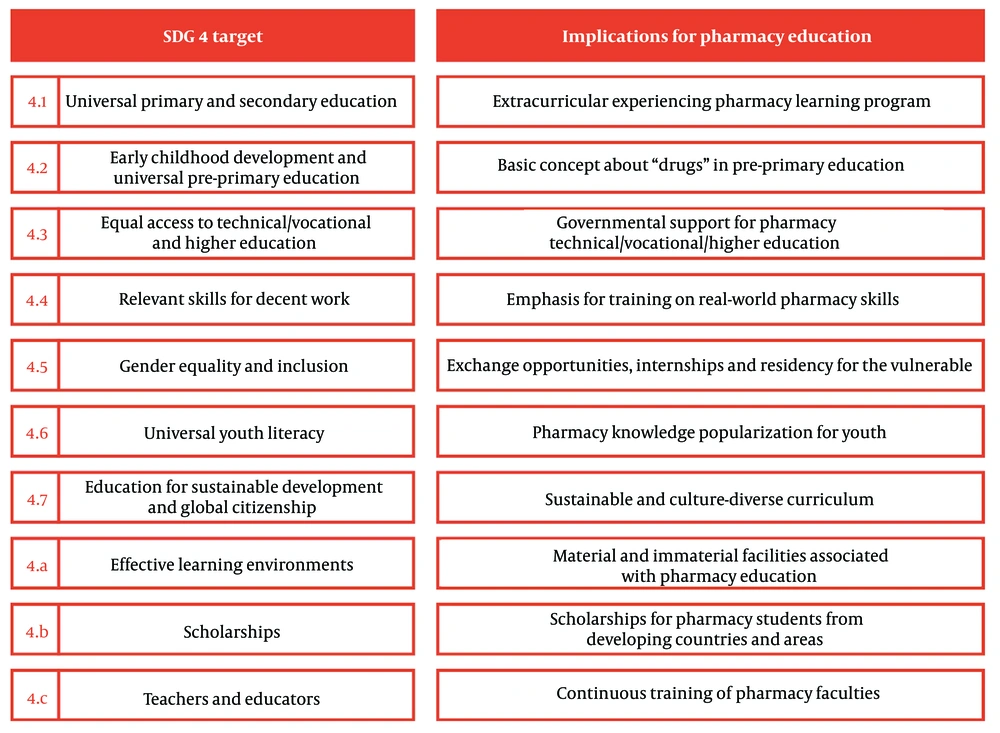
Figure 4.
Implications of SDG4 on pharmacy education
Table 1.
Alignment of SDG4 Targets with Pharmacy Education Implications, Supporting Evidence, Expected Outcomes, and Implementation Barriers
| SDG4 Target | Pharmacy Education Implication | Supporting Evidence | Expected Educational Outcome | Implementation Barrier |
|---|---|---|---|---|
| 4.1 | Extracurricular pharmacy programs in primary/secondary schools | School years shape worldviews and long-term memory (27, 28) | Increased career interest and knowledge | Curriculum time; lack of educators |
| 4.2 | Basic drug concepts in pre-primary education | Early childhood is key for initial cognitive development (29) | Safety awareness and rule recall | Age-appropriate design; teacher training |
| 4.3 | Government support for pharmacy tertiary education | Policy logic of equal access to quality education (30) | Higher enrollment; lower dropout rates | Funding; policy variation |
| 4.4 | Real-world pharmacy skills training in tertiary education | Gap between theory and practice (31, 32, 33) | Higher employment and licensure rates | Industry-academia gap; curriculum overload |
| 4.5 | Exchange/internship/residency opportunities for vulnerable groups | Targeted programs improve career outcomes (34, 35) | Higher participation; reduced opportunity gaps | Policy constraints; limited funding |
| 4.6 | Pharmacy knowledge popularization for youth | Youth health education improves literacy (36, 37) | Improved knowledge and health literacy | Content engagement; resource intensity |
| 4.7 | Sustainable and culturally diverse pharmacy curriculum | Sustainability integration enhances ethical sensitivity (38, 39) | Better curriculum; higher ethical sensitivity | Faculty expertise; accreditation conflicts |
| 4.a | Material and nonmaterial facilities for pharmacy education | Modern laboratories and inclusive culture enhance skills (40, 41) | Higher satisfaction; better performance | High cost; digital divide |
| 4.b | Scholarships for students from developing countries | Financial support improves access (42) | Higher diversity and graduation rates | Funding sustainability; brain drain risk |
| 4.c | Continuous training for pharmacy faculty | Teacher competence determines graduate quality (43, 44) | Better teaching evaluations; improved student outcomes | Time; funding; lack of incentives |
3.3. Prospect
Since September 2015, the world has undertaken sustainable development practices under the guidance of SDGs 1 - 17, and a series of actions, publications, and events have been released for each SDG. According to information from the official SDG website, as of May 21, 2026, there were substantial differences in the numbers of actions, publications, and events related to each of SDGs 1 - 17 globally (Figure 5). Data on actions, publications, and events associated with each SDG were manually retrieved from the official United Nations SDG website (https://sdgs.un.org/events) on May 21, 2026 (UTC+8). The website has dedicated pages listing registered actions, publications, and events for each SDG. The counts were directly recorded from the category totals displayed on each SDG page. The same retrieval method was consistently applied across SDG 1 to SDG 17. It is important to note that these counts represent only activities voluntarily registered on the UN platform and do not capture all global SDG-related activities. As shown in Figure 5, SDG4 had 1,870 actions, 60 events, and 12 publications. Among all SDGs, the numbers of actions, publications, and events for SDG4 ranked 5th (top 29% or bottom 71%), 17th (top 100% or bottom 0%), and 15th (top 88% or bottom 12%), respectively. Although this lower ranking in documented activities may suggest limited global attention, it is important to acknowledge that website counts reflect recorded items rather than direct global implementation outcomes. Therefore, the current status highlights a need for more active documentation and advocacy rather than serving as a definitive measure of implementation failure.
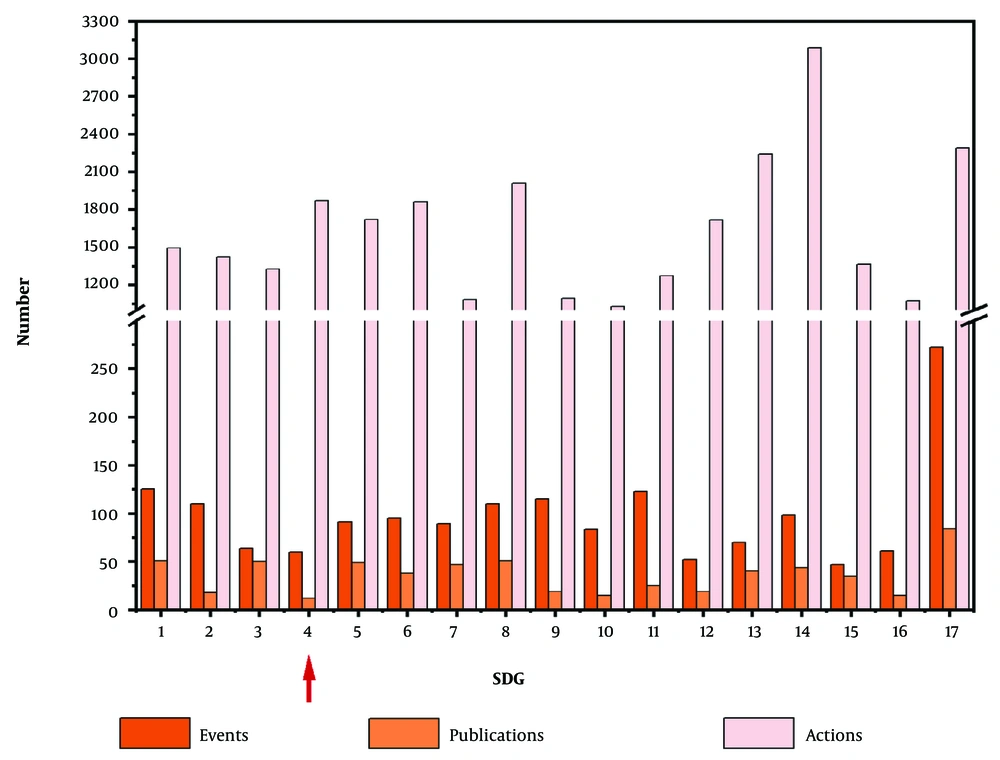
Figure 5.
Number of actions, publications, and events associated with SDG1 - 17. Data were retrieved by the authors from the official United Nations Sustainable Development Goals website (https://sdgs.un.org/events) on May 21, 2026 (UTC+8). This figure was created by the authors based on the retrieved data.
This situation presents both a dilemma and an opportunity. It indicates that substantial room remains for exploration and improvement in SDG4. As the demand for clinical medication is gradually increasing in human society (45), advancing pharmacy education may represent an important pathway to support the implementation of SDG4. To make SDGs a reality, pharmacy educators worldwide should be fully engaged and take action based on the theoretical framework of this paper. Beyond contributing more actions, publications, and events, it is more important to achieve tangible improvements in educational outcomes, thereby facilitating the realization of SDG4 and ultimately all SDGs.
4. Conclusions
Entering the 21st century, the concept of “sustainable development” has gained broad global recognition. The United Nations first addressed poverty through the MDGs and subsequently launched the SDGs in 2015, encompassing multidimensional development across society, the economy, and the environment. Among these, SDG4 focuses on ensuring inclusive and equitable quality education and promoting lifelong learning opportunities for all. It includes 10 targets covering all stages of education, diverse populations, and key educational elements.
By analyzing each SDG4 target, this review clarifies its implications for pharmacy education across several domains, ranging from basic to higher education and from curriculum design to educational equity. These implications underscore the need to integrate sustainable development into pharmacy education and propose specific practical pathways, such as implementing pharmacy experience projects in primary and secondary schools, strengthening real-world pharmacy skills training in higher education, and expanding educational opportunities for disadvantaged groups. Notably, the framework proposed in this review is a conceptual model intended to support further discussion, adaptation, and rigorous evaluation, rather than an established, evidence-proven intervention model. However, as of 2026, the numbers of SDG4-related actions, publications, and activities rank low among all SDGs. Although these data reflect documented participation on official platforms rather than a comprehensive assessment of global implementation effectiveness, they indirectly indicate the currently limited attention given to SDG4 and suggest substantial room for further exploration and improvement. Against the backdrop of increasing global demand for clinical medication, pharmacy education may serve as an important channel for helping to achieve SDG4. We propose that pharmacy educators worldwide use the theoretical framework presented in this paper as a reference point for dialogue and pilot testing. They should not only increase the number of relevant actions, publications, and activities but also subject the proposed implications to empirical validation to improve educational outcomes, promote the sustainable development of pharmacy education, contribute to the implementation of SDG4 and all sustainable development goals, and support improvements in global medical and health standards.
Future research should empirically test the proposed recommendations through pilot studies in diverse educational settings, including primary schools, universities, and continuing education programs. Studies should evaluate feasibility, cost-effectiveness, effects on learning outcomes, and long-term impacts on pharmacy workforce development and public health. If institutions adopt this framework, success should be evaluated using a mixed-methods approach that includes: 1) quantitative metrics aligned with each SDG4 target, such as enrollment rates among disadvantaged students, graduate employment rates, and faculty training completion rates; 2) qualitative assessments from stakeholders, including students, faculty, and employers; and 3) longitudinal tracking of pharmacy workforce outcomes and contributions to public health.
4.1. Limitations
As a narrative review, this study did not use systematic screening, data extraction, or meta-synthesis. The recommendations are therefore presented as a conceptual framework for discussion and future empirical testing, rather than as evidence-proven intervention effects. Importantly, the proposed SDG4–pharmacy education framework has not yet been empirically validated in real-world educational settings. Future studies are needed to test the feasibility, effectiveness, and generalizability of these recommendations before widespread implementation.