1. Background
Hospital wastewater is produced from various departments of a hospital including patient wards, surgery units, laboratories, clinical wards, intensive care units, and laundries and contains different compounds due to different duties and various medical compounds (1). A study by Gautam et al. (2) showed that significant concentrations of COD and BOD, 1900 and 700 mg/L, have been measured in medical wastewater effluent. One of the major environmental concerns due to the discharge of medical wastewater to the public networks without proper treatment is the negative effect on the ecological balance and public health. If left untreated, pathological, chemical and infectious components of medical wastewater result on outbreaks of water borne diseases such as diarrhea epidemics, cholera, skin diseases, enteric illness, and groundwater contamination.
The Gaza Strip is a well-known place in the world where the utilization of the resources goes beyond the available resources. Water and land resources are partially depleted, based on the United Nation latest report, Gaza 2020; more than 95% of water resources are unsuitable for human consumption (3-5). The groundwater is the only water resource for the Gaza Strip for domestic purposes, which is fed from rainfall (6-9). Due to the population increase, consumption from the groundwater leads to a drop in groundwater level, as a consequence sea intrusion occurs (5, 10). Intensive agriculture to cope with the market needs imposed farmers to use huge quantities of fertilizers, which finally reached to the groundwater causing the sever nitrate pollution (4, 11). The Gaza Strip has a total of 6 main hospitals that are located adjacent to the residential area and has a wastewater sewer connected to municipal sewage networks, which has potential to cause pollution to the environment.
Unfortunately, most of the Gaza Strip hospitals are directly connected to the public sewer system without any primary treatment on site except for the European hospital in Khan Yunis, which has its own wastewater treatment plant. Many activities that practice in hospitals such as surgery, drug treatments, laundry, operation room, chemical and biological laboratories, etc. are a main source of pollutant discharge into the environment (12). Mostly, hospital wastewater is classified as municipal wastewater, however, due to activities that are conducted in the hospital, it contains different hazardous compounds including pathogenic microorganisms, toxic chemicals, chlorine compounds as disinfectants, drugs, and medical solutions in addition to radioactive isotopes (13, 14). Surely, the central wastewater treatment plants in the Gaza Strip cannot get rid of serious medical pollutants, which infiltrate to the groundwater or discharged to the sea. Moreover, some medical stuff such as disinfectants could negatively affect the efficiency of the treatment system. Characterization of medical wastewater is rarely conducted in the Gaza Strip. Therefore, the main objective of the current research is to improve water status and health hygiene for the residents of the Gaza Strip by characterization of medical wastewater as a first step towards medical wastewater treatment and management.
2. Methods
Al-Shifa medical complex was established in 1946 located in Gaza city in Al-Rimal quarter. Since 1946 Al-Shifa medical complex expanded many times until 2016. Nowadays, the total clinical capacity has 564 beds on a total area of 42,000 m2, with a flat existing building area of 15,235 m2, consisting of several buildings of several floors, and serves the Gaza Strip residents who face many abrupt wars in the past 10 years. The number of employees in all specialties are 1440 employees. The hospital has four internal main sections namely; Internal department men and women, Department of General Surgery, Department of birth, Department of Children and nursery, and an emergency department, which is in addition to the intensive care unit. The hospital is equipped with three operating theaters; in addition to the general surgery, there are three specialized operation units; bones and Urology, Ear, Nose, and Throat surgery. There is a support medical department in the hospital: X-ray department, laboratory and blood bank, physiotherapy, Audiogram, tissue tests, pharmacy, engineering unit, and maintenance. Moreover, there are specialized clinics at the hospital; Internal clinic, surgery clinic, women's clinic and childbirth, ear, nose and throat clinic, orthopedic clinic, kidney and urinary tract clinic, clinic rheumatic diseases, and cancer clinic.
2.1. Sampling and Analytical Work
Composite samples, each 2 hours for 24 hours, are collected from 8 locations representing 8 medical departments of Al-Shifa complex as represented in circles in Figure 1. The 2 hour samples from the 8 sites for a period of 24 hours will give preliminary indication of the effluent medical waste water characteristics from Al-Shifa medical complex. Further investigations will be conducted for longer monitoring periods of weeks and months in the current project upon the availability of the fund.
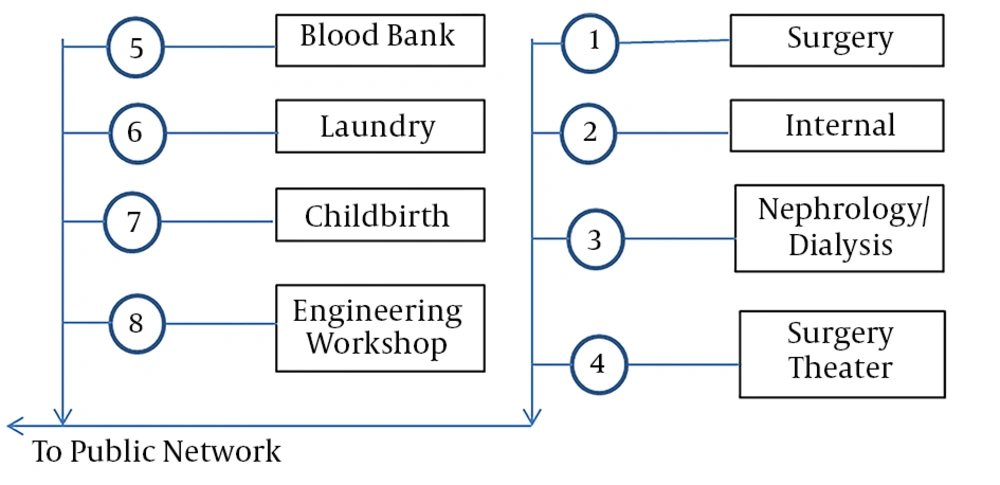
Figure 1.
Samples locations from each individual department from Al-Shifa medical complex
The samples were analyzed of each location for; EC, pH, TSS, BOD, COD, TKN, and heavy metals Cd, Zn, and Pb according to the standard method for the examination of water and wastewater (15).
pH: Combined portable meter (HI 8424) was used for measuring pH. EC: Measuring the electrical conductivity is done by using EC meter (El-Hanna, TH-2400).
Biochemical oxygen demand (BOD): BOD was measured using the OxiTop measuring system, the quantity of samples was taken after being mixed well, according to corresponding measuring range recommended in the manufacturer manual.
The chemical oxygen demand (COD) is a parameter to determine the oxygen required to oxidize the organic matter content of a sample by strong oxidants. The closed dichromate reflux method (Colorimetric Method) was used to determine COD.
The total Kjeldahl nitrogen: In the presence of H2SO4, potassium sulfate (K2SO4), and copper Sulfate (CuSO4)- catalyst.
Suspended solid (TSS): The method 2540 D is used for determining the TSS. The sample is filtered through a weighed standard glass-fiber filter and the residue retained on the filter is dried to a constant weight 105°C.
Heavy metals: 3120B. Inductivity coupled plasma (ICP) method. Wastewater samples were filtered through a 0.45 µm Millipore for analysis. Samples were analyzed by Agilent Technologies 700 series (ICP/OES) for heavy metals (Cd, Zn and Pb).
3. Results and Discussion
As shown in Figure 2, the EC indicated the salinity of wastewater; in general, the wastewater from Al-Shifa complex is characterized by its high salinity, which range from 18400 to 27300 µS/cm. The high salinity refers to the sources of the water supply, which is not potable. Al-Shifa medical complex has its own groundwater well with a capacity of 500 m3/day and the salinity levels (EC) exceeds 25000 µS/cm, while the recommended EC value by Palestinian Environmental Quality Affairs (PEQA) for discharge into the public network is 3120 µS/cm (5). It is worth mentioning that the well is located at a distance of 1500 m from the seashore, the zone that was intensively affected by seawater intrusion. The employees and patients used another potable water source such as desalinated water from a small-scale desalination plant, which was installed at the water supply system for drinking purposes and for the nephrology/dialysis unit.
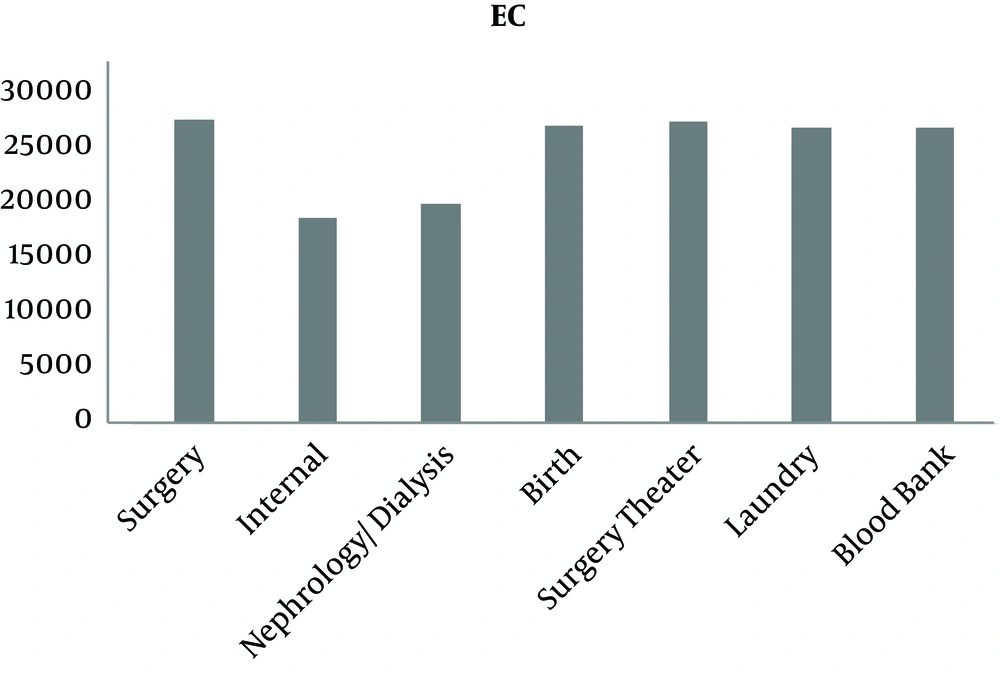
Figure 2.
Electrical conductivity (µS/cm) of wastewater from different departments of Al-Shifa medical complex
This explains the relatively lower EC values of wastewater from internal and nephrology/dialysis units. Unfortunately, the brine water from the desalination unit discharge directly to the wastewater collection system leading to high records of electrical conductivity (EC) and total dissolved solids (TDS).
According to PEQA, the acceptable range for discharge to the public network is from pH 6 to 9. The range from different units at Al-Shifa complex is from 6.9 to 7.8. The lowest pH value of 6.9 is obtained from the surgery department (Figure 3). The lower pH indicates the use of disinfectants and acidic solutions in the surgery department for cleaning purposes. A sample from the wastewater was analyzed for pH during the cleaning of the surgery unit showed pH of 6.8. The pH value of wastewater has great influence on the lifetime of the piping system and the efficiency of biological wastewater treatment (16). Caution should be taken during the cleaning process to prevent the sewer system from corrosion due to the disposal of acidic wastewater from the surgery unit.
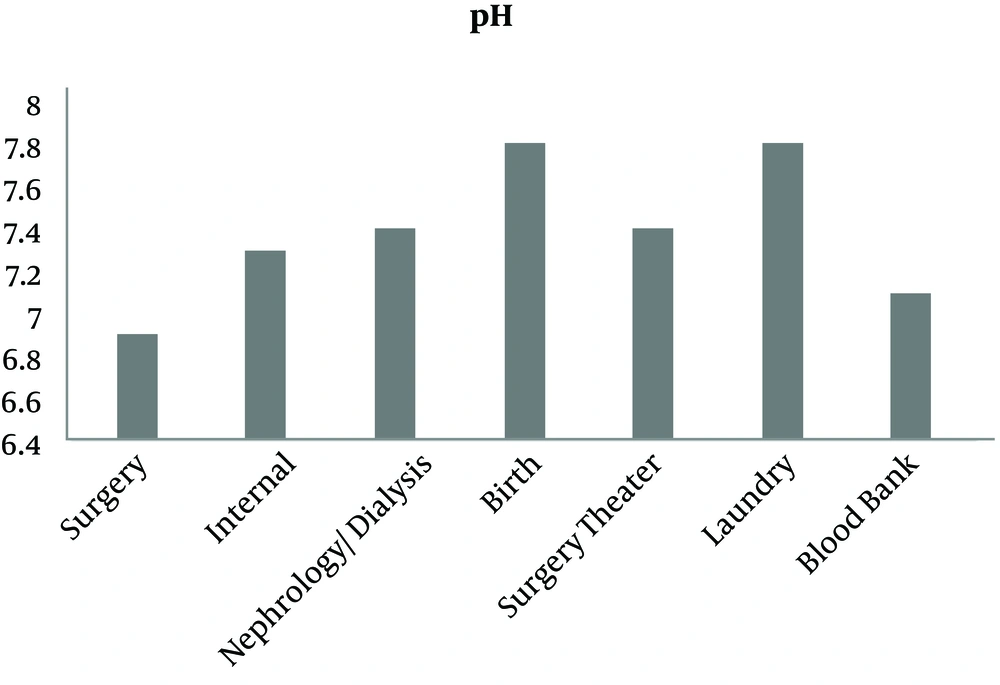
Figure 3.
pH of wastewater from different departments of Al-Shifa medical complex
One of the main parameters to characterize a wastewater is the total suspended solids (TSS). As shown in Figure 4, the wastewater from the laundry has the lowest TSS and the surgery unit has the highest TSS concentrations of 253 and 3008 mg/L, respectively. Most of the medical complex units are within the range of domestic wastewater 120 - 400 mg TSS/L (17) except for surgery, blood bank, and surgery theater, which account for 3008, 1630, and 1873 mg TSS/L, respectively. According to PEQA, the suspended solids should not exceed 600 mg/L to be disposed in the public networks. Due to the danger of the suspended materials in the medical wastewater, it is highly recommended to conduct pretreatment (settling process) to remove the suspended solids and finally dispose with the medical solid waste in special dumping process.
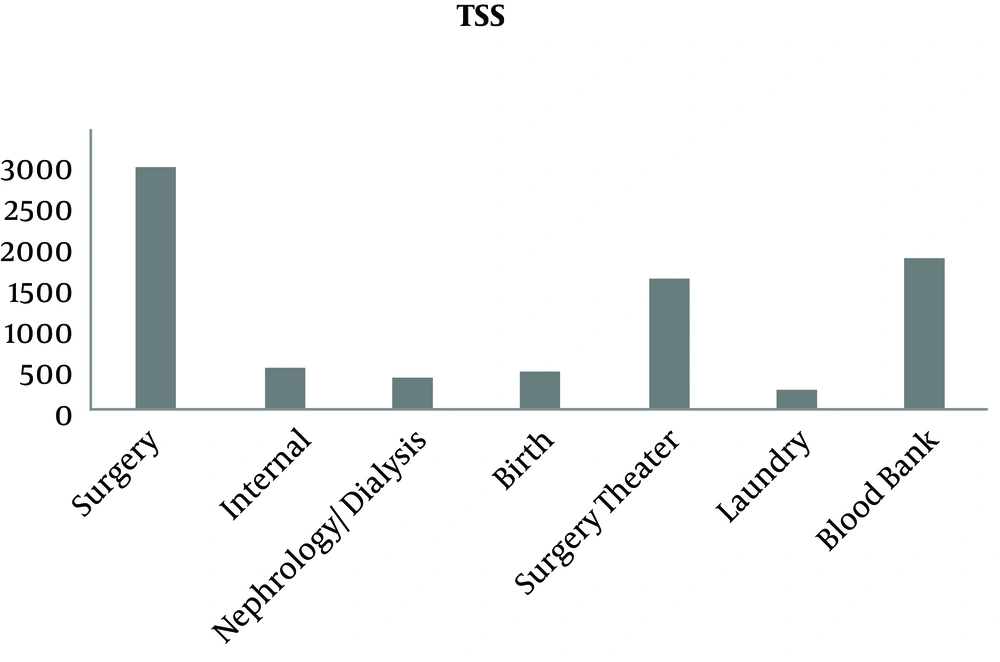
Figure 4.
Total Suspended Solids (mg/L) of wastewater from different departments of Al-Shifa medical complex
The BOD measured from different departments shows strong pollution (Figure 5) in comparison to domestic wastewater (110 - 350 mg BOD/L), where BOD more than 400 mg/L is classified as strong pollution (17, 18). The BOD from the surgery department is nearly two times higher than other departments and account for 1150 mg/L followed by nephrology/ dialysis where BOD is 744 mg/L.
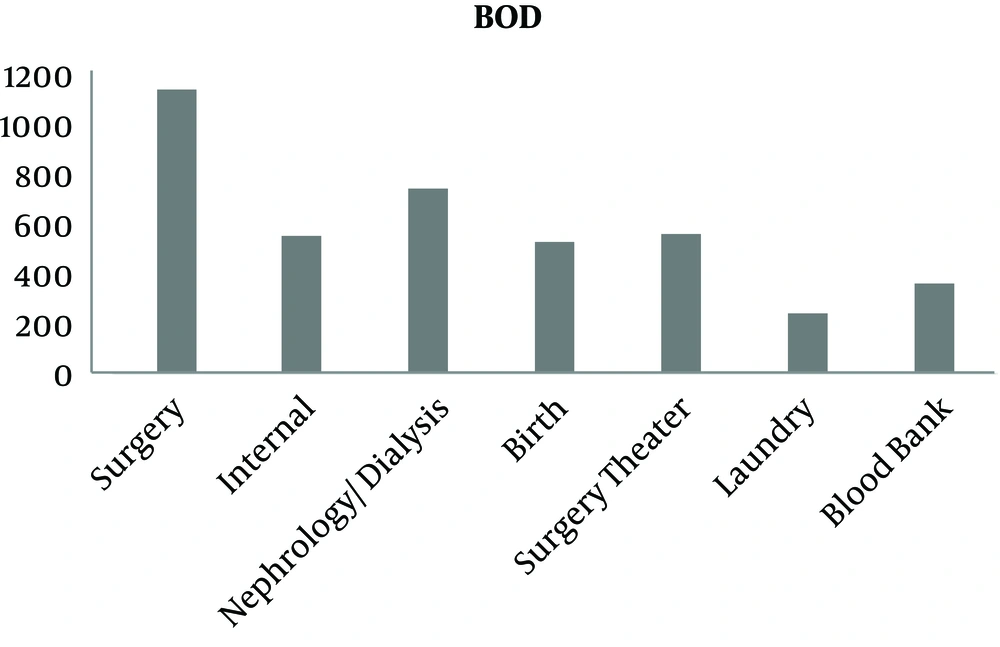
Figure 5.
Biological oxygen demand (mg/L) of wastewater from different departments of Al-Shifa medical complex
The wastewater from Al-Shifa medical complex can never be classified as domestic wastewater, the COD values nearly four times higher than the BOD. The COD values are 5350, 2665, 2646, and 2093 mg/L from surgery, women's clinic and childbirth, blood bank, and surgery theater units, respectively (Figure 6). According to Polprasert, 1996, COD within 250 - 800 mg/L, is common for domestic wastewater. COD from Al-Shifa complex departments are classified as strong non-biodegradable compounds that need treatments in site before disposal to the public sewer system according to PEQA, where BOD and COD should not exceed 600 and 1500 mg/L, respectively. The previously mentioned values of COD are the analysis of composite samples for the period of 24 hours. Samples analyzed for COD during the cleaning process shows tremendously high values of COD from different units; 29870, 14080, 3370, and 2167 mg/L from internal medicine, Oncology clinic, surgeries, and nephrology/ dialysis units, respectively. BOD and COD have been measured for studying organic pollution levels from the medical wastewater.
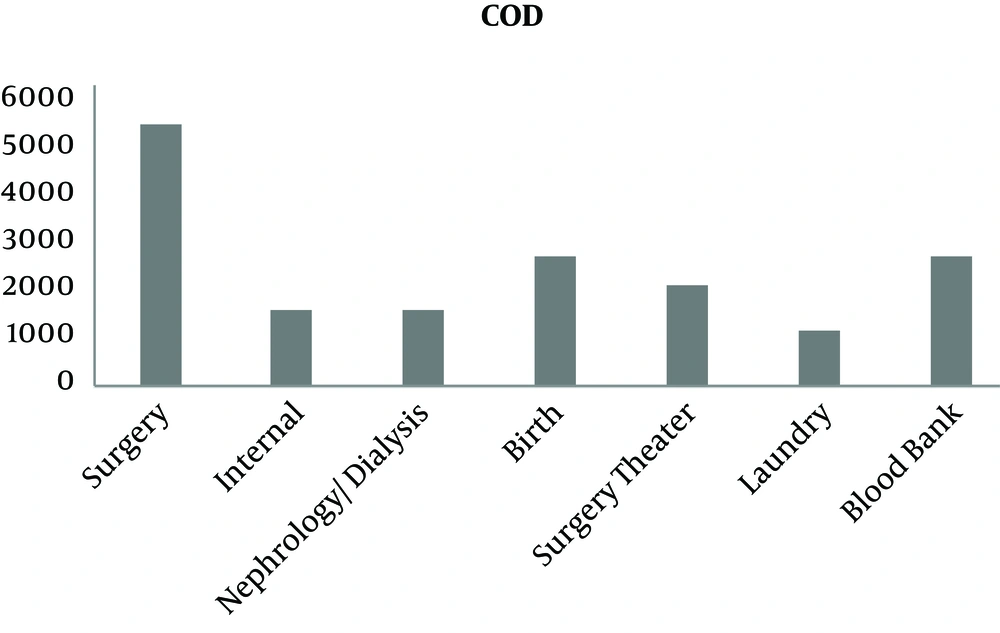
Figure 6.
Chemical oxygen demand (mg/L) of wastewater from different departments of Al-Shifa medical complex
TKN is high from surgery theater, nephrology/dialysis, and internal medicine units accounting for 115, 89, and 90 mg/L, respectively. As shown in Figure 7, presenting a source of nitrogen pollution, more than 85 mg/L is considered strongly polluted wastewater with nitrogen and require pretreatment before discharge to the public network.
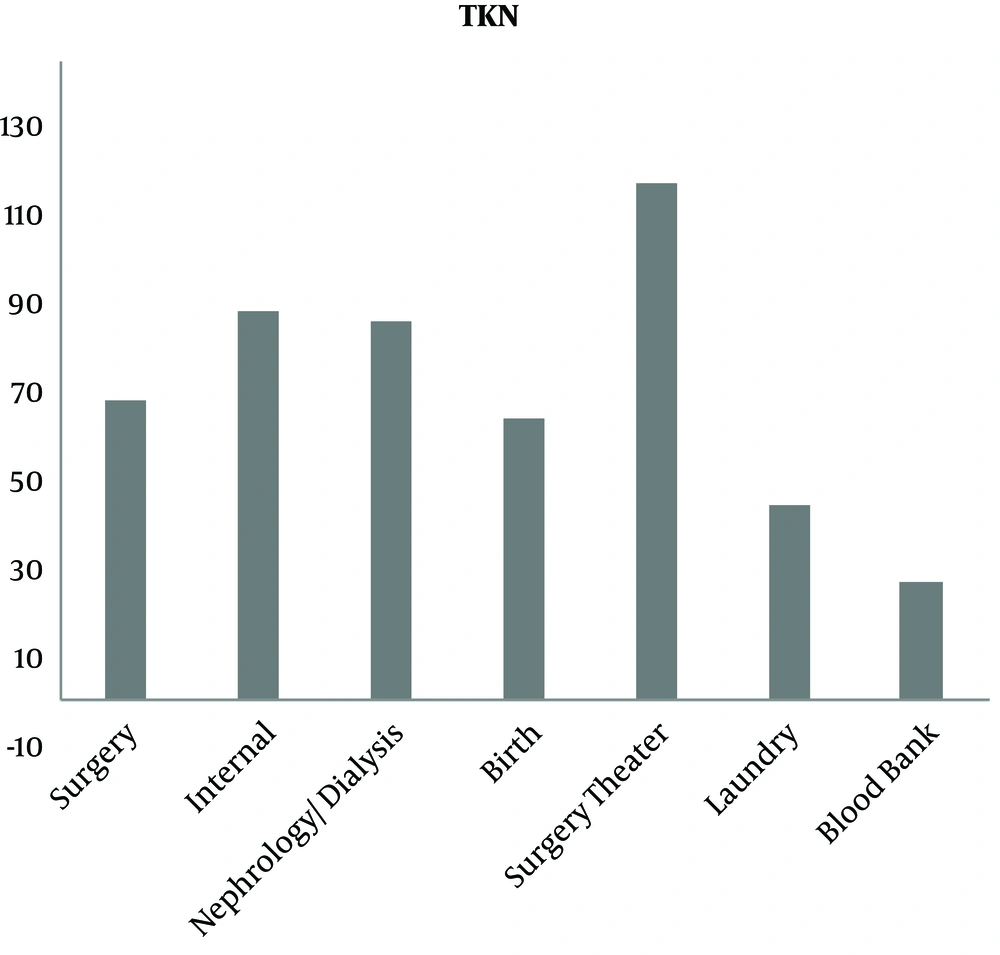
Figure 7.
Total Kjeldahl nitrogen (mg/L) of wastewater from different departments of Al-Shifa medical complex
Heavy metals are a major concern in the treatment of wastewater due to their toxic and other detrimental effects. Cd and Pb were below the detection limits < 0.001 mg/L. While Zn from the surgery, internal, and nephrology/dialysis units account for 0.154, 0.024, and 0.028 mg/L, respectively.
Incredible pollution was detected from the wastewater, which collected from the engineering and maintenance workshop. The TSS, BOD, COD, and TKN account for 73800, 6300, 24680, and 130 mg/L, respectively. The effluent is nearly black in color indicating the disposal of hydrocarbon products, oil, and grease in the wastewater collection system; the COD/BOD ratio is 3.9. Such a type of wastewater is comparable to industrial wastewater rather than medical one.
Many studies are conducted to characterize the medical wastewater, however, most of it agreed that domestic wastewater is similar to the characteristics of medical wastewater. In Iranian hospitals, the values of the pH, TSS, BOD, COD, as well as total coliforms showed that the wastewater generated from hospitals has the same characteristics of domestic wastewater, however, some hospitals should select onsite separate wastewater treatment due to the high pollution (16).
In Turkish hospitals, the results have shown that the wastewater of these hospitals can be classified as medium-strength domestic wastewater (19). In Indonesia, the highest BOD and COD values of the wastewater from three hospitals in Malang city are 240 and 350 mg/L (20). In Sri Lanka, wastewater from three main hospitals has maximum verified values within three months of sampling for TSS, BOD, and COD, which were 314, 1950, and 1183 mg/L, respectively (21).
Verlicchi et al. conducted a comparison between qualitative characteristics of hospital and urban wastewaters based on detailed literature from France, Turkey, India, Iran, Italy, Thailand, Canada, and Greece indicating that BOD, COD, and TSS are 200, 500, and 160 mg/L for hospital wastewater and 90, 170, and 60 mg/l for urban wastewater, respectively. Considering these three parameters, and their average concentrations in the urban wastewater, it can be concluded that in hospital wastewater BOD, COD, and SS keep 2 - 3 times higher than in urban wastewater, while TKN has high differences from 5 - 80 mg/L in hospital wastewater and ranges from 20 - 70 mg/L in urban wastewater (22).
4. Conclusion
According to the classification of wastewater characteristics, the wastewater from Al-Shifa medial complex is considered high-polluted interims of TSS, BOD, COD, and TKN. Therefore, primary treatment is required before discharge to the public sewerage system. The variation in wastewater characteristics among different departments emphasis the need for further investigation to determine the cause of differentiation and the type of medical material used.
It is highly recommended to conduct microbial and radioactive investigations to ensure the wastewater free of pathogens and infectious diseases before disposal to the public sewerage system to protect the health of the workers at the central wastewater treatment plants.
The strategy of Palestinian Water Authority concerned about each drop of treated effluent for agricultural purposes and groundwater recharge. The combination of heavily polluted medical wastewater with domestic wastewater will burden the central treatment plants, which were designed to treat domestic wastewater and therefore, will affect the treated effluent quality.
The previously mentioned results of the medical wastewater characteristics in the Gaza Strip deserve comprehensive evaluation by technologists and ecotoxicologists as well as public health specialists.