1. Background
Chronic hepatitis B (CHB), as a clinically common viral infectious disease of liver tissues, is defined as positive results in CHB virus testing, duration of disease > 6 months, and manifestations of chronic hepatitis (1, 2). Currently, the pathogenesis of CHB has not been clarified, but viral infection and immune factors have been considered the main risk factors (3, 4). Hepatitis B virus (HBV)-related acute-on-chronic liver failure (HBV-ACLF) refers to acute liver failure based on CHB, which is typified by rapid exacerbation, high severity, and poor prognosis. Its clinical manifestations mainly include coagulation dysfunction, jaundice, and ascites. Nearly 80% of liver failure symptoms are closely associated with CHB (5).
Programmed death-1 (PD-1), as an immunosuppressive molecule expressed in B, T, dendritic, and natural killer T cells, can suppress anticancer immunity. Programmed death-1 is associated with the course of hepatocellular carcinoma and HBV infection (6, 7). In the hepatitis-associated hepatocellular carcinoma microenvironment, PD-1 exerts immunosuppressive effects by producing cytokines in Tregs, as well as by inhibiting T helper 17 (Th17) cell activation (8).
CC chemokine ligand 20 (CCL20) was originally identified in the liver as an activation-associated chemokine, also known as macrophage inflammatory protein-3α. Based on the diversity of CCL20-inducing agents, CCL20 has been verified to participate in normal and pathological processes, including chronic liver injury and liver cancer (9, 10). In patients with alcoholic hepatitis, the expression level of CCL20 significantly increases. Additionally, CCL20 may be an important mediator of lipopolysaccharide-induced liver inflammation, fibrosis, hepatocyte, injury, and inflammatory cell recruitment, as well as a novel biomarker for evaluating the prognosis of patients with alcoholic hepatitis (11).
2. Objectives
In the present study, the levels of PD-1, CCL20, and Treg/Th17 cytokines in HBV-ACLF patients were detected, aiming to explore the associations of PD-1 and CCL20 with Treg/Th17 balance and their predictive values for the prognosis.
3. Methods
3.1. General Data
In this cross-sectional study, 50 HBV-ACLF patients diagnosed in our hospital from February 2021 to February 2022 were selected as an HBV-ACLF group. Fifty CHB patients diagnosed in our hospital in the same period were selected as a CHB group. Another 50 healthy volunteers receiving physical examinations in our hospital in the same period were selected as a control group. Informed consent was obtained from all subjects in this study.
The inclusion criteria were as follows: The patients in the CHB group met the diagnostic criteria for CHB proposed by the Chinese Medical Association (14): Positive for HBV DNA and HBsAg+ for more than 6 months. The patients in the HBV-ACLF group met the diagnostic criteria for liver failure proposed by the Chinese Medical Association (15): Abdominal distension, loss of appetite and physical fatigue based on CHB, prothrombin activity (PTA) < 40%, and total bilirubin (TBil) ≥ 171 μmol/L. The subjects in the control group had no history of CHB. All subjects had complete medical data.
The exclusion criteria were (1) subjects with incomplete medical data; (2) those with a history of liver surgery; (3) those with malignancies of liver tissues; (4) those with cardio-cerebrovascular diseases; (5) those who have undergone related treatment recently; (6) those with communication disorders; or (7) patients who developed CHB-dependent hepatocellular carcinoma.
3.2. Sample Collection
Fasting venous blood (10 mL) was collected from each subject on the day of treatment, centrifuged for 20 min (3000 r/min) to obtain the serum, and then stored at -50°C prior to use.
3.3. Detection of Programmed Death-1 Expression by Western Blotting
The serum sample was lysed with lysis buffer to extract the protein. Then, 50 μg of proteins were denatured by boiling and subjected to SDS-PAGE. The product was transferred onto a membrane, which was then blocked with Western blocking buffer for 3 h and incubated with primary antibodies (1:2000) at 4 - 6°C overnight. The next day, the membrane was washed 3 times with Western buffer, incubated with secondary antibodies (1:5000) for 2 h, and washed again with Western buffer, followed by color development, exposure, and imaging. The gray value of the protein band was detected to determine the relative expression of PD-1. The quantitative analysis of PD-1 protein expression was performed using FluorChem FC2 Imaging System (Alpha Innotech, Germany).
3.4. Detection of the CC Chemokine Ligand 20 Level by Immunoturbidimetry
Buffer (350 μL) was added into each of 3 clean test tubes labeled as A, B, and C, into which 20 μL of distilled water, 20 μL of standard solution, and 20 μL of diluted serum were added, respectively. After being shaken evenly, the test tubes were incubated at 37°C for 10 min, followed by colorimetry. The turbidity of the immune complex was measured at 340 and 700 nm, and the CCL20 level was detected based on the absorbance according to the kit’s instructions (Beijing Baiaolaibo Technology Co, Ltd, China; Cat. No. SNM258).
3.5. Detection of Treg/T Helper 17 Cytokine Levels by Enzyme-Linked Immunosorbent Assay
Three wells (blank well 1, blank well 2, and test well) were set on the enzyme-linked immunosorbent assay (ELISA) plate. Stop buffer and chromogenic agent were added into blank well 1, and diluted standard was added into blank well 2. serum samples and antibodies were added into the test well, followed by sealing, shaking, and incubation in the incubator. With blank well 1 as the baseline, the absorbance was detected at 450 nm using a microplate reader (ML-dr3518, Shanghai MLBio Co, Ltd, China), based on which the levels of transforming growth factor β (TGF-β), interleukin-10 (IL-10), IL-23, and tumor necrosis factor α (TNF-α) were detected according to the kits’ instructions. The ELISA kits for TGF-β (Cat. No. ARD10281) and IL-23 (Cat. No. ARD10086) were purchased from Guangzhou Aoruida Biotechnology Co, Ltd, China. The ELISA kits for IL-10 (Cat. No. HP-E21378) and TNF-α (Cat. No. HP-E10110) were obtained from Hepeng Biotechnology Co, Ltd, Shanghai, China.
3.6. Statistical Analysis
SPSS 26.0 software (SPSS Inc, Chicago, Ill, USA) was used for statistical analysis. The measurement data were expressed as (
4. Results
4.1. General Data of Subjects
The HBV-ACLF group included 26 males and 24 females aged (57.18 ± 12.37) years old, and the mean body mass index (BMI) was (22.50 ± 3.82) kg/m2. The CHB group included 29 males and 21 females with a mean age of 56.77 ± 14.16 years and a mean BMI of 22.29 ± 2.68 kg/m2. The control group had 27 males and 23 females with a mean age of 55.39 ± 12.23 years and a mean BMI of 23.16 ± 3.15 kg/m2. There were no significant differences in clinical information/characteristics (including sex ratio, age, and mean BMI) between the 3 groups (P > 0.05). Compared with the control group, the other 2 groups had lower levels of PTA and albumin (Alb) but higher levels of alanine aminotransferase (ALT) and TBil. The levels of PTA and Alb were lower, while the levels of ALT and TBil were higher in the HBV-ACLF group than in the CHB group (P < 0.05; Table 1).
Table 1.
Clinical Information of the Subjects
| Clinical Information | Control Group (n = 50) | CHB Group (n = 50) | HBV-ACLF Group (n = 50) | F/x2 | P Value |
|---|---|---|---|---|---|
| Gender (male/female) | 27/23 | 29/21 | 26/24 | 0.381 | 0.532 |
| Age (y) | 55.39 ± 12.23 | 56.77 ± 14.16 | 57.18 ± 12.37 | 0.836 | 0.375 |
| BMI (kg/m2) | 23.16 ± 3.15 | 22.29 ± 2.68 | 22.50 ± 3.82 | 1.365 | 0.162 |
| PTA (%) | 98.51 ± 12.55 | 87.11 ± 10.21 | 32.16 ± 4.23 | 42.561 | 0.001 |
| ALT (U/L) | 20.33 ± 3.12 | 208.67 ± 31.56 | 521.62 ± 67.26 | 36.228 | 0.001 |
| Alb (g/L) | 45.29 ± 5.34 | 38.77 ± 4.07 | 29.01 ± 3.36 | 25.362 | 0.001 |
| TBil (µmol/L) | 11.95 ± 2.35 | 33.59 ± 4.15 | 374.29 ± 45.62 | 68.394 | 0.001 |
Abbreviations: Alb, albumin; ALT, alanine aminotransferase; BMI, body mass index; CHB, chronic hepatitis B; HBV-ACLF, hepatitis B virus-related acute-on-chronic liver failure; PTA, prothrombin activity; TBil, total bilirubin.
4.2. Expression Levels of Programmed Death-1 and CC Chemokine Ligand 20
The levels of PD-1 and CCL20 were higher in the HBV-ACLF and CHB groups than in the control group (P < 0.05). The HBV-ACLF group had higher levels of PD-1 and CCL20 than the CHB group (P < 0.05; Table 2 and Figure 1).
Table 2.
Expression Levels of Programmed Death-1 and CC Chemokine Ligand 20 a
| Group | Case (n) | PD-1 | CCL20 (pg/mL) |
|---|---|---|---|
| Control | 50 | 1.02 ± 0.13 | 32.67 ± 4.21 |
| CHB | 50 | 1.26 ± 0.19 | 168.35 ± 22.67 |
| HBV-ACLF | 50 | 1.63 ± 0.25 | 372.60 ± 42.15 |
| F | 18.752 | 36.137 | |
| P value | 0.001 | 0.001 |
Abbreviations: CCL20, CC chemokine ligand 20; CHB, chronic hepatitis B; HBV-ACLF, hepatitis B virus-related acute-on-chronic liver failure; PD-1, programmed death-1.
a The data are presented as mean ± SD.

Figure 1.
Western blot for programmed death-1 and CC chemokine ligand 20 protein expression levels. CCL20, CC chemokine ligand 20; PD-1, programmed death-1.
4.3. Associations of Programmed Death-1 and CC Chemokine Ligand 20 with Clinical Characteristics of Hepatitis B Virus-Related Acute-on-Chronic Liver Failure Patients
The HBV-ACLF group was further divided into mild, moderate, and severe subgroups according to the criteria for liver failure proposed by the Chinese Medical Association (15). The levels of PD-1, CCL20, ALT, and TBil were higher, while the levels of PTA and Alb were lower in moderate HBV-ACLF patients than in mild HBV-ACLF patients (P < 0.05). The levels of PD-1, CCL20, ALT, and TBil were also higher, while the levels of PTA and Alb were lower in severe HBV-ACLF patients than in mild and moderate HBV-ACLF patients (P < 0.05). Hepatitis B virus-related acute-on-chronic liver failure patients with poor prognosis had higher levels of PD-1, CCL20, ALT, and TBil but lower levels of PTA and Alb than those with good prognosis (P < 0.05; Table 3).
Table 3.
Associations of Programmed Death-1 and CC Chemokine Ligand 20 with Clinical Characteristics of Hepatitis B Virus-Related Acute-on-Chronic Liver Failure Patients a
| Clinical Characteristic | Case (n) | PD-1 | CCL20 (pg/mL) | PTA (%) | ALT (U/L) | ALB (g/L) | TBil (µmol/L) |
|---|---|---|---|---|---|---|---|
| Severity | |||||||
| Mild | 16 | 1.33 ± 0.21 | 301.54 ± 30.56 | 42.56 ± 4.12 | 467.57 ± 48.24 | 34.35 ± 4.87 | 339.54 ± 38.67 |
| Moderate | 21 | 1.59 ± 0.23 | 365.17 ± 35.67 | 33.26 ± 3.22 | 506.32 ± 40.21 | 23.61 ± 4.12 | 427.20 ± 40.63 |
| Severe | 13 | 1.91 ± 0.34 | 419.32 ± 42.55 | 25.69 ± 3.71 | 597.20 ± 45.28 | 14.62 ± 3.56 | 515.68 ± 41.22 |
| F | 9.135 | 13.265 | 15.630 | 6.648 | 16.460 | 14.41 | |
| P value | 0.001 | 0.001 | 0.004 | 0.030 | 0.004 | 0.005 | |
| Prognosis | |||||||
| Good | 27 | 1.46 ± 0.23 | 321.39 ± 31.08 | 41.25 ± 5.03 | 503.65 ± 27.02 | 35.62 ± 5.64 | 368.25 ± 34.25 |
| Poor | 23 | 1.89 ± 0.29 | 412.57 ± 40.55 | 25.63 ± 4.62 | 587.03 ± 40.12 | 20.17 ± 2.38 | 461.25 ± 37.20 |
| t | 8.122 | 21.526 | 3.961 | 2.986 | 4.371 | 3.186 | |
| P value | 0.001 | 0.001 | 0.017 | 0.04 | 0.012 | 0.033 |
Abbreviations: CCL20, CC chemokine ligand 20; PD-1, programmed death-1.
a The data are presented as mean ± SD.
4.4. Treg/T Helper 17 Cytokine Levels
The levels of TGF-β, IL-10, IL-23, and TNF-α were higher in the CHB and HBV-ACLF groups than in the control group, and they were also higher in the HBV-ACLF group than in the CHB group (P < 0.05; Table 4).
Table 4.
Treg/T helper 17 Cytokine Levels (ng/L) a
| Group | Case (n) | TGF-β | IL-10 | IL-23 | TNF-α |
|---|---|---|---|---|---|
| Control | 50 | 54.62 ± 6.33 | 17.55 ± 2.14 | 3.22 ± 0.61 | 2.26 ± 0.42 |
| CHB | 50 | 81.51 ± 9.52 | 32.63 ± 4.51 | 4.95 ± 0.92 | 2.91 ± 0.46 |
| HBV-ACLF | 50 | 103.67 ± 12.37 | 51.72 ± 6.35 | 8.06 ± 1.21 | 3.95 ± 0.60 |
| F | 31.697 | 45.339 | 33.652 | 21.527 | |
| P value | 0.001 | 0.001 | 0.001 | 0.001 |
Abbreviations: CHB, chronic hepatitis B; HBV-ACLF, hepatitis B virus-related acute-on-chronic liver failure; IL-10, interleukin-10; TGF-β, transforming growth factor-β; TNF-α, tumor necrosis factor α.
a The data are presented as mean ± SD.
4.5. Correlations of Programmed Death-1 and CC Chemokine Ligand 20 with Treg/T Helper 17 Cytokines in Hepatitis B Virus-Related Acute-on-Chronic Liver Failure Patients
The expression levels of PD-1 and CCL20 in HBV-ACLF patients were positively correlated with the levels of Treg/Th17 cytokines (TGF-β, IL-10, IL-23, and TNF-α; P < 0.05; Figures 2 and 3).

Figure 2.
Correlations between programmed death-1 and Treg/T helper 17 cytokines in hepatitis B virus-related acute-on-chronic liver failure patients. HBV-ACLF, hepatitis B virus-related acute-on-chronic liver failure; PD-1, programmed death-1; Th17, T helper 17.

Figure 3.
Correlations between CC chemokine ligand 20 and Treg/T helper 17 cytokines in hepatitis B virus-related acute-on-chronic liver failure patients. CCL20, CC chemokine ligand 20; HBV-ACLF, hepatitis B virus-related acute-on-chronic liver failure; Th17, T helper 17.
4.6. Predictive Values of Programmed Death-1, CC Chemokine Ligand 20, and Treg/T Helper 17 Cytokines for Prognosis of Hepatitis B Virus-Related Acute-on-Chronic Liver Failure Patients
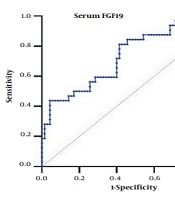
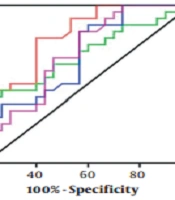
The combined detection of PD-1, CCL20, and Treg/Th17 cytokines had higher sensitivity and lower specificity than single detection for predicting the prognosis of HBV-ACLF patients (P < 0.05; Table 5 and Figure 4).
Table 5.
Predictive Values of Programmed Death-1, CC Chemokine Ligand 20, and Treg/T Helper 17 Cytokines for Prognosis of Hepatitis B Virus-Related Acute-on-Chronic Liver Failure Patients
| Index | AUC | 95% CI | P Value | Sensitivity (%) | Specificity (%) | Cut-off Value | Youden Index |
|---|---|---|---|---|---|---|---|
| PD-1 | 0.684 | 0.549 - 0.818 | 0.014 | 66.58 | 83.66 | 1.61 | 0.502 |
| CCL20 (pg/mL) | 0.679 | 0.544 - 0.815 | 0.017 | 67.23 | 82.52 | 365.3 | 0.498 |
| Treg/Th17 | 0.686 | 0.550 - 0.821 | 0.014 | 68.02 | 81.70 | - | 0.497 |
| Combined detection | 0.759 | 0.640 - 0.879 | 0.001 | 85.11 | 71.33 | - | 0.564 |
Abbreviations: CCL20, CC chemokine ligand 20; PD-1, programmed death-1; Th17, T helper 17..

Figure 4.
Receiver operating characteristic curves of predictive values of programmed death-1, CC chemokine ligand 20, and Treg/T helper 17 cytokines for prognosis of hepatitis B virus-related acute-on-chronic liver failure patients. CCL20, CC chemokine ligand 20; HBV-ACLF, hepatitis B virus-related acute-on-chronic liver failure; PD-1, programmed death-1; ROC, receiver operating characteristic; Th17, T helper 17.
5. Discussion
In clinical medicine, CHB is defined as positive results in CHB virus testing, symptoms of chronic hepatitis, unknown time of onset, and duration of disease > 6 months (16). As CHB continuously develops and deteriorates, patients may suffer from the symptoms of liver failure (ie, HBV-ACLF). Hepatitis B virus-related acute-on-chronic liver failure patients have a poor prognosis, and the 3-month mortality rate may exceed 50% (17). At present, the occurrence and progression of CHB and HBV-ACLF are closely linked to immune system disorders (18). The changes in the expression of PD-1, an important member of the immunoglobulin superfamily, are highly related to the immunological condition (19). Programmed death-1 expressed on the surface of T and B cells can interact with its receptors, thereby affecting the immunological function of T lymphocytes (20).
In this study, PD-1 had an abnormally high expression in HBV-ACLF; thus, its expressions in HBV-ACLF patients with different clinical characteristics were further detected. The patients with severer disease and poorer prognosis had a higher level of PD-1, suggesting a high correlation of PD-1 expression with the severity and prognosis of HBV-ACLF patients. It is well-documented that CHB and HBV-ACLF occur and develop along with inflammatory responses in liver tissues (21). CC chemokine ligand 20, a chemotactic protein secreted by hepatocytes, is expressed in liver tissues, facilitating the development of inflammatory responses in liver tissues (22, 23). Moreover, Treg/Th17 cytokines are important players in immuno-inflammatory regulation (24). The changes in the levels of Treg/Th17 cytokines (TGF-β, IL-10, IL-23, and TNF-α) are closely related to the Treg/Th17 balance. The high correlation between Treg/Th17 balance and the occurrence and development of CHB has been proven (25, 26), but the association between Treg/Th17 balance and HBV-ACLF has been rarely studied. In this study, the serum CCL20 level was abnormally high in the CHB and HBV-ACLF groups, especially in the HBV-ACLF group, indicating that CCL20 had an abnormally high expression upon HBV-ACLF. Meanwhile, the levels of TGF-β, IL-10, IL-23, and TNF-α in HBV-ACLF patients were significantly higher, indicating significant Treg/Th17 imbalance in HBV-ACLF patients.
Furthermore, we found that the serum levels of CCL20, PD-1, ALT, and TBil in patients with severe HBV-ACLF or poor prognosis were higher, while the levels of PTA and ALB were lower compared with patients with mild and moderate HBV-ACLF or good prognosis. Hence, the levels have high values for the diagnosis and prognostic evaluation of HBV-ACLF patients.
In this study, the levels of PD-1 and CCL20 were significantly associated with Treg/Th17 cytokines in HBV-ACLF patients, and the combined detection of PD-1, CCL20, and Treg/Th17 cytokines had higher sensitivity and lower specificity for predicting the prognosis. Therefore, PD-1, CCL20, and Treg/Th17 cytokines may be implicated in the onset and progression of HBV-ACLF, and the combined detection of them has a high value for predicting the prognosis of HBV-ACLF patients.
In conclusion, the expression levels of PD-1 and CCL20 are higher in HBV-ACLF patients, being correlated with Treg/Th17 balance. The combined detection of PD-1, CCL20, and Treg/Th17 cytokines has a higher value for predicting the prognosis of HBV-ACLF patients. Regardless, this is a single-center study with a small sample size; thus, the results may be biased. Further multicenter studies with larger sample sizes are needed to confirm whether the detection of PD-1, CCL20, and Treg/Th17 cytokines is also a cost-benefit way in clinical practice.