Full Text
Full text is available in PDF
Official Journal of Research Center for Gastroenterology and Liver Diseases
Authors
Background: In medical terms, occupational diseases are defined as health disorders specifically associated with the working environment of people and their occupational activity. From the medical and legal perspectives, the vast majority of European countries consider particular diseases to be of occupational origin if they are mentioned in the current list of occupational diseases and caused by exposure to factors in the working environment that are harmful to health.
Objectives: The aim of this study was to analyze the occurrence of cases of viral hepatitis certified as an occupational disease in Poland during 1979-2009. This article presents the medical, economic, and legal aspects of the epidemiology of hepatitis as an occupational disease in Poland.
Materials and Methods: Publically available statistical data on certified occupational diseases in Poland and data contained in individual "occupational disease diagnosis cards" (based on data used in Poland statistical form), regarding certified cases of hepatitis among health care professionals, which were collected by the Department of Occupational Hygiene of the Polish Public Health Service, were analyzed in this study.
Results: In Poland, the highest number of cases of hepatitis certified as an occupational disease was observed in 1987. A gradual reduction in the number of cases of hepatitis as an occupational disease has been noted since then. Currently, hepatitis C as an occupational disease is certified more frequently than hepatitis B. In Poland, the number of women with hepatitis certified as an occupational disease is higher than that of men. However, among health care professionals, particularly nurses, this difference is insignificant because women outnumber the men. The existence of such a situation is due to the significant quantitative predominance of women over men among medical personnel, especially among nurses.
Conclusions: Immunization of health care professionals against the hepatitis B virus (HBV), introduced in Poland in 1988, was an important factor involved in reducing the number of cases of occupational viral hepatitis. Socioeconomic and financial factors affected the epidemiological data on cases of hepatitis certified as an occupational disease in Poland. An additional problem associated with the diagnosis of occupational diseases is the lack of obligatory testing for anti-hepatitis C virus (HCV) and anti-hepatitis B surface antigen (HBsAg) antibodies and examinations to ensure the efficacy of HBV vaccination among medical staff before and during employment.
© 2011 Kowsar M.P.Co. All rights reserved.
© 2011, Author(s). This open-access article is available under the Creative Commons Attribution 4.0 (CC BY 4.0) International License (https://creativecommons.org/licenses/by/4.0/), which allows for unrestricted use, distribution, and reproduction in any medium, provided that the original work is properly cited.
Stawinska-Witoszynska B, Zysnarska M, Krzywinska-Wiewiorowska M, Wojtyła-Buciorab P, Krzyzaniak A, et al. Trends in the Incidence Rates of Chronic Hepatitis B in Poland in the Years 2005 - 2013. Hepat Mon. 2016;16(8):e32692. doi: https://doi.org/10.5812/hepatmon.32692
Alavi SM, Hajiani E. Hepatitis C infection: a review on epidemiology and management of occupational exposure in health care workers for general physicians working in Iranian health network setting. Jundishapur J Microbiol. 2011;4(1):. doi:
Talebi Taher M, Mohit M, Boghous Avanessians T. Viral Hepatitis in Patients Hospitalized in Two Teaching Hospitals, Tehran , Iran. Arch Clin Infect Dis. 2010;5(1):. doi:
Rezaee-Zavareh MS, Karimi-Sari H, Dolatimehr F, Alavian SM. Hepatitis A Virus Infection, Vaccination and Iranian Healthcare Workers. Hepat Mon. 2015;15(12):e35238. doi: https://doi.org/10.5812/hepatmon.35238
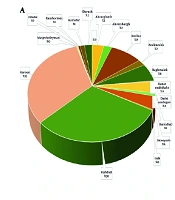
Amiri H, Mohammadi MJ, Farhadi M, Zahiri N, Ghanbari S, et al. The Incidence of Hepatitis A and the Variables Influencing the Outbreak in Southwest Iran Over Ten Years (2013 - 2023). Hepat Mon. 2025;25(1):e165205. doi: https://doi.org/10.5812/hepatmon-165205
Last Update: 3 weeks ago
Last Update: 3 weeks ago
Last Update: 3 weeks ago
Last Update: 8 hours ago
Last Update: 11 hours ago
Last Update: 4 days ago