Full Text
Full text is available in PDF
Official Journal of Research Center for Gastroenterology and Liver Diseases
Authors
 1,*, Kavous Firouznia2, Seyed Mehran Vaziri Bozorg2, Ahmad Reza Ghasemi Esfe2, Marzieh Motevallei2, Mohammad Reza Abedini2, Saed Rahmat Sadeghi2
Background and Aims: Palliation therapy is the only available therapeutic method for most patients with tumor-induced obstructive jaundice. Metallic stents are now performed percutaneously as an alternative route to the endoscopic approach. It is widely accepted because of its safety, good patency rate, and minimal invasiveness. This study was designed to evaluate the long-term results of metallic self-expandable stent insertion in patients with malignant stenosis of the biliary tree.
Methods: It is a longitudinal study of patients with percutaneously biliary stenting from September 2005 to March 2009. The patients had unresectable malignant biliary obstruction with unsuccessful endoscopic stenting and access. Percutaneous transhepatic cholangiogram performed after adequate local anesthesia, under sonographic or fluoroscopic guidance. Stenting or balloon dilation was performed through the hydrophilic guide wire. Among 50 patients, 45 stents were placed in biliary tree stenosis sites. Patients' follow-up was during the first, second, third, and then the sixth month after insertion of biliary stents. Stent patency was considered successful in our patients, when there were no lab results or sonographic appearance of biliary tree obstruction.
Results: 10(20%) patients' stent placement treatment failed because of unsuccessful technical procedure. The stenosis of biliary tract was complete and passage of guide wire was not possible through the tumor growth. 6 (15 %) patients with successful stent placements died within one month (mean, 22 days). Total serum bilirubin resolved to below 1.5 mg/dl within 30 days for 36 (90%) patients with successful stent placements. Early complications not leading to death occurred in 28% of cases. The mean survival time for all patients who underwent stent placement was 140 days (16-420days). The mean patency rate for all stents was 147 days.
Conclusions: Percutaneous biliary stenting is a safe procedure with few technical complications and a high success rate of palliation for patients with malignant biliary jaundice. Early complications are mostly managed conservatively and death is mainly due to systemic effects of the malignant disease.
© 2010, Author(s). This open-access article is available under the Creative Commons Attribution 4.0 (CC BY 4.0) International License (https://creativecommons.org/licenses/by/4.0/), which allows for unrestricted use, distribution, and reproduction in any medium, provided that the original work is properly cited.
Ebrahiminik H. Self-Expandable Metal Stents in Malignant Biliary Obstruction. I J Radiol. 2014;11(30th Iranian Congress of Radiology):e21423. doi: https://doi.org/10.5812/iranjradiol.21423
Gharib Salehi M. Intervention in Benign Biliary Stricture and Biliary Leak. I J Radiol. 2014;11(30th Iranian Congress of Radiology):e21425. doi: https://doi.org/10.5812/iranjradiol.21425
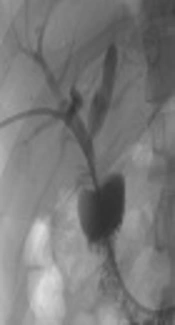
Saberi H, Karimi S, Rasuli B, Alaj E. Short- and Long-Term Outcome of Balloon Dilatation of Benign Biliary Strictures. I J Radiol. 2017;14(4):e21617. doi: https://doi.org/10.5812/iranjradiol.21617
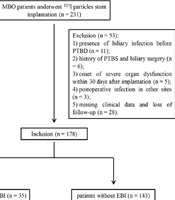
Song F, Niu Y, Li X, Che J, Huang H, et al. The Risk Factors of Early Biliary Infection After 125I Particles Stent Implantation in Patients with Malignant Biliary Obstruction. I J Radiol. 2024;21(2):e143789. doi: https://doi.org/10.5812/iranjradiol-143789
Rasekhi A, Gholami Z. Efficacy of Radiologic Percutaneous Interventional Treatments for Biliary Complications after Liver Complications after Liver Transplantation: Shiraz Experience. I J Radiol. 2014;11(30th Iranian Congress of Radiology):e21437. doi: https://doi.org/10.5812/iranjradiol.21437
Last Update: 3 weeks ago
Last Update: 3 weeks ago
Last Update: 3 weeks ago
Last Update: 7 hours ago
Last Update: 1 day ago
Last Update: 4 days ago