

Full Text
Full text is available in PDF
IJ Radiology
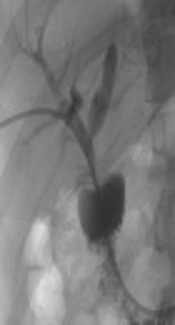
Benign causes of biliary obstruction are often iatrogenic in nature, and most commonly result from inadvertent damage to the biliary tree during surgical procedures, particularly laparoscopy. Benign biliary obstruction may be associated with trauma, inflammatory processes due to stone disease or pancreatitis, surgery with biliary-enteric anastomoses, liver transplantation, sphincter of Oddi dysfunction, and as a late complication of the treatment of other intra-abdominal processes. The percutaneous treatment of benign biliary strictures by dilatation has a success rate ranging from 67 to 90%, which is higher than that of endoscopic treatment. Common complications of percutaneous biliary drainage and intervention include hemorrhage from puncture of the portal vein or hepatic artery, pleural or gallbladder puncture, injury to bowel or kidney, and sepsis. Placement of metallic stents in the BBS has been tried with no long term promising results. Metallic stents should only be considered for failed attempts at surgical repair. Development of self-expandable covered stents specifically designed to be removed at a later date may change current management strategies. Treatment with covered metal stents or bio absorbable stents warrants further evaluation. Endoscopic biliary sphincterotomy (EBS) is a first-line therapy for various pancreaticobiliary diseases. The endoscopic management of benign biliary diseases typically consists of dilation and insertion of one or more plastic stents followed by elective stent exchange every 3 months to avoid cholangitis caused by stent clogging. Sequential placement of multiple, large diameter stents in patients with distal common bile duct stenosis secondary to chronic pancreatitis appears to be superior to single stent placement and may provide good long-term benefits.
© 2014, Author(s). This open-access article is available under the Creative Commons Attribution 4.0 (CC BY 4.0) International License (https://creativecommons.org/licenses/by/4.0/), which allows for unrestricted use, distribution, and reproduction in any medium, provided that the original work is properly cited.
Saberi H. Biliary Interventions. I J Radiol. 2014;11(30th Iranian Congress of Radiology):e21440. doi: https://doi.org/10.5812/iranjradiol.21440
Ebrahiminik H. Self-Expandable Metal Stents in Malignant Biliary Obstruction. I J Radiol. 2014;11(30th Iranian Congress of Radiology):e21423. doi: https://doi.org/10.5812/iranjradiol.21423
Saberi H, Karimi S, Rasuli B, Alaj E. Short- and Long-Term Outcome of Balloon Dilatation of Benign Biliary Strictures. I J Radiol. 2017;14(4):e21617. doi: https://doi.org/10.5812/iranjradiol.21617
Ghanaati H, Firouznia K, Vaziri Bozorg S, Ghasemi Esfe A, Motevallei M, et al. Nintinol Self-Expandable Metallic Stenting in Management of Malignant Obstructive Jaundice: A Case Series. Hepat Mon. 2010;10(1):. doi:
Al-Judaibi B, Hernandez Alejandro R, Uhanova J, Marotta P, Mosli M, et al. Duct-to-Duct Biliary Anastomosis Yields Similar Outcomes to Roux-en-Y Hepaticojejunostomy in Liver Transplantation for Primary Sclerosing Cholangitis. Hepat Mon. 2015;15(5):e18811. doi: https://doi.org/10.5812/hepatmon.15(5)2015.18811

Checking
Last Update: 2 weeks ago
Last Update: 2 weeks ago
Last Update: 2 weeks ago
Last Update: 4 days ago
Ordering Reprints
Articles are published under the Creative Commons license stated on each article. No permission or royalty fee is required for uses permitted by that license. CCC handles optional bulk and customized reprint orders. Any quotation covers production and delivery services only, not copyright permission. > Request Reprints from CCC