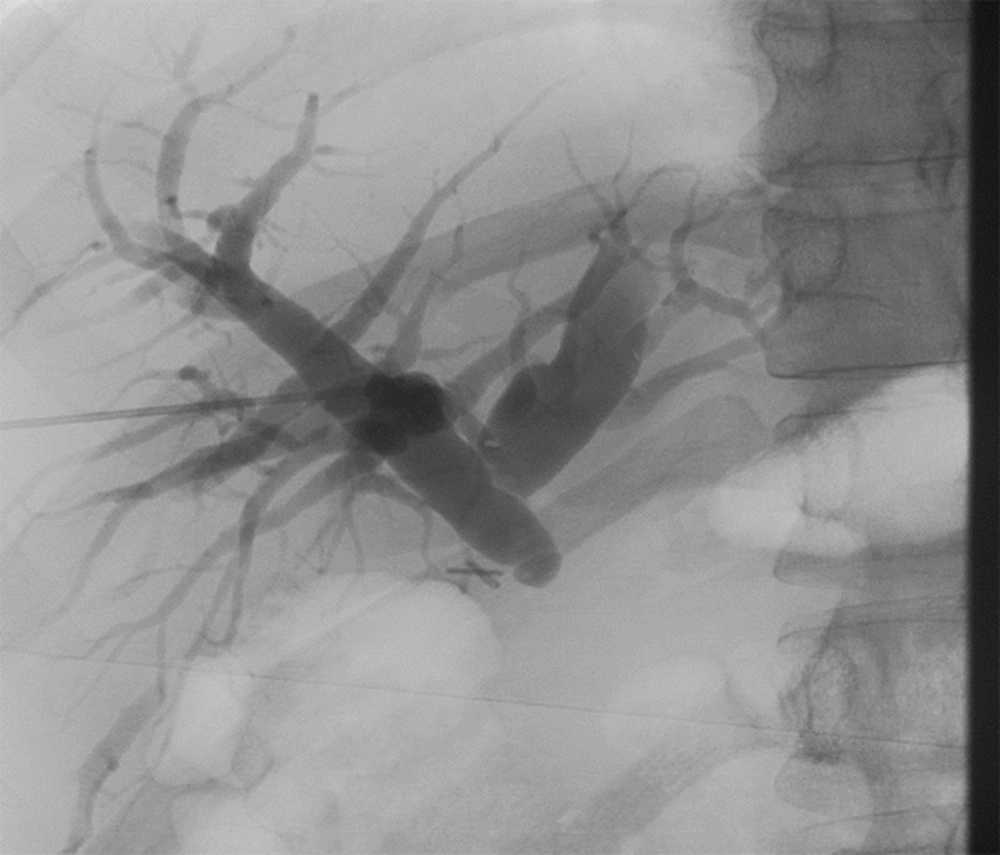
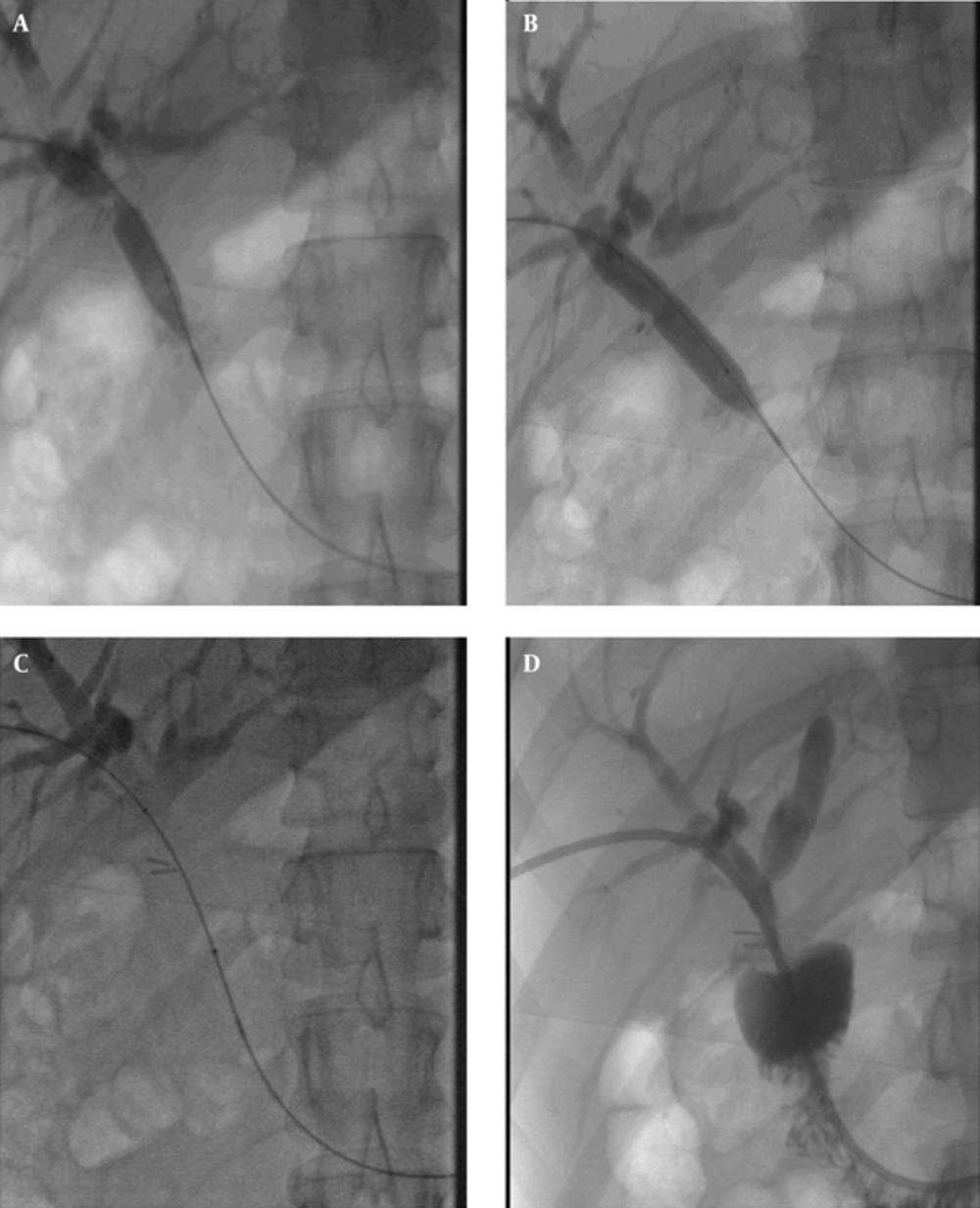
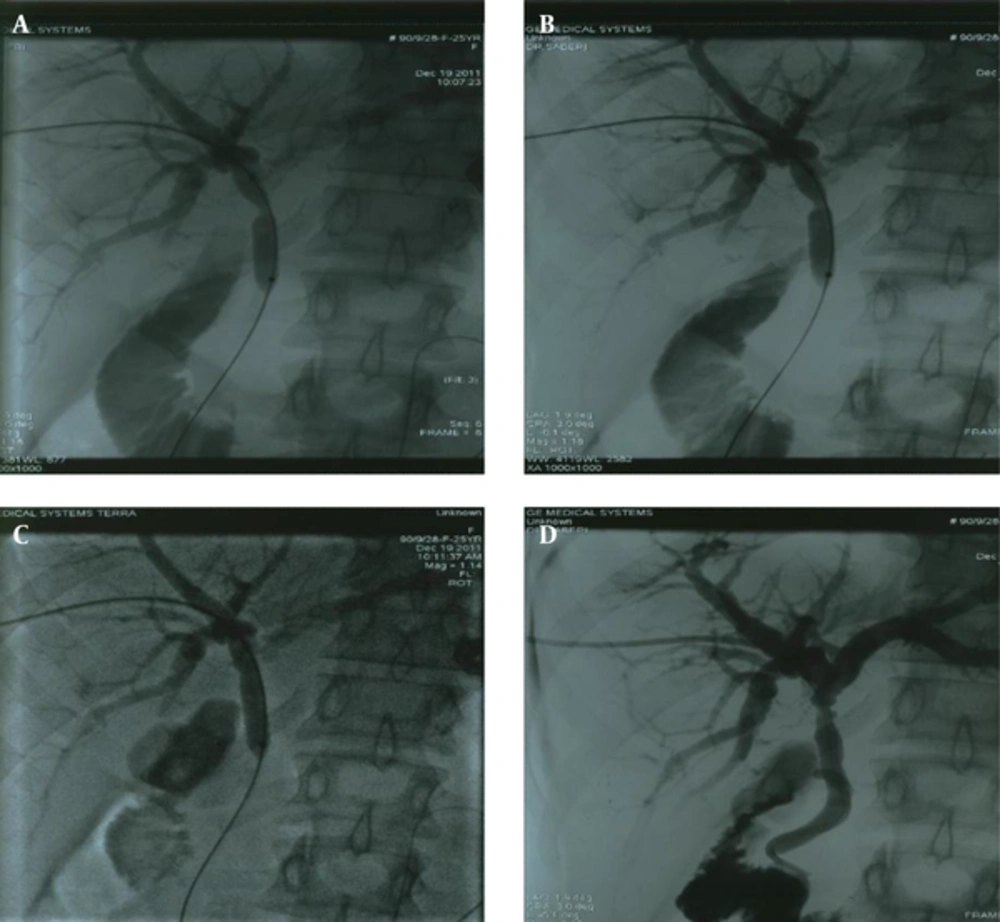
The increased rate of biliary strictures in recent years is an anticipated result of the increase in the number of laparoscopic cholecystectomy operations. Laparoscopic interventions have led to lesser hospital burden and better patient compliance, yet with increased risk of biliary damage. In initial studies, a risk of 0.1% to 0.3% was reported for this kind of complication following laparoscopic cholecystectomy, but the rate has been raised to 0.4% - 0.6% in recent studies (
1-
8). On a related note, the etiology of more than 80% of biliary strictures is believed to be iatrogenic (
9). This issue was also observed in our study, where 87.5% (21/24) of our patients developed biliary strictures following a laparoscopic cholecystectomy. Before the development of laparoscopic methods, the ratio of iatrogenic damage to biliary system in males was two times more than females, but this ratio has been reversed to 60% - 80% in females after the usage of this technique (
9).
Therefore, consistently with previous publications, results of our study showed this ratio to be 70% higher in females than in males.
Management of biliary strictures can be challenging, and restenosis with recurrent symptoms is commonly seen (
10-
13). In these patients, percutaneous trans-hepatic biliary drainage (PTBD) has been shown to be a successful method in the treatment of biliary leakage (
14-
16). The combination of PTBD and balloon dilation offers a less invasive approach. Several studies have shown very promising results. Technical success rates approach 93% - 100% with complication rates of 5% - 20%. The probability of a patient having clinically relevant restenosis at 1 year after the treatment is 0.7% - 1.0%, and it decreases to 0.56% - 0.81% at 2 years after the treatment and 0.52% - 0.7% at 5 years after the treatment (
17-
24).
Kocher et al. reported a 94% long-term success rate in their study (
22). This rate was 90% in the study of Thomas et al. (
25), while Lee et al. reported a 93% success rate (
26). In our study, short term success was assessed as the absence of biliary strictures in cholangiography in the one week follow-up session, and long-term success was defined as the resolution of symptoms, normal liver function tests, and a normal ultrasound examination in 3- and 6-month follow-up sessions. Except for one patient which needed a re-insertion of the balloon dilatator, in this study, all cases were considered successful, as evaluated by the post-procedure cholangiography (95% short-term success
rate). In terms of the long-term success rate, 2 patients died about 2 months after the procedure (due to complications of previous surgery). Despite a non-significant decrease in their liver enzyme levels, we cannot use the significant decrease in serum bilirubin level and the absence of clinical symptoms and normal sonography reports after 6 months to define these two cases as successful procedures, which leads to a 91% long-term success rate for our study. Sepsis, cholangitis, hemorrhage, and biliary fistulas to adjacent organs are the most common complications following ballooning of biliary strictures (
1-
8). In our study, the biliary ballooning was successful in all patients, with no serious complications.
According to our findings, laparoscopic cholecystectomy was the most frequent cause of benign biliary strictures (87.5%). In accordance with previous studies, most (70%) of the patients with benign biliary strictures were female. This fact may be due to more frequent procedures on females because gallbladder stones are more prevalent in this gender, resulting in an increased rate of laparoscopic surgeries. There was no significant correlation between the time after the surgery which caused the biliary stricture and the increase in serum bilirubin levels in patients after biliary balloon dilatation (P = 0.34). Serum levels of AST and ALT in patients following biliary balloon dilatation were not significantly decreased because they were not high before the procedure (P > 0.5). However, serum bilirubin level significantly decreased after balloon dilatation (P < 0.0001).